

What if the night guard you wear every evening is actually masking a deeper conversation your body is trying to have with you? Most people dealing with TMJ feel trapped in a cycle of morning headaches and a jaw that feels perpetually locked. It's frustrating to see your lower face visibly widen from overactive masseter muscles while traditional solutions only seem to address the symptoms, not the source. You can move beyond these temporary fixes by integrating somatic exercises for neck and jaw tension into your daily ritual. Reclaiming your comfort starts with understanding that your jaw isn't just a joint; it's a primary site for stored emotional and physical stress.
In this guide, you'll discover how to use professional somatic massage techniques to release deep-seated tension and restore your face's natural, harmonious contour from the comfort of home. We'll explore the foundational principles of the Face Up Method™ to help you calm your nervous system and provide the lasting relief you've been seeking. By the end of this article, you'll have a clear path toward a more relaxed, balanced, and pain-free life. It's time to transition from managing discomfort to mastering a state of calm efficiency within your own body.
Key Takeaways
- Understand how the jaw acts as a primary storage site for stress and why nervous system awareness is essential for unlocking chronic tightness.
- Identify the three primary muscle groups involved in TMJ dysfunction to target your massage efforts with professional precision.
- Discover the transformative benefits of intraoral (buccal) massage, a professional secret for reaching deep tissues that surface-level techniques cannot access.
- Learn how to integrate somatic exercises for neck and jaw tension into a five-minute daily ritual that resets your nervous system and prevents pain from returning.
- Explore how to transition from basic self-care to long-term facial wellness by mastering the proprietary Face Up Method™.
Beyond the Joint: The Somatic Root of TMJ Tension
Somatic TMJ relief is the practice of addressing physical tension through intentional nervous system awareness. It's a shift from seeing the jaw as a mechanical hinge to viewing it as a sensitive barometer for your internal state. When you engage in somatic exercises for neck and jaw tension, you aren't just stretching tissue; you're retraining the brain to let go of defensive patterns that have become hardwired over time.
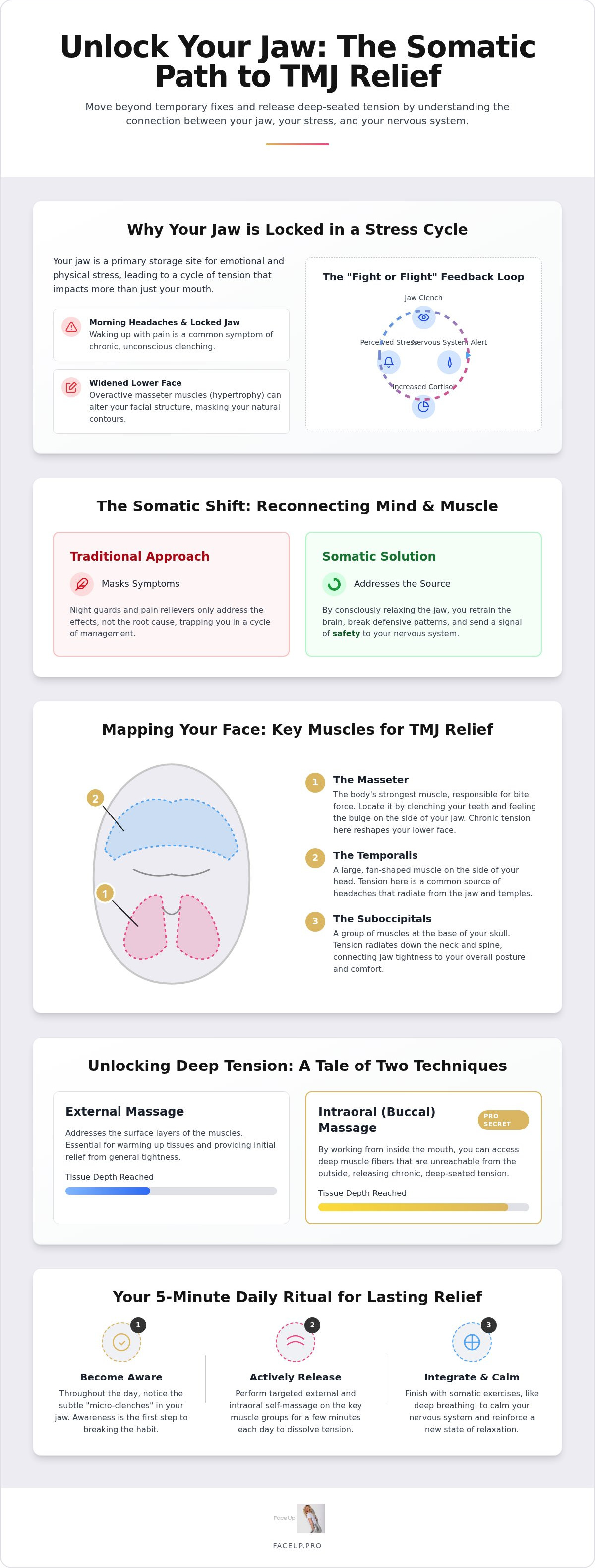
The jaw is the body's primary stress-storage site due to our evolutionary "fight or flight" response. In moments of perceived danger, the masseter muscles contract instinctively to protect the skull and prepare the body for action. While we rarely face physical predators today, our bodies react to digital notifications and professional pressures with that same primitive clench. This constant activation engages the Vagus nerve in a feedback loop of high alert. By consciously relaxing the jaw, you send a signal of safety directly to your nervous system, facilitating a state of calm efficiency that radiates throughout the entire body.
At Face Up, our philosophy centers on the belief that tension-free muscles lead to a naturally sculpted face. Chronic tightness doesn't just cause pain; it alters your facial architecture by pulling features downward or widening the lower face through masseter hypertrophy. Releasing this grip allows your natural bone structure to emerge, restoring facial harmony without the need for invasive interventions.
The Nervous System Connection
The trigeminal nerve creates a bidirectional feedback loop where jaw tension signals the brain to remain in a state of high alert. This chronic clenching keeps the body flooded with cortisol, which can lead to fatigue and systemic inflammation. Somatic awareness helps you break this cycle by teaching you to identify the subtle "micro-clench" before it evolves into a full-blown tension headache or an unconscious grinding episode.
Emotional Storage in the Masseter
The jaw often serves as a physical container for unspoken words and suppressed emotions. We frequently "grit our teeth" through difficult situations or "bite our tongues" to avoid conflict, causing the muscles to lock in a defensive posture. Because of this deep connection, performing somatic exercises for neck and jaw tension can sometimes trigger an unexpected emotional release, such as a sudden sense of lightness or even tears. This holistic approach is a cornerstone of somatic massage therapy, which treats the face as an integrated part of your emotional and physical well-being.
Mapping Your Face: Key Muscles for TMJ Self Massage
To effectively manage discomfort, you must first understand the landscape of your own anatomy. While TMJ is often discussed as a singular joint issue, the surrounding muscles are the primary drivers of both pain and dysfunction. Identifying these areas allows you to perform somatic exercises for neck and jaw tension with professional precision. Before you begin any physical work, it is vital to distinguish between external palpation, which addresses the surface layers, and internal release. Internal work, or intraoral massage, provides access to the deep fibers of the muscles that are otherwise unreachable from the outside.
The jaw functions within a complex biomechanical chain where no muscle operates in isolation. When one area is compromised, the tension radiates through the scalp and down into the cervical spine. Establishing a daily ritual to address these connections can prevent the accumulation of strain. You can access structured routines for this purpose through the Face Up App Subscription.
The Masseter: The Strongest Muscle in Your Body
You can easily locate your masseter by placing your fingers on the side of your jaw and clenching your teeth. The firm bulge that pushes against your fingertips is the muscle responsible for your bite force. When this muscle remains in a state of hyper-tonicity, it doesn't just cause pain; it actually reshapes the lower third of your face. Overactive masseters can lead to a visibly wider, more square jawline, often masking your natural bone structure. The primary trigger point is typically found in the center of the muscle belly, roughly an inch in front of the earlobe. Applying gentle pressure here can provide immediate feedback on the level of tension you are holding.
The Temporalis and Suboccipitals
While many people begin their journey with surface-level rubbing, true jaw liberation requires a tiered approach. External techniques are excellent for daily maintenance and fluid movement. However, the Buccal technique remains the professional secret for reaching the deep muscular layers that external pressure simply cannot access. Choosing between them depends on your immediate goal: are you looking to reduce morning puffiness, or are you trying to unlock a chronic, deep-seated clench?
Combining these methods creates a comprehensive ritual. External work prepares the tissue and calms the surface nerves, while intraoral work addresses the structural tightness at the source. This dual approach ensures that your somatic exercises for neck and jaw tension provide both immediate comfort and long-term structural improvement. Always prioritize hygiene by washing your hands thoroughly or using nitrile gloves before any internal work. Safety is about listening to your body's feedback; the goal is to invite relaxation, not to force it through aggressive pressure.
External Sculpting and Drainage
External work focuses on the superficial layers of the masseter and the surrounding lymphatic pathways. One of the most effective methods is the knuckle slide. By using your middle knuckles to sweep gently from the corner of the mouth toward the ear, you encourage lymphatic drainage. This reduces facial puffiness and softens the appearance of an over-active jaw. While your hands are your most intuitive instruments, a high-quality tmj massage tool can offer more consistent pressure and reach angles that fingers might miss. These external somatic exercises for neck and jaw tension serve as a vital "warm-up" for the nervous system.
The Power of Intraoral (Buccal) Release
Intraoral work is where profound change happens. To begin, place your thumb inside your mouth, tucked into the pocket of the cheek, while your index finger remains on the outside. This creates a pincer grip that allows you to compress the masseter muscle from both sides simultaneously. As you move your thumb slowly along the inner cheek wall, you'll likely find "knots" or areas of heightened sensitivity. Hold gentle pressure on these spots while taking deep, diaphragmatic breaths. A successful intraoral release often feels like a sudden "melting" or softening of the tissue. It's a unique sensation of total liberation, as if the muscle has finally received the signal that it's safe to let go of its defensive posture.
The Face Up Daily Ritual: A Step-by-Step Routine
Consistency is the foundation of the Face Up Method™. While it's tempting to apply intense pressure during a single session, lasting change occurs through small, daily repetitions that retrain the nervous system. This five-minute ritual serves as a gateway to calm, signaling your body to release its defensive posture before the day's stress accumulates. It's a proactive approach rather than a reactive fix, designed to fit seamlessly into a busy professional lifestyle.
The ideal time to practice these somatic exercises for neck and jaw tension is either in the morning to prevent daytime clenching or before bed to stop nocturnal grinding. By integrating breathwork into these physical movements, you address both the muscular tightness and the physiological stress response simultaneously. This creates a state of calm efficiency that lasts long after the ritual is complete.
Preparation: Breath and Alignment
To begin, find a comfortable seated position with your spine long and shoulders relaxed. Place the tip of your tongue on the roof of your mouth, just behind your upper teeth, in the "resting" position. This simple adjustment naturally creates a small gap between your upper and lower teeth, preventing clenching. As you settle in, focus on diaphragmatic breathing. Inhale deeply into your belly rather than your chest. This style of breathing activates the parasympathetic nervous system, lowering jaw tension immediately and preparing your tissues for the massage sequence.
The 5-Minute Jaw Release Sequence
- Step 1: Tissue Warming. Use the flats of your fingers to create light friction in circular motions along the jawline. This increases blood flow and prepares the fascia for deeper work.
- Step 2: Deep Masseter Hooks. Create a "hook" shape with your index fingers. Place them just under your cheekbones and slowly slide them down the length of the masseter muscle while keeping your mouth slightly open. Apply firm but respectful pressure.
- Step 3: Temporalis Lifting. Place your palms on your temples. Apply gentle upward pressure while performing slow, circular strokes to lift the tissue and release the scalp. This helps alleviate the "wraparound" tension often associated with headaches.
- Step 4: Somatic Shake Out. End the ritual by gently fluttering your lips and shaking your hands out. This helps release any residual energy or tension held in the facial nerves, leaving you in a state of global readiness.
To maintain these results and turn this sequence into a permanent habit, explore the guided rituals available through a Face Up App Subscription.
Elevating Your Practice: From Self-Care to Professional Mastery
Moving beyond the initial relief of a five-minute ritual allows you to cultivate a deeper sense of facial harmony and systemic health. While the immediate release of pressure is vital, the ultimate goal of the Face Up Method™ is to transform your relationship with tension entirely. Integrating somatic exercises for neck and jaw tension into your lifestyle isn't just about avoiding pain; it's about reclaiming the natural elegance of your facial structure. This journey requires a shift from reactive self-care to a proactive, mastery-based approach that addresses the root causes of muscular dysfunction rather than just masking the symptoms.
Why a Guided Course Makes the Difference
Many individuals begin their journey with fragmented advice from social media or generic tutorials. While these can offer temporary comfort, they often lack the anatomical context and safety protocols necessary for those dealing with chronic clenching. The Jaw Release Course provides a structured somatic curriculum that moves you through progressive layers of release, from external softening to deep intraoral liberation. Under the expert guidance of Olga Newman, you'll learn to navigate your own unique tension patterns with the same precision as a professional bodyworker. This comprehensive guide ensures you aren't just "doing an exercise," but rather mastering a sequence that resets your nervous system from the inside out. You'll gain access to specialized modules that address the connection between the jaw, the pelvis, and the feet, providing a truly holistic approach to structural alignment.
Joining the Face Up Community
Consistency is the primary challenge for most professionals navigating high-stress environments. The Face Up App Subscription solves this by providing an ecosystem of daily somatic prompts and guided rituals that keep you on track. It transforms your practice from a chore into a sophisticated daily ritual of calm efficiency. These somatic exercises for neck and jaw tension are updated regularly, ensuring your nervous system remains engaged and responsive. If you find that your tension patterns are particularly stubborn, the app also serves as a gateway to finding a practitioner in our global directory who can provide personalized support through Somatic Bodywork Sessions.
For those who feel a calling to share these transformative techniques with others, we offer a path toward professional advancement. Mastering the Face Up Method™ allows you to facilitate deep healing for your own clients through our facial sculpting certification. Whether you're seeking personal liberation from pain or a new professional standard in somatic bodywork, your journey toward a tension-free face is a courageous step toward lasting wellness. You don't have to navigate this path alone; you're entering a community dedicated to integrity, reliability, and the art of natural rejuvenation.
Reclaiming Your Natural Harmony
Releasing chronic jaw tension is a journey that moves far beyond a simple physical stretch. It's an invitation to retrain your nervous system and restore the natural architecture of your face. By understanding the somatic root of your discomfort and mastering the distinction between external sculpting and deep intraoral release, you can break the cycle of morning headaches and muscle hypertrophy. The Face Up Method™ offers a non-invasive, results-driven path to lasting relief through professional techniques once reserved for elite bodywork sessions.
Integrating somatic exercises for neck and jaw tension into your daily life creates a state of calm efficiency that impacts your entire well-being. With expert somatic guidance from Olga Newman and the support of daily rituals available in the Face Up App, you have the tools to maintain these results indefinitely. It's time to stop managing symptoms and start experiencing a truly relaxed, balanced expression.
Start your journey to a tension-free jaw with our Jaw Release Course and join a global community dedicated to professional-grade self-care. Your path to a lighter, more vibrant face begins with a single, intentional breath.
Frequently Asked Questions
How often should I perform TMJ self-massage for best results?
Consistency is paramount for retraining the nervous system. You should perform these techniques for at least five minutes every day to see lasting results. While a single session provides temporary relief, daily rituals help prevent the return of chronic clenching. Many users find that practicing in the morning sets a tone of calm efficiency for the day, while evening sessions stop nocturnal grinding before it starts.
Can TMJ massage help slim my face or jawline?
Releasing the jaw often results in a more refined and slimmed appearance. When the masseter muscles are overactive, they undergo hypertrophy, which physically widens the lower face. By using the Face Up Method™ to soften these muscles and encourage lymphatic drainage, you reduce both muscular bulk and fluid retention. This non-invasive approach allows your natural bone structure to become more visible, restoring facial harmony without the need for medical interventions.
Is it normal for my jaw to click more during or after a massage?
Mild clicking or popping can occur as the surrounding muscles begin to soften and the joint realigns. This is often a sign that the tissue is shifting away from a defensive, locked position. However, you should never force a movement that causes sharp pain or significant discomfort. Focus on the somatic feedback your body provides during the ritual. If the clicking is accompanied by a sense of ease, it's typically part of the release process.
What is the difference between a regular face massage and a TMJ somatic release?
A standard face massage typically focuses on skin rejuvenation and surface-level relaxation. In contrast, somatic exercises for neck and jaw tension target the nervous system to address the root cause of muscular tightness. This approach utilizes specific techniques like intraoral release to reach deep tissue layers that regular massages ignore. It's a holistic method designed to break the "fight or flight" feedback loop that keeps your jaw in a state of perpetual clench.
Can I do intraoral massage if I have dental implants or braces?
You can safely perform intraoral massage with dental hardware, provided you exercise caution and use light pressure. Focus your movements on the soft tissue of the inner cheek rather than pressing directly against the braces or implant sites. It's often helpful to use a glove to prevent the hardware from catching on your skin. If you feel any sharp discomfort or shifting of your dental work, stop immediately and consult with your orthodontic professional.
How do I know if my jaw tension is emotional or physical?
In the Face Up Method™, we view physical and emotional tension as deeply intertwined. If your jaw tightness increases during professional stress or suppressed anger, it likely has a strong emotional component. Performing somatic exercises for neck and jaw tension can help you identify these patterns. If a physical release is followed by a sudden sense of emotional lightness or a shift in mood, it's a clear indication that your body was storing unspoken stress.
Should I use oil or lotion for TMJ self-massage?
For external sculpting techniques, a high-quality facial oil provides the necessary slip to prevent dragging on the skin. This allows for smooth, rhythmic strokes that aid in lymphatic drainage. However, for intraoral or buccal work, you should use clean, dry hands or nitrile gloves. Using products inside the mouth is unnecessary and can make it difficult to maintain the firm pincer grip required to release the deep fibers of the masseter muscle effectively.
What are the red flags that mean I should stop self-massage and see a pro?
While self-care is powerful, certain symptoms require professional intervention. If you experience a completely locked jaw, sudden swelling, or sharp, radiating pain that doesn't subside with gentle movement, stop your practice. These can be signs of structural issues that require a specialized diagnosis. In such cases, we recommend consulting our Practitioner Directory Listing to find a certified professional who can provide a personalized Somatic Bodywork Session tailored to your specific requirements.


