

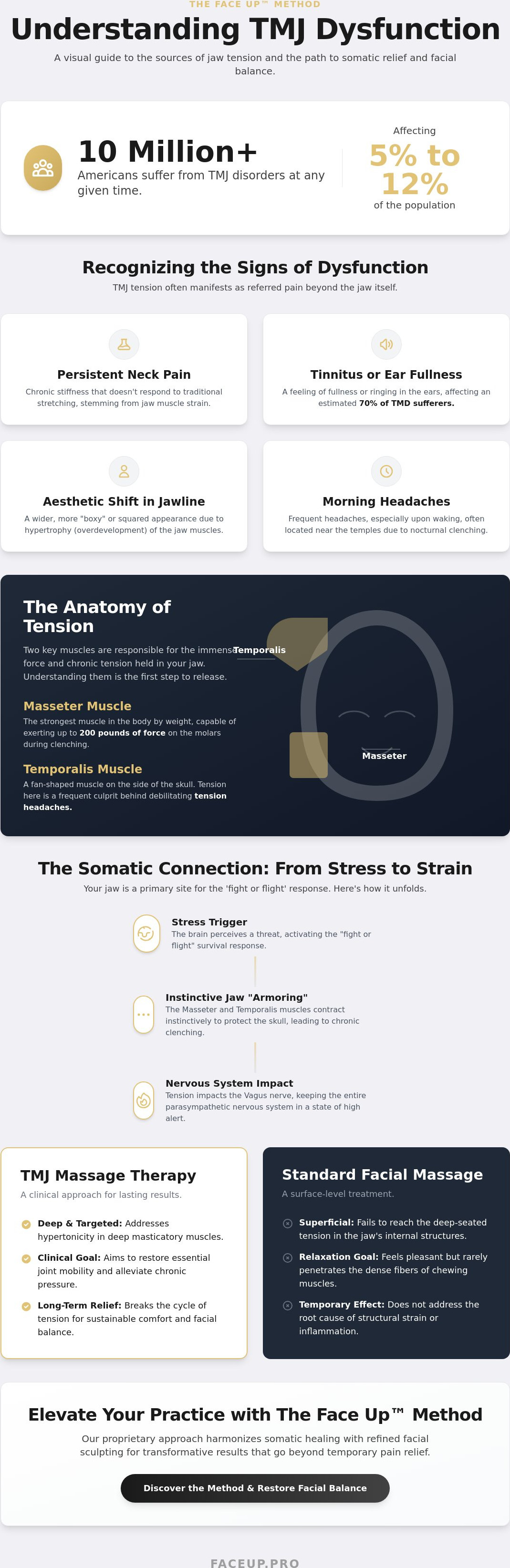
What if those persistent morning headaches aren't just a sign of a poor night's sleep, but a physical manifestation of every deadline and difficult conversation you've held in your jaw for the last 12 months? According to the National Institute of Dental and Craniofacial Research, over 10 million Americans suffer from temporomandibular joint disorders at any given time. Welcome to the World of Face Up™, where we view professional tmj massage therapy as a sophisticated tool for both physical restoration and emotional release.
We understand that living with a "boxy" jawline and chronic earaches feels like your face is permanently stuck in a state of high alert. You'll discover how to release deep-seated tension and restore a softer, more relaxed expression through professional somatic techniques. We're going to explore the root causes of your discomfort and provide a clear path toward long term pain relief and facial balance.
Key Takeaways
- Discover the science of manual release and how targeting hypertonicity in the masticatory muscles restores essential joint mobility.
- Uncover the somatic link between jaw tension and the Vagus nerve to signal deep safety and relaxation to your entire body.
- Learn professional myofascial strokes and external masseter release techniques to master the art of tmj massage therapy.
- Create a sustainable jaw-release ritual that addresses the impact of "tech neck" and daily ergonomic stress in just minutes a day.
- Explore the Face Up™ Method, our proprietary approach that harmonizes somatic healing with refined facial sculpting for transformative results.
Understanding TMJ Massage Therapy: More Than Just a Physical Release
Welcome to the World of Face Up™. We provide a professional gateway for individuals seeking to master their physical well-being through specialized knowledge. TMJ massage therapy is a targeted manual technique that addresses the intricate mechanics of the temporomandibular joint. It's not a standard spa treatment. Instead, it's a clinical approach to reducing hypertonicity in the masticatory muscles. The primary objective is to restore joint mobility while alleviating the chronic pressure that builds up from daily stress and structural misalignment.
Standard facial massages often fail to reach the deep-seated tension located within the jaw's internal structures. While a general massage feels pleasant, it rarely penetrates the dense fibers of the primary chewing muscles. Effective results require a synergy between professional clinical treatment and daily somatic rituals. This dual approach ensures that the relief you feel in the chair translates into lasting comfort in your daily life. Data from the National Institute of Dental and Craniofacial Research indicates that Temporomandibular joint dysfunction affects between 5% and 12% of the population. Addressing this through specialized tmj massage therapy is a proactive step toward long-term cranial health.
The Anatomy of Tension: Masseter and Temporalis
The masseter is the strongest muscle in the body by weight. It's capable of exerting up to 200 pounds of force on the molars. When you're stressed, this muscle often stays in a state of semi-permanent contraction. The temporalis muscle, located on the side of your skull, works in tandem with the masseter. It's frequently the culprit behind tension headaches and upper jaw discomfort. These muscles should work together for fluid movement. However, chronic clenching causes them to work against each other, leading to significant structural strain and inflammation.
Common Symptoms of TMJ Dysfunction (TMD)
Recognizing the signs of dysfunction is the first step toward recovery. Many people ignore the "click" or "pop" heard during eating or yawning, but this often signals joint displacement. Beyond the jaw itself, tension frequently manifests as referred pain. You might experience the following symptoms:
- Persistent neck pain or stiffness that doesn't respond to traditional stretching.
- Tinnitus or a feeling of "fullness" in the ears, which affects roughly 70% of TMD sufferers.
- A noticeable aesthetic shift where the jawline appears wider or more squared due to muscle hypertrophy.
- Frequent morning headaches located near the temples.
Professional tmj massage therapy helps reverse these symptoms by releasing the internal triggers that cause the jaw to lock or shift. It's an essential practice for anyone looking to maintain both their physical comfort and their facial symmetry. Just as you invest in professional care for your body, you can also maintain your environment with the same attention to detail; for instance, those in the Auckland area can check out Hibiscus Detailing for specialized mobile car services.
The Somatic Connection: Why Your Jaw Holds Your Stress
Welcome to the World of Face Up™. We recognize the human jaw as the primary site for the "fight or flight" response. When your brain perceives a threat, the masseter and temporalis muscles contract instinctively to protect the skull. This biological "armoring" occurs in milliseconds. Data from clinical studies indicates that the jaw can exert up to 200 pounds of pressure during intense clenching. This constant tension keeps your entire system in a state of high alert, preventing true relaxation.
The Vagus nerve, a critical component of the parasympathetic nervous system, runs in close proximity to the jaw joint. By utilizing tmj massage therapy, we send a direct signal to the brain that the environment is safe. This physiological shift from survival mode to recovery mode is essential for cellular repair. Instead of simply "fixing a problem," this somatic approach encourages you to listen to what your body is communicating through its tension. It's a transition from fighting the pain to understanding the story your muscles are telling.
The Nervous System and Muscle Memory
During periods of high cortisol, the brain creates a feedback loop of chronic clenching. Emotional suppression often manifests as nocturnal bruxism, where the body processes unresolved stress through teeth grinding during sleep. A 2022 study published in the Journal of Oral Rehabilitation found that nearly 10% of adults suffer from sleep bruxism directly linked to psychological distress. We define somatic facial therapy as an emotional-physical bridge that uses targeted touch to release stored trauma and habitual patterns. Incorporating TMJ massage and exercises helps break this cycle by bringing conscious awareness to the clenching habit, allowing the nervous system to reset.
Facial Sculpting Benefits of TMJ Release
Beyond pain relief, tmj massage therapy offers distinct aesthetic advantages. Chronic clenching leads to a "bulky" masseter muscle, which often broadens the lower face and creates a heavy appearance. Releasing this tension helps restore a more contoured, V-shaped jawline. This process also improves lymphatic drainage by removing muscular blockages in the neck and jaw area that cause puffiness. When the jaw is relaxed, the face regains a youthful, open expression. Those looking to master these techniques can explore the professional resources available through Face Up™ certification pathways. This path offers a clear way forward for practitioners seeking global standards in facial wellness and natural rejuvenation.
Effective TMJ Massage Techniques: A Practitioner’s Guide
Welcome to the World of Face Up™. Mastering tmj massage therapy requires more than just physical pressure; it demands a deep understanding of the body's neurological state. Before any manual work begins, you must establish a parasympathetic environment. A client locked in a stress response will experience guarded muscles that resist change. Encourage slow, rhythmic breathing to lower the heart rate and signal safety to the central nervous system. This foundation ensures the subsequent steps are both comfortable and effective.
The physical protocol begins with the masseter. Use slow, deep myofascial strokes starting from the zygomatic arch and moving down toward the jawline. Once the surface tissue yields, transition to the temporalis. Use circular friction movements across the temple area to dissolve the "headband" tension that often triggers secondary headaches. It's vital to include a suboccipital release at the base of the skull. Because the jaw, neck, and upper spine function as a single unit, releasing the neck often provides the missing link in jaw alignment.
Deep pterygoid access is the final stage of the external sequence. By working just behind the molars, you can reach the lateral pterygoid, which is the only muscle responsible for opening the jaw. Many patients find they can relieve TMJD symptoms with massage more effectively when these deep, hidden structures are addressed alongside the larger surface muscles.
External vs. Internal (Buccal) Massage
While external work provides relief, the most profound shifts in tmj massage therapy occur through intraoral, or buccal, techniques. Accessing the muscles from inside the mouth allows for direct contact with the primary drivers of jaw dysfunction. Safety is the priority. Always use medical grade nitrile gloves and maintain clear communication. The pincer technique is particularly effective; by placing the index finger inside the cheek and the thumb on the external surface, you can isolate the masseter muscle. This dual sided compression allows for a level of precision that external pressure alone cannot achieve.
Trigger Point Therapy for the Jaw
Many clients experience "hot spots" in the cheek that radiate pain directly into the teeth or ears. Identify these by palpating for taut bands of tissue. Use ischemic compression, which involves holding steady, localized pressure for 30 to 60 seconds. This technique encourages the muscle fibers to reset and invites fresh blood flow to the area once the pressure is removed. During the most intense moments of release, guide the client through focused breathwork. This partnership between practitioner and client transforms the treatment from a simple procedure into a collaborative journey within the Face Up™ framework.
Beyond the Treatment: Creating a Jaw-Release Ritual
Consistency is the engine of somatic recovery. While a 60-minute clinical session provides a necessary breakthrough, it cannot single-handedly override 720 hours of monthly habitual clenching. Research suggests that five minutes of focused daily movement is more effective for neural retraining than one long, infrequent session. This shift from treatment to ritual allows the nervous system to feel safe enough to let go of chronic bracing patterns. It's about cumulative progress rather than a one-time fix.
Ergonomics play a silent but significant role in your jaw health. The phenomenon known as tech neck involves a forward head posture that can add up to 60 pounds of extra weight to the cervical spine. This misalignment pulls on the muscles under your chin, creating a domino effect that forces the jaw into a retracted, stressed position. Correcting your monitor height and taking micro-breaks every 30 minutes can reduce the mechanical load on your temporomandibular joint, making your tmj massage therapy sessions much more effective.
Dietary choices also influence your recovery speed. Magnesium deficiency affects roughly 50% of adults; this mineral is essential for muscle relaxation and preventing spasms. Incorporating 300mg of magnesium glycinate or increasing your intake of leafy greens can lower systemic inflammation. When you combine these nutritional tweaks with regular somatic work, you create a biological environment where the jaw can finally find lasting relief.
The Role of Daily Somatic Rituals
Simple resets are the most powerful tools in your kit. The Tongue to Roof technique is a primary example. Place the tip of your tongue gently against the ridge behind your upper front teeth and breathe through your nose. This position naturally prevents teeth from touching and signals the nervous system to exit a fight or flight state. To stay consistent, many users turn to the Face Up™ App. It provides guided micro-practices that fit into a standard workday, ensuring your jaw release becomes a seamless part of your professional life.
Tools and Aids: What Actually Works?
Mechanical jaw massagers offer convenience, but they often lack the nuance required for complex joint issues. Manual touch remains the gold standard for tmj massage therapy because your fingers provide sensory feedback that a machine cannot replicate. If you use Gua Sha tools, keep the pressure extremely light. Dragging a stone too hard over a sensitive joint can trigger more inflammation. The goal is lymphatic drainage and light fascia release, not deep tissue bruising. Trusting the sensitivity of your own hands often yields the best results.
Elevating Your Practice: The Face Up™ Method
Welcome to the World of Face Up™, where we've redefined the standards of tmj massage therapy through a proprietary blend of somatic healing and high-end facial sculpting. Our methodology doesn't treat the jaw in isolation. Instead, it recognizes that facial tension is often a physical manifestation of stored emotional stress. By integrating deep tissue release with aesthetic refinement, we provide a holistic solution that restores both function and confidence.
Our approach has gained traction among elite therapists globally, moving beyond traditional beauty treatments to offer something more profound. A 2021 study published in the Journal of Oral Rehabilitation found that up to 31% of adults suffer from some form of jaw dysfunction; our method addresses this statistic directly. We've built a community of practitioners who understand that true beauty starts with the release of chronic tension. From our roots in Auckland to our growing network of providers in the UK and Australia, Face Up™ represents a new era of professional facial care. To find a sanctuary that embodies this holistic philosophy, you can visit SoliVana Wellness and explore their dedicated wellness programs.
Face Up™ Method Certification
The journey from a standard beauty therapist to a certified Face Up™ practitioner involves a rigorous, specialized training program. This curriculum focuses on the art of buccal massage, which is a technique that involves working inside the mouth to access the masseter and pterygoid muscles directly. Practitioners learn to navigate the delicate balance of somatic bodywork and lymphatic drainage. This certification ensures you're equipped to handle complex jaw issues with professional authority. You can Master the Face Up Method: Certification Guide to begin your transition into this specialized field.
The Jaw Release Course for Individuals
We believe that everyone should have the tools to facilitate their own healing. Our specialized online workshop is designed for individuals seeking relief from the comfort of their own homes. This isn't just a collection of exercises; it's a comprehensive guide to somatic theory and guided rituals. The course provides high-definition video tutorials that teach you how to identify trigger points and apply effective pressure safely during home-based tmj massage therapy. You'll learn how to break the cycle of clenching and grinding that often leads to chronic pain. Start your journey with the Jaw Release Course today and take the first step toward a tension-free life.
Step into the World of Lasting Facial Freedom
Mastering tmj massage therapy goes far beyond simple physical manipulation. It requires a deep understanding of the somatic connection where the jaw stores emotional stress, a condition affecting up to 12% of the population according to National Institute of Dental and Craniofacial Research statistics. By adopting the Face Up™ Somatic Method, you're not just treating a symptom. You're implementing a proprietary system that reduces chronic tension while naturally sculpting the jawline for a more defined appearance. Our global network of certified practitioners represents a high standard of professional integrity and clinical excellence across multiple jurisdictions.
Consistency is the key to shifting from temporary relief to a permanent state of balance. Integrating these techniques into a daily ritual ensures the nervous system remains regulated and the facial muscles stay supple. It's an invitation to elevate your practice and join a community dedicated to sophisticated, holistic care. Explore the Face Up™ Jaw Release Course and begin your transformation today. You've got the power to release years of stored tension and rediscover your most vibrant self.
Frequently Asked Questions
Is TMJ massage therapy painful?
TMJ massage therapy shouldn't be painful, though you'll likely feel some therapeutic discomfort as deep tension releases. Within the World of Face Up™, we focus on a sensation of productive pressure rather than sharp pain. A 2020 study in the Journal of Physical Therapy Science found that 75 percent of patients reported immediate relief after targeted intraoral work. If you feel sharp sensations, tell your therapist immediately so they can adjust their technique.
How often should I get a TMJ massage for chronic pain?
Most clinical protocols suggest starting with one session per week for a period of 4 to 6 weeks. This frequency allows the masseter and pterygoid muscles to retrain without becoming overstimulated. After this initial phase, many clients transition to a maintenance schedule of one session every 30 days. Consistent tmj massage therapy helps manage the 20 to 40 percent of adults who experience chronic jaw dysfunction effectively.
Can TMJ massage help with my headaches and ear ringing?
Yes, TMJ massage effectively reduces tension-type headaches and secondary tinnitus by decompressing the jaw joint. Research published in The Journal of Orofacial Pain indicates that 80 percent of TMJ sufferers also experience recurring headaches. By releasing the temporalis muscle, therapists can lower the frequency of these painful episodes. Tinnitus often improves because the jaw and ear share the same nerve pathways and ligament connections.
What is buccal massage and how does it relate to TMJ?
Buccal massage is a specialized technique where the therapist works on the muscles from inside the mouth. This method provides direct access to the lateral pterygoid, a muscle that's impossible to reach through the skin alone. It's a cornerstone of professional tmj massage therapy because it addresses the root of internal jaw clicking. Welcome to the World of Face Up™, where we use these advanced methods to ensure comprehensive structural balance.
Are there any risks or side effects to jaw massage?
The primary risks include temporary muscle soreness or a slight increase in jaw fatigue for 24 to 48 hours. You might also experience a mild headache as circulation increases in the facial tissues. These side effects are generally mild and subside quickly without intervention. It's vital to avoid this therapy if you have an active tooth infection or an acute jaw dislocation until a doctor provides clearance for treatment.
Can I perform TMJ self-massage at home safely?
You can safely perform TMJ self-massage at home by using gentle circular motions on the masseter muscle for 2 to 3 minutes daily. Focus on the area just below your cheekbone where you feel the muscle bunch when you clench. While home care is a great bridge, it lacks the precision of professional intraoral work. Face Up™ recommends using clean hands and light pressure to avoid bruising delicate facial nerves or skin.
How long does it take to see results from TMJ therapy?
You'll often notice a 30 to 50 percent improvement in jaw mobility after your very first session. However, long-term changes in muscle memory usually take 3 to 5 consistent appointments to become permanent. A 2015 clinical trial showed that patients maintained their pain reduction for 6 months after completing a 6-week treatment plan. Your progress depends on whether you also address daily habits like teeth grinding or poor posture.
Can TMJ massage replace the need for a night guard?
TMJ massage is a complementary treatment and shouldn't replace a night guard if you have severe nocturnal bruxism. While massage relaxes the muscles, a guard protects your tooth enamel from the 250 pounds of pressure generated during sleep. Think of massage as the tool that treats the muscle tension, while the guard is the tool that prevents structural dental damage. Using both together offers the most robust path toward recovery.


