

A skin-care plan can support more than your complexion. The mind-body connection in skincare means pairing appropriate dermatologic treatment with practices that help manage stress and support emotional well-being, such as mindfulness, breathwork, or somatic movement. These practices can complement treatment, but they aren’t a substitute for care of a skin condition.
If stress seems to coincide with changes in your skin, the connection can feel personal and frustrating. Emotional strain may influence skin symptoms, while visible or uncomfortable skin concerns can also affect mood and quality of life.
This article explains how stress and emotional health can intersect with skin, what research suggests about mindfulness and dermatologic quality of life, and how grounding practices can complement professional treatment. You’ll also learn how to approach holistic wellness practically, without expecting one routine to resolve every skin concern.
Key Takeaways
- Notice whether stress and skin symptoms seem to shift together, and bring that pattern into conversations about your skin care.
- Use relaxation practices such as mindfulness, breathwork, or somatic movement alongside, not instead of, appropriate dermatologic treatment.
- Understand how stress responses can affect the skin barrier, inflammation, and symptoms such as itching or breakouts.
- Consider emotional well-being and skin-related distress as part of quality of life, not just the appearance of your skin.
- Choose supportive practices that feel manageable and sustainable, and seek professional support for persistent skin concerns or harmful picking and pulling habits.
Combining dermatologic treatment with stress reduction
Dermatologic treatment addresses skin conditions, while stress-management practices support emotional well-being. Combining them can help you understand how stress, symptoms, and daily habits interact.
Mindfulness and Stress Management
Mindfulness means paying attention to present thoughts and sensations without immediately judging or reacting. If you notice stress before an eczema itch or acne flare, pausing can make emotional patterns easier to recognize. Meditation, controlled breathing, and positive affirmations offer practical ways to manage stress and support self-esteem.
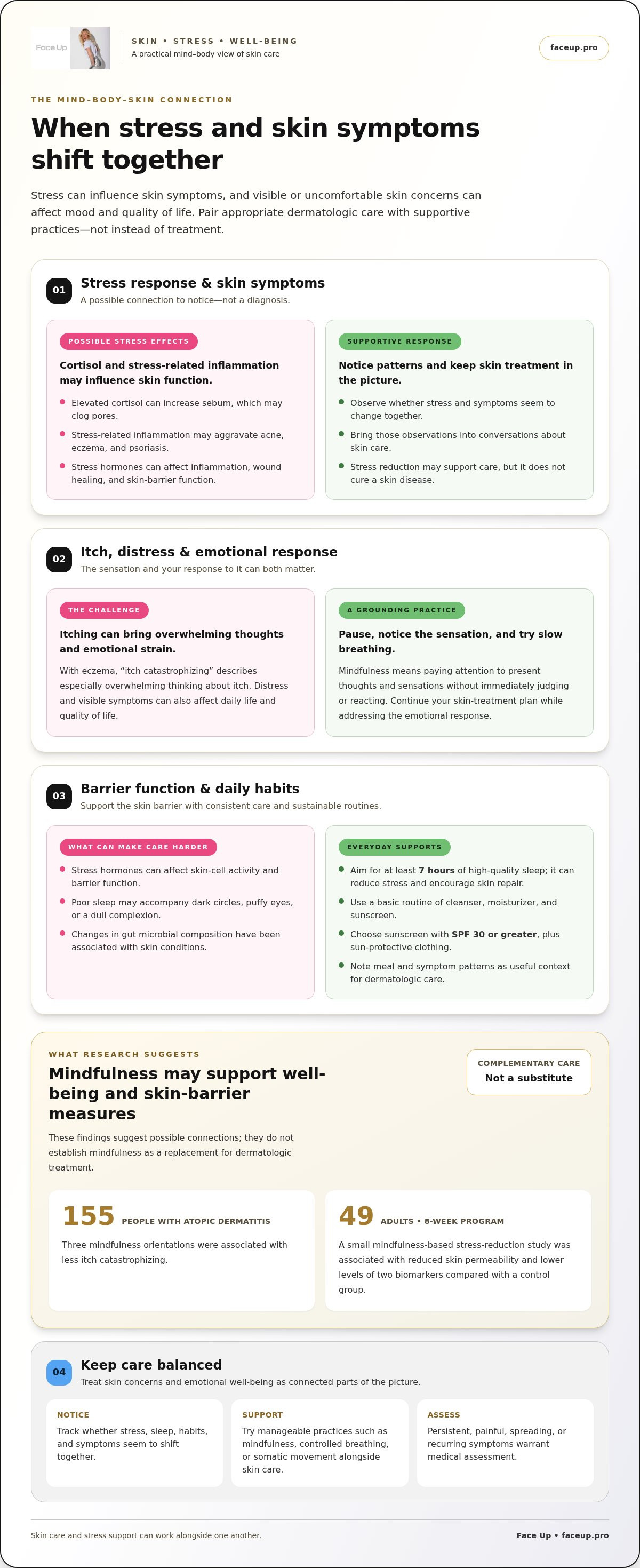
Can mindfulness or meditation improve stress-related skin symptoms? They may help manage stress and emotional well-being, which can support care for stress-related symptoms. In a study of 155 people with atopic dermatitis, three mindfulness orientations were associated with less itch catastrophizing, or less overwhelming thinking about itch.
Stress, Cortisol, and Skin Conditions
Stress is a body response that can involve cortisol, a hormone linked with inflammation and skin function. Elevated cortisol can increase sebum production, which may clog pores, while stress-related inflammation may aggravate acne, eczema, and psoriasis. These links can matter when symptoms change alongside emotional strain, but reducing stress does not cure a skin disease.
A small study explored mindfulness-based stress reduction and skin-barrier measures. Forty-nine adults took part in an 8-week program, which was associated with reduced skin permeability and lower levels of two biomarkers compared with a control group. This finding suggests a possible connection between stress reduction and barrier function; it does not establish mindfulness as a replacement for dermatologic treatment.
Eczema can also bring distress around itching. When you notice itch catastrophizing, try a grounding practice such as slow breathing, while continuing your skin-treatment plan. This addresses both the sensation and your emotional response.
Sleep, Diet, and Skin Health
Sleep, food, and gut health are everyday factors that can shape how skin looks and feels. Getting at least 7 hours of high-quality sleep can reduce stress and encourage skin repair. Poor sleep may also accompany dark circles, puffy eyes, or a dull complexion, so a regular sleep routine supports both mental well-being and skin care.
How do diet and gut health affect the skin? Gut microbes support digestion and immune function, while changes in gut microbial composition have been associated with skin conditions. A diet high in sugar and processed foods can contribute to acne and other skin issues. Noting patterns in meals and symptoms can add useful context to dermatologic care.
Ayurveda offers another perspective on caring for skin and stress. This five-thousand-year-old Indian system includes Abhyanga, an Ayurvedic oil massage intended to nourish the skin and balance the doshas. It can be understood as a traditional wellness practice, alongside, not instead of, treatment for acne, eczema, or psoriasis.
What’s the Science Behind the Body-Mind-Skin Connection?
Skin, nerves, and emotional responses interact through connected biological systems. Psychodermatology brings this relationship into care by considering skin symptoms and mental well-being together.
Psychodermatology and Mind-Skin Care
Psychodermatology considers psychological factors alongside treatment for skin conditions. Anxiety, distress, and visible symptoms can influence one another, affecting daily skin care and quality of life.
How can you tell whether a skin problem is stress-related or needs medical care? A flare during stressful periods may suggest a connection, but timing alone cannot identify the cause. Persistent, painful, spreading, or recurring symptoms warrant medical assessment.
For example, someone managing eczema might follow a clinician’s treatment plan while also addressing anxiety or distress related to itching. This recognizes the emotional impact without treating emotional care as a replacement for skin treatment.
Research on the gut-brain-skin axis also illustrates why psychodermatology looks beyond visible symptoms. It considers skin conditions alongside factors such as stress, immune responses, and changes in gut microbes.
Skin, Brain, and Central Nervous System
The skin and nervous system share an embryonic origin, and skin is richly innervated and connected to the brain and central nervous system. This helps explain why touch, discomfort, and emotional strain can be experienced together rather than as separate events.
Stress hormones, including cortisol and corticosterone, affect skin-cell proliferation, wound healing, inflammation, and aging. Stress-related cortisol can also slow hyaluronic acid production, contributing to moisture loss and a weakened skin barrier.
These connections don’t mean every symptom has an emotional cause. Instead, observing changes alongside anxiety, poor sleep, or a new skin-care ritual can give you a fuller picture to discuss during clinical care.
Skin Barriers and the Gut-Brain-Skin Axis
The skin barrier helps retain moisture and protect against environmental aggressors. A basic routine uses a cleanser, moisturizer, and sunscreen; sunscreen with SPF 30 or greater, plus sun-protective clothing, is recommended regardless of weather.
What skincare practices support the skin barrier and overall skin health? Choose products suited to your skin type and concerns. For eczema, use products that calm irritation and support skin integrity. Consistent cleansing, moisturizing, and sun protection provide a practical foundation.
What is the evidence for the gut-brain-skin axis? The concept was described at the University of Pennsylvania in the 1930s. A 2021 study noted links between skin diseases and changes in skin and gut microbiomes, while 2020 psoriasis research found an association with gut microbial composition and called for larger studies and uniform standards.
Those findings offer context, not a diagnosis based on eating habits or gut symptoms alone. A calming facial ritual can also support sensory awareness; explore somatic facial care as one way to bring mindful attention to the face.
Emotional-health practices alongside professional skincare
Skin care can address visible symptoms, while emotional-health practices support the person managing them. For example, pair a dermatologist’s eczema plan with journaling about itch, stress, and daily routines. This doesn’t assume emotions cause every flare. It makes room for skin health and the mental strain skin conditions can bring.
What are the risks of using skincare to treat stress-related skin conditions without seeing a dermatologist? Products alone can’t identify the cause of a rash or persistent inflammation, and relying on them may delay appropriate care. A product that doesn’t suit your skin may also cause irritation, making symptoms harder to interpret.
Mindfulness, meditation, journaling, and therapy offer different ways to process emotional strain. A brief journal entry, for example, can record a stressful event, the skin sensation that followed, and how you responded. Meditation can create space between an urge and an action, while therapy can help with distress that feels difficult to manage alone. These practices complement professional skin care rather than replace it.
Movement and breathing can make stress management part of an everyday routine. Yoga and controlled breathing are practices used to manage stress; pranayama is a traditional breathing practice. Because the body’s response to strain is part of the connection between stress and skin, a regular calming practice can support overall well-being without promising a particular complexion change.
What daily habits can support both mental well-being and healthy skin? Prioritize 7-9 hours of sleep each night, and aim for at least 30 minutes of moderate-intensity exercise most days of the week. A simple evening routine can combine wind-down time with regular skin care. These habits support mental health and skin health without turning every change in appearance into a source of pressure.
Stress can also influence behaviors that affect skin. It may contribute to overeating, smoking, or excessive alcohol consumption, while mindful eating and alternative emotional outlets can help interrupt those patterns. If emotional strain prompts skin picking or hair pulling, these behaviors can damage skin and contribute to scarring or prolonged skin issues. Seeking professional help addresses emotional and skin health.
A balanced approach keeps professional treatment and self-care in their proper roles. Someone with acne, for instance, can follow a treatment plan while using journaling or breathing exercises to recognize stress patterns. Positive thinking doesn’t mean ignoring difficult emotions. It means responding without blaming yourself for skin symptoms, supporting a more thoughtful, sustainable routine.
Mindfulness, distress, and dermatological quality of life
Skin conditions affect more than physical symptoms. They can shape confidence, relationships, and daily choices. A fuller view of skin health includes psychological distress and its effects on quality of life.
A study of 120 adult dermatology outpatients found that 33.4% reported clinically significant social anxiety. That finding shows why a skin connection can involve more than visible changes: anxiety can make social situations feel difficult, while symptoms can draw attention and affect confidence. The percentage describes that study group, not every person with a skin condition.
Psoriasis can also carry serious emotional distress. In a study of 127 people with psoriasis, 9.7% wished they were dead and 5.5% experienced suicidal ideation. These figures deserve care and context, not assumptions about everyone living with psoriasis. If thoughts of self-harm arise, tell a trusted person and seek professional help promptly.
Mindfulness offers one way to notice thoughts, sensations, and emotions without immediately reacting to them. A 2016 study found that higher mindful awareness was associated with reduced psychosocial distress and improved dermatological quality of life. Association does not establish that mindfulness alone caused those changes, but it supports including emotional well-being in conversations about skin care.
Try a brief meditation to observe the skin connection in daily life. Sit comfortably, notice your breath, and name sensations such as tightness, itch, or warmth without judging them. Then record the situation and feeling in a journal. For example, note whether a flare coincided with a stressful meeting or disrupted sleep. This practice supports awareness, not diagnosis.
Explore quality of life with practical questions: Does discomfort interrupt sleep? Have symptoms changed how you take part in social activities? Does your treatment routine feel manageable? Sharing specific examples helps a dermatology professional understand the physical and mental effects together. It also gives the appointment a clear focus beyond appearance.
Mindfulness isn’t a demand to stay positive or dismiss difficult emotions. It can create space to release self-blame and describe distress honestly. If shame, anxiety, or low mood affects daily life, mention it in care conversations. Psychological support can complement skin treatment. A somatic practice, such as gently noticing jaw tension while breathing, offers a concrete focus without promising a skin outcome.
How do stress and cortisol affect skin conditions like acne, eczema, and psoriasis?
Cortisol is part of the body’s stress response, and prolonged strain can affect skin inflammation and barrier function. Effects differ by condition: acne involves oil and clogged pores, while eczema and psoriasis involve inflammatory symptoms. Stress is one influence among several, so a flare alone doesn’t reveal its cause.
With acne, elevated cortisol can increase sebum production, making clogged pores and breakouts more likely. A 2003 Stanford study published in Archives of Dermatology found that college students experienced acne flare-ups during finals when they reported more stress. The example illustrates how pressure can coincide with visible changes, rather than proving that stress alone causes acne.
For eczema, stress can aggravate itching and inflammation, while damaged skin can add further emotional strain. A 2021 study noted that social deprivation and stress negatively affect atopic eczema symptoms, alongside factors such as air pollution and climate change. This broader picture matters: an eczema flare can reflect interacting influences, not simply a person’s emotional state.
Psychological stress can also worsen psoriasis. Stress-related inflammation may intensify symptoms, while discomfort and visible plaques can create further distress. Treating the skin condition and addressing stress are complementary considerations. Reducing stress is not expected to cure psoriasis or replace dermatologic treatment.
The mind-body connection in skincare is useful when it guides observation rather than self-diagnosis. Note when symptoms change, what was happening at the time, and whether sleep, routines, or emotional strain changed too. For example, you might record a stressful work deadline alongside new acne or increased eczema itching, then discuss the pattern during a medical appointment.
A 2019 review described a possible pathway linking depression and anxiety with acne, involving gut microbiota and intestinal permeability. The review offers context for how psychological strain and skin symptoms might interact, but it doesn’t establish that gut changes explain an individual breakout. Keeping that distinction clear helps avoid restrictive diets or unsupported self-treatment.
Stress management can complement care by addressing one factor that may aggravate symptoms. Mindfulness, controlled breathing, or somatic movement can help someone notice tension and respond with greater awareness. These practices don’t diagnose skin disease or replace prescribed treatment. For a guided facial practice, explore somatic facial care as one way to build mindful attention into a self-care routine.
Face Up: Face Up Method Certification
Face Up Method Certification is a next step for practitioners who want to learn Face Up’s approach to facial sculpting and somatic bodywork. It focuses on working with facial and neck tension through a non-invasive method, complementing, not replacing, dermatologic care for skin conditions.
For personal practice, the Face Up App Subscription and Jaw Release Course offer guided self-practice options. If you’re looking for hands-on facial work, explore the Face Up Sculpting Treatment. Each option serves a different need, from building practitioner skills to establishing a self-care ritual or experiencing facial sculpting.
Choose the format that fits your interest in somatic facial care, and continue medical treatment for diagnosed skin concerns. Visit faceup.pro to explore Face Up’s approach.
Choose a Mindful Next Step
Choose a next step you can sustain, such as pausing to notice facial tension or making room for a calming self-care ritual. The mind-body connection in skincare can help you consider emotional well-being alongside skin care, without making appearance the measure of progress.
For a guided somatic approach, Face Up Method Certification is designed for practitioners, while the Face Up App Subscription and Jaw Release Course support personal practice. These options offer different ways to explore facial sculpting and tension release in everyday life.
Keep dermatologic care central for diagnosed or persistent skin concerns, and use supportive practices to complement it. To discuss skincare and explore whether Face Up’s approach fits your interests, contact Face Up to discuss skincare.
Small, thoughtful steps can make self-care feel more connected and intentional.
Frequently Asked Questions
How Can You Embrace Holistic Wellness?
Think of skin care, emotional health, and everyday habits as parts of a holistic wellness routine. For example, notice whether facial tension appears during a demanding workday, then make a calming pause part of your evening. Keep medical treatment in place for diagnosed conditions, and choose wellness habits you can maintain without making skin appearance your only measure of progress.
How does Psychodermatology work?
Psychodermatology considers how emotional experiences and skin concerns may affect each other, bringing both into the care conversation. Prepare by noting which symptoms bother you most, how they affect daily activities, and what you want addressed. For instance, explain if worry about a visible flare makes you avoid social plans. That context connects skin care with the effect symptoms have on your life.
What can I do at home?
At home, use a skin-care moment to notice sensations without judging them. As you apply moisturizer, check whether your jaw is clenched or your forehead feels tense, then consciously soften those muscles. Keep products and steps consistent enough to observe how your skin responds. Avoid adding several new products at once, which can make it harder to tell what may be affecting your skin.
What does it do?
A somatic facial practice brings attention to sensations, movement, and tension in the face and neck. It may help you notice habits such as clenching your jaw while concentrating. That awareness can support a more intentional self-care routine, but it isn’t a diagnosis or treatment for acne, eczema, or psoriasis. Keep dermatologic care central for an ongoing skin condition.
What is the mind-body connection in skincare?
The mind-body connection in skincare describes how skin health and emotional well-being can influence each other. Stress may coincide with changes in symptoms, while a skin concern can affect confidence or social comfort. Emotions don’t explain every skin problem. The concept offers a way to consider physical symptoms, mental well-being, and appropriate skin care together when deciding what support may help.


