

What if the persistent tightness in your jaw isn't just a mechanical muscle knot, but a physical map of your nervous system's stored stress? It's a common frustration for many who find that traditional stretches or generic massage for neck and jaw tension only offer fleeting moments of peace. You likely recognize the cycle: the morning begins with a clenched jaw, followed by a heavy, sagging sensation in the lower face and a dull headache that lingers. It feels as though your face is holding onto a story you're ready to let go of.
We believe that true release requires a more sophisticated approach than invasive fillers or temporary fixes. In this guide, you'll discover how to dissolve chronic discomfort through the Face Up Method™, a proprietary blend of somatic bodywork and facial sculpting techniques. We will explore how to regulate your nervous system to achieve immediate physical relief and a naturally defined jawline. By understanding the profound body-mind connection, you can move beyond simple symptom management and enter a state of total, lasting release.
Key Takeaways
- Identify the "Tension Triangle" and discover why addressing the functional interdependence of the neck and jaw is the key to resolving chronic clicking and stiffness.
- Explore how the nervous system stores emotional stress in deep fascia and why specialized massage for neck and jaw tension provides a more profound release than mechanical stretching.
- Learn the benefits of manual sculptural techniques for achieving a naturally contoured jawline without the need for invasive fillers or Botox.
- Gain a practical 5-step self-care ritual designed to lengthen the cervical spine and release the trapezius for immediate daily relief.
- Discover how the Face Up Method™ and the Jaw Release Course offer a structured, professional path to lasting somatic liberation and facial rejuvenation.
The Bio-Mechanical Bridge: Why Neck and Jaw Tension Are Inseparable
The jaw doesn't exist in a vacuum. It is the apex of a complex structural network we call the "Tension Triangle." In this ecosystem, three primary muscle groups operate in a constant, delicate feedback loop:
- The Masseter: The primary driver of chewing and clenching.
- The Temporalis: The fan-shaped muscle on the side of the head that assists in jaw closure. Tension in this muscle can also impact the scalp environment; for those managing hair loss or scalp health, Synergy Trichology provides expert diagnosis and treatment.
- The Sternocleidomastoid (SCM): The thick muscle in the neck that stabilizes the head and jaw axis.
When one of these pillars falters, the entire system compensates. This is why a stiff neck often manifests as clicking in the jaw or a dull ache behind the eyes. In our 2026 digital environment, "tech-neck" has become a primary driver of this imbalance. As we lean forward to engage with screens, the cervical spine loses its natural curve, forcing the jaw muscles to tighten simply to keep the head upright. This chronic postural shift creates a bio-mechanical bridge where stress travels freely between the neck and the skull. We often see clients struggling with Temporomandibular joint dysfunction (TMD) who are surprised to learn their symptoms are rooted in the base of their neck.
At Face Up, we view this tension as a global body issue. Effective massage for neck and jaw tension must address the entire axis rather than focusing on a single localized joint. For those looking to address tension through professional one-on-one assisted stretching, click here to see how Stretchprotherapy can support your recovery. By treating the face and neck as a unified field, we can begin to unravel the deep-seated patterns that lead to chronic discomfort.
The Role of the Masseter: The Body’s Strongest Muscle
The masseter is a physiological marvel, capable of exerting hundreds of pounds of pressure during biting. However, this strength makes it a magnet for chronic clenching. When we're stressed, the nervous system signals the masseter to contract, leading to muscle hypertrophy. This overdevelopment doesn't just cause pain. It creates an aesthetic "heaviness" in the lower face, widening the jawline and masking the natural bone structure. The masseter serves as the primary anchor of facial tension, holding the weight of our daily stressors.
The SCM and Trapezius: The Support System of the Jaw
The Sternocleidomastoid (SCM) and the trapezius muscles are the unsung heroes of jaw stability. The SCM runs from behind the ear to the collarbone, acting as a stabilizer whenever you speak, chew, or turn your head. If these neck muscles are tight, they pull on the fascia surrounding the jaw, severely restricting mobility and causing that familiar "locked" sensation. This is the reason why massaging the jaw alone often fails to provide lasting relief; without releasing the cervical spine, the jaw remains tethered to a rigid support system. Specialized massage for neck and jaw tension must prioritize the lengthening of these lateral neck muscles to unlock the face.
Somatic Release: The Emotional Architecture of Facial Tension
The jaw is often the first place the body registers a perceived threat. When the "fight or flight" response is triggered, the masseter and temporalis muscles contract instinctively as a primal survival mechanism designed to protect the skull. In our modern world, these threats are rarely physical; they are deadlines, social anxieties, and unresolved emotions. Over time, the body "remembers" these stressors, creating a chronic state of contraction known as somatic holding. This is why many people find that their jaw feels locked even when they aren't consciously stressed.
Traditional massage for neck and jaw tension often focuses solely on the physical muscle fibers, but the Face Up Method™ approaches this from a nervous system perspective. We recognize that jaw tightness is frequently linked to suppressed expression. When we hold back words or "bite our tongue," the tension radiates through the facial fascia. By addressing the emotional architecture of the face, we can unlock a deeper level of physical freedom. This holistic approach ensures that we aren't just treating a symptom, but rather the underlying somatic pattern.
The Vagus Nerve and Facial Relaxation
The vagus nerve is the primary component of the parasympathetic nervous system, regulating our "rest and digest" state. It shares a profound connection with the cranial nerves that control the muscles of the face and neck. When we perform deep tissue somatic work, we aren't just kneading muscle; we're sending a direct signal to the brain that it's safe to let go. This process triggers a shift out of sympathetic dominance, allowing the body to heal. As the tension melts, many people experience a significant psychological relief, often described as removing a "mask" they didn't know they were wearing. While self-care stretching exercises are helpful for daily maintenance, professional somatic bodywork facilitates a more profound nervous system reset.
Breaking the Cycle of Bruxism and Stress
Bruxism, or night-time teeth grinding, is rarely just a dental issue. It's a somatic symptom of daytime stress that hasn't been processed. The brain continues to "work through" tension while we sleep, leading to worn enamel and morning headaches. Awareness-based massage works by bringing conscious attention to these unconscious patterns. Instead of providing mere symptomatic relief, our goal is root-cause somatic healing. We teach the brain to stop the clenching response before it starts. This transition from reactive to proactive care is a cornerstone of our philosophy. For those ready to begin this journey at home, our Jaw Release Course offers a structured path to somatic liberation and long-term comfort.
Professional Techniques for Deep Neck and Jaw Liberation
While home care provides a foundation for relief, professional interventions offer a level of precision that mechanical tools simply cannot replicate. A skilled practitioner begins by assessing your unique tension patterns, looking for facial asymmetries and postural deviations that signal where the nervous system is "holding." This diagnostic phase ensures the treatment is tailored to your specific bio-mechanical needs. We prioritize sculptural face lifting, a sophisticated technique that goes beyond surface relaxation to restructure the facial architecture by targeting the deepest tissue layers.
Buccal Massage: Releasing Tension from the Inside Out
Buccal massage, or intra-oral work, is the definitive solution for reaching the deep fibers of the masseter muscle. By accessing the muscle from inside the mouth, a therapist can apply bilateral pressure that is impossible to achieve through external work alone. This technique doesn't just relieve physical pain; it offers a significant aesthetic benefit. By releasing the chronic clenching that causes muscle hypertrophy, the face loses the "heavy" look in the lower third, allowing for a more refined, sculpted jawline naturally. Buccal massage stands as the most effective non-invasive TMJ therapy because it addresses the muscle at its most foundational, structural level.
Somatic Bodywork and Myofascial Release
Standard massage often focuses on the temporary relaxation of muscle groups, but somatic myofascial release targets the connective tissue that binds them. This approach integrates conscious breathwork with manual manipulation to encourage the nervous system to downregulate. It's an active partnership between the practitioner and the client, where the goal is to "unlearn" tension. The long-term benefits of regular tmj massage therapy include restored range of motion, improved lymphatic drainage, and a significant reduction in chronic tension headaches. This integrated path ensures that the body doesn't just feel better temporarily, but actually moves toward a state of permanent balance.
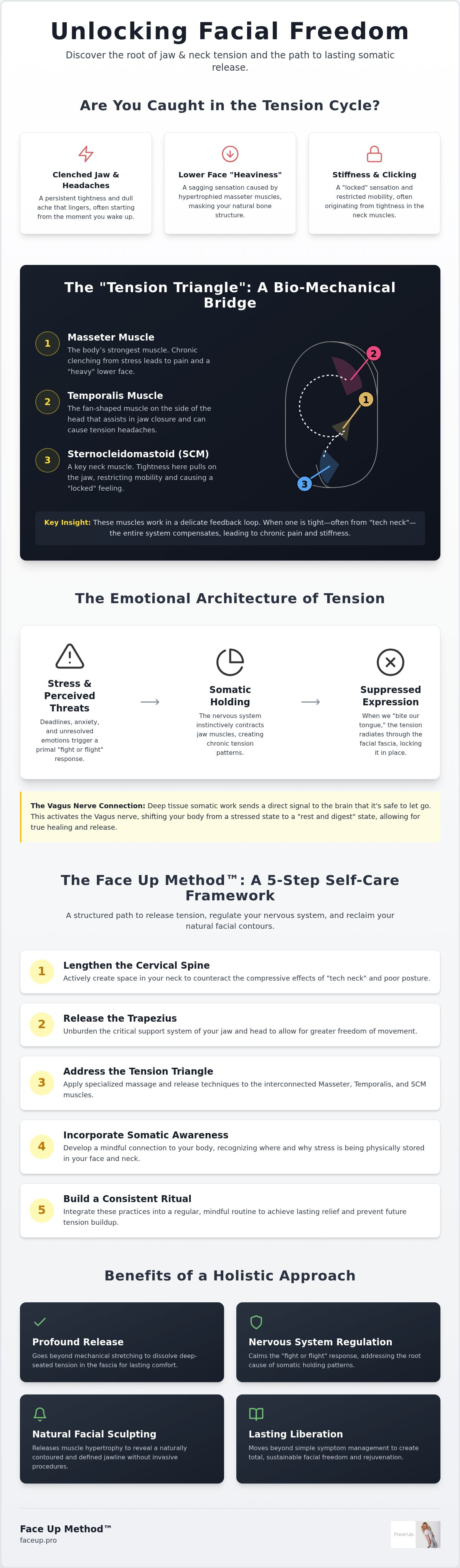
A 5-Step Self-Care Ritual for Daily Jaw Release
- Step 1: Neck Lengthening. Place your fingertips at the base of your skull and gently stroke downward along the Sternocleidomastoid (SCM) muscle toward the collarbone. Imagine creating space between your ears and your shoulders.
- Step 2: External Masseter Kneading. Locate the angle of your jaw. Using small, circular motions with your knuckles, find the "trigger points" where tension feels most concentrated. Apply firm but respectful pressure.
- Step 3: Temporal Smoothing. Place your palms on your temples. Slowly sweep your hands upward and outward toward the hairline, releasing the upper connection of the jaw muscles.
- Step 4: Intra-oral Awareness. With a clean thumb, reach inside your cheek to find the masseter muscle from the inside. Gently pinch the muscle between your thumb and outside fingers, breathing into the sensation of the tissue softening.
- Step 5: Integration and Breath. Close your eyes and let your tongue rest on the floor of your mouth. Exhale deeply, visualizing the last remnants of tension draining away into the ground.
Using the Right Support Tools
While your hands are your most intuitive instruments, incorporating a specialized tmj massage tool can enhance the depth of your ritual. These tools allow for consistent, targeted pressure on the deep fascia that fingers sometimes struggle to reach. We recommend using a high-quality facial oil to reduce friction and improve the sensory experience. Remember that in somatic work, consistency always beats intensity. Soft, repetitive movements are more effective at "convincing" the nervous system to relax than aggressive, painful pressure.
Morning vs. Evening Rituals
A morning ritual is about activation. It helps release the overnight clenching many experience during sleep, waking up the facial muscles and improving circulation for a refreshed appearance. In contrast, an evening ritual focuses on decompression. It allows you to shed the day's accumulated stress, ensuring the "fight or flight" response is quieted before you go to bed. Even if you only have five minutes, integrating these steps into your schedule can yield significant results. For those who prefer a guided experience, the Face Up App provides structured sessions to keep you on track. Enroll in the Jaw Release Course for a comprehensive, guided somatic experience.
The Jaw Release Course: Mastery of Self-Care
Generic video tutorials often miss the nuance of nervous system regulation, focusing only on mechanical stretching. The Jaw Release Course provides a structured, high-standard curriculum that includes deep somatic theory and step-by-step video guidance. It's designed to help individuals move from a state of chronic clenching to one of total facial freedom. Many of our students report that after years of trying various forms of massage for neck and jaw tension, this course was the first time they felt a permanent shift in their comfort levels. It’s an investment in a future free from the "mask" of stress, providing tools that empower you to manage your own well-being.
Become a Certified Face Up Practitioner
Somatic facial therapy has emerged as a rapidly growing niche within the holistic wellness industry. For professionals looking to elevate their practice, our facial sculpting certification offers the gold standard in training. The curriculum covers everything from advanced buccal techniques to the complexities of nervous system regulation and fascia health. Upon completion, graduates join our global directory of certified providers, connecting them with a community of high-standard practitioners dedicated to excellence. This certification empowers you to offer transformative results that go far beyond traditional aesthetics, positioning you as a leader in the specialized landscape of somatic bodywork. It’s an opportunity to join a global movement that values proactive management and professional integrity.
Step into a Future of Lasting Facial Freedom
Unlocking the deep-seated stress in your face is more than a physical adjustment; it's a profound shift in how you relate to your body. By addressing the "Tension Triangle" through a combination of professional techniques and daily rituals, you move beyond temporary fixes toward a state of total release. Whether you are seeking a more defined jawline or relief from chronic discomfort, the integration of somatic awareness ensures that your results are both aesthetic and functional. Using specialized massage for neck and jaw tension allows you to reclaim your natural expression and quiet the nervous system's defensive response.
Face Up leads this global movement with a Red Dot Design Award-winning methodology that has empowered over 1,000 certified practitioners across the globe. Our holistic, non-invasive approach provides a clear path forward for those ready to move past invasive procedures and embrace true somatic healing. You don't have to carry the weight of daily stress in your jaw any longer. Begin your journey with the Jaw Release Course today and discover the transformative power of the Face Up Method™. A lighter, more vibrant version of yourself is within reach.
Frequently Asked Questions
Can massage for neck and jaw tension really help with headaches?
Targeted massage for neck and jaw tension is highly effective for alleviating tension-type headaches. By releasing the masseter and temporalis muscles, you address the primary sources of referred pain that often travel to the temples or behind the eyes. This somatic approach calms the nervous system, reducing the frequency of stress-induced migraines. It's a proactive way to manage discomfort without relying on temporary fixes, providing a long-term solution for chronic cranial pressure.
How often should I perform jaw release exercises to see results?
Consistency is the cornerstone of somatic healing. We recommend performing short, five-minute release rituals daily, ideally in the morning and evening. This regular cadence helps reprogram the nervous system to stop clenching instinctively. While some individuals experience immediate relief after a single session, lasting structural changes typically become visible after three to four weeks of dedicated daily practice. It's about steady progression rather than intensity when using massage for neck and jaw tension.
Is buccal massage painful if my jaw is very tight?
Buccal massage may feel intense, especially during the first few sessions, but it shouldn't be sharp or unbearable. A certified practitioner prioritizes your comfort, adjusting pressure based on the feedback from your tissues. This intra-oral technique allows for a deep, bilateral release of the masseter muscle that you can't achieve through external work alone. As the fascia softens and chronic tension dissolves, the sensation transitions from a deep ache to a profound feeling of lightness.
Can I use a jaw massager tool instead of manual massage?
A specialized jaw massager tool is an excellent supplement for maintaining tissue health between professional sessions. However, it doesn't fully replace the precision and sensory feedback of manual therapy. Your hands, or those of a professional, can detect subtle knots and adjust pressure in real-time. Tools are best used to enhance your daily ritual, providing consistent pressure to the deep fascia while you focus on conscious breathwork and somatic integration within the proprietary ecosystem.
What is the difference between TMJ and TMD?
The term TMJ refers specifically to the temporomandibular joint, which is the physical hinge connecting your jaw to your skull. TMD, or temporomandibular disorder, refers to the actual condition or set of symptoms involving pain and dysfunction in that joint and the surrounding muscles. Understanding this distinction is vital for an accurate assessment. Our somatic approach focuses on the muscular and nervous system patterns that contribute to TMD, offering a path to functional recovery and lasting relief.
How does the Face Up Method™ differ from a standard facial?
A standard facial typically focuses on the skin's surface and aesthetic appearance through topical products. In contrast, the Face Up Method™ is a deep, science-based somatic therapy that targets the underlying muscles, fascia, and nervous system. We use advanced sculpting and buccal techniques to release structural tension and promote lymphatic drainage. This proprietary approach doesn't just improve your complexion; it restructures the facial architecture and fosters a deep state of internal calm and global readiness.
Can releasing jaw tension change the shape of my face?
Yes, releasing chronic tension can lead to a more defined and sculpted jawline naturally. When the masseter muscle is constantly clenched, it undergoes hypertrophy, which can create a wider or heavier appearance in the lower face. By using the Face Up Method™ to relax these muscles, you reduce this bulk and allow your natural bone structure to emerge. This aesthetic refinement is a direct result of improved muscle health and a regulated, calm nervous system.
Is somatic bodywork safe for people with dental implants?
Somatic bodywork is generally safe for individuals with dental implants, as the focus is on the surrounding musculature and fascia rather than the teeth themselves. However, it's essential to avoid direct, heavy pressure on the specific site of the implant, especially if the procedure was recent. We always recommend consulting with your dental professional before beginning any new intra-oral work. Our certified practitioners are trained to adapt their techniques to accommodate your unique dental history and structural needs.


