
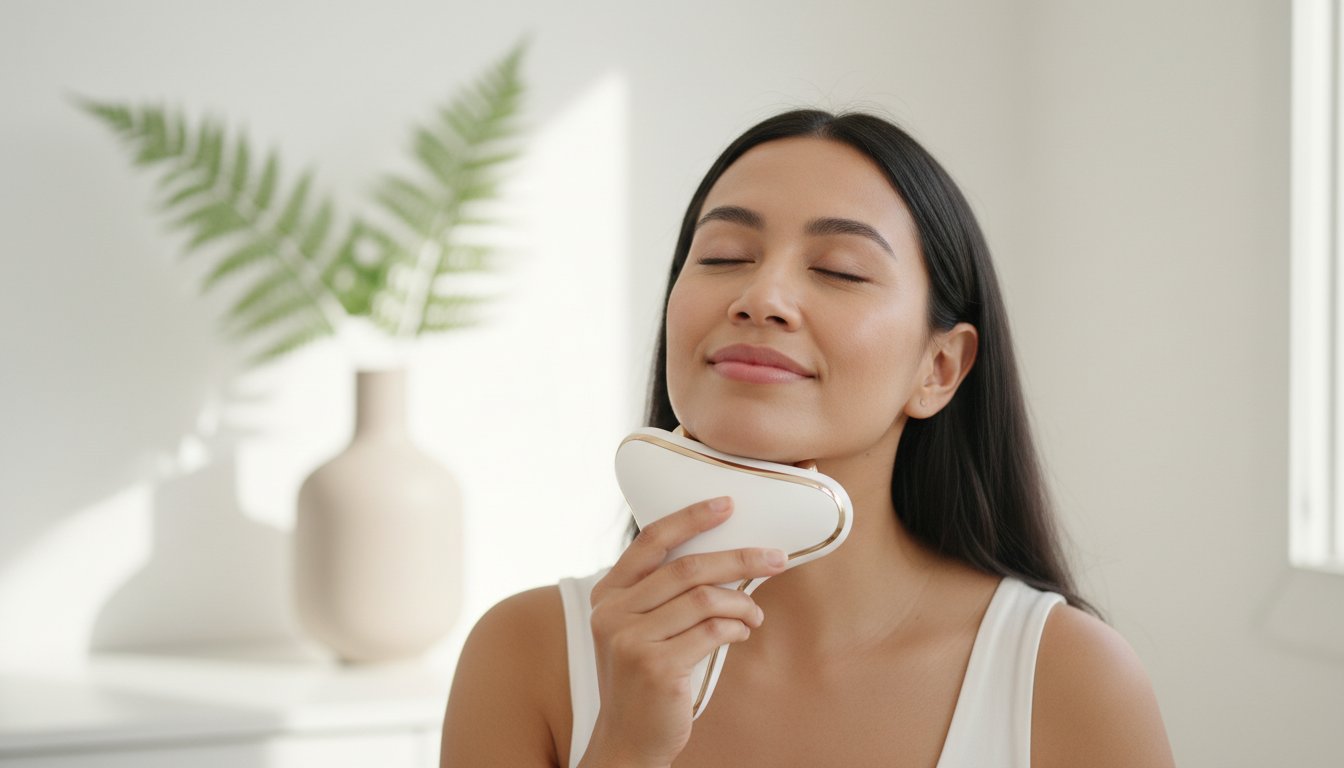
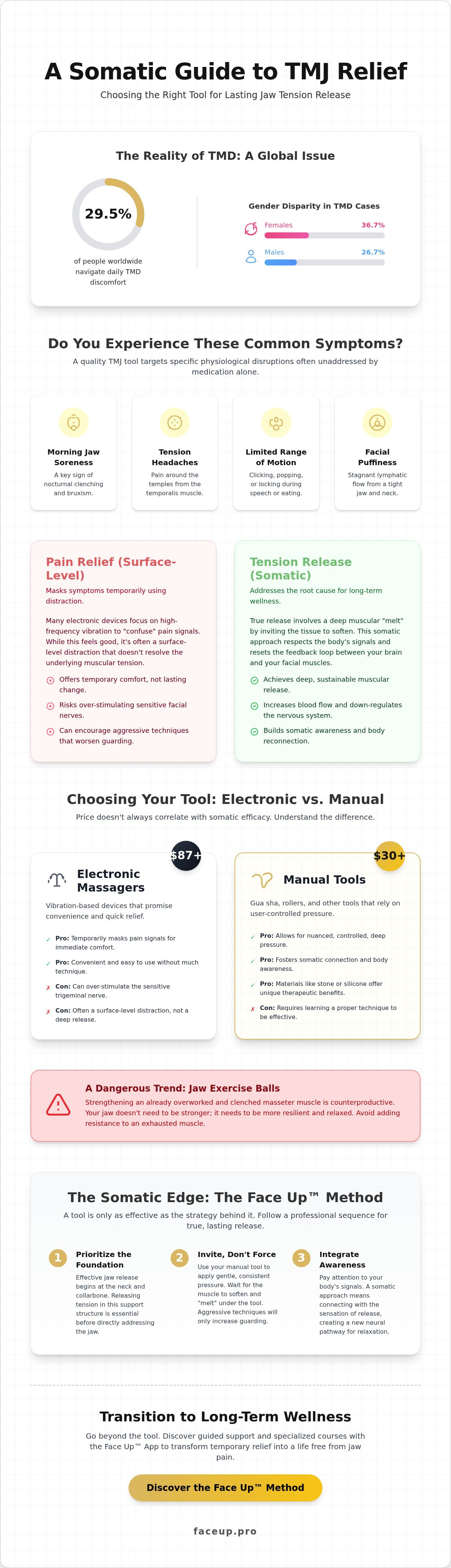
Nearly 29.5 percent of people worldwide currently navigate the daily discomfort of Temporomandibular Disorders (TMDs). If you're among the 36.7 percent of females or 26.7 percent of males facing this reality, you know that waking up with a locked jaw or a stress-induced headache can derail your entire day. You've likely searched for a tmj massage tool that promises instant relief; you want a natural way to manage tension without resorting to invasive dental procedures. It's frustrating to feel like your facial muscles are permanently clenched, and it's even harder when you don't know which device actually works.
Welcome to the World of Face Up™, where we believe a tool is only as effective as the somatic awareness of the person holding it. While options like the $87.64 patented vibration devices or the $30.59 heated massagers offer temporary comfort, lasting relief requires a deeper connection to your body's signals. This guide reveals the most effective tools on the market and explains why a somatic approach is the secret to releasing deep-seated jaw tension for good. We'll compare the latest technology and show you how to integrate these tools into the Face Up™ methodology for a relaxed, pain-free life.
Key Takeaways
- Identify how a specialized tmj massage tool works to increase blood flow and down-regulate the nervous system for immediate comfort.
- Compare the efficacy of electronic massagers and manual rollers while understanding why material choices like silicone or stone impact your results.
- Learn why the somatic Face Up Method is essential to prevent aggressive techniques from accidentally increasing your jaw tension.
- Follow a professional sequence that prioritizes the neck and collarbone to ensure a truly effective path to lasting jaw release.
- Discover how to transition from temporary relief to long-term wellness through the guided support of the Face Up™ App and specialized courses.
What is a TMJ Massage Tool and Do You Really Need One?
A tmj massage tool is a specialized instrument designed to target and release the masseter and temporalis muscles. These are the primary drivers of your jaw movement and, unfortunately, the primary sites of chronic tension. The fundamental goal of using such a tool is to increase localized blood flow while down-regulating a stressed nervous system. For the nearly 29.5 percent of the global population navigating Temporomandibular joint dysfunction, manual or tool-assisted intervention is often the only way to break a cycle of constant clenching. When your muscles stay in a state of "guarding" for months or years, they lose the ability to relax on their own. They need a physical signal to let go.
In the World of Face Up™, we view a tmj massage tool as more than a gadget; it's a gateway to somatic reconnection. Most traditional guides treat the jaw as an isolated joint. We understand that your jaw is the anchor point for a complex chain of muscles extending into your neck and shoulders. If you've noticed that your jaw pain spikes when your shoulders are tight, you've already experienced this connection. Using a tool allows you to apply consistent, controlled pressure that your fingers might not be able to sustain, helping to reset the feedback loop between your brain and your face.
Common Symptoms a TMJ Tool Can Address
If you're unsure whether a tool is right for you, consider your physical patterns. A high-quality tool targets specific physiological disruptions that often go unaddressed by medication alone:
- Morning jaw soreness: This is a clear sign of nocturnal bruxism, where the masseter muscle works overtime while you sleep.
- Tension headaches: Pain that wraps around the temples is often actually referred tension from the temporalis muscle.
- Limited range of motion: Clicking or "locking" during speech and eating suggests the joint is being pulled out of alignment by tight connective tissue.
- Facial puffiness: Stagnant lymphatic flow often clusters around a tight jaw, leading to a heavy or "blocked" sensation in the lower face.
The Difference Between Pain Relief and Tension Release
Comparing Popular TMJ Massage Tools: Pros, Cons, and Efficacy
Selecting the right tmj massage tool requires an understanding of how different materials and technologies interact with your nervous system. In a marketplace where a patented vibration tool currently sells for $87.64 and simpler heated devices are available for $30.59 as of May 2026, the price point doesn't always correlate with somatic efficacy. The material of your tool dictates the "sensory conversation" you have with your tissue. Medical-grade silicone offers a gentle, grippy texture that mimics human touch. Stainless steel provides a cooling, firm surface ideal for reducing inflammation. Natural stones like jade or rose quartz are popular for their weight and temperature retention, though they require careful sanitization if used near the mouth.
One dangerous trend in the current wellness market is the "Jaw Exercise Ball." Many products claim that strengthening the jaw is the cure for pain. However, since clenching and chronic stress are primary causes of temporomandibular disorders, adding more resistance to an already overworked masseter muscle is often counterproductive. You don't need a stronger jaw; you need a more resilient, relaxed one. For a deeper look at how to approach this without causing further harm, read our TMJ massage therapy guide.
Electronic vs. Manual Jaw Massagers
Electronic tools often promise convenience through high-frequency vibration. While these can temporarily "confuse" the nerves to stop pain signals, they carry a risk of over-stimulating the sensitive trigeminal nerve. Manual tools, such as Gua Sha stones or textured rollers, offer superior feedback. They allow you to feel exactly where the tissue is knotted and where it begins to release. In the World of Face Up™, we maintain that your hands are the most sophisticated tmj massage tool available. They provide an immediate, two-way communication channel that no battery-powered device can replicate.
Specialised Tools: TMJ Wraps and Cork Rollers
Thermal therapy plays a vital role in managing flare-ups. TMJ wraps that provide moist heat are excellent for chronic stiffness, while cold therapy is reserved for acute inflammation. For those needing to reach the lateral pterygoid muscle, specialized cork rollers or intra-oral tools are effective, though they require a steady hand and somatic awareness. Safety is paramount here. You must avoid the carotid artery and the delicate facial nerves. If you're ready to master these techniques with professional guidance, exploring a somatic bodywork session can help you navigate these sensitive areas safely and effectively.
The Somatic Edge: Why Your Tool Needs a Strategy
Most people approach jaw pain with a "fix it" mentality. They buy a tmj massage tool and apply heavy pressure, hoping to crush the tension away. This aggressive intent often backfires by triggering the body's natural defense mechanisms. Instead of releasing, the muscle fibers contract further to protect the joint from perceived trauma. Success requires a shift in how you interact with your own anatomy. Somatic jaw release is a process of nervous system regulation rather than mechanical friction. It's about changing the signal your brain sends to your muscles.
This is where the Face Up Method of somatic facial sculpting changes the narrative. By incorporating TMJ self-care techniques like mindful breathwork, you invite the jaw to soften. You aren't forcing a change; you're creating the safety required for the change to happen naturally. When you use your tmj massage tool with a soft, rhythmic touch, you're communicating directly with your nervous system. This approach ensures that your efforts result in lasting ease rather than a temporary pause in a cycle of pain.
The Nervous System Connection
The Vagus nerve plays a central role in your ability to relax. It acts as the primary highway for the parasympathetic nervous system, influencing everything from your heart rate to the tension in your face. When you provide "safe" touch signals to the brain, you effectively tell the clenching reflex to stand down. Face Up™ rituals focus heavily on the "internal world" of the practitioner. We teach you to feel the release from the inside out, ensuring that your brain perceives the massage as a nurturing act rather than an invasive one.
Emotional Release Through Jaw Work
The jaw often acts as a biological storage site for unspoken stress and repressed frustration. It's the place where we "grit our teeth" to get through a difficult day. When deep tension finally begins to "melt" through somatic work, don't be surprised if you experience an emotional shift. This might manifest as a sudden sense of calm or the release of long-held anxiety. Transitioning from a "fix-it" mindset to a "nurture" mindset allows you to treat your body as a partner in your healing journey. This holistic perspective is what separates a routine massage from a life-changing somatic experience.
Step-by-Step: How to Use Your TMJ Tool the Face Up™ Way
To get the most from your tmj massage tool, you must move beyond the "find a knot and press hard" approach. In the World of Face Up™, we prioritize a specific sequence that respects the body's natural drainage and nervous system pathways. Before you even touch your face, check your posture. Sit tall with your feet flat on the floor; take three deep breaths into your belly. This simple act signals your body that it's safe to release. If you start while hunched over a laptop, your nervous system will remain in a protective state, making any progress temporary at best.
Our "less is more" rule is vital for success. Facial muscles are far more delicate than the muscles in your legs or back. If you use a 10 out of 10 pressure, you'll likely cause bruising or defensive tightening. Aim for a 3 or 4 on a scale of 10. You want to feel the tool, but it should never be painful. After your session, drink 250ml of water and move your jaw in gentle circles to integrate the release. This helps the fascia settle into its new, relaxed state.
The Warm-Up: Releasing the Neck and Shoulders
A tight neck makes jaw release nearly impossible because these muscle groups are interconnected through the fascia. If your sternocleidomastoid, the large muscle on the side of your neck, is rigid, it pulls directly on the jaw joint. Start by performing gentle side-to-side neck tilts for 60 seconds. Once you feel a slight softening, use your tmj massage tool to gently stroke from the base of your ear down toward your collarbone. This opens the "drainage pathways." It ensures that any fluid or metabolic waste released from the jaw area has a clear exit route, reducing post-massage puffiness.
Targeting the Masseter and Temporalis
Locate the masseter by clenching your teeth slightly. It's the hard muscle that pops out near your jaw angle. Place your tool there, but don't press aggressively. Instead, wait for the "melt" to occur. Use slow, mindful strokes that move upward toward the ears. For the temporalis, move to the area above your temples. Instead of rapid rubbing, use the tool to create small, stationary circles. Keep your tongue resting gently on the roof of your mouth, just behind your front teeth. This "intra-oral" awareness prevents you from re-clenching while you work. If you're ready to master these movements through a structured, professional program, our Jaw Release Course provides the comprehensive guidance you need to succeed.
Welcome to the World of Face Up™: Beyond the Tool
Owning a tmj massage tool is a proactive step toward wellness, but the device itself is only the beginning of your journey. Founder Olga Newman envisions a world where natural rejuvenation and jaw health are achieved through somatic bodywork rather than invasive procedures or temporary fixes. This philosophy moves beyond the mechanical action of a device and into the territory of nervous system regulation. By entering the World of Face Up™, you're choosing a path of integrity and professional-grade self-care that respects your body's complex anatomy. It's about moving from a state of constant "guarding" to a state of expressive freedom.
While a tool provides the physical leverage, our methodology provides the strategy. For those who want to understand the "why" behind their clenching, our Jaw Release Course offers a deep dive into the emotional and physical roots of tension. If you're a professional looking to bring these results to your own clients, our Facial Sculpting Certification allows you to master the Face Up™ method in 2026 and join our global directory of experts. We don't just provide solutions; we build a community of practitioners dedicated to high standards of facial health.
The Power of Daily Rituals
Consistency is the secret to lasting physiological change. In the World of Face Up™, we've found that 10 minutes of somatic work every day is far more effective than a single 60-minute session once a month. The Face Up™ App serves as your daily digital guide, providing the rhythmic flow needed to make your tmj massage tool truly effective. It creates a "Professional Guide" experience in the comfort of your home, ensuring you never feel lost in the process. Members of our community often report a visible reduction in facial puffiness and a significant decrease in morning jaw soreness within the first 14 days of using the app's guided rituals.
Join the Global Somatic Movement
There is a profound difference between a standard aesthetic facial and a Face Up™ somatic sculpting session. While one focuses on the surface, the other addresses the deep muscular architecture of the face. You can find a certified Face Up™ practitioner in your city through our directory to experience the method firsthand. Whether you're seeking a professional Somatic Bodywork Session or looking to manage your tension independently, we're here to facilitate your progress. Your path to a relaxed, pain-free jaw is waiting. Start your journey with the Jaw Release Course today and discover the power of a truly somatic approach.
Embrace a Future of Lasting Jaw Freedom
Lasting relief from jaw tension requires more than just a high-tech gadget; it demands a shift in how you communicate with your nervous system. You've learned that while a tmj massage tool can provide physical leverage, the Face Up™ Method ensures that this intervention leads to deep, somatic release rather than defensive tightening. By prioritizing a proper sequence and gentle pressure, you invite your body to let go of the stress it has stored for years. Success isn't found in aggressive force, but in the rhythmic "gateway" experience of mindful touch.
The World of Face Up™ offers a clear path forward through the expertise of founder Olga Newman, a specialist in somatic bodywork. Our proprietary, trademarked approach is supported by a global community of certified practitioners across Australia, New Zealand, and beyond. As of May 2026, this method remains at the forefront of natural jaw care. Whether you're among the 29.5 percent of people navigating TMD or seeking professional-grade rejuvenation, the right strategy makes all the difference. You don't have to navigate this journey alone.
Join the Jaw Release Course and free your face today. You deserve to wake up every morning with a relaxed, pain-free jaw and the confidence that comes from true somatic harmony.
Frequently Asked Questions
Can a TMJ massage tool make my pain worse?
Yes, a tool can increase your pain if you apply excessive force or use an aggressive technique. When you press too hard, your muscles trigger a "guarding reflex" and contract to protect the joint. This is why the Face Up™ method emphasizes a light, somatic touch. If your body perceives the tool as a threat, it'll respond with more tension rather than less.
How often should I use a jaw massager for best results?
You'll see the best results by using your massager for 10 minutes every day. Consistency is more important than duration because it helps retrain your nervous system to stay relaxed. Short, daily sessions prevent the over-stimulation of sensitive facial nerves. As of May 2026, data suggests that frequent, gentle engagement is the most effective way to manage chronic clenching patterns.
Is it better to massage the jaw from the inside or the outside?
A combination of both methods provides the most comprehensive relief. Massaging from the outside targets the large masseter and temporalis muscles. However, an intra-oral or buccal massage is necessary to reach the lateral pterygoid muscle, which is often the source of deep clicking. The Face Up™ approach often integrates both to ensure a total release of the jaw architecture.
What is the best material for a manual TMJ tool?
Medical-grade silicone and stainless steel are the most reliable materials for jaw work. Silicone provides a soft, grippy texture that mimics the sensation of human hands. Stainless steel is excellent for its cooling properties, which help reduce localized inflammation. Both materials are non-porous and easy to sanitize, making them safer than porous stones for use near the mouth.
Can I use a gua sha stone as a TMJ massage tool?
A gua sha stone is an excellent manual tmj massage tool when used correctly. The various edges of the stone allow you to contour the jawline and apply specific pressure to the temple area. Just remember to use a light touch and plenty of slip. Using a stone without proper somatic awareness can lead to bruising or increased muscle guarding.
What should I do if my jaw clicks while using a massage tool?
Stop the movement immediately and reduce the amount of pressure you're applying. Clicking is a signal that the joint is being pulled or pushed in a way that it isn't ready for yet. Focus on softening the surrounding muscles in the neck and cheeks first. Once those areas are relaxed, you can return to the jaw joint with a much lighter, more invitational touch.
Does the Face Up™ method require any special equipment?
No, you don't need any special equipment to begin practicing the Face Up™ method. While a tmj massage tool can be a helpful addition to your routine, our methodology primarily focuses on using your hands. We believe your fingers provide the best sensory feedback. This allows you to stay connected to your body's signals and adjust your pressure in real time.
How long does it take to see results from somatic jaw release?
Most individuals experience an immediate sense of "softness" after their first session, but lasting results typically appear within 14 days. It takes time to break the cycle of chronic clenching and retrain the nervous system. If you follow a daily ritual, you'll likely notice better sleep quality and reduced morning headaches by the end of the second week of practice.


