

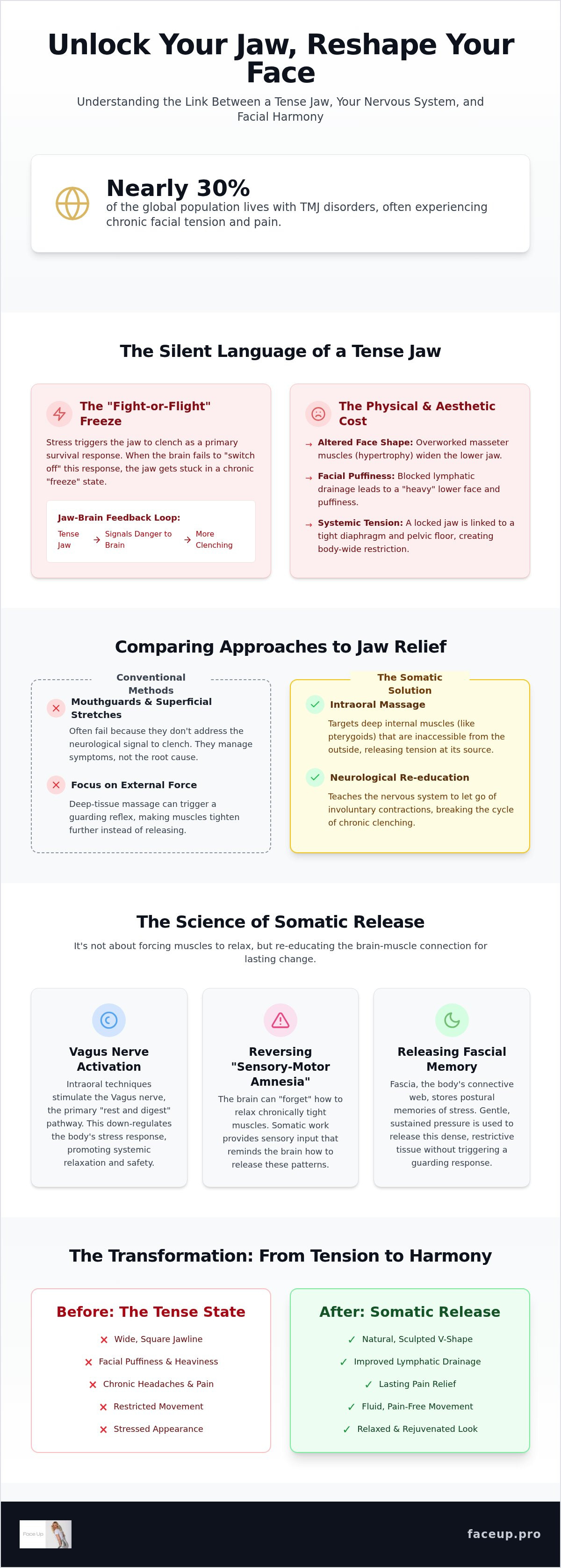
Have you ever considered that your clenched jaw is actually a physical signature of a frozen nervous system? For the nearly 30% of the global population living with TMJ disorders, the daily reality often involves a heavy, stressed facial appearance and the frustration of mouthguards that don't provide lasting relief. It's exhausting to feel like your face is constantly wearing the weight of your stress, resulting in chronic headaches and restricted movement.
We welcome you into an ecosystem dedicated to professional-grade self-care and global standards of wellness. By mastering specific intraoral massage techniques for tmj, you can finally access the deep-seated tension held within the internal musculature of the mouth. This article explores how somatic practices and the Face Up Method™ help you transition from a state of constant bracing to one of fluid, pain-free movement. We will preview how restoring facial harmony through our Jaw Release Course provides the tools for both aesthetic rejuvenation and genuine emotional regulation.
Key Takeaways
- Understand how the jaw acts as a primary storage site for the fight-or-flight response and how chronic clenching physically alters your facial structure.
- Learn the science of somatic release and how re-educating the nervous system through the Vagus nerve facilitates lasting muscle relaxation.
- Discover why traditional mouthguards often fail to address the root cause and how intraoral massage techniques for tmj restore functional comfort and facial symmetry.
- Access practical daily rituals via the Face Up App to down-regulate your nervous system and maintain a naturally sculpted, relaxed appearance.
- Explore the transition from personal healing to professional advancement with the Face Up Method Certification for practitioners in the global wellness landscape.
The Silent Language of Jaw Tension and TMJ
The human jaw is a primary survival center. It acts as the first line of defense during the fight or flight response, ready to bite or protect. When we experience stress, the masseter muscles prime themselves for action, often locking into a "freeze" state that the brain fails to switch off even after the threat passes. This chronic engagement leads to Temporomandibular joint dysfunction, a condition that affects millions and often persists despite standard stretching or mouthguards. Superficial stretches usually fail because they don't address the neurological signal to clench or the deep internal muscle fibers accessible only through intraoral massage techniques for tmj.
Beyond Teeth Grinding: The Emotional Connection
The Aesthetic Cost of a Tight Jaw
Chronic tension eventually changes how the world sees you. When jaw muscles stay contracted, they act as a dam, blocking efficient lymphatic drainage and causing persistent facial puffiness. This stagnation contributes to a "heavy" lower face and the premature appearance of jowls as the skin and underlying tissues lose their buoyancy. By applying intraoral massage techniques for tmj, we can release the internal pterygoid muscles from within the mouth. This internal access is vital because these muscles are nearly impossible to reach from the outside. Releasing them allows the face to return to its naturally sculpted and youthful state. Somatic release restores the natural V-shape of the face by melting away the chronic contractions that pull the features downward.
The Science of Somatic Release for TMJ
Somatic release represents a sophisticated shift from mechanical manipulation to neurological re-education. It's the process of teaching the nervous system to release involuntary muscle contractions that have become habitual over time. Many individuals live with a condition known as Sensory-Motor Amnesia. This occurs when the brain loses the ability to perceive or control specific muscles because they've been chronically contracted for years. While traditional deep-tissue massage often relies on external force to break up "knots," somatic work focuses on the brain's role in maintaining muscle tone. By using intraoral massage techniques for tmj, we can access the nervous system at a profound level, providing the sensory input necessary for the brain to "remember" how to relax.
The Vagus nerve plays a critical role in this process of restoration. As the primary component of the parasympathetic nervous system, it facilitates a sense of safety and systemic relaxation. When we provide the right sensory input to the facial muscles, we encourage the Vagus nerve to down-regulate the body's stress response. This is a vital step in TMJ disorder diagnosis and treatment, as it moves beyond simple symptom management toward true neurological recovery.
The Masseter and the Nervous System
The masseter muscle is the strongest in the human body relative to its size. It can exert significant force on the jaw and skull, often exceeding 150 pounds of pressure. There's a powerful feedback loop between the jaw and the amygdala, the brain's center for emotional processing. A tight jaw signals the brain that it's in danger, while a relaxed jaw signals safety. Utilizing professional tmj massage therapy helps interrupt this loop, allowing the nervous system to reset and exit the cycle of chronic pain.
Fascia: The Biological Web of Tension
Fascia is more than just "wrapping" for muscles; it's a sophisticated biological web that stores postural memories of emotional trauma and physical stress. If you've lived in a state of high alert, your fascia has likely adapted by becoming dense and restrictive. Releasing this tissue requires gentle, sustained pressure, often involving specialized intraoral massage techniques for tmj to reach the deeper layers of the facial web. Aggressive rubbing often triggers a guarding reflex, which is counterproductive to the somatic goal. For those seeking to integrate these advanced methods into their professional repertoire, the Face Up ecosystem offers a sophisticated framework for success. A successful somatic release is marked by an immediate softening of the facial contours as the brain finally permits the musculature to let go of its protective bracing.
Somatic Release vs. Botox and Mouthguards
Traditional approaches to jaw pain often focus on symptom suppression rather than neurological resolution. While medical interventions like Botox or mouthguards provide immediate relief for some, they rarely address the underlying cause of the clench. Botox, for instance, acts as a chemical band-aid by paralyzing the masseter muscle. Over time, this lack of muscle activity can lead to significant muscle atrophy. When the muscle loses its volume and tone, the surrounding skin lacks structural support, often resulting in premature sagging and a loss of facial definition. Somatic release offers a root-cause solution that seeks to balance the nervous system without compromising the long-term integrity of your facial structure.
Mouthguards serve a specific, protective purpose, but their scope is limited. They act as a physical barrier to prevent tooth wear, yet they don't stop the brain from sending the signal to clench. Many users find they simply bite down harder on the plastic, which can actually exacerbate muscular fatigue. By integrating intraoral massage techniques for tmj, we move beyond passive protection. These techniques allow for the active release of deep-seated tension, teaching the brain that it's safe to let go of the bracing pattern. Choosing somatic work over recurring invasive procedures is a sustainable investment in both functional health and aesthetic longevity.
This focus on long-term facial health is shared by boutique aesthetic providers like Exotica Skin Care, who offer advanced treatments designed to support the skin's natural vitality and appearance.
The Problem with Invasive Procedures
Invasive treatments like fillers and neurotoxins often mask underlying structural and emotional issues. When we freeze the muscles responsible for expression, we risk "frozen face syndrome," which can diminish our ability to communicate authentic emotions. This disconnection between the mind and the body is the antithesis of somatic healing. For professionals who value natural results and holistic wellness, pursuing a facial sculpting certification provides a sophisticated alternative. This path focuses on manual mastery and neurological re-education rather than temporary chemical fixes.
Why Mouthguards Aren’t Enough
There is a fundamental difference between the passive protection of teeth and the active release of the muscle. Even with a night guard in place, the brain’s stress response can remain in a high-alert state, leading to a restless night and a tight jaw upon waking. To truly break the cycle, we recommend incorporating somatic rituals into your nighttime routine. Using intraoral massage techniques for tmj before sleep helps down-regulate the nervous system, signaling to the body that it's time for restorative rest. This proactive approach ensures that you aren't just protecting your teeth, but actually healing the muscles that move them.
Practical Somatic Techniques for Daily Jaw Relief
Lasting change requires more than a ten-minute routine found on social media. The Face Up approach integrates specific rituals into your daily life, transforming how your nervous system responds to stress. Before beginning, it's essential to create a safe, quiet environment. This sets the stage for down-regulation, ensuring your body is receptive to the work. When you're ready, begin with awareness and breathwork. Take a few deep breaths to map out where your tension resides. Is it a dull ache in the temples or a sharp clench in the back molars? Once you've identified these sites, move to an external masseter release. Use gentle, rhythmic somatic pressure with your fingertips, focusing on inviting the muscle to soften under your touch rather than forcing it into submission.
Introduction to Buccal and Intraoral Release
Working inside the mouth is the gold standard for therapeutic success. While external work is helpful, intraoral massage techniques for tmj allow you to reach deep muscles like the lateral pterygoid. This muscle is a major player in jaw deviation and clicking, yet it remains hidden behind the cheekbones. To find it, you must slide a clean finger along the upper gum line toward the very back of the mouth. For self-administered buccal work, hygiene is paramount. Always wash your hands thoroughly or use surgical-grade gloves. By accessing the tissue from both sides, you provide the brain with a complete map of the area. This dual-sided approach facilitates a deeper release than external work alone can ever achieve.
Using the Right TMJ Massage Tool
While your hands are your most intuitive instruments, there are times when a specialized tmj massage tool is beneficial. Ergonomic tools help maintain consistency, especially during a busy week when your hands might be tired or strained from professional obligations. These instruments are designed to apply precise pressure without straining your own joints, making it easier to reach the deep pterygoids. Using a tool can also provide a different sensory input to the brain, which helps break through Sensory-Motor Amnesia. To ensure you're using these techniques safely and effectively, the Face Up App provides step-by-step video guidance. It acts as a professional mentor in your pocket, ensuring your home practice aligns with global standards of care.
If you're ready to master these techniques and reclaim your facial harmony, our Jaw Release Course serves as the definitive entry point for your self-healing journey.
Elevating Your Practice with the Face Up Method™
For many, the journey into somatic work begins with a personal need to resolve the cycle of chronic clenching. Once you experience the profound shift that intraoral massage techniques for tmj provide, a natural progression toward deeper mastery often follows. The Face Up Method™ stands as a unique pillar in the global wellness industry because it refuses to separate functional health from aesthetic form. While other programs focus strictly on pain relief or isolated exercises, we address the nervous system as the architect of both your comfort and your facial appearance. Joining our global community means aligning with a high standard of care that values integrity, natural rejuvenation, and the courageous pursuit of professional excellence.
This commitment to structural integrity and specialized care is a hallmark of excellence across the wellness spectrum. For instance, in the field of podiatry, Foot Health Practice provides expert care to ensure the feet—our body's foundation—are healthy and properly aligned, supporting overall systemic balance.
The Face Up App and Jaw Release Course
The Jaw Release Course serves as a comprehensive deep dive for those navigating the complexities of chronic TMJ. It provides the foundational knowledge required to move from passive suffering to active regulation. To support this journey, the Face Up App offers a subscription model that delivers daily guided rituals for the face, neck, and posture. These micro-practices are designed to fit into a busy professional schedule, ensuring that down-regulation becomes a consistent habit rather than a sporadic effort. Users can track their progress through the app, observing not just the physical softening of the jawline but also the subtle emotional shifts that occur when the body finally feels safe. This data-driven approach to self-care allows for a transparent view of your own healing arc.
Professional Advancement: Certification and Beyond
Somatic facial therapy is currently one of the fastest-growing niches in holistic beauty and wellness. As more clients seek alternatives to invasive procedures, the demand for practitioners skilled in intraoral massage techniques for tmj continues to rise globally. Our Face Up Method Certification offers a rigorous curriculum that covers everything from advanced buccal massage to the nuances of nervous system regulation. This path is ideal for professionals looking to expand their international reach and provide a proprietary level of service that sets them apart in a specialized landscape. For those who aren't ready to become practitioners but wish to receive expert care, our global practitioner directory makes it easy to find a certified expert in your city. Whether you're seeking a personal somatic bodywork session or a professional path forward, our ecosystem provides a clear and reliable journey toward facial harmony.
Reclaiming Your Natural Facial Harmony
True rejuvenation begins when you stop fighting your body and start listening to its signals. We've discussed how chronic jaw tension is a reflection of a stressed nervous system and how somatic release offers a sustainable path forward. By choosing a holistic, non-invasive approach to beauty, you protect the structural integrity of your face while resolving the root causes of pain. Integrating intraoral massage techniques for tmj into your routine isn't just about relief; it's about restoring the natural, sculpted balance that clenching has hidden away.
With over 1,000 practitioners certified globally, the Face Up Method™ provides a reliable framework for your transformation. You'll gain access to the Face Up App for daily guided rituals that ensure your journey is consistent and well-governed. It's time to transition from a state of constant bracing to one of fluid, effortless movement. Start your journey to a tension-free life with the Jaw Release Course. You possess the power to reshape your experience and rediscover the vibrant clarity of your own expression.
Frequently Asked Questions
Is somatic release good for TMJ?
Somatic release is highly effective for TMJ because it targets the neurological patterns that drive chronic clenching. Unlike mechanical treatments, it addresses the "freeze" state of the nervous system. By using intraoral massage techniques for tmj, you can access internal muscles that external massage simply cannot reach. This approach helps the brain recognize that the jaw is no longer in danger, allowing for a profound and lasting release of functional tension.
How do you release somatic jaw tension at home?
Releasing somatic tension at home begins with creating a safe environment to down-regulate your nervous system. You can use breathwork to map out specific areas of tightness before applying gentle, rhythmic pressure to the masseter muscles. For those seeking structured guidance, the Jaw Release Course provides a professional framework for these daily rituals. Using the Face Up App ensures you follow safe protocols while tracking your physical and emotional progress over time.
What emotions are stored in the jaw?
The jaw is a primary storage site for survival-based emotions like anger, frustration, and the impulse to protect oneself. It's often where we hold suppressed expression or words we've "swallowed" to maintain professional decorum. This emotional bracing creates a feedback loop with the amygdala, signaling constant stress to the body. Somatic work helps break this cycle by inviting the nervous system to let go of these stored emotional imprints.
Can somatic exercises fix a clicking jaw?
Somatic exercises can significantly reduce or eliminate jaw clicking by balancing the tension in the lateral pterygoid muscles. Clicking often occurs when the disc in the joint is pulled out of alignment by uneven muscle contractions. By learning specific intraoral massage techniques for tmj, you can release these deep internal muscles. This allows the joint to move through its natural range of motion without the mechanical interference that causes clicking sounds.
How long does it take to see results from somatic TMJ release?
Most individuals experience an immediate softening of the facial features and a reduction in pain after their first session. However, lasting results depend on the cumulative effect of re-educating the nervous system. Consistent practice over several weeks is typically required to break long-standing clenching habits. As you continue with the Face Up App daily rituals, you'll notice that your jaw stays relaxed for longer periods and your facial contours appear more defined.
What is the difference between buccal massage and somatic release?
Buccal massage refers to the specific technique of massaging the muscles from inside the mouth. Somatic release is the broader neurological framework that guides how these techniques are applied. While buccal massage can be purely mechanical, the Face Up Method™ uses these intraoral approaches to communicate safety to the brain. The goal is not just to rub a muscle, but to change the neurological signal that keeps that muscle tight.
Is somatic release safe for everyone with TMJ?
Somatic release is generally safe for most people because it prioritizes gentle, non-invasive pressure over aggressive force. It's particularly useful for those who haven't found relief through traditional mouthguards or medical interventions. If you're experiencing acute inflammation, a recent jaw injury, or have severe structural joint damage, it's always wise to consult with a healthcare professional first. Our practitioner directory can help you find a certified expert for a personalized assessment.
Can I do somatic jaw release if I have dental implants?
Yes, you can safely perform somatic jaw release even if you have dental implants. The techniques focus on the soft tissues, fascia, and muscles rather than the teeth or the bone where the implant is anchored. Since these practices are gentle and rhythmic, they don't place undue stress on dental work. Releasing the surrounding musculature can actually improve blood flow to the area, supporting the overall health of your gums and jawbone.


