

What if the "weak" jawline you see in the mirror isn't a matter of genetics or aging, but a physical manifestation of the stress you carry? Many people struggle with chronic jaw tightness or the appearance of sagging jowls even when they are physically fit. You might feel that your only options are invasive procedures or the "puffy" look that often comes with too much filler. It's frustrating to feel like your profile doesn't reflect your vitality. However, the truth is that facial sculpting for jawline definition starts beneath the skin's surface, within the muscles and fascia that hold onto our daily tension.
You don't have to accept TMJ pain or a softened profile as your permanent reality. By using the Face Up Method™, you can reclaim a naturally sharp, chiseled look through a somatic approach that prioritizes the health of your nervous system. This article explores how releasing deep muscular contraction and emotional stress can reveal the bone structure you already possess. We'll look at the science of jaw release, the benefits of a sustainable beauty ritual, and how you can transition from temporary fixes to lasting, non-invasive results.
Key Takeaways
- Learn why chronic stress and muscular tension are often the hidden causes of a heavy or sagging jawline.
- Discover how facial sculpting for jawline definition through the Face Up Method™ offers a natural, restorative alternative to dermal fillers.
- Understand the somatic connection between emotional release and the physical restoration of your facial contours.
- Explore how the Face Up App and the Jaw Release Course provide sustainable tools for maintaining a sharp, chiseled profile at home.
- Identify the professional advantages of offering non-invasive, somatic beauty treatments in a market increasingly focused on natural results.
Why Your Jawline Loses Definition: It’s More Than Just Aging
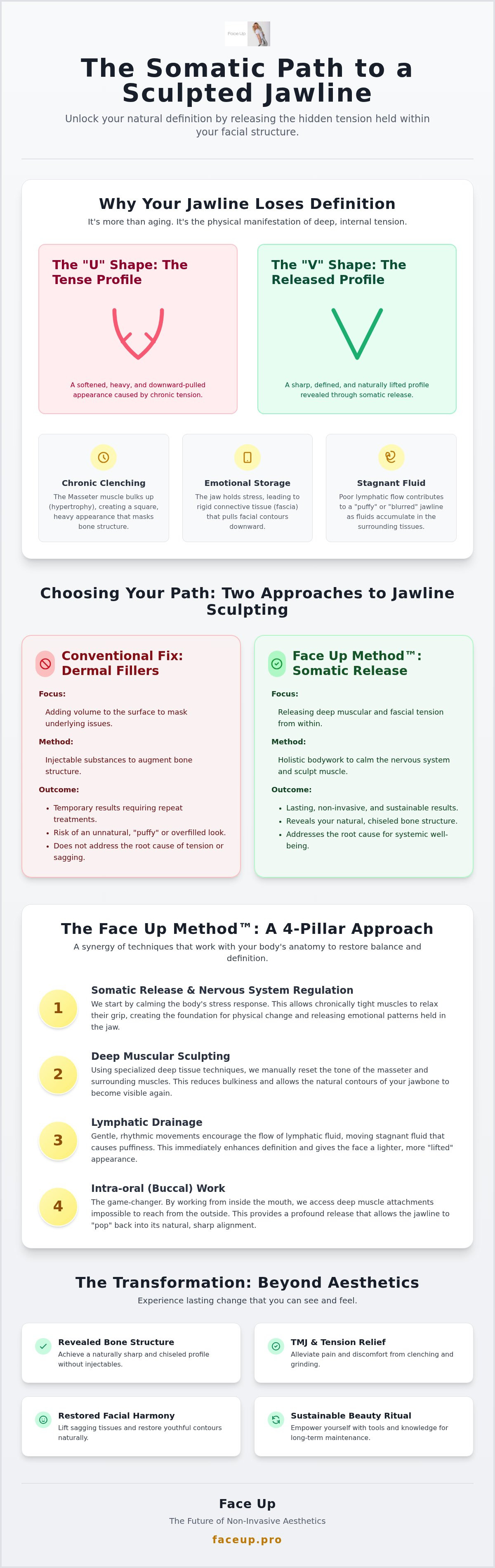
Many people believe a fading jawline is simply the inevitable result of bone resorption or shifting fat pads. While these biological factors play a role, they don't tell the whole story. The lower face is a complex architecture of bone, deep fat layers, and a powerful muscle layer that is frequently overlooked in traditional aesthetics. When we focus only on adding volume to the surface, we ignore the internal tension that actively pulls the facial scaffolding downward. This transition from a sharp "V" shape to a wider, heavier "U" shape is often driven by physical habits rather than just genetics.
The Role of the Masseter Muscle in Facial Shape
The Masseter muscle is one of the strongest muscles in the human body, responsible for the primary action of chewing. However, for many, it also becomes a primary site of chronic clenching. When you clench your teeth during the day or grind them at night, this muscle undergoes hypertrophy, meaning it grows larger and bulkier. This creates a square, heavy appearance in the lower third of the face that can mask your natural bone structure. Beyond the aesthetic impact, this tension is a hallmark of TMJ dysfunction, which leads to a "blurred" jawline as the surrounding tissues become stagnant. Effective facial sculpting for jawline definition must address this muscular bulk to reveal the underlying profile.
Emotional Storage and Facial Sagging
From a somatic perspective, the jaw is a primary reservoir for unspoken stress and suppressed emotions. This physical holding pattern creates fascial restrictions, where the connective tissue becomes rigid and "glued" into a downward, sagged position. This isn't just about skin elasticity; it's about the deep fascia losing its fluidity and pulling the contours of the face with it. Releasing these restrictions allows the tissue to lift and settle back into its natural alignment. Somatic facial therapy serves as the essential bridge between emotional release and physical sculpting, ensuring that the results you achieve are rooted in systemic relaxation.
While you can't change your basic bone structure, you can certainly change the habits that distort it. By focusing on facial sculpting for jawline health through somatic release, you address the root cause of "jowls" and heaviness. This approach moves beyond the surface, offering a restorative path that honors your natural character while providing the sharp, defined profile you seek. It's a method that works with your body's existing anatomy to restore a sense of balance and clarity to your lower face.
The Face Up Method™: Sculpting the Jawline Through Somatic Release
The Face Up Method™ represents a fundamental shift in how we approach facial rejuvenation. It is a holistic system that views the face not as a collection of isolated features, but as an extension of the body's entire nervous system. Traditional aesthetics often focus on superficial skin treatments, but our approach utilizes deep tissue techniques and somatic bodywork to address the root causes of facial aging. By calming the nervous system, we allow the muscles to release chronic tension patterns. This shift creates visible, lasting change in the lower face by addressing the internal architecture that supports the skin.
Our method relies on a powerful synergy between lymphatic drainage and muscular sculpting. While the sculpting work resets muscle tone, the lymphatic drainage moves stagnant fluid that often contributes to a "heavy" or "puffy" look. This combination provides an immediate "lift," restoring the sharp angles of the profile and reversing the downward pull that leads to sagging. It's a sustainable way to achieve facial sculpting for jawline definition without relying on temporary, invasive fixes.
Intra-oral (Buccal) Sculpting Explained
Intra-oral sculpting, often called buccal massage, is a core component of the Face Up Method™ and a true game changer for the lower face. By working from inside the oral cavity, practitioners can access the deep attachments of the masseter and pterygoid muscles. These areas are virtually impossible to reach from the outside alone. Releasing these deep points allows the jawline to "pop" back into its rightful place, revealing the bone structure that tension has hidden. For beauty professionals who want to master these advanced techniques, our facial sculpting certification provides the comprehensive training needed to deliver these high-level results.
Somatic Bodywork for Facial Symmetry
True facial symmetry requires looking beyond the jaw itself. The neck and shoulders act as a foundation for the face; when they're tight, they create a "pull-down" effect on the chin and jowls. Somatic release techniques address this entire chain of tension, freeing the jawline from the weight of the upper body. Interestingly, somatic therapy recognizes a deep connection between the pelvic floor and the jaw. Tension in one often mirrors the other due to their shared developmental origins. By addressing these systemic links, we ensure that the results of facial sculpting for jawline health are deep-seated and balanced. You can experience this integrated approach through a Face Up Sculpting Treatment tailored to your specific needs.
Natural Facial Sculpting vs. Dermal Fillers: Choosing Your Path
When seeking a more defined profile, most people find themselves at a crossroads between clinical interventions and natural methods. Dermal fillers represent an "additive" approach, where substances like hyaluronic acid are injected to mimic the appearance of bone or volume. In contrast, the Face Up Method™ is a "restorative" approach. Instead of adding external material, it restores the functional health of your muscles and fascia to reveal the structure you already possess. While fillers provide an immediate change, facial sculpting for jawline definition offers a sustainable path that honors your unique facial character. To explore other holistic alternatives that support this restorative philosophy, you can discover Zhong Centre and their specialized treatments rooted in Traditional Chinese Medicine.
The difference in longevity is significant. Fillers are temporary and require regular maintenance cycles to prevent the product from migrating or dissolving unevenly. Professional facial sculpting for jawline health builds muscle memory over time. By consistently releasing tension and toning the underlying layers, you create a lasting foundation that doesn't "wear off" in a few months. This makes it a proactive investment in your long-term facial architecture rather than a recurring clinical obligation.
The 'Puffy' Face Trap: Why Fillers Aren't Always the Answer
A common concern in 2026 is the "puffy" or over-filled look that can occur when too much volume is added to the lower face. According to industry data from May 2026, the average cost of jawline filler is between $600 and $900 per syringe, and many patients require multiple syringes to see a change. Adding this much weight to the jaw area can sometimes backfire, obscuring the natural bone structure and making the face look heavier rather than sharper. Sculpting avoids this trap by focusing on de-puffing through lymphatic drainage and lifting through muscular release. It enhances your features without altering your fundamental identity.
When to Combine or Choose One Over the Other
Choosing a natural path doesn't always mean rejecting clinical options entirely. Many Face Up practitioners work with clients who use sculpting to prepare their tissues for better injectable outcomes. A face free of chronic tension allows filler to sit more naturally and last longer. However, we increasingly see clients who are looking to "dissolve" their previous fillers and restart with a somatic approach. They often find that the psychological benefits of a self-care ritual provide a sense of agency that clinical procedures lack. Taking five minutes each day for a sculpting ritual creates a deeper connection to your body, turning beauty into a mindful practice rather than a medical appointment.
Daily Rituals for a Chiseled Jaw: From Tension Release to Sculpted Contours
Achieving a chiseled profile isn't about a single intense session; it's about the cumulative power of daily attention. In the world of facial sculpting for jawline definition, consistency always beats intensity. A short, dedicated practice allows the tissues to adapt and the nervous system to remain regulated. This prevents the rebound tension that often follows aggressive, infrequent treatments. By integrating these rituals into your morning and evening routines, you transform your beauty regimen into a sustainable somatic practice.
A five-minute morning ritual focuses on moving stagnant lymph and de-puffing the lower face. This immediate fluid drainage reveals the sharp angles of your mandible that often hide under morning "heaviness." In contrast, a nighttime ritual focuses on somatic release. This practice calms the masseters before sleep, significantly reducing the likelihood of nocturnal clenching. For those struggling with chronic tightness, the Jaw Release Course provides a structured path to incorporating these movements into your daily life.
Essential Techniques for Jawline Definition
The "Hook and Slide" is a foundational move for defining the mandible. Using your index and middle fingers in a "hook" shape, gently slide from the center of the chin along the jawbone toward the ear. This helps to "unstick" the fascia and encourage drainage. Another critical step is releasing the sternocleidomastoid (SCM) muscle in the neck. When this muscle is tight, it pulls the facial tissues downward, blurring the profile. Releasing it creates the space needed for a clear, lifted jawline. When performing these moves, the pressure for facial sculpting for jawline health should be firm but never painful, and you can further enhance your results with high-tech beauty devices from luminoustouch.us.
While many enjoy using a stone or a specialized tmj massage tool for deeper work, your hands remain your most sensitive and effective instruments. Manual sculpting allows you to feel the subtle "knots" and temperature changes in the tissue, providing biofeedback that a tool cannot. However, tools are excellent for cooling the skin and reaching specific acupressure points. To keep your practice manageable, you can follow guided sessions via a Face Up App Subscription, which offers rituals designed to fit into even the busiest lifestyles.
By making these techniques a habit, you move beyond temporary fixes. You aren't just chasing a look; you're cultivating a healthier relationship with your body's tension patterns. Over time, this muscle memory ensures that your jawline remains defined, relaxed, and naturally vibrant.
Elevate Your Practice: Professional Facial Sculpting for the Modern Practitioner
The aesthetic market is evolving rapidly. As we move through 2026, the volume of cosmetic procedures continues to grow, but the preference has shifted toward subtle, natural outcomes. Modern clients no longer want to look altered; they want to look refreshed and relaxed. This demand creates a significant opportunity for practitioners who can offer specialized facial sculpting for jawline definition through a somatic lens. By moving beyond the surface and addressing the nervous system, you provide a service that traditional med spas often overlook. The Face Up Method™ differentiates your menu by providing a holistic, high-standard alternative to the standard injectable protocol.
Implementing these techniques allows you to transition from a purely transactional service model to one of professional mentorship. You aren't just performing a treatment; you're facilitating a physical and emotional release that has a profound impact on a client's profile. This integrated approach ensures that your practice stays at the forefront of global beauty standards. It appeals to professionals in diverse international markets who seek order, reliability, and a clear path toward professional advancement.
The Face Up Method™ Certification Program
The path to becoming a recognized expert begins with the Face Up Method Certification. This program is designed for beauty professionals, massage therapists, and holistic practitioners who want to master the art of deep tissue and intra-oral work. The curriculum covers everything from advanced anatomy to practical somatic assessments, ensuring you can identify and treat the specific tension patterns that lead to facial sagging. Once you complete the program, you gain a place in our global Practitioner Directory Listing. This listing connects you with a growing community of clients who are specifically seeking out the Face Up Method™ for its non-invasive, high-impact results. Success stories from our current practitioners highlight how effectively these techniques can restore a client's jawline without the need for fillers.
Joining a Global Community of Holistic Experts
Choosing this path means entering a proprietary ecosystem of like-minded professionals. It's a specialized community where you can access ongoing training and the latest somatic research to keep your practice sharp. This environment fosters professional advancement and ensures you have a reliable partner as you navigate the complexities of modern aesthetics. By embracing this facilitator role, you offer your clients a clear path forward that values integrity and long-term tissue health. If you're ready to expand your professional reach and offer a truly unique service, you can start your journey toward professional certification with Face Up today.
Reclaiming Your Profile Through Somatic Wisdom
Redefining your lower face is about more than surface-level aesthetics; it's about understanding the deep connection between your nervous system and your physical form. By addressing the chronic tension held in the masseter muscles and fascia, you can unlock a naturally sharp profile that reflects your inner vitality. This restorative approach ensures that your results are rooted in health, moving away from the temporary look of fillers toward a sustainable, chiseled appearance. Consistent facial sculpting for jawline health builds the muscle memory needed to maintain your contours for years to come.
Founded by somatic bodywork specialist Olga Newman, the Face Up Method™ offers a non-invasive, Red Dot-standard approach to beauty that respects your unique facial character. This proprietary system provides a sophisticated environment for both individuals and professionals, supported by a global directory of certified experts. You don't have to settle for tension or a blurred profile. Explore the Face Up Method™ and start your transformation today. Your most defined, relaxed self is waiting to be revealed.
Frequently Asked Questions
Can facial sculpting really change the shape of my jawline?
Yes, facial sculpting for jawline definition changes the shape by reducing the bulk of the masseter muscles and draining stagnant lymphatic fluid. While it doesn't alter your bone structure, it removes the "heaviness" that often masks your natural profile. By releasing the deep facial fascia, the tissues settle into a more lifted and defined position, revealing the sharp angles of the mandible that were previously obscured by chronic tension and swelling.
How long does it take to see results from jawline sculpting?
You will often see an immediate reduction in puffiness after a single session due to lymphatic drainage. However, lasting changes in muscle tone and fascia alignment typically require four to six weeks of consistent practice. This timeframe allows the nervous system to reset its "holding patterns" and for the muscles to adapt to a more relaxed state. Significant structural refinement usually becomes more prominent as you move through a dedicated course.
Is facial sculpting for the jawline painful if I have TMJ?
Facial sculpting for jawline health should never be painful, even for those with active TMJ dysfunction. In fact, the Face Up Method™ is designed to ease the deep-seated discomfort associated with jaw clenching. Practitioners use a graduated approach, starting with gentle somatic awareness before moving into deeper tissue work. If you feel sharp pain, it's a sign to reduce pressure and focus on regulating your nervous system first.
What is the difference between buccal massage and regular facial sculpting?
Regular facial sculpting usually involves external manipulation of the skin and muscles. Buccal massage is an intra-oral technique where the practitioner works from inside the mouth to access the deep attachments of the masseter and pterygoid muscles. This internal access is a game changer for releasing the "knots" that create a square or heavy lower face. It provides a level of release that external massage alone cannot achieve.
Can I do facial sculpting if I currently have dermal fillers?
You can perform facial sculpting if you have fillers, but you must wait at least four weeks after your injection. This waiting period ensures the filler has fully settled into the tissue. Once settled, somatic sculpting can actually help maintain a natural look by preventing fluid stagnation around the injection site. It also helps the filler integrate more smoothly with your natural facial movements, avoiding a stiff or "over-done" appearance.
How often should I perform jawline sculpting rituals at home?
Consistency is the most important factor, so we recommend a five-minute daily ritual. A short morning session is ideal for de-puffing the face and defining the jawline for the day ahead. A nighttime session helps release the stress of the day, preventing you from clenching your teeth during sleep. If you're short on time, even three minutes of focused somatic release can make a difference in your long-term results.
Is there a specific 'somatic' way to release jaw tension?
The somatic approach focuses on the connection between the brain and the muscles rather than just physical force. It involves slow, mindful movements and breathwork to "invite" the jaw to release its emotional storage. Instead of attacking a tight muscle, you use gentle awareness to identify where you're holding stress. This method signals to the nervous system that it's safe to let go, resulting in a deeper and more permanent release.
What tools are best for at-home jawline contouring?
Your hands are the most sophisticated tools because they provide immediate biofeedback about tissue tension. However, a high-quality Gua Sha stone can be helpful for cooling the skin and reaching the contours of the jawbone. For those with intense TMJ pain, a specialized intra-oral tool can assist in reaching difficult trigger points. The Face Up App provides specific guidance on how to use these tools effectively within your daily somatic practice.


