
What if the "frozen" aesthetic of traditional injectables isn't just a side effect, but a sign that your skin's natural vitality is being suppressed? Most of us have felt that familiar pull toward a quick fix when faced with persistent jaw tension or the first signs of fine lines. You aren't alone in wanting a more defined profile, yet the thought of regular toxins and high maintenance costs often feels like a compromise rather than a true solution.
When weighing facial sculpting vs botox, it's easy to focus on the immediate result while overlooking how each choice impacts your long-term skin health and emotional well-being. This guide will help you discover why manual facial sculpting offers a regenerative, somatic alternative to the temporary "mask" of Botox for long-term rejuvenation. We will explore the biological differences between paralyzing a muscle and releasing its stored tension through the Face Up Method™, helping you decide which path aligns with your desire for a natural, expressive, and pain-free face.
Key Takeaways
- Understand the cellular mechanisms that allow manual techniques to improve skin health while neurotoxins focus solely on surface-level aesthetics.
- Explore the relationship between emotional stress and facial tension, revealing why paralysis fails to clear the underlying somatic charge.
- Evaluate the maintenance, cost, and long-term risks associated with facial sculpting vs botox to determine which approach fits your lifestyle.
- Gain insight into the professional standards of the Face Up Method™ and how it serves as a global benchmark for non-invasive rejuvenation.
Facial Sculpting vs. Botox: Defining the Two Paths to Rejuvenation
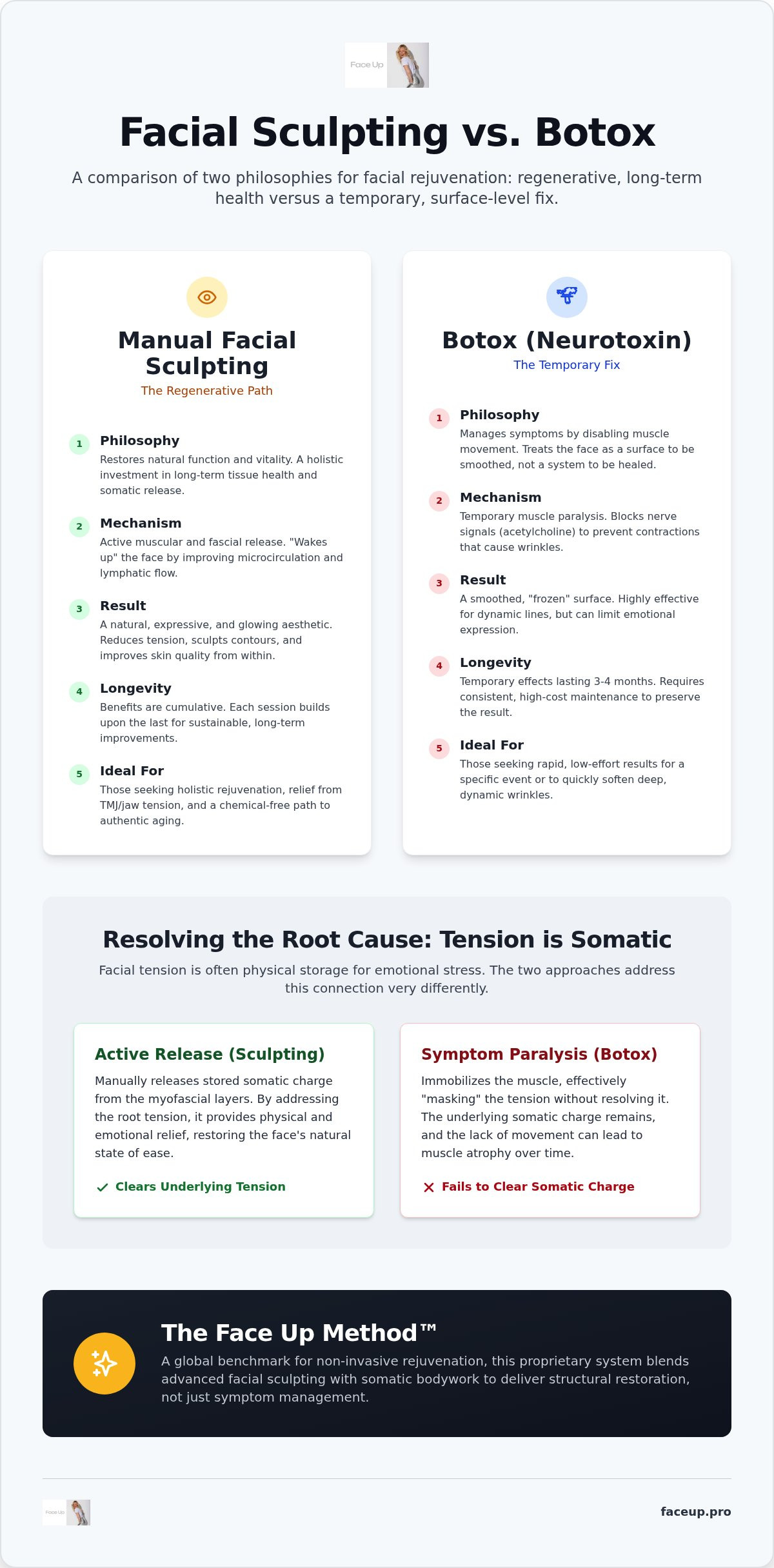
The aesthetic industry often presents a binary choice: you either accept the aging process or you fight it with needles. However, when examining facial sculpting vs botox, we find two entirely different philosophies of care. Botox relies on Botulinum toxin, a powerful neuromodulator that temporarily interrupts nerve signals to paralyze specific muscles. This immobilization smooths the skin's surface by preventing the muscle contractions that cause dynamic wrinkles. It's a highly effective tool for localized smoothing, but it functions by disabling the face's natural movement.
In contrast, professional facial sculpting is a manual discipline that targets the myofascial layers and deep somatic tension. Rather than silencing the muscle, it seeks to restore its natural function, placement, and tone. The Face Up Method™ stands at the forefront of this movement, offering a sophisticated system that prioritizes structural restoration over simple symptom management. It's a proprietary blend of facial sculpting and somatic bodywork designed to address the face as a dynamic, living system rather than a collection of lines to be erased.
The "Quick Fix" Mentality vs. Regenerative Beauty
Botox has earned its status through convenience. It offers immediate, low-effort results for those seeking a rapid change. While effective for surface-level smoothing, this approach often treats the face as a static object. Facial sculpting represents an investment in long-term tissue health. It focuses on the "fluid" vitality of the face, ensuring that skin remains resilient and responsive. Where toxins can create a "mask-like" finish that limits emotional range, manual release encourages a natural, glowing aesthetic that evolves with the individual. This regenerative approach builds cumulative benefits, improving microcirculation and lymphatic health with every session.
Who is Each Treatment For?
The choice often depends on your immediate goals and long-term values. Botox remains a popular choice for those preparing for a specific event or seeking to soften deep, dynamic lines quickly. However, a growing number of wellness consumers are experiencing "Botox fatigue," a dissatisfaction with the high maintenance costs and the "frozen" look of traditional injectables.
Facial sculpting is the ideal path for individuals seeking holistic rejuvenation. It's particularly effective for those dealing with chronic jaw tension or TMJ pain, as it addresses the root physical and emotional causes of facial tightness. For beauty professionals, mastering these techniques through a facial sculpting certification provides a way to offer clients sustainable, chemical-free results that improve skin health from the inside out. This approach appeals to the modern client who values authenticity, longevity, and a clear path toward natural aging.
The Science of Results: Temporary Paralysis vs. Active Muscular Release
To truly understand the debate of facial sculpting vs botox, we must look at what happens at a cellular level. Botox injections work by blocking the release of acetylcholine, the neurotransmitter responsible for muscle contraction. When the muscle can't receive these signals, it enters a state of induced inactivity. Over time, this lack of movement leads to muscle atrophy. While this effectively smooths the skin's surface, it can have unintended consequences for the underlying structure. Recent discussions in the somatic community have raised concerns regarding the long-term impact of prolonged muscle paralysis on local bone density, particularly in the jaw area.
Manual facial sculpting takes the opposite approach. Instead of silencing the tissue, it "wakes up" the face through targeted fascia release and improved microcirculation. By manually manipulating the myofascial layers, practitioners encourage the body's natural regenerative processes. This doesn't just change the shape of the face; it improves the quality of the skin from within. The Face Up Method™ prioritizes this active release, ensuring that the tissues remain supple, hydrated, and structurally sound rather than becoming dormant. The biological debate of facial sculpting vs botox is essentially a choice between temporary stillness and long-term vitality.
Masseter Botox vs. Jaw Sculpting for Slimming
In August 2026, the FDA moved toward formalizing the use of neurotoxins for masseter prominence. While this provides a medical path for slimming, it doesn't address why the tension exists. Using tmj massage therapy offers a functional cure by physically releasing the stored stress in the jaw. This approach avoids the risk of "jowling," a common side effect where the skin sags because the underlying muscle has lost too much volume to support the face's weight.
Circulation, Oxygenation, and the "Glow" Factor
There is a distinct aesthetic difference between a face that is paralyzed and one that is vital. Because Botox limits muscle movement, it can inadvertently reduce the metabolic demand and blood flow to the dermis, sometimes resulting in a dull or "flat" complexion. Manual sculpting techniques specifically target the lymphatic system to flush out toxins and reduce puffiness naturally. This surge in oxygenation creates a "sculpted glow" that no chemical can replicate. To begin your own journey toward this natural vitality, you can explore the Face Up ecosystem for professional guidance and daily rituals.
Resolving the Root Cause: Why Facial Tension is Often Somatic
Traditional aesthetics often views the face as a mechanical object. When a wrinkle appears, the standard instinct is to "fix" the surface. However, when we evaluate the merits of facial sculpting vs botox, we must address the concept of somatic storage. Our faces are deeply connected to our emotional history. Stress, grief, and chronic anxiety don't just exist in the mind; they manifest as "armouring" in the muscles of the jaw, brow, and forehead. While Botox can temporarily smooth the skin by paralyzing the muscle, it does nothing to release the underlying emotional charge. The tension remains trapped within the nervous system, even if the muscle is unable to move.
The Face Up Method™ recognizes that true rejuvenation requires more than a surface-level intervention. By integrating somatic bodywork with manual sculpting, practitioners can help individuals process and release this stored stress. There is a powerful feedback loop between our facial expressions and our nervous system. When we manually release deep-seated tension, we send a signal to the brain that it's safe to relax. This creates a holistic shift that improves both physical appearance and emotional well-being, a result that a clinical injection simply can't replicate.
The Nervous System Connection
Chronic jaw clenching is rarely just a physical habit; it's often a physiological "fight or flight" response. When the masseter muscles are constantly engaged, the body stays in a state of high alert. Manual sculpting techniques act as a bridge to the parasympathetic nervous system, signaling the body to enter a state of "rest and digest." Releasing this deep facial armouring provides significant mental health benefits, reducing the background "noise" of physical stress that many people carry unconsciously every day.
Emotional Release Through Manual Work
Practitioners of the Face Up Method™ frequently witness profound emotional shifts during deep facial work. As the fascia is manipulated and tension is released, clients may experience a sense of relief that goes far beyond the mirror. This "healing" experience stands in sharp contrast to the clinical, often sterile environment of neurotoxin injections. Manual work serves as a vital form of emotional hygiene and self-care. It allows for a courageous, honest approach to aging that honors the individual's journey rather than masking it. By choosing a somatic path, you aren't just altering your aesthetic; you're fostering a deeper connection with your own body and its unique narrative.
Making the Decision: Comparing Longevity, Risks, and Aesthetics
Choosing between facial sculpting vs botox involves weighing immediate convenience against cumulative health. Botox requires a clinical visit every three to six months to maintain the blockade of nerve signals. This creates a cycle of "wearing off" and "re-injecting" that can feel like a never-ending obligation. Manual sculpting rituals, however, build on themselves. The more you engage with the fascia, the more responsive the tissue becomes. While an initial series of treatments establishes the foundation, maintenance becomes a lifestyle choice rather than a medical necessity. It's a proactive management of your own vitality.
Safety profiles also differ significantly. Botox carries clinical risks such as ptosis (eyelid drooping) or toxin migration to unintended muscles. These are temporary but can be distressing. Professional sculpting risks are generally limited to mild muscle soreness or temporary detox symptoms as the lymphatic system clears. For those wanting to transition from injectables, we recommend a gradual approach. Start by extending the time between your injections while increasing the frequency of manual release to support the muscle as it regains its natural function. This prevents the "rebound" tension that often follows when Botox wears off.
Can You Combine Both Treatments?
If you aren't ready to leave injectables behind, a hybrid model is possible. It's essential to observe a waiting period of at least 14 days after receiving Botox before starting manual work. This ensures the toxin has fully bound to the receptors and won't migrate. Many clients find that regular sculpting actually helps "metabolize" old filler or Botox more evenly, preventing the lumpy or asymmetrical look that can occur as products degrade. This balanced path allows for a smoother transition toward a more natural aesthetic. For those who desire more permanent refinement in facial proportions, the surgical care provided by Emre Üregen M.D. offers a professional alternative to achieve lasting structural harmony through specialized procedures like a lip lift.
The visual results of facial sculpting vs botox are distinct. A sculpted face looks "lifted" and "awake" because the muscles are toned and the tissue is hydrated. Excessive use of neuromodulators can sometimes lead to a "heavy" or "flattened" appearance, particularly in the brow or mid-face, as the muscles lose their ability to provide structural support. Manual techniques preserve the unique character and "soul" of your face, ensuring you look like a refreshed version of yourself rather than a static version of someone else. To find a professional who can guide this transformation, you can browse our global practitioner directory.
The Face Up Method™: A Professional Path to Natural Rejuvenation
The Face Up Method™ serves as a vital anchor for those navigating the complex landscape of modern beauty. It represents a paradigm shift away from the cycle of temporary paralysis and toward a foundation of structural integrity. While the choice between facial sculpting vs botox often feels like a decision between speed and sustainability, our method bridges that gap by offering professional-grade results through biological restoration. It's a comprehensive system designed for both the dedicated practitioner and the individual seeking a deeper, more honest connection with their own reflection. By combining advanced manual techniques with deep somatic release, we provide a path that respects the face as a living, expressive system.
Our approach is built on the belief that rejuvenation should be a regenerative process rather than a transactional one. We don't just aim to smooth lines; we aim to restore the fluid vitality and emotional freedom that define a youthful appearance. This proprietary ecosystem allows you to move beyond the "frozen" aesthetic and embrace a look that is both defined and authentically yours. Whether you are a professional looking to elevate your practice or an individual ready to take control of your aging process, the Face Up Method™ offers the high-standard partnership you need to move forward with confidence.
Professional Certification for the Modern Practitioner
The demand for holistic, non-invasive treatments is surging as more clients seek alternatives to traditional injectables. Somatic facial therapy has emerged as the fastest-growing niche in the beauty world because it addresses the root causes of tension rather than just masking symptoms. Professionals who pursue a facial sculpting certification gain access to a rigorous curriculum that spans from intra-oral buccal techniques to deep somatic bodywork. This training transforms a standard aesthetic practice into a specialized sanctuary for healing. By joining our global network, you become a high-standard facilitator in a community dedicated to professional advancement and excellence.
Daily Rituals: Taking Rejuvenation Into Your Own Hands
True transformation happens in the quiet moments between professional sessions. The Face Up App empowers users to maintain their results daily through guided rituals that fit into any lifestyle. For those specifically struggling with the physical toll of chronic stress, our specialized "Jaw Release" course provides targeted relief that addresses the same concerns as masseter neurotoxins but through functional healing. Self-practice is the ultimate sustainable beauty habit, turning daily maintenance into a rewarding ritual of self-care. When evaluating facial sculpting vs botox, the ability to proactively manage your own rejuvenation is a powerful advantage that chemical interventions simply cannot offer. For those looking to deepen their home practice, incorporating red light therapy or thermal wellness devices from Therma Luxe can provide an additional layer of cellular support, helping to maintain the skin’s natural glow between treatments. To begin your journey, we invite you to find a certified provider in our directory for an in-person experience that meets our proprietary standards of care.
Embracing a New Standard of Vitality
The journey toward lasting rejuvenation begins with a fundamental choice between temporary stillness and active vitality. By choosing somatic manual techniques over chemical paralysis, you address the deep-seated emotional and physical tension that defines your aesthetic health. This holistic approach, founded by somatic specialist Olga Newman, ensures your face remains a dynamic reflection of your well-being. It's a method that honors your history while refining your future.
Deciding between facial sculpting vs botox is ultimately an investment in your long-term tissue integrity. Whether you seek relief from chronic TMJ pain or a naturally defined jawline, the Face Up Method™ provides the professional tools and global community needed to achieve your goals. You can Explore the Face Up Method™ Certification and App to join our ecosystem of high-standard care and find a certified practitioner near you. Your path to a more vital, authentic self is waiting for you.
Frequently Asked Questions
Is facial sculpting more effective than Botox for jaw slimming?
Facial sculpting offers a functional approach to jaw slimming by releasing the chronic muscle contractions that create a bulky appearance. While Botox achieves slimming through induced muscle atrophy, sculpting restores the muscle's natural length and tone. This prevents the "jowling" effect that can occur when the skin lacks underlying structural support. When comparing facial sculpting vs botox for slimming, the manual path provides a more natural, vital contour that improves over time.
How long do the results of a Face Up sculpting treatment last?
While you may see an immediate "lift" after one session, the true strength of the Face Up Method™ lies in its cumulative nature. Unlike the 3-6 month cycle of neurotoxins, manual results become more stable as your tissue health improves. By consistently engaging with the myofascial layers, you build a foundation of resilience. This makes the rejuvenation process a long-term investment in your facial structure rather than a temporary aesthetic fix.
Can I start facial sculpting if I currently have Botox?
You can certainly begin your journey while still using injectables, provided you observe a strict 14-day waiting period after your last treatment. This ensures the toxin has fully bound to the receptors and won't migrate during manual manipulation. Many individuals find that integrating facial sculpting vs botox in a hybrid model helps them transition away from chemicals by supporting the muscle's health and preventing the rebound tension that often follows injections.
Will facial sculpting help with my TMJ and jaw pain?
The Face Up Method™ is highly effective for managing TMJ and chronic jaw pain because it targets the physical and emotional root causes of tension. By manually releasing the masseter and surrounding fascia, we signal the nervous system to exit its "fight or flight" state. This functional restoration provides lasting relief that goes beyond the temporary numbing of a medical injection, helping you regain full, pain-free mobility in the jaw.
Does facial sculpting hurt more than getting injections?
Sculpting is a deep, therapeutic experience that differs significantly from the sharp prick of a needle. You may feel intense pressure or a "productive" ache as deep-seated tension is released from the fascia. Most clients describe this as a deeply satisfying sensation rather than pain. It's a courageous approach to beauty that prioritizes the active release of stored stress over the passive experience of receiving a clinical injection in a medical setting.
Can manual facial sculpting actually lift sagging skin?
Manual techniques are remarkably effective at lifting the face by restoring the underlying muscular and fascial support. Sagging often occurs when the tissues become dehydrated or lose their natural tone. By improving microcirculation and releasing adhesions in the fascia, sculpting "wakes up" the face and encourages a firmer, more resilient structure. It provides a lifted, "awake" appearance that preserves your unique facial character without the heavy look of excessive fillers.
How often do I need to perform sculpting rituals to see a difference?
Consistency is the cornerstone of the Face Up ecosystem. Performing short, 5-10 minute rituals daily using our app ensures that tension doesn't have the chance to accumulate. You'll likely notice a difference in your skin's glow and jaw comfort within the first week of daily practice. For those seeking significant structural changes, a combination of daily self-care and regular professional treatments creates the most transformative and sustainable results.
What is the "somatic" part of the Face Up Method™?
The somatic element refers to the deep connection between your facial expressions and your nervous system. Our method recognizes that the face is a primary site for storing emotional stress and trauma. By working with the "somatic charge" in the muscles, we help you clear the physical armouring that can make the face look tired or strained. This process fosters emotional fluidity and a sense of internal calm that radiates outward.


