

Recent dental surveys indicate that 70% of practitioners have seen a sharp increase in patients suffering from bruxism and chronic facial pain. If you're struggling with a jaw that feels perpetually locked or tension headaches that cloud your day, you aren't alone. Most people looking for how to release tension in face focus on the surface muscles, yet the true source of that "hardened" expression often lies deeper within your nervous system. You've likely felt the physical toll of staying in a constant state of fight-or-flight, where your features become a rigid map of your daily obligations.
It's possible to reclaim a sense of ease and a more youthful, open expression by moving beyond temporary fixes. We'll show you how to dissolve deep-seated tension by addressing the vital connection between your nervous system and your muscles. This guide explores the somatic principles necessary for lasting relief. You'll learn how to transition from chronic clenching to a state of calm efficiency, providing you with a clear path toward both physical comfort and a more vibrant, relaxed appearance.
Key Takeaways
- Identify the three primary "hot zones"—the jaw, brow, and temples—where chronic stress manifests as physical contraction and aesthetic hardening.
- Understand the somatic connection between your nervous system and the Vagus nerve to address the root cause of persistent facial tightness.
- Discover advanced sculptural lifting and intra-oral Buccal massage techniques for those seeking professional-grade advice on how to release tension in face.
- Establish a 5-step daily ritual that integrates nervous system grounding and lymphatic opening to maintain a soft, youthful expression.
- Learn how the Face Up Method™ provides a comprehensive, non-invasive alternative to traditional treatments for chronic TMJ and deep-seated muscular stress.
Understanding Facial Tension: Why Your Stress Shows Up in Your Jaw and Brow
The human face is a complex landscape of 43 individual muscles that work in concert to communicate emotion and facilitate basic functions like eating and speaking. Under normal circumstances, these muscles contract and release fluidly. However, when the nervous system remains in a heightened state, these contractions can become chronic. This state of persistent engagement is what we define as facial tension. It's more than just a momentary feeling of tightness; it is a physical manifestation of your internal environment. Understanding how to release tension in face starts with identifying exactly where and why these holding patterns occur.
Identifying the "hot zones" is the first step in reclaiming your facial ease. The masseter, or jaw muscle, is often the primary culprit, as it's one of the strongest muscles in the body relative to its size. Other critical areas include the procerus muscle between the brows and the temporalis muscles at the temples. When these areas remain "on" for extended periods, they create what professionals call "Stress Face." This phenomenon occurs when repetitive micro-expressions, driven by subconscious stress, eventually settle into permanent structural features. It marks the transition from temporary fatigue to a chronic somatic holding pattern that your brain accepts as the new baseline.
The Physical Impact of a Tight Face
Chronic tension in the face isn't merely an aesthetic concern; it carries significant physiological consequences. When the masseter is constantly engaged, it often leads to Understanding Bruxism (teeth grinding), which can wear down tooth enamel and cause significant jaw pain. This persistent muscular engagement also affects the surrounding fascia. Because the facial fascia is interconnected with the scalp and neck, a tight jaw or brow frequently results in chronic tension headaches that feel like a vice around the skull. Over time, these holding patterns contribute to deeper nasolabial folds and a "heavy" appearance in the brow area as the muscles lose their natural ability to rest.
Common Triggers You Might Overlook
Modern lifestyles introduce several triggers that keep our facial muscles in a state of high alert. Digital strain is a major factor. As we squint at screens, we activate the procerus and orbicularis oculi muscles, while "tech neck" pulls on the platysma muscle in the neck, which in turn drags down the lower face. Posture plays an equally vital role; if your shoulders are rounded and your head is forward, the connective tissues are pulled taut, making it nearly impossible for the jaw to truly relax. Many people also struggle with unconscious clenching during sleep or while focused on demanding work tasks. Recognizing these subtle somatic triggers is essential for anyone seeking a more open and relaxed expression.
The Somatic Connection: Why Your Nervous System Holds the Key
The face is the most expressive part of our anatomy, yet it often acts as a silent reservoir for our deepest stressors. While identifying physical "hot zones" is a necessary first step, achieving true relief requires looking at the nervous system's command over these muscles. Somatic bodywork shifts the focus from the muscle itself to the internal experience of the body. It recognizes that your physical form and your mental state are not separate entities; they are a single, interconnected system. When you search for how to release tension in face, you're essentially looking for a way to communicate safety to your brain.
Traditional massage often fails because it only addresses the superficial layers. If your nervous system remains stuck in a "fight or flight" state, the brain will instinctively re-tighten those muscles within hours of a treatment. This persistent tension is often mediated by the Vagus nerve, which plays a pivotal role in facial expression and relaxation. By working with the body's natural rhythms, we can begin to dissolve the "emotional armor" built through years of suppressed feelings and defensive holding patterns. Understanding how to release tension in face requires an approach that prioritizes this neurological reset over simple rubbing.
Facial Fascia: The Memory of Your Emotions
Fascia is a specialized web of connective tissue that surrounds every muscle and nerve in your face. It's highly sensitive to emotional states. In response to prolonged stress or trauma, it can actually thicken and lose its elasticity, creating a rigid mask. Somatic facial therapy serves as a sophisticated tool for emotional regulation by resetting the autonomic nervous system through targeted touch. There is a profound difference between temporarily relaxing a muscle and releasing a deep-seated somatic pattern. Releasing a pattern involves teaching the fascia to let go of the "memory" of past stress, allowing for a permanent shift in how you hold your features.
The Face-Brain Feedback Loop
The relationship between your face and your brain is a two-way street. While your brain tells your face to clench when you're anxious, a relaxed face sends a powerful "safety" signal back to the brain. This feedback loop is the key to breaking the cycle of chronic clenching. Incorporating specific movements, such as TMJ exercises from Oxford University Hospitals, can help re-establish this sense of security and physical ease.
The Face Up philosophy moves beyond surface-level aesthetics to address the very core of this neurological loop. We believe that true beauty and comfort arise when the nervous system is at peace. If you're ready to experience this shift first-hand, a Somatic Bodywork Session can help you begin the journey of deep muscular and emotional release, moving you toward a state of lasting calm.
Effective Techniques to Release Facial Tension: Beyond Standard Massage
While standard facials provide a welcome moment of relaxation, they often fail to address the underlying structural rigidity that characterizes chronic stress. If you are researching how to release tension in face, it's vital to distinguish between surface-level pampering and deep tissue work. Passive tools like jade rollers or cold spoons might offer a fleeting cooling sensation or minor fluid movement, but they lack the depth required to penetrate the dense masseter or temporalis muscles where tension is truly stored. Achieving lasting relief requires a more proactive, manual approach that honors the complexity of the facial anatomy.
Deep Tissue Sculpting vs. Surface Rolling
Manual manipulation remains the gold standard for restoring natural muscle tone. Unlike passive tools, a practitioner's hands can detect "knots" or myofascial adhesions within the cheeks and jaw. Sculptural face lifting involves a rhythmic, deep-tissue approach that physically stretches and relaxes the muscle fibers from their contracted state. This method ensures that the muscles return to their optimal length, rather than remaining in a shortened, stressed position. By identifying these specific areas of resistance, you can move toward a more "open" and youthful expression that surface treatments simply cannot achieve.
The Power of the Buccal Technique
For those suffering from chronic jaw clenching or the physical weight of suppressed emotions, the Buccal technique is often the transformative missing piece. This intra-oral massage involves working the facial muscles from both the inside and outside of the mouth simultaneously. It is arguably the most effective method for tmj massage therapy, as it allows direct access to the lateral pterygoid and other deep muscles that are otherwise unreachable through the skin. Because this work involves deep intra-oral manipulation, professional training is required to ensure the release is both safe and effective. It provides a level of jaw release that standard external massage simply cannot match.
Beyond the jaw, we must also consider the fluid dynamics of the face. Chronic tension often restricts lymphatic flow, leading to "stress puffiness" around the eyes and jawline. Integrating gentle lymphatic drainage helps clear these pathways, allowing the results of deep sculpting to become more visible and refined. Finally, true facial freedom is impossible without addressing the neck and décolleté. These areas act as the structural foundation for the face; if the neck is tight, it pulls the facial muscles downward. Mastering how to release tension in face requires this holistic view, ensuring every layer from the collarbone up is invited into a state of ease.
To further enhance the visible results of these techniques, professional skincare can play a vital role in maintaining a healthy complexion. You can learn more about Blessed Lashes and how their specialized facial treatments can help restore your glow alongside your somatic practice.
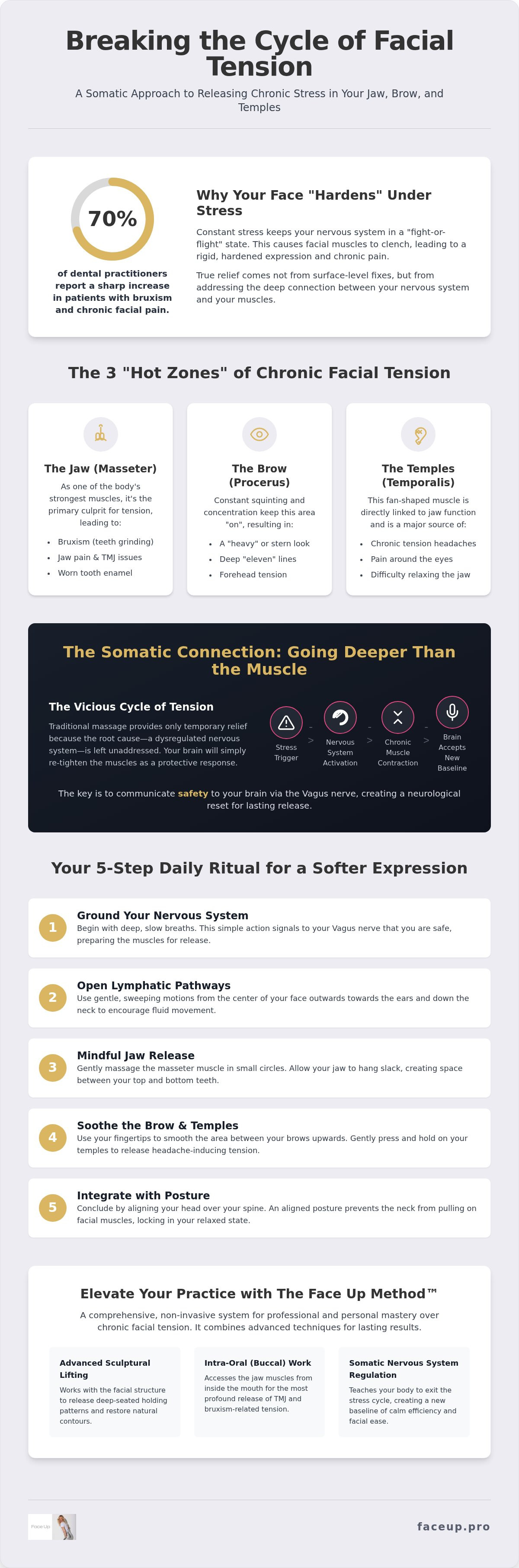
A Daily Ritual for Face and Jaw Release: 5 Steps to Soften Your Expression
Establishing a consistent routine is the most effective way to override the long-term somatic patterns your body has adopted. While professional treatments provide deep intervention, your daily habits determine the baseline of your facial health. Mastering how to release tension in face relies on creating a predictable environment for your nervous system. By following a structured sequence, you can transition from a state of defensive clenching to one of calm readiness.
- Step 1: Grounding. Begin by sitting with your feet flat on the floor and your spine elongated. Take three deep diaphragmatic breaths, focusing on expanding your belly rather than your chest. This simple shift signals to your brain that you are safe.
- Step 2: Lymphatic Opening. Use the pads of your fingers to gently pump the area just above your collarbones. Move to the sides of your neck with light, downward strokes to clear the pathways for fluid drainage.
- Step 3: Masseter Release. Form soft knuckles with your hands and place them just below your cheekbones. With a slightly open mouth, glide your knuckles slowly down toward the jawline. This targeted movement is a fundamental component of learning how to release tension in face.
- Step 4: Brow Softening. Place your fingertips on the center of your forehead. Sweep them outward toward your temples, imagining you are smoothing out the "mental" tension stored in the procerus and frontalis muscles.
- Step 5: Integration. Close your eyes and sit in stillness for 30 seconds. Notice the sensation of space in your mouth and the weight of your jaw.
Tools to Enhance Your Ritual
While your hands are your most intuitive instruments, certain additions can elevate the experience. Using a high-quality oil or "slip" is essential to prevent dragging the skin and to allow for deeper muscular access. For those with significant structural rigidity, choosing the right tmj massage tool can help you reach the deeper attachments of the masseter muscle more effectively. To ensure you are performing these movements with professional precision, you can follow the guided daily rituals within the Face Up App.
Consistency Over Intensity
The brain learns through repetition, not through occasional intensity. Spending five minutes every day on this ritual is far more beneficial than a single sixty-minute session once a month. To maintain your progress, set "tension triggers" throughout your day; for example, check the state of your jaw every time you sit at your desk or check your phone. The ultimate objective is to maintain a neutral face that is responsive to emotion rather than one frozen in a mask of stress. If you're ready to commit to a structured path toward relief, the Jaw Release Course offers the comprehensive training needed for true personal mastery.
Elevating Your Practice: The Face Up Method™ for Professional and Personal Mastery
Mastering the art of facial relaxation requires more than just knowing a few exercises; it involves adopting a comprehensive system that respects the intricate link between the mind and the muscles. The Face Up Method™ represents a proprietary blend of deep tissue sculpting and somatic bodywork designed to provide a sustainable alternative to invasive procedures. By moving beyond surface-level aesthetics, this method addresses the root neurological causes of "Stress Face." Whether you are looking for personal relief or a professional career path, understanding how to release tension in face through this specialized lens ensures that the results are both structural and lasting.
Our mission is to foster a global community of individuals and practitioners dedicated to natural rejuvenation and nervous system health. For those struggling with chronic TMJ and the physical exhaustion that follows, the Jaw Release Course serves as a vital entry point. This specialized digital program provides the tools necessary to dismantle long-standing clenching patterns, allowing the jaw to return to its natural, relaxed state. It's about reclaiming your features from the grip of chronic stress and restoring a sense of calm efficiency to your daily life.
For the Self-Healer: Digital Courses and App
The journey toward a more relaxed expression is often a deeply personal one. Our digital ecosystem is designed to support you at every stage of this progression. The Face Up App Subscription offers an extensive library of rituals tailored to your specific needs, whether you require a morning "wake up" for your lymphatic system or a deep evening release for a tight jaw. Users frequently report that these daily rituals have allowed them to avoid Botox and other fillers by naturally softening their features and restoring muscle tone. The Jaw Release workshop further complements this by providing a deep dive into the mechanics of oral and facial freedom, ensuring you have a professional-grade toolkit at your fingertips.
For the Aspiring Practitioner
The demand for holistic, somatic-based beauty treatments is growing rapidly as professionals and clients alike seek more sustainable wellness solutions. Joining our community as a certified provider allows you to offer a unique, high-standard service that stands out in the specialized professional landscape. By obtaining your facial sculpting certification, you gain mastery over the Face Up Method™ and learn how to facilitate deep emotional and physical releases for your clients. This career path offers more than just technical skill; it positions you as a professional mentor in the field of somatic facial therapy. Once certified, you are invited to join our global Practitioner Directory Listing, connecting you with a worldwide network of professionals who value integrity, proactive management, and the profound power of learning how to release tension in face.
Reclaim Your Vitality Through Somatic Awareness
True relief from chronic facial tightness is not found in a single treatment, but in the ongoing dialogue between your nervous system and your muscles. By integrating the somatic principles we've discussed, you can move from a state of constant clenching toward a baseline of calm efficiency. You now understand that how to release tension in face involves a combination of grounding rituals, lymphatic drainage, and specialized deep tissue techniques that honor the body's internal rhythms.
Developed by somatic expert Olga Newman, the Face Up Method™ provides the proprietary somatic sculpting techniques needed to achieve these lasting results. Whether you are seeking personal rejuvenation or professional advancement, our global community of certified practitioners is here to support your progression. It is time to step into a proprietary ecosystem that values integrity and proactive health management.
Master the art of release with the Face Up Method™ Certification
Your path toward a more open, youthful expression and a regulated nervous system is now clear. Trust in the process of somatic release and allow your features to reflect the deep sense of ease you've cultivated from within.
Frequently Asked Questions
How often should I perform facial tension release exercises?
Perform these exercises daily for approximately five minutes to achieve the best results. Consistency is the primary driver of success because the brain requires frequent repetition to override long-standing somatic patterns. While a longer weekly session provides depth, it's the daily commitment that prevents tension from accumulating. This rhythmic approach ensures your nervous system remains regulated throughout the week, rather than swinging between states of extreme clenching and temporary relief.
Can releasing facial tension actually make me look younger?
Releasing facial tension can lead to a more youthful appearance by softening the "hardened" features associated with chronic stress. When you learn how to release tension in face, you're essentially smoothing out the micro-expressions that have become permanent structural markers. This process restores natural volume to the cheeks and lifts the brow area. It offers a non-invasive alternative to traditional procedures by allowing the muscles to return to their optimal, relaxed length.
What is the fastest way to stop clenching my jaw during the day?
The fastest way to stop clenching during the day is to establish "tension triggers" that prompt a nervous system check-in. Every time you perform a routine action, such as opening an email or sitting at a red light, consciously drop your tongue from the roof of your mouth and exhale fully. This simple somatic reset interrupts the anxiety-induced clenching cycle. It signals to your brain that you are safe, allowing the masseter muscles to release immediately.
Is buccal massage safe to do on myself at home?
Buccal massage is not recommended as a DIY practice at home because it involves deep intra-oral manipulation that requires specialized professional training. Performing this technique incorrectly can lead to bruising or unintended strain on the delicate facial nerves. For safe and effective jaw release, it's best to seek a certified practitioner or follow a structured digital course that focuses on external techniques before attempting any internal work.
How do I know if my facial tension is emotional or physical?
In somatic therapy, we recognize that facial tension is almost always both emotional and physical. The face acts as a reservoir for suppressed feelings, which then manifest as physical contractions in the muscles and fascia. If your tension flares during specific social interactions or work tasks, it likely has a strong emotional component. Regardless of the origin, the Face Up Method™ addresses both layers by calming the nervous system while physically sculpting the tissue.
Can these techniques help with chronic migraines?
These techniques can be highly effective for managing chronic migraines by releasing the myofascial adhesions that pull on the scalp and neck. Tension in the temples and jaw often creates a referral pattern that triggers or exacerbates headache pain. By softening the facial fascia and improving lymphatic flow, you reduce the physical pressure on the nerves. Many individuals find that regular somatic release significantly decreases the frequency and intensity of their tension-related headaches.
Do I need special tools like a gua sha to see results?
You don't need special tools like a gua sha to see significant results; your hands are your most intuitive and effective instruments. While a high-quality oil is necessary to provide "slip," manual manipulation allows you to detect and release specific knots that a rigid tool might miss. Tools can be helpful enhancements once you've mastered the basics, but they are never a requirement for understanding how to release tension in face effectively.
What is the difference between face yoga and the Face Up Method™?
Face yoga primarily focuses on repetitive muscle exercises to build volume, whereas the Face Up Method™ is a proprietary blend of somatic sculpting and deep muscular release. While yoga might strengthen the face, our method prioritizes the relaxation of overactive muscles and the regulation of the nervous system. We move beyond surface movements to address the fascia and the Vagus nerve, providing a more holistic and therapeutic approach to facial health.


