
What if the key to unlocking years of chronic jaw tension isn't found on the surface of your skin, but from within the mouth's internal architecture? If you've spent years managing clicking, popping, and facial fatigue, you've likely realized that standard treatments often miss the root cause. Exploring buccal massage for tmj offers a sophisticated shift in perspective, moving beyond topical relaxation to address the deep-seated emotional vault of the jaw.
We understand how draining it is to feel like your stress is physically stuck in your face. In this guide, you'll discover how the Face Up Method™ provides a non-invasive, somatic solution to target the muscles of mastication directly. We will examine the powerful mind-body connection behind your pain, the benefits of improved facial symmetry, and how this unique intraoral approach delivers the lasting relief you deserve. It's time to move toward a state of calm efficiency and reclaimed comfort.
Key Takeaways
- Understand why intraoral techniques are essential for reaching the deep muscles of mastication that external treatments cannot access.
- Learn how buccal massage for tmj serves as a somatic tool to unlock the "emotional vault" where your body stores survival-based stress.
- Explore the differences between temporary mechanical fixes and the long-term benefits of somatic retraining for lasting jaw relief.
- Gain insights into safe home-care rituals and how to integrate specialized tools to maintain facial symmetry and ease tension.
- Discover how the Face Up Method™ provides a professional pathway to jaw health through global practitioner expertise and digital courses.
What is Buccal Massage for TMJ and How Does It Work?
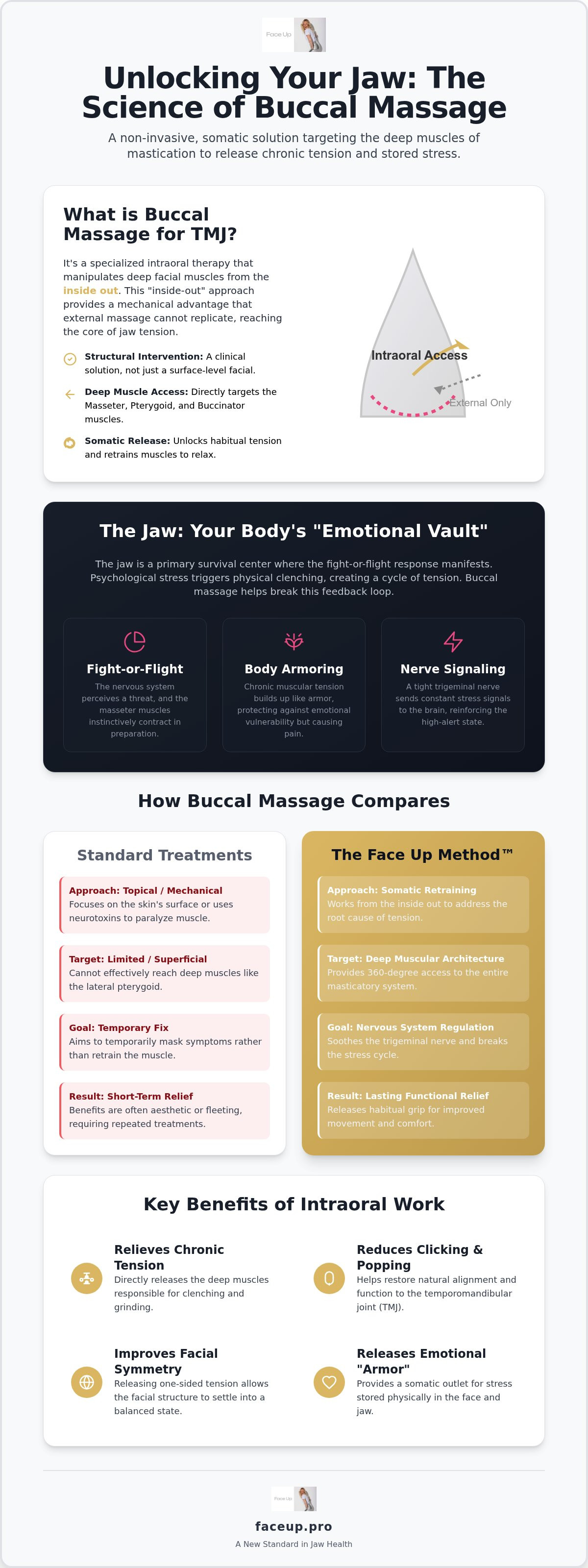
Buccal massage for tmj is a specialized manual therapy that involves working within the oral cavity to manipulate the deep facial muscles from the inside out. While many people first discover this technique through its sculptural beauty benefits, its true power lies in its ability to address Temporomandibular joint dysfunction (TMD) from an internal perspective. Initially developed as a method for sculptural face lifting to define the jawline, the technique has evolved into a vital clinical solution for those suffering from chronic pain. Practitioners now recognize that the same movements that lift the face also provide profound relief for the complex systems of the jaw.
This "inside-out" approach provides a mechanical advantage that external massage simply cannot replicate. By accessing the muscles from both the interior and exterior of the cheek, a practitioner can provide a comprehensive release that reaches the core of your tension. The sensory experience is distinct and deeply professional. During a session, you can expect your practitioner to wear sterile gloves and apply firm, intentional pressure to the inner tissues of your mouth. It isn't a traditional, light-touch facial; it's a structural intervention. You might feel a sense of intense release as the "emotional vault" of the jaw begins to soften. This sensation is often described as a "good hurt" where the muscle finally lets go of a grip it has held for years.
The Anatomy of the Buccal Cavity
The primary focus of this work involves the masseter and the pterygoid muscles. These are the heavy hitters responsible for clenching and chewing. The lateral pterygoid, in particular, is buried deep behind the jawbone, making it nearly impossible to treat effectively through the skin alone. By entering the buccal cavity, we achieve a 360-degree stretch of the facial fascia. This process also addresses the buccinator muscle, which helps with facial expression but often stores residual stress from daily habits. Releasing these internal layers allows the entire jaw structure to settle into a more natural, relaxed alignment.
Buccal Massage vs. Standard Facial Massage
A standard facial focuses on the skin's surface, using products to improve texture and tone. In contrast, the Face Up Method™ prioritizes the deep muscular architecture of the face. This focus is why buccal massage for tmj is often referred to as "nature's Botox" for the lower face. Instead of paralyzing the muscle with neurotoxins, we retrain it to release its habitual grip through somatic awareness. This specialized attention to the temporomandibular joint (TMJ) function ensures that the results aren't just aesthetic; they're functional. You aren't just looking better; you're moving better and living with less pain.
The Somatic Connection: Why Your Jaw Stores Emotional Stress
The human jaw acts as a primary survival center, functioning as the physical site where our fight-or-flight response often manifests. When the nervous system perceives a threat, the masseter muscles instinctively contract, preparing the body for a defensive stance. This reaction is deeply ingrained, yet in modern life, these threats are often psychological rather than physical. Consequently, many individuals find themselves in a state of chronic clenching that reinforces a stressed nervous system. By utilizing buccal massage for tmj, we address this cycle directly, moving beyond mechanical relief to facilitate a somatic release of stored tension.
The Face Up philosophy recognizes that facial sculpting is inseparable from somatic bodywork. We don't view the jaw as a collection of isolated parts, but as a gateway to holistic healing. Integrating buccal massage for tmj into a wellness routine allows for a profound shift in how the body processes environmental stressors. According to the National Institute of Dental and Craniofacial Research, TMJ disorders are complex and can involve various biological and environmental factors. Our approach honors this complexity by treating the face as a living record of our emotional history. When we release the physical "armor" of the jaw, we often break the feedback loop that keeps the brain in a state of high alert.
The Science of Somatic Facial Therapy
Releasing Emotional Trauma Through the Jaw
It is quite common for clients to experience unexpected emotional catharsis during a session. Because the jaw is the center of communication, it often stores the weight of suppressed words and unexpressed feelings. During a deep buccal release, don't be surprised if you feel a sudden urge to laugh or cry; this is simply the body discharging stored energy. For those interested in exploring these connections further, our guide on somatic massage therapy provides additional insights into restoring balance. If you're ready to experience this shift yourself, you can find a certified professional through our practitioner directory.
Buccal Massage vs. Traditional TMJ Treatments
Most individuals begin their search for jaw relief with a visit to the dentist, often leaving with a custom-fitted night guard. While these devices are vital for protecting tooth enamel from the mechanical forces of grinding, they don't address the muscular dysfunction itself. In fact, some patients find that a night guard provides a new object to clench against, potentially increasing masseter activity during sleep. Buccal massage for tmj offers a necessary shift in strategy. Instead of simply managing the symptoms of clenching, this manual therapy works to release the tension at its source, retraining the muscles to rest in a neutral position.
The medical community provides a wide spectrum of interventions for jaw pain. According to the Cleveland Clinic on TMJ, treatments can range from simple self-care and posture changes to complex surgical procedures. However, many people find themselves caught in the middle, seeking something more effective than a plastic guard but less invasive than surgery. Manual therapy provides this middle ground, offering a sophisticated, high-standard approach that respects the body's natural architecture while delivering measurable functional improvements.
Mechanical Relief vs. Symptom Management
Anti-inflammatory medications are another common "first line" defense. While these can ease the acute discomfort of a flare-up, they are a temporary bridge rather than a destination. They don't solve the structural imbalances or the somatic "armoring" discussed in previous sections. Manual release through the buccal cavity targets the root cause of TMD by physically stretching the fascia and muscles from within. This 360-degree access ensures that the release is thorough, helping the jaw joint move through its full range of motion without the clicking and popping that often accompany chronic tension.
Is Buccal Massage Safer Than Injections?
The use of neurotoxins like Botox to paralyze the masseter muscles has become a popular clinical trend. While it provides rapid relief, it comes with the risk of muscle atrophy over time and can lead to a "frozen" or hollowed appearance in the lower face. Buccal massage for tmj serves as a sustainable, non-toxic alternative that preserves your natural facial expressions. It's a process of somatic retraining rather than chemical paralysis. By teaching the muscles how to let go through skilled touch, you achieve a "natural facelift" effect and pain reduction without the risks associated with long-term injections.
How to Practice TMJ Relief at Home and What to Look For
Empowering yourself with home-care techniques is a vital step in maintaining the progress achieved during professional sessions. While a practitioner provides the deep structural work, your daily habits determine how well your nervous system integrates those changes. Practicing buccal massage for tmj at home allows you to address tension as it arises, preventing minor clenching from evolving into a full-scale flare-up. It's about building a relationship with your own anatomy and learning to recognize the subtle signals of stress before they become painful.
You don't always need complex equipment to find relief; your hands are your most intuitive tools. However, as you progress, you might find that a specialized tmj massage tool can help you reach deeper angles with less strain on your fingers. Whether you use your hands or a tool, the goal remains the same: gentle, consistent release. Consistency always beats intensity in somatic work. Aggressive pressure can trigger a defensive "guarding" response in the muscles, whereas a soft, rhythmic approach encourages the nervous system to downregulate and let go.
Safety is paramount when working inside the oral cavity. If you experience sharp, shooting pain, increased swelling, or a sudden loss of joint mobility, stop immediately. These red flags suggest that your condition requires the expertise of a certified professional rather than self-treatment. For those ready to deepen their home practice with guided expertise, our Jaw Release Course offers a structured digital path to lasting ease.
The Face Up Self-Care Ritual
Begin by thoroughly sanitizing your hands and creating a quiet, calm environment where you won't be interrupted. Once you're settled, use the 'hook and pull' method by placing your thumb inside your cheek and your fingers on the outside to pinch the masseter muscle gently. Slowly glide your thumb downward while maintaining a steady, slow breath. Integrating deep, diaphragmatic breathing with this manual release helps signal to your brain that it's safe to relax the jaw's "survival center."
Finding a Certified Buccal Practitioner
When seeking professional help, it's essential to verify your therapist's credentials. Look for a practitioner who holds a recognized facial sculpting certification, as this ensures they've been trained in the specific nuances of intra-oral safety and somatic release. Ask your therapist about their specific training in the Face Up Method™ and their experience with TMD cases. You can easily find verified experts globally by browsing the Face Up practitioner directory, ensuring you receive care that meets our high standards of professional integrity.
The Face Up Method™: A New Standard in Jaw Health
The Face Up Method™ represents a sophisticated evolution in how we address the intersection of facial aesthetics and functional health. Founded by Olga Newman, this proprietary approach is built on the experience of working with over 2,000 faces. It provides a structured framework for using buccal massage for tmj not just as a one-off treatment, but as a lifestyle of somatic awareness. By entering this ecosystem, you move beyond the transactional nature of standard therapies and into a community dedicated to global standards of care and professional integrity.
For many individuals, the journey begins with a search for relief and ends with a profound transformation in how they inhabit their own bodies. This transformation is supported by a suite of digital and professional solutions designed to meet you wherever you are in your healing process. Whether you're a patient looking for daily support or a professional seeking to advance your career, the method provides a reliable, high-standard path forward that values long-term results over temporary fixes.
Digital Solutions for Daily Relief
The Jaw Release Course is our specialized digital offering for those who cannot visit the Auckland studio in person. Inside, you'll find a deep-dive into anatomy, somatic theory, and the specific manual techniques required for effective buccal massage for tmj. To maintain these results, the Face Up App offers guided daily rituals through a subscription model. This ensures consistency, which is the key to nervous system regulation. Tracking your progress through the app helps turn these somatic interventions into a seamless part of your professional and personal life, ensuring tension doesn't have the chance to return.
Becoming a Face Up Practitioner
As global awareness of the mind-body connection grows, so does the demand for certified somatic facial therapists. The Face Up Method Certification provides a rigorous pathway for professionals to master these high-demand skills and join our global practitioner directory. The process moves from online theoretical modules to practical mastery, ensuring every practitioner can deliver the Face Up Sculpting Treatment with confidence. This is more than a career advancement; it's an invitation to join a global network of facilitators who are redefining the standards of the beauty and wellness industry.
Ready to transform your practice? Explore the Face Up Method™ Certification and discover how to bring this somatic path to your own community.
Reclaiming Your Comfort Through Somatic Release
Navigating chronic jaw pain requires a shift from managing symptoms to addressing the deep muscular and emotional architecture of the face. By choosing buccal massage for tmj, you're opting for a non-invasive, holistic approach that respects your body's natural alignment. We've explored how this "inside-out" technique reaches the lateral pterygoid and masseter muscles, providing a level of relief that surface-level treatments simply cannot match. This journey isn't just about physical ease; it's about regulating your nervous system and releasing years of stored tension.
Founded by somatic expert Olga Newman, the Face Up Method™ offers a proprietary ecosystem of support, from digital courses to a global community of certified practitioners. Whether you're practicing rituals at home or visiting a professional, you're never alone on this path to recovery. We invite you to move toward a state of calm efficiency and lasting functional health. Release your jaw tension today with the Face Up Method™ and experience the profound difference of a truly somatic approach. You deserve a life defined by comfort rather than clenching.
Frequently Asked Questions
Is buccal massage painful for someone with severe TMJ?
Buccal massage for tmj shouldn't cause sharp or distressing pain; instead, it provides a sensation of intense therapeutic release. While severe tension can make the initial contact feel tender, a certified practitioner will adjust the pressure to your comfort level. The goal is to encourage the muscle to let go rather than forcing it, which prevents a defensive guarding response from your nervous system.
How many sessions of buccal massage are needed to see results for TMJ?
Most clients see significant results within three to six sessions. While immediate relief is often felt after the first appointment, chronic dysfunction requires a series of treatments to retrain the muscular memory and achieve lasting somatic change. Your practitioner will establish a customized plan based on the severity of your clenching habits and your specific goals for jaw health and facial symmetry.
Can I perform buccal massage on myself safely at home?
You can safely perform buccal massage on yourself at home if you follow professional guidance. Using a structured digital program ensures you understand the internal anatomy and apply the correct pressure without causing irritation. Consistency is the primary factor in maintaining the results of professional treatments and preventing the return of deep-seated facial tension through daily, mindful rituals.
Does buccal massage change the shape of my face or just help with pain?
Buccal massage for tmj addresses both aesthetic concerns and physical pain simultaneously. By releasing chronic masseter tension, the treatment reduces inflammation and fluid retention, which often results in a more defined jawline and improved facial symmetry. You aren't just managing pain; you're restoring the natural, relaxed architecture of your lower face by retraining the muscles to rest in a neutral position.
Is it sanitary to have a buccal massage during a regular facial?
Professional buccal massage is highly sanitary when performed with medical-grade gloves and strict hygiene protocols. A qualified therapist will ensure their hands and any tools used are properly sterilized before beginning the intra-oral portion of the treatment. This standard of care is a hallmark of the Face Up Method™, ensuring a safe and professional environment for every client navigating their wellness journey.
What is the difference between intra-oral massage and buccal massage?
Intra-oral massage is a broad clinical term, while buccal massage is a specific sculptural and somatic technique. While both involve working inside the mouth, buccal massage focuses on the 360-degree manipulation of the facial muscles to achieve both functional relief and aesthetic lifting. It integrates myofascial release with a deep understanding of the mind-body connection to provide a holistic experience.
Can buccal massage help with tension headaches and migraines?
This technique is exceptionally effective for relieving tension headaches and migraines triggered by jaw dysfunction. The muscles of mastication are closely linked to the nerves that refer pain to the temples and forehead. By releasing the internal tension in the jaw, we often see a secondary reduction in the frequency and intensity of chronic head pain as the entire facial structure relaxes.
Is buccal massage safe if I have dental implants or braces?
Buccal massage is generally safe for those with dental implants or braces, though it requires a specialized approach. Your practitioner will avoid direct pressure on the hardware while focusing on the surrounding soft tissues and muscles. It's essential to inform your therapist about any dental work so they can navigate the oral cavity with the necessary precision and care required for your safety.


