

What if the most effective way to lift your face in 2026 isn't through a needle, but through the fluid intelligence of your own body? You've likely noticed that while traditional injectables offer a quick fix, they often come with a heavy price tag and the risk of a "frozen" look that doesn't feel like you. It's frustrating to pay for treatments that mask chronic jaw tension or TMJ without actually addressing the underlying stagnation in your tissue. You want to look like yourself, only more vibrant and less burdened by the weight of daily stress and fluid retention.
In this guide, we'll explore the nuances of lymphatic drainage massage vs botox to help you reclaim your beauty ritual. You'll discover how manual lymphatic sculpting serves as a sophisticated, somatic alternative that promotes long-term skin health and structural integrity. We'll compare the costs, the physiological impacts, and the sustainable benefits of choosing flow over freeze. This overview provides the clarity you need to move toward a self-empowered practice that delivers a sculpted, lifted appearance without compromising your natural expression or your health.
Key Takeaways
- Contrast the physiological mechanisms of muscle paralysis with the revitalizing power of manual fluid stimulation for a truly lifted profile.
- Gain insight into the connection between facial movement and emotional intelligence, ensuring your rejuvenation path supports your mental well-being.
- Compare the financial and biological investments of lymphatic drainage massage vs botox to choose the most sustainable path for your 2026 goals.
- Discover how the Face Up Method™ provides professional-grade tools to resolve chronic tension and maintain your results through empowered daily practice.
Understanding the Choice: Lymphatic Drainage Massage vs Botox in 2026
The aesthetic landscape of 2026 reflects a growing desire for authenticity and somatic intelligence. We've moved beyond the era of aggressive "anti-aging" toward a pro-aging movement that prioritizes the long-term health of our skin. Deciding on lymphatic drainage massage vs botox requires an understanding of how each approach affects your facial architecture. One path relies on chemical intervention to pause time, while the other utilizes manual mastery to optimize the body's natural processes. This comparison matters because it highlights the difference between fixing a surface-level wrinkle and cultivating a thriving cellular environment.
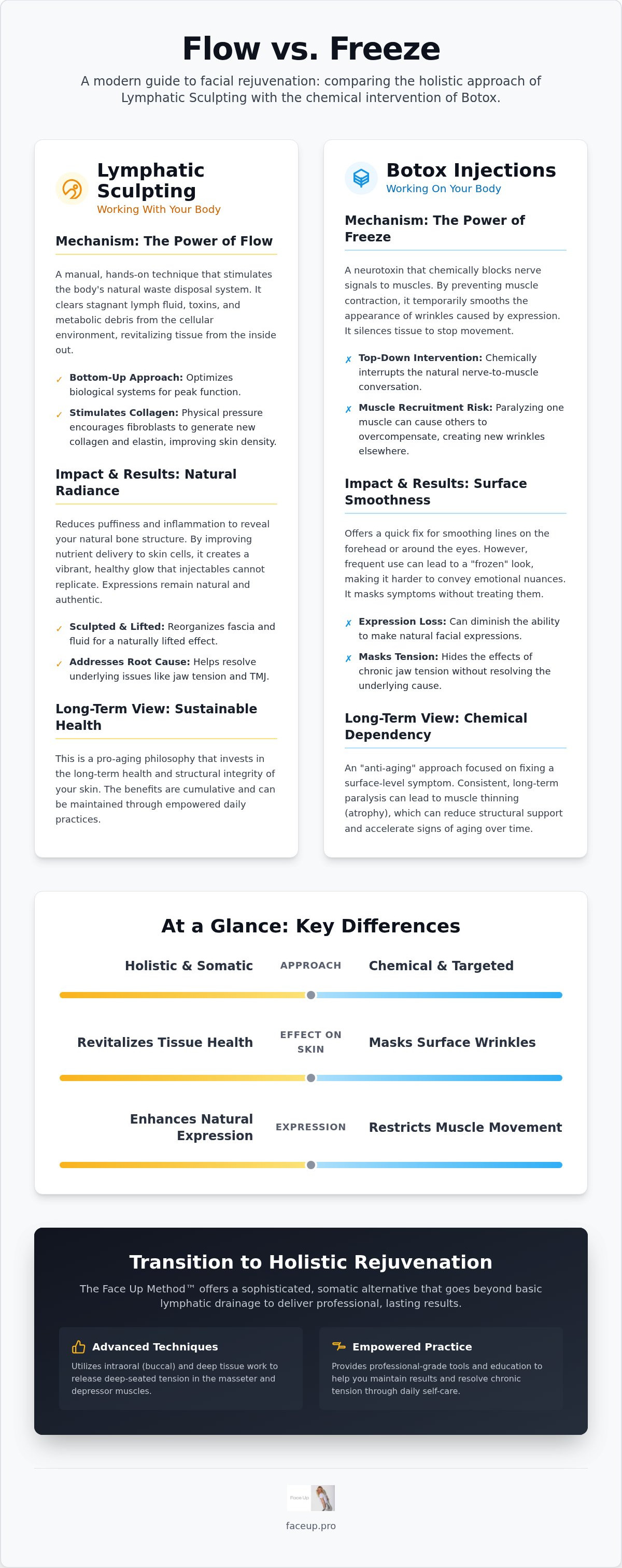
Botox is a neurotoxin derived from Botulinum toxin that works by temporarily blocking the nerve signals responsible for muscle contraction. By contrast, lymphatic drainage is a manual technique designed to stimulate the movement of lymph fluids throughout the face and body. While Botox offers a temporary suspension of movement, lymphatic sculpting invites a revitalization of the tissue itself. One addresses the symptom of aging, while the other addresses the biological environment that allows skin to stay resilient.
What is Botox Actually Doing to Your Face?
Botox acts as a chemical shield. It blocks the neurotransmitter acetylcholine to prevent muscle fibers from contracting. While this effectively smooths the forehead or crow's feet, it also silences the muscle's ability to communicate. Frequent use can lead to a loss of natural facial expression, making it harder for others to read your emotional nuances. Consistent paralysis can lead to muscle thinning. When a muscle is forced into a state of inactivity for years, it loses volume. This can inadvertently accelerate the appearance of aging by reducing the structural support beneath the skin, a concern that specialists like Dr. Leonard Grossman address through restorative fat grafting procedures.
The Science of Lymphatic Sculpting and Flow
Your lymphatic system serves as the body's essential waste disposal unit, filtering out toxins and excess fluid. Unlike the heart, this system lacks a pump; it relies entirely on movement and manual stimulation to function. Stagnant lymph fluid creates a heavy, puffy appearance that can obscure your natural bone structure and lead to chronic inflammation. Through Manual lymphatic drainage (MLD), practitioners gently guide this fluid toward the lymph nodes for processing. Facial sculpting is a manual intervention that reorganizes fascia and fluid for a lifted effect. This process doesn't just reduce swelling; it improves nutrient delivery to the skin cells, resulting in a glow that no injectable can replicate.
The Mechanism of Action: Muscle Paralysis vs. Lymphatic Flow
While we have established the basic biological definitions, the true divergence lies in the direction of the intervention. Botox exerts a top-down influence by chemically interrupting the neurological conversation between the nerve and the muscle. It essentially silences the tissue to prevent movement. In contrast, manual sculpting adopts a bottom-up philosophy. By leaning into the benefits of lymphatic drainage, this technique clears metabolic debris and stagnant fluid from the cellular environment. When comparing lymphatic drainage massage vs botox, we see the difference between stopping a movement and optimizing a biological system to function at its peak.
A significant risk of neurotoxins is a phenomenon known as muscle recruitment. When the primary muscle used for an expression is paralyzed, the brain instinctively recruits secondary muscles to perform the task. This often results in the formation of new, unexpected wrinkles in areas that were previously smooth. Manual work avoids this trap by harmonizing the entire facial structure rather than isolating a single muscle. The physical pressure applied during sculpting also stimulates fibroblasts to generate fresh collagen and elastin. This provides a natural density and "bounce" to the skin that chemicals cannot replicate, ensuring the face remains resilient and structurally sound as it ages.
Buccal and Deep Tissue: Beyond Basic Lymphatic Drainage
Surface-level strokes are often insufficient for addressing deep-seated structural lines or heavy jowls that have formed over years of tension. The Face Up Method utilizes advanced intraoral techniques to address the masseter and depressor muscles from both the inside and outside of the cheek. This is why many estheticians look for buccal massage training online to elevate their results. By releasing these deep tension points, we achieve a lifted, architectural look that mimics the effects of masseter Botox without the risks of facial migration or the loss of structural support.
The Atrophy Factor: Why Muscle Health Matters
Long-term muscle health is the essential foundation of natural rejuvenation. Decades of continuous immobilization can lead to muscle thinning; much like a limb atrophies when kept in a cast, facial muscles lose volume when they aren't allowed to contract. This loss of volume eventually requires dermal fillers to restore the face's natural contours. Manual sculpting maintains what we call expression intelligence, which refers to the subtle micro-movements that make your face uniquely yours. If you're ready to prioritize your facial structure, visit our practitioner directory to find a certified specialist who can guide you through this process.
Beyond the Surface: The Somatic Cost of Freezing Your Expressions
The choice between lymphatic drainage massage vs botox often centers on aesthetics, yet the emotional implications of these treatments are equally profound. Scientific research into the "Facial Feedback Hypothesis" suggests that our facial expressions don't just reflect our feelings; they help create them. When we smile, our brain receives signals that we are happy. If these pathways are chemically silenced through neurotoxins, that internal feedback loop is disrupted. By freezing the muscles responsible for expression, we may inadvertently dampen our ability to fully experience joy or empathy. Choosing a manual approach ensures that your face remains a vibrant, communicative tool for your emotional life.
Our faces act as a biological record, storing years of emotional trauma and daily stress within the fascia and muscle tissue. While Botox can mask the visual evidence of a furrowed brow, it leaves the underlying tension untouched. This creates a state of somatic dissonance where the face looks calm, but the nervous system remains in a state of high alert. Manual sculpting allows you to address these stored signatures of stress directly. It invites a release that is both physical and emotional, moving beyond the superficial to foster a sense of genuine internal peace.
Facial Tension and the Nervous System
The connection between your facial muscles and the Vagus nerve is a cornerstone of somatic health. This nerve governs your body's ability to transition into a "rest and digest" state. When facial muscles are chronically tight, they send signals of distress to the brain. For individuals dealing with chronic jaw clenching or grinding, tmj massage therapy provides a deeper level of relief than Botox, which only masks the discomfort without resolving the habit. Facial sculpting serves as a targeted somatic release that deconstructs layers of stored physiological tension while simultaneously refining the aesthetic contours of the face. This dual action supports a regulated nervous system and a more resilient appearance.
The Face Up Method™: A Holistic Alternative
Olga Newman’s Face Up Method™ represents a shift in the beauty industry, moving from a philosophy of "fixing" to one of "listening." This method integrates advanced somatic bodywork with aesthetic sculpting to treat the face as an extension of the whole person. Practitioners who adopt this approach recognize that a lifted cheekbone is most beautiful when it accompanies a relaxed jaw and a calm mind. By choosing this path, you aren't just opting for a natural look; you're committing to a ritual that honors your body's wisdom. This transition from chemical intervention to manual mastery allows for results that are visible on the skin and felt within the soul.
Practical Comparison: Results, Maintenance, and Long-Term Investment
When evaluating lymphatic drainage massage vs botox, the timeline of results is often the first consideration. Botox offers the allure of instant gratification, typically settling within seven to 14 days to smooth the skin surface. However, this effect is transient, requiring a return to the clinic every few months as the neurotoxin wears off. Manual sculpting operates on a principle of cumulative progress. While you may see an immediate reduction in puffiness after one session, the true transformation occurs over weeks as the tissue reorganizes and the muscles regain their natural tone. This path requires patience, but it rewards you with a structural integrity that injectables cannot replicate.
The financial commitment also differs significantly. While a single Botox treatment might cost between $420 and $528 on average in 2026, those costs recur indefinitely to maintain the effect. There is also the invisible cost of potential side effects. Injection site bruising or eyelid ptosis (drooping) are documented risks that can occur even with experienced providers. Choosing the Face Up Method™ shifts you from a state of dependency to one of empowerment. Instead of being a passive recipient of a clinical procedure, you become an active participant in your own rejuvenation, building a foundation of health that lasts a lifetime.
Maintenance: The Role of Daily Rituals
Professional treatments are the catalyst, but daily rituals are the fuel. Incorporating a tmj massage tool into your evening routine allows you to manage jaw tension in real time, preventing the formation of deep lines before they start. The Face Up App provides the structure for these daily rituals, making holistic facial care a seamless part of your lifestyle. Spending just five minutes a day on manual stimulation outperforms the temporary stillness of paralyzed muscles because it keeps the tissue oxygenated and the lymph flowing. Consistency in these small acts creates a compounding effect on your skin's radiance.
Who is the Ideal Candidate for Each?
Botox may serve a purpose for those with severe medical masseter prominence, but for many, it becomes an aesthetic crutch that masks deeper issues rather than resolving them. The ideal Face Up client is someone seeking longevity, health, and authentic expression over a temporary freeze. If you've used injectables for years, transitioning to manual work can help "wake up" the face. Sculpting encourages blood flow to return to atrophied muscles, gently restoring the facial landscape and reviving your natural features. To begin this transition, we invite you to explore our Face Up App subscription and start building your sustainable beauty ritual today.
Transitioning to Holistic Rejuvenation: The Face Up Method™ Approach
Moving from the analytical debate of lymphatic drainage massage vs botox to a tangible practice involves shifting your mindset from suppression to support. While the medical aesthetic industry often focuses on what to take away or freeze, the Face Up Method™ focuses on what to restore. This journey begins with a commitment to somatic intelligence. It's about recognizing that your face is not a problem to be solved, but a living system that responds to touch, fluid movement, and nervous system regulation. By choosing a holistic path, you transition from temporary chemical corrections to a permanent state of tissue health and structural vitality.
The transition often starts with a professional treatment to clear years of stagnation and "wake up" the facial muscles. Finding a certified practitioner is essential; these experts understand the delicate interplay between the lymphatic system, the fascia, and the emotional signatures held within the jaw. For those who prefer the comfort of their own home, mobile wellness providers like The Outcall Spa offer professional treatments that fit seamlessly into a busy lifestyle. Once the foundation is laid in a professional setting, the focus shifts to the home environment. Integrating these techniques into your lifestyle ensures that your results aren't just a fleeting post-facial glow, but a lasting transformation that evolves with you.
Professional Certification for the New Era
For estheticians and bodyworkers, the shift in consumer demand toward "no-tox" alternatives presents a unique opportunity. The facial sculpting certification provides a comprehensive framework to master these advanced manual techniques. In a market saturated with standard facials that only treat the skin's surface, this training allows practitioners to offer deep, structural changes that rival the effects of injectables. Becoming part of the global community of Face Up practitioners means moving beyond traditional beauty standards. It positions your practice as a leader in somatic facial therapy, appealing to a growing demographic of clients who value integrity, health, and authentic expression.
Your First Step: The Face Up Ritual
You don't have to wait for a professional appointment to begin your journey. Downloading the Face Up App provides immediate access to specialized routines for jaw release and lymphatic drainage. These guided rituals are designed to regulate your nervous system while refining your facial contours. In your first professional Face Up sculpting session, you'll experience the profound difference between a relaxing massage and a functional reorganization of your facial tissues. This work is deep, intentional, and deeply restorative. It’s time to move toward a beauty ritual that empowers you rather than one that makes you dependent on a needle. Explore the Face Up Method Certification and App to start your path toward natural, sustainable rejuvenation today.
Ultimately, beauty is an internal state of balance reflected in the health of your external tissues. When you prioritize flow over freeze, you aren't just choosing a different treatment; you're choosing a different relationship with yourself. In 2026, the most sophisticated choice is the one that honors your body's innate wisdom and allows your true expression to shine through clearly.
Embrace the Future of Facial Vitality
Choosing between lymphatic drainage massage vs botox is ultimately a decision about how you wish to inhabit your own skin in 2026. We've examined how manual sculpting moves beyond surface-level fixes to restore the fluid intelligence of your tissues and the resilience of your facial architecture. This path doesn't just smooth lines; it releases the somatic weight of stress and preserves the authentic expressions that connect you to others. By prioritizing flow over paralysis, you invest in the long-term health of your skin and your nervous system.
Olga Newman’s proprietary Somatic Method provides a sophisticated framework for this transition. Through our global community of certified specialists and app-based rituals for daily maintenance, we offer the professional expertise and self-practice tools needed for a truly regenerative beauty journey. It is a movement rooted in integrity, empowering you to lead your own rejuvenation with confidence and clarity. Join the movement and become a Certified Face Up Practitioner today.
Your journey toward a more vibrant, expressive self begins with a single, mindful touch. Trust in your body's ability to renew itself.
Frequently Asked Questions
Can lymphatic drainage massage really get rid of forehead wrinkles like Botox?
Manual techniques can significantly soften forehead lines by releasing the underlying frontalis muscle tension and hydrating the fascia. While Botox provides a temporary chemical freeze, sculpting addresses the habitual patterns that cause wrinkles. Consistent practice leads to a smoother appearance that looks natural rather than static, fostering long-term skin resilience without the need for neurotoxins.
How long do the results of a facial sculpting massage last compared to Botox?
Botox typically lasts three to four months, whereas the results of lymphatic drainage massage vs botox are cumulative and sustainable. While a single massage session offers immediate depuffing, engaging in daily rituals through the Face Up App helps maintain structural lifting indefinitely. You are building tissue health and muscle tone rather than waiting for a chemical to wear off.
Is it safe to get a lymphatic drainage massage if I already have Botox?
It is generally safe to receive a massage after Botox, provided you wait at least 14 days for the neurotoxin to fully settle and integrate into the muscle. Practitioners often recommend manual work after this period to maintain blood flow to the area. This helps prevent the muscle atrophy and "heavy" feeling sometimes associated with long-term injectable use.
Does facial massage cause more wrinkles by stretching the skin?
Professional facial massage does not cause wrinkles; it actually supports the skin's structural integrity and elasticity. By using specific techniques and proper lubrication, we move the underlying fluid and fascia without dragging the surface skin. This process stimulates collagen production and improves nutrient delivery, which helps prevent future fine lines from forming naturally.
Can I use lymphatic drainage to treat TMJ instead of Botox injections?
Manual sculpting and specialized intraoral work are highly effective for managing TMJ symptoms by releasing the masseter and pterygoid muscles. Unlike Botox, which simply paralyzes the muscle to stop the clenching, somatic bodywork addresses the root cause of the tension. This provides a more holistic and functional solution for those seeking relief from chronic jaw pain and clicking.
How many sessions of professional facial sculpting do I need to see a difference?
You will likely see a visible reduction in puffiness and a brighter complexion after your very first session. For lasting structural changes and a truly defined jawline, a series of six to ten professional treatments is usually recommended. Following this with a consistent home ritual ensures that the cumulative benefits of the method remain visible and permanent.
What is the best age to start lymphatic drainage massage for anti-aging?
There is no single "best" age to begin, as lymphatic support benefits the skin at every stage of life. Starting in your 20s or 30s acts as a powerful preventative measure to maintain fluid flow and skin density. In later years, the focus shifts to restorative work to address deeper lines and restore the facial volume that may have been lost.
Is buccal massage painful compared to the sting of a needle?
Buccal massage involves deep internal work that feels more like an intense stretch than the sharp, localized sting of a needle. While the sensation is profound and deep, most clients describe it as a therapeutic "good hurt" that releases deep-seated emotional and physical tension. It provides a level of structural relief for the lower face that an injection simply cannot achieve.


