

Your face serves as a living record of your internal world, often storing years of emotional stress and physical tension within the deep muscles of the jaw. You've likely felt that persistent rigidity during a long workday or noticed a softening of your once-sharp profile in the mirror. While a single session provides an immediate glow, the real transformation happens through intentional consistency. To move from fleeting relief to a permanent structural shift, you must determine exactly how often should you get a buccal massage based on your specific somatic and aesthetic goals.
We understand that true beauty isn't about freezing your features; it's about releasing the blockages that hide your natural vitality. In this guide, we'll break down the science of neuromuscular retraining and the Face Up Method™ approach to frequency. Whether you're seeking to alleviate chronic TMJ discomfort or want to maintain a sculpted, lifted appearance, we'll provide a clear roadmap for your journey. You'll learn how to balance intensive professional sessions with the supportive daily rituals found in the Face Up App to ensure your results remain as vibrant as your spirit.
Key Takeaways
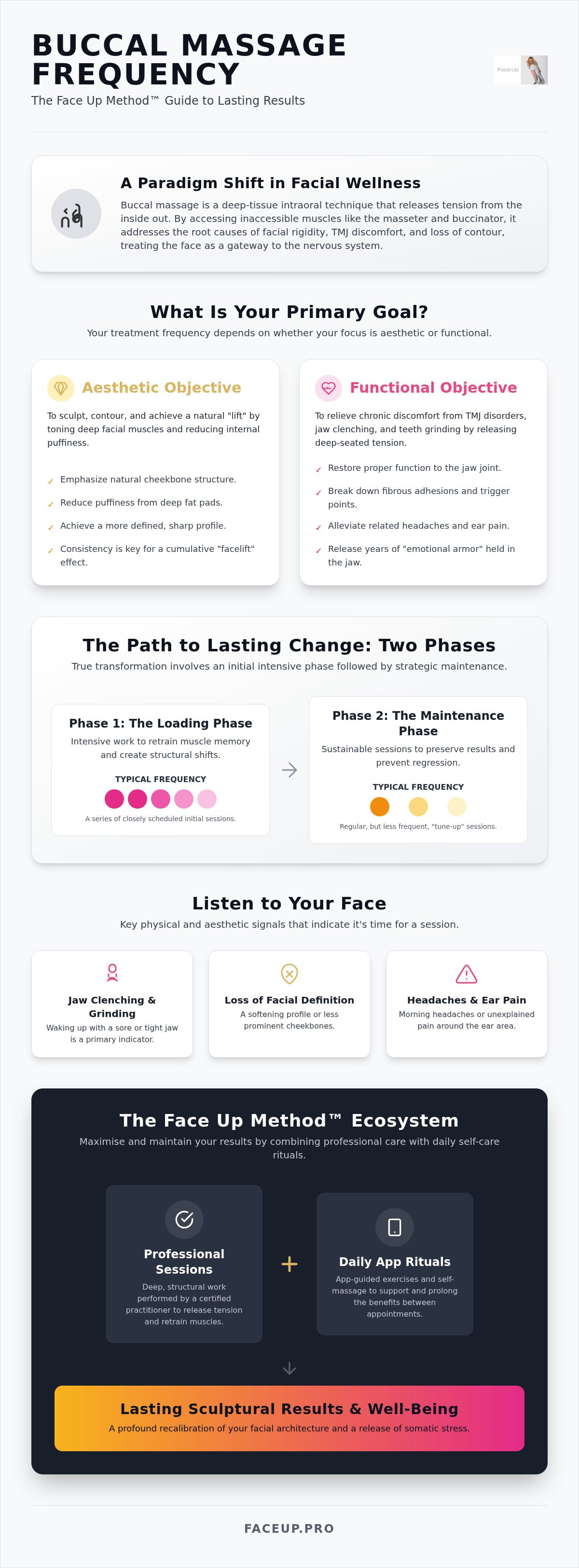
- Learn the distinction between an intensive Loading Phase for structural change and a sustainable Maintenance Phase for long-term preservation.
- Discover how often should you get a buccal massage to successfully retrain muscle memory and release deep-seated emotional tension.
- Identify the physical and aesthetic signals, from jaw clenching to loss of facial definition, that indicate your structure requires professional attention.
- Master the Face Up Method™ ecosystem by combining professional sessions with daily app-guided rituals for lasting sculptural results.
Understanding Buccal Massage: Why Frequency Varies by Goal
Buccal massage represents a professional shift in how we approach facial wellness. It is a deep-tissue intraoral technique that allows practitioners to reach the masseter and buccinator muscles from both sides of the cheek. By working inside the oral cavity, we can manipulate muscle fibers that are otherwise inaccessible to traditional external methods. This isn't a "one size fits all" treatment. Your starting tension levels, facial structure, and lifestyle all dictate your personal schedule. Determining how often should you get a buccal massage is the first step in creating a sustainable plan for your unique facial goals.
The Face Up Method™ treats the face as a vital gateway to the entire nervous system. We believe that releasing facial rigidity does more than just smooth the skin; it signals the brain to move out of a "fight or flight" state. This holistic perspective ensures that every session serves your total well-being, not just your reflection. By addressing the somatic roots of tension, we facilitate a deeper connection between your physical form and your emotional state.
The Aesthetic Objective: Sculpting and Contouring
If your goal is a more defined profile, intraoral work is exceptionally effective. It targets the deep fat pads and muscles to reduce internal puffiness and emphasize the natural contours of the cheekbones. Achieving these results requires a commitment to regular sessions that gradually "lift" the facial architecture. A natural facelift is the cumulative result of consistent muscle toning and structural realignment over time. Without this rhythm, the muscles tend to return to their habitual, slumped positions, making consistency the key to longevity.
The Functional Objective: TMJ and Tension Relief
Many clients seek buccal massage to address the debilitating effects of jaw clenching and teeth grinding. This therapeutic application shares many principles with medical massage, as it focuses on restoring proper function to the temporomandibular joint. High-stress individuals often carry years of "emotional armor" in their jaw, resulting in chronic rigidity. Consequently, they may require more frequent sessions at the start of their journey to break down fibrous adhesions and trigger points. These sessions don't just provide temporary comfort; they provide a roadmap for long-term recovery by releasing the deep tension that causes morning headaches and ear pain. For those struggling with chronic discomfort, our Ultimate Guide to TMJ Massage Therapy offers additional strategies for restoring balance. Understanding these distinct objectives helps you and your practitioner decide how often should you get a buccal massage to ensure your progress never plateaus.
The Cumulative Effect: How Regular Sessions Retrain Muscle Memory
Facial muscles don't operate in isolation; they're part of a complex neuromuscular network that develops specific habits over time. When you experience chronic stress, your muscles "learn" to hold onto tension, creating semi-permanent patterns of rigidity in the jaw and brow. This facial muscle memory is why a single treatment, while deeply relaxing, isn't enough to create lasting structural change. When considering how often should you get a buccal massage, it's essential to understand that we're working to overwrite these ingrained physical responses. By consistently manipulating the tissue from within the oral cavity, we begin to break down the fibrous adhesions and internal scar tissue that keep your face in a state of "guarding."
This process facilitates a somatic unwinding. As you return for subsequent sessions, your nervous system begins to feel safer, allowing the deep muscles of the face to release more fully than they did during your initial appointment. The Face Up approach isn't about chasing a temporary, post-facial glow. Instead, we focus on a profound recalibration of your facial architecture. This cumulative progress is the primary reason why the answer to how often should you get a buccal massage usually involves a series of initial treatments designed to establish a new, relaxed baseline for your musculoskeletal system.
Neuromuscular Re-education in Facial Sculpting
Your brain maintains a constant loop of communication with your facial muscles. If that loop is stuck in a pattern of clenching, the Face Up Method™ acts as a physical "reset" for those neural pathways. During the first session, the muscles often resist deep work because they're unaccustomed to the stimulus. However, by the second and third appointments, the brain has recognized the treatment as beneficial rather than intrusive. This shift is why many clients report that their most significant breakthroughs in jaw mobility and emotional release happen during these middle sessions of a treatment course. To experience this structural shift firsthand, you can explore our Face Up Sculpting Treatment options.
The Lymphatic and Circulatory Build-up
Beyond the muscles, regular buccal work provides a consistent stimulus for the lymphatic system. While a single session can reduce immediate puffiness, consistent drainage prevents the stagnant fluid from returning, leading to a more permanently refined jawline. The increased blood flow during these sessions also delivers a steady supply of oxygen and nutrients to the deeper layers of the dermis, which improves skin quality from the inside out. Repeated sessions effectively strengthen the facial scaffold by stimulating collagen production and reinforcing the underlying muscular framework. This creates a resilient foundation that resists the downward pull of gravity and the visible effects of daily stress.
Finding Your Rhythm: Intensive Phase vs. Long-Term Maintenance
Your journey with intraoral work evolves as your facial structure responds to the treatment. It isn't a static schedule; rather, it's a rhythmic progression from deep recalibration to intuitive preservation. When clients ask how often should you get a buccal massage, the answer depends on whether they're in the process of reshaping their facial architecture or simply maintaining a healthy, relaxed baseline. By categorizing your sessions into distinct phases, you can achieve profound structural changes without overtaxing your tissue or your schedule.
The 8-Week Transformation Protocol
For those starting with significant jaw tension or visible sagging, the "Loading Phase" is the professional gold standard. This involves weekly sessions for a duration of 6 to 8 weeks. This frequency is necessary to overcome the initial resistance of the masseter muscles and to begin the process of neuromuscular re-education. By week four, most individuals notice a visible "lift" in the mid-face and a marked reduction in morning jaw stiffness. This intensive period often triggers a significant somatic release; as the physical "armor" of the face softens, many clients report a surprising reduction in overall anxiety levels. Mastery of these specific protocols is a core component of our Facial Sculpting Certification, ensuring that practitioners can guide clients safely through this transformative period.
Sustaining Results: The Monthly Maintenance Model
Once you've achieved your desired sculptural and functional goals, you'll move into the "Maintenance Phase." At this stage, sessions are typically scheduled every four to six weeks. This rhythm is designed to preserve the muscle tone and lymphatic efficiency established during your intensive protocol. You'll know it's time for a visit when you feel a familiar "heaviness" in the jowls or a slight restriction when opening your mouth wide. To extend the time between studio visits, we recommend using the Face Up App for daily rituals that prevent tension from accumulating. This combination of professional expertise and self-care allows you to customize your schedule based on lifestyle factors like high-stress work projects or upcoming dental procedures.
There are also times when an "Emergency Session" becomes essential. If you're navigating a period of acute emotional stress or physical clenching, an ad-hoc appointment can prevent a full relapse into old tension patterns. Understanding how often should you get a buccal massage means learning to listen to these subtle cues from your body. Whether you're in the middle of a transformation or simply protecting your progress, a structured approach ensures that your results are both visible and deeply felt.
Listening to Your Face: Signs You Need a Session
The question of how often should you get a buccal massage is best answered by your own anatomy. Your face communicates its needs through subtle shifts in sensation and structure long before a scheduled session arrives. By developing a keen sense of somatic awareness, you can transform your maintenance routine from a calendar obligation into a responsive healing practice. This approach ensures you're addressing tension as it arises, rather than waiting for it to become a chronic issue.
Physical indicators are often the most urgent signals. If you wake up with persistent morning headaches or feel a sharp restriction when yawning, your masseter muscles are likely in a state of chronic contraction. You might also experience a "heavy" sensation in the jowls or a feeling of being disconnected from your facial expressions. This "frozen" mask effect is a common somatic response to prolonged stress. To help identify these areas of resistance, you can use a TMJ Massage Tool for a gentle self-assessment before booking your next professional appointment.
The Mirror Test: Visual Cues for Maintenance
Aesthetic changes often mirror internal tension. Fluid retention in the lower third of the face can make the jawline appear soft or undefined, a sign that the lymphatic system is sluggish. You should also look for asymmetry; if one cheekbone appears lower or more "sunken" than the other, it usually indicates one-sided clenching. Surprisingly, even "tired eyes" can stem from jaw tension. The muscles of the face are interconnected, and a tight jaw pulls on the ocular area, creating a look of fatigue that no amount of sleep can fix. Regularly assessing these visual markers helps you determine how often should you get a buccal massage to maintain your sculptural results.
Somatic Awareness: Feeling the Tension Before it Shows
True results come from catching tension before it becomes structural. We encourage the "Face Up" habit of checking in with your jaw multiple times a day. Are your teeth touching? Is your tongue pressed against the roof of your mouth? These emotional "holding" patterns are clear signals that you need an intraoral release. By using the daily rituals in the Face Up App, you'll increase your sensitivity to these patterns, making it easier to stay ahead of the rigidity. This daily check-in is the most effective way to extend the benefits of your professional treatments.
If you've noticed these signs and are ready to reclaim your facial freedom, explore our Face Up Sculpting Treatment to restore your natural architecture and release deep-seated tension.
Maximising Results: The Face Up Method™ Ecosystem
Professional treatments are the catalyst for change, but the Face Up Method™ ecosystem provides the structure for that change to last. Your facial architecture is dynamic. It responds to every clench, every smile, and every hour of sleep. Relying solely on studio appointments is like going to the gym once a month; you'll feel better, but you won't see the structural transformation you desire. By integrating professional sessions with the Face Up App, you create a feedback loop of release and reinforcement. For those seeking the highest level of in-person expertise, our Auckland studio remains the home of these proprietary techniques.
When determining how often should you get a buccal massage, you must consider your capacity for home care. A client who uses the app daily may find they can extend their maintenance sessions to every six weeks. Conversely, someone navigating a high-stress period without home rituals might need to stick to a strict monthly schedule. Our certified practitioners are trained to evaluate your "frequency profile," ensuring your treatment plan matches the current state of your nervous system and muscle tone.
Daily Rituals: The Key to Fewer Studio Visits
The Face Up App acts as your digital mentor, guiding you through five-minute somatic jaw release rituals. These brief, daily sessions are designed to prevent tension from "setting" into the muscle fibers. While professional deep work recalibrates the system, these at-home rituals ensure the nervous system stays in a state of safety. This synergy is what allows for the long-term sculptural results we promise. You aren't just treating symptoms; you're cultivating a new baseline of facial freedom. Five minutes of daily self-massage is more effective for muscle memory than a monthly session in isolation.
Your Professional Path: From Client to Practitioner
As you experience the shift in your own facial structure, you may feel called to share this work with others. Understanding the nuances of how often should you get a buccal massage is a vital skill for any modern therapist. Our certification programs go beyond simple technique; they teach the somatic science of the Face Up Method™. This enables practitioners to assess a client's needs with professional authority and compassion. Explore our professional certification programs for global practitioners.
Whether you're a client seeking relief or a professional looking to advance your career, the Face Up Method™ offers a clear path forward. We encourage you to find a certified provider in our directory for a personalized assessment. They'll help you find the rhythm that honors both your aesthetic goals and your somatic well-being.
Reclaiming Your Natural Architecture
Achieving a sculpted jawline and lasting relief from TMJ discomfort is a journey of neuromuscular retraining. Success relies on the synergy between an intensive loading phase to reset your baseline and a consistent maintenance rhythm to protect your progress. Determining how often should you get a buccal massage is not about following a rigid rule; it's about learning to respond to your body's unique signals. By combining the deep, intraoral work of a professional with daily somatic rituals, you ensure that tension never regains its foothold in your features.
The Face Up Method™ offers a holistic approach to natural facial sculpting trusted by certified practitioners worldwide. We utilize proprietary somatic techniques for deep jaw release that prioritize both your aesthetic goals and your nervous system's health. It's time to honor your facial structure and give it the space to realign naturally. You don't have to carry the weight of the day in your jaw anymore.
Begin your journey to a tension-free face with the Face Up App and experience the profound shift that comes from consistent, mindful care. You deserve to move through the world with a face that feels as light and expressive as you truly are.
Frequently Asked Questions
How soon will I see results after my first buccal massage?
You'll likely experience an immediate reduction in facial puffiness and a sense of lightness in your jaw after the very first session. However, structural changes like a more defined jawline and lasting relief from chronic clenching typically manifest after four to six weeks of consistent treatment. This timeline allows the muscles to fully respond to the neuromuscular re-education of the Face Up Method™ and establish a new baseline for your facial architecture.
Can I get buccal massage too often?
Yes, it's possible to over-stimulate the facial tissues. While the Loading Phase requires weekly sessions, your muscles need time to recover and integrate the changes between appointments. When considering how often should you get a buccal massage, professional guidance is essential to avoid inflammation or unnecessary sensitivity. Your practitioner will monitor your tissue's resilience and adjust your schedule to ensure you achieve sculptural results without compromising your somatic well-being.
Is it better to do buccal massage in the morning or evening?
The ideal timing depends on your primary objective. Morning sessions are excellent for stimulating lymphatic drainage and reducing overnight fluid retention, giving you a refreshed look for the day. If your goal is to address jaw clenching and stress, an evening session allows you to release the day's emotional holding patterns. This encourages a deeper, more restorative sleep by calming the nervous system and preventing nocturnal teeth grinding before you go to bed.
How long do the effects of a single session last?
The immediate aesthetic glow and lift from a single session generally last between 48 and 72 hours. However, the functional relief from jaw tension can persist for several weeks as the nervous system remains in a relaxed state. To extend these benefits, we recommend integrating daily rituals from the Face Up App. These guided practices help prevent the gradual return of muscular rigidity and fluid accumulation between your professional studio visits.
Should I wait a certain amount of time after dental work to get a massage?
You should wait at least four to six weeks after major dental procedures, such as implants, extractions, or oral surgery, before receiving an intraoral treatment. This ensures the site is fully healed and that the deep manipulation doesn't interfere with your recovery. For routine cleanings or minor fillings, a shorter wait of one week is usually sufficient. Always consult your dentist or oral surgeon to confirm your healing progress before booking your next session.
Can I perform buccal massage on myself every day?
You can safely perform light self-massage every day using the guided rituals in the Face Up App. These daily practices are specifically designed to be less intense than professional treatments, focusing on maintenance rather than deep recalibration. While a professional session provides the deep structural work needed for change, your daily five-minute ritual is the key to preventing tension from accumulating and keeping your facial muscles supple and responsive.
What happens if I stop getting buccal massages after the intensive phase?
If you stop treatments entirely after the intensive phase, your muscles will gradually return to their old habits of clenching and tension. The structural lift you've achieved may soften as muscle memory begins to favor previous stress patterns. This is why we emphasize the Maintenance Phase. Understanding how often should you get a buccal massage for long-term preservation ensures that your investment in your facial health and sculptural definition remains visible for years.
Does buccal massage interfere with other facial treatments?
Buccal massage is highly compatible with most holistic wellness practices, but you should avoid it immediately after aggressive skin resurfacing. If you've had a deep chemical peel or laser treatment, wait until the skin has completely healed before scheduling intraoral work. Because the Face Up Method™ focuses on deep muscular release rather than surface skin layers, it often enhances the results of other non-invasive rejuvenation techniques by significantly improving circulation and nutrient delivery.


