

What if the persistent tightness in your face isn't just a physical habit, but a silent dialogue your nervous system is having with your daily stress? You might wake up with a dull headache or notice an unsettling clicking sound during breakfast, feeling as though your jaw is permanently locked in a defensive state. This chronic clenching doesn't just cause pain; it can actually alter your appearance, leading to masseter hypertrophy that softens the definition of your natural jawline. Learning effective jaw release techniques is about more than just stretching a muscle. It's an invitation to enter a sophisticated ecosystem of somatic healing that addresses the root cause of your discomfort.
We understand that living with TMJ discomfort feels like carrying an invisible weight. You deserve a path forward that prioritises long-term wellness over temporary fixes. This guide provides a professional-grade roadmap to dissolving tension through the Face Up Method™, a holistic approach founded on somatic bodywork principles. You'll discover how to achieve immediate physical relief, restore facial symmetry, and master real-time tools to prevent clenching before it starts. By the end of this article, you'll have a clear understanding of how to navigate your journey toward a more relaxed, confident, and tension-free version of yourself.
Key Takeaways
- Understand why the masseter muscle is the primary site for stress storage and how your nervous system's "fight or flight" response triggers chronic clenching.
- Discover how to use jaw release techniques and diaphragmatic breathing to communicate a sense of safety to your body for immediate relief.
- Compare the benefits of external massage with intra-oral (buccal) release to effectively target both superficial and deep muscular tension.
- Implement a structured five-minute daily ritual designed to alleviate pain, reduce masseter hypertrophy, and restore your natural facial symmetry.
- Transition from temporary relief to a long-term solution by integrating the somatic principles of the Face Up Method™ into your wellness programme.
The Science of Jaw Tension: Why We Store Stress in the Masseter
The masseter muscle is a biological marvel. Relative to its size, it's the strongest muscle in the human body, capable of exerting significant force when we chew or bite. This power is essential for survival, yet it becomes a liability when your nervous system remains in a state of high alert. When we experience stress, the masseter is often the first muscle to contract, acting as a physical shield for the sensitive structures of the head and neck.
Many individuals unknowingly suffer from The Science of Bruxism, a condition where involuntary clenching or grinding occurs during sleep or high-pressure moments. This isn't just a mechanical habit; it's a primitive "fight or flight" response. In moments of perceived threat, our ancestors needed to protect their airways and prepare to defend themselves. Today, that same biological reflex is triggered by a demanding email or a traffic jam, leading to a state of perpetual muscular readiness that never quite switches off.
Somatic storage refers to the way our bodies "park" emotional trauma or daily micro-stress within our physical tissues. The jaw acts as a primary container for what we haven't said or the emotions we've been forced to suppress. Over time, this chronic engagement leads to masseter hypertrophy. This is a physical thickening of the muscle that can widen the lower face and soften your natural facial contour, creating a heavier appearance that doesn't reflect how you feel inside.
The Nervous System and Your Jawline
The trigeminal nerve is the primary sensory nerve of the face and the motor nerve for the muscles of mastication. It's the direct line between your brain's stress centre and your jaw. When you "hold your tongue" or suppress a reaction, this nerve remains stimulated, keeping the muscles in a state of dysfunctional tension. Unlike functional tension, which is the healthy use of muscles for eating, dysfunctional tension is a constant, low-level contraction. Breaking this cycle requires specialised jaw release techniques that communicate directly with the nervous system to signal that the danger has passed.
Symptoms You Should Not Ignore
Tension often speaks in whispers before it shouts. You might notice "silent" symptoms like a slight limitation when opening your mouth or a persistent feeling of ear fullness that isn't related to an infection. These are early indicators that your fascia is tightening. Beyond local discomfort, this tension radiates, contributing to chronic neck pain and debilitating tension headaches. Because the jaw is central to facial structure, chronic clenching also impacts skin health by restricting lymphatic drainage. This can lead to persistent puffiness and a loss of facial symmetry. Recognising these signs early allows you to implement effective jaw release techniques before the tension becomes a permanent fixture of your physiology.
Somatic Jaw Release Techniques for Emotional and Physical Relief
Somatic awareness is the practice of internal listening. It's about feeling the tension before trying to fix it. When you approach jaw release techniques from a somatic perspective, you aren't just rubbing a sore muscle. You're engaging in a dialogue with your nervous system. Start by closing your eyes and noticing the weight of your lower jaw. Is it pulling to one side? Is there a sense of heat or pressure? This awareness creates the space needed for real change, allowing you to move from a state of unconscious clenching to conscious relaxation.
The "Breath-Jaw Connection" serves as your most immediate tool for relief. Diaphragmatic breathing signals safety to the masseter muscle, allowing it to disengage from its defensive posture. As you inhale deeply into your abdomen, imagine the space between your upper and lower molars widening. This practice, combined with gentle palpation of the cheek and temple, helps map out specific trigger points. You might find that the tension isn't just in the jaw, but extends into the soft palate. Relaxing the back of the throat allows for total cranial relaxation, releasing the grip that daily stress has on your face.
The Vagus Nerve Reset for Your Face
Stimulating the area around the jaw can calm your entire nervous system. The vagus nerve passes near the TMJ, meaning that gentle manipulation here has a ripple effect throughout your body. Try a simple ear-pulling technique: grasp your earlobes and gently pull them outward and downward. This releases the fascia surrounding the joint. You can deepen this cranial reset by combining it with eye movements. While keeping your jaw relaxed, slowly shift your gaze from far left to far right. This coordination helps break the neurological patterns that keep you locked in a clenching cycle.
Mindful Unclenching: A Mental Technique
Long-term relief requires a shift in how you carry yourself. The "N-rest" position is the ideal state for a relaxed jaw. Simply say the letter "N" and leave the tip of your tongue exactly where it lands. It should rest on the roof of your mouth, just behind the front teeth, without the teeth actually touching. Creating micro-check-ins throughout the day ensures that you catch tension before it builds. While clinical advice like the Mayo Clinic on Bruxism Treatment emphasises stress management, these somatic habits provide the real-time physical intervention you need. For those seeking a guided approach, the Face Up App Subscription offers a daily programme to turn these jaw release techniques into a natural habit.
Comparing External Massage vs. Intra-oral (Buccal) Release
To master effective jaw release techniques, you must distinguish between external manipulation and the profound depth of intra-oral work. Most conventional advice focuses solely on the surface, yet the masseter is a thick, multi-layered muscle. While external massage is an excellent entry point for warming the tissues, it often only addresses the superficial fibers. To reach the deeper muscular attachments where chronic tension truly resides, a more direct approach is required.
Buccal massage, or intra-oral release, involves working from the inside of the mouth. This method allows you to compress the muscle from both sides, providing a level of release that external pressure cannot match. Beyond the physical relief of dissolving "knots," this technique offers significant aesthetic benefits. By releasing deep-set tension, you effectively "de-puff" the lower face and allow the natural contours of your jawline to emerge. It's a functional reset that doubles as a sculpting treatment. Safety remains the priority here; always ensure your hands are thoroughly sanitised or use medical-grade gloves before beginning any intra-oral work.
External Techniques: Kneading and Friction
External work is your foundation. Using your knuckles to safely "iron out" the masseter muscle helps to improve blood flow and prep the fascia. Start at the cheekbone and move slowly toward the angle of the jaw, maintaining a firm but respectful pressure. It's vital to include the temporalis muscle in this process. This fan-shaped muscle on the side of your head often works in tandem with the jaw; if your temples are tight, your jaw will be too. Using a tmj massage tool can enhance this external release by providing targeted, consistent pressure that saves your hands from fatigue.
The Power of Buccal (Intra-oral) Release
The "pincer grip" is the defining move of professional buccal work. By placing your thumb inside the cheek and your fingers on the outside, you can palpate the entire thickness of the masseter. This allows you to find and release the lateral pterygoid, a small but powerful muscle responsible for jaw deviation and clicking. This muscle is virtually impossible to reach from the outside. Releasing it can immediately improve how your jaw tracks when opening. Many clients describe this work as a "natural facelift" because it removes the internal "propping" caused by hyper-toned muscles, allowing the face to sit in a more relaxed, symmetrical, and youthful position. Integrating these advanced jaw release techniques into your routine transforms your practice from simple maintenance into deep somatic healing.
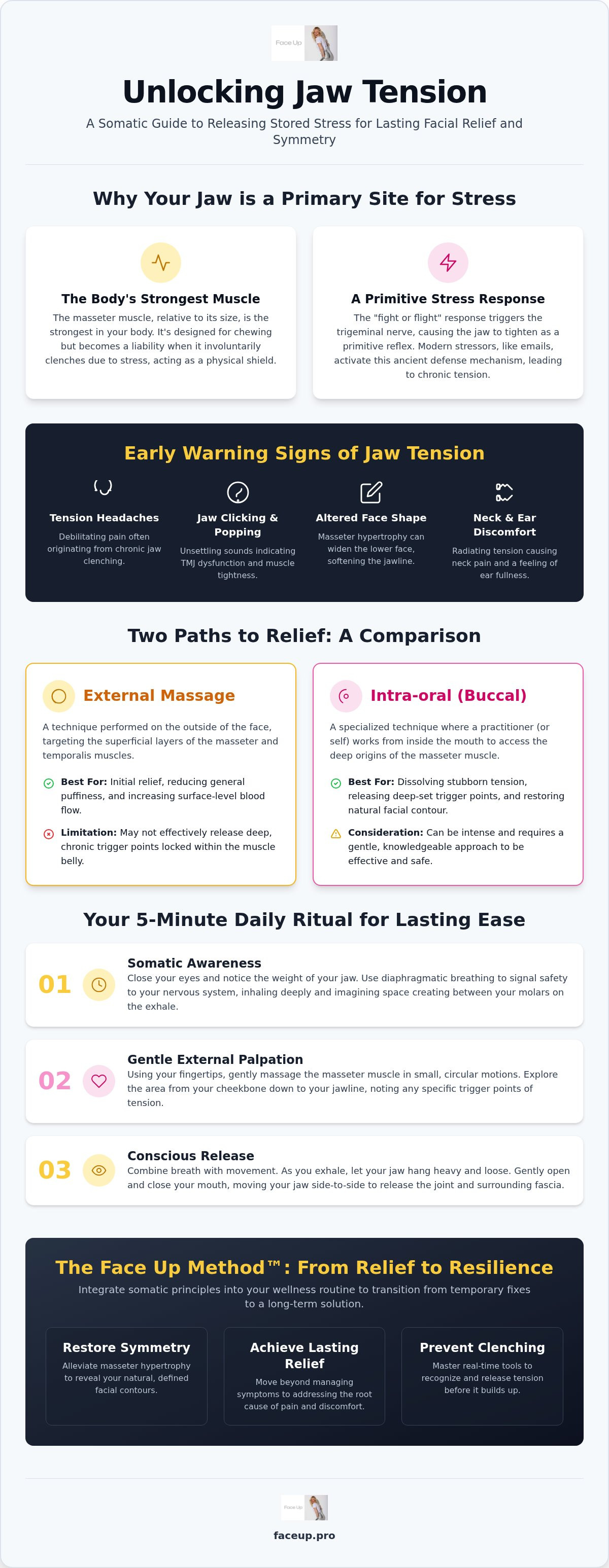
Your Daily Jaw Release Ritual: 5 Minutes to Lasting Ease
Establishing a consistent practice is the bridge between understanding the theory of somatic health and actually feeling its benefits in your body. While professional sessions provide deep intervention, your daily ritual ensures that tension doesn't have the opportunity to settle into your tissues. This five-minute sequence of jaw release techniques is designed to be efficient, effective, and deeply grounding, fitting seamlessly into even the most demanding professional schedule.
- Step 1: The Warm-up. Begin by warming your hands and placing them over your cheeks. Follow this with gentle neck mobility exercises, such as slow side-to-side rotations, to prep the fascia and improve blood flow.
- Step 2: External Sculpting. Use your knuckles or the heels of your hands to perform slow, sweeping motions from the chin upward toward the ear. This encourages lymphatic drainage and begins to soften the masseter.
- Step 3: The Deep Release. Locate the thickest part of your masseter muscle. Apply steady, respectful pressure to any trigger points you find, holding for thirty seconds while maintaining a soft gaze.
- Step 4: The Internal Reset. Perform a simplified buccal move by placing a clean thumb inside your cheek. Gently massage the muscle between your thumb and fingers to address deep-set clenching patterns.
- Step 5: Integration. Return your tongue to the "N-rest" position. Close your ritual with three diaphragmatic breaths, consciously allowing your lower jaw to feel heavy and separate from the upper teeth.
Morning vs. Evening Rituals
A morning ritual is essential for releasing the "night clench" and waking up your facial lymphatic system. It sets a tone of ease for the day ahead, ensuring you start with a relaxed expression. In contrast, an evening ritual focuses on decompressing the day's accumulated stress. This ensures your nervous system is primed for restorative sleep rather than a night of grinding. For those who prefer a guided experience, the Face Up App Subscription provides structured daily programmes that walk you through these movements in real-time.
Consistency Over Intensity
In the world of somatic bodywork, five minutes of daily attention is significantly more effective than a sixty-minute session once a month. This frequent, gentle input teaches your nervous system that it's safe to remain relaxed. You can track your progress by noticing subtle changes in your facial symmetry or a reduction in morning headaches. To ensure you never miss a day, try habit stacking: perform your jaw release techniques immediately after brushing your teeth or while waiting for your morning coffee to brew. This small investment of time yields a profound return in both physical comfort and natural facial rejuvenation.
Elevating Your Practice with the Face Up Method™
The Face Up Method™ represents a fundamental shift in how we perceive facial aesthetics and wellness. It isn't merely a set of exercises; it's a comprehensive somatic system designed to harmonise the relationship between your nervous system and your facial structure. By integrating advanced jaw release techniques with deep tissue sculpting, this method addresses the root causes of tension while simultaneously refining your natural appearance. This holistic approach ensures that relief is not a fleeting moment, but a sustainable state of being within our proprietary ecosystem.
For those navigating chronic discomfort or significant masseter hypertrophy, the Jaw Release Course offers a specialised deep dive. This programme moves beyond general advice, providing the technical precision needed to resolve long-standing clenching patterns. It empowers you with the knowledge to manage your own somatic health, reducing the reliance on external interventions. To maintain these results, the Face Up App Subscription serves as a digital mentor, guiding your daily practice with the same professional rigour found in our clinical sessions.
If you find yourself passionate about these transformations, the path toward a facial sculpting certification allows you to master the Face Up Method™ at a professional level. This training prepares you to facilitate deep somatic changes for others, joining a global community of practitioners who are redefining the standards of the beauty and wellness industries.
Why Somatic Bodywork is the Future of Beauty
The modern world is moving away from invasive "quick fixes" like Botox or dermal fillers. These temporary solutions often mask symptoms without addressing the underlying muscular dysfunction that causes them. Somatic bodywork offers a more honest and courageous path. It prioritises long-term muscle health and the empowerment that comes from learning to heal your own face. By restoring the natural function of the jaw, we unlock a level of radiance that no needle can replicate. Face Up practitioners are at the forefront of this movement, championing a model of care that values integrity, transparency, and the body's innate wisdom.
Next Steps for Your Jaw Health
We invite you to join the Face Up community, a specialised environment where professionals and wellness enthusiasts alike share a commitment to proactive health management. Your jaw tension didn't develop overnight; it's the result of years of accumulated stress and neurological patterns. Releasing it is a journey that requires patience and the right tools. Every small step you take toward relaxation is a victory for your nervous system. Join the Jaw Release Course today and begin the process of restoring your natural ease and confidence.
Embarking on Your Journey to Facial Freedom
Restoring ease to your jaw is a profound act of somatic self-care that transcends simple physical relief. You've explored how the masseter serves as a primary site for emotional storage and learned why reaching deep muscular layers through buccal release is essential for lasting change. By establishing a consistent five-minute ritual, you bridge the gap between chronic clenching and a relaxed, symmetrical facial contour. Integrating these professional jaw release techniques into your lifestyle ensures that your nervous system remains in a state of calm efficiency, allowing your natural beauty to shine through without the need for invasive interventions.
Whether you're looking to eliminate morning headaches or seeking to redefine your jawline naturally, the Face Up ecosystem provides the specialised tools and community support you need. You can access our professional somatic techniques anytime via the Face Up App, making daily maintenance a seamless part of your professional routine. Now is the time to transition from temporary fixes to a sustainable, holistic practice. Master your tension with the Face Up Jaw Release Course and reclaim the comfort and confidence you deserve. Your path to a tension-free life is just beginning.
Frequently Asked Questions
How often should I perform jaw release techniques?
Daily practice is recommended for the best results. A five-minute ritual, as outlined in the Face Up Method™, helps prevent tension from accumulating in the masseter. Consistency is more important than intensity. By integrating these movements into your morning or evening routine, you train your nervous system to maintain a state of relaxation. For those with chronic issues, short micro-sessions throughout the day can provide ongoing relief and prevent unconscious clenching.
Can jaw release techniques actually change my face shape?
Yes, these techniques can influence your facial appearance by reducing masseter hypertrophy. When the masseter muscle is chronically overactive, it grows larger, which can widen the lower face and soften the jawline's definition. By consistently applying jaw release techniques, you allow these muscles to return to their natural state. This process de-puffs the area and restores your natural facial contour, leading to a more symmetrical and refined appearance without invasive procedures.
Is it normal for my jaw to feel sore after a release session?
Mild tenderness is common, especially when you first begin addressing deep-set tension or trigger points. However, you shouldn't experience sharp or lingering pain. If your jaw feels bruised, you're likely applying too much pressure. Somatic work is about dialogue with the body, not forcing a change. Always stay within a comfortable range of sensation. If soreness persists for more than twenty-four hours, reduce the intensity of your sessions and focus on gentle warmth.
What is the difference between TMJ massage and a regular facial?
A regular facial focuses on skin health and surface-level relaxation, while TMJ massage targets deep muscular and somatic release. The Face Up Method™ specifically addresses the masseter, pterygoids, and surrounding fascia to resolve functional issues like clicking or pain. While a facial might involve light effleurage, specialised jaw release techniques often include intra-oral work to access muscles that cannot be reached from the outside. It's a therapeutic approach rather than a purely cosmetic one.
Can I do buccal massage on myself safely?
You can safely perform buccal massage on yourself if you follow professional guidance and maintain high hygiene standards. It's essential to wash your hands thoroughly or use medical-grade gloves before working inside the mouth. Focus on gentle, slow movements rather than aggressive pulling. Using a pincer grip to palpate the masseter allows you to find tension points safely. For those who want to ensure their technique is correct, the Face Up Jaw Release Course provides detailed video instruction.
How long does it take to see results from jaw release rituals?
Most individuals experience immediate physical relief from tension and headaches after their first session. However, structural changes like improved facial symmetry and reduced masseter size typically take four to six weeks of consistent daily practice. Your body needs time to break long-standing neurological patterns and for the muscle tissue to adapt. Tracking your progress through photos can help you notice these subtle shifts in your natural facial contour as the weeks progress.
Can these techniques help with teeth grinding (bruxism) at night?
Somatic techniques are highly effective for managing nocturnal bruxism by down-regulating the nervous system before sleep. While a mouthguard protects the teeth, it doesn't stop the underlying muscle contraction. Performing a release ritual in the evening signals to your brain that it's safe to disengage the "fight or flight" response. This reduces the intensity of night-time clenching. Over time, these practices help retrain the jaw to remain in the relaxed "N-rest" position during sleep.
Do I need special tools for these jaw release exercises?
You don't strictly need tools to begin, as your hands are the most versatile instruments for somatic work. However, specialised tools can enhance your practice by providing more consistent pressure and reaching deeper into the fascia. A dedicated TMJ tool can save your hands from fatigue during longer sessions. While these are beneficial, the core of the Face Up Method™ relies on your own awareness and manual techniques to achieve lasting relief and facial sculpting.


