

What if your onboarding process could predict a client's skin response before you even touch their face? Many practitioners treat the client intake form for holistic facials as a mere administrative hurdle, but in a somatic practice, it's a diagnostic map of the nervous system. You likely feel the frustration of using generic forms that ignore jaw tension or emotional stress, leaving you to uncover critical details mid-treatment when you should be focused on the flow of the session. A basic checklist simply cannot capture the complexity of the mind-body connection.
We understand that providing a high-standard, non-invasive experience requires more than just knowing a client's skin type. You want to offer transformative results that justify your professional expertise and command premium prices. This guide will teach you how to design a comprehensive intake process that captures the deep connection between emotional health and physical tension. We'll examine essential questions for somatic work, safety protocols for advanced techniques like buccal massage, and how a refined onboarding journey positions you as a leader in the Face Up Method™ and the global wellness landscape.
Key Takeaways
- Understand why standard esthetician forms fall short by shifting your focus from surface symptoms to the client’s nervous system and internal state.
- Discover how to design a client intake form for holistic facials that identifies somatic markers, dental history, and emotional tension to address the root causes of facial aging.
- Learn the specific legal and safety requirements for advanced somatic techniques, including essential contraindications for buccal massage and sculptural face lifting.
- Gain insights into why evaluating posture and neck health is critical for achieving lasting facial rejuvenation through the Face Up Method™.
- Streamline your practice by transitioning to a digital intake process and a targeted 10-minute somatic consultation based on your collected form data.
Why Standard Esthetician Forms Fail the Holistic Practitioner
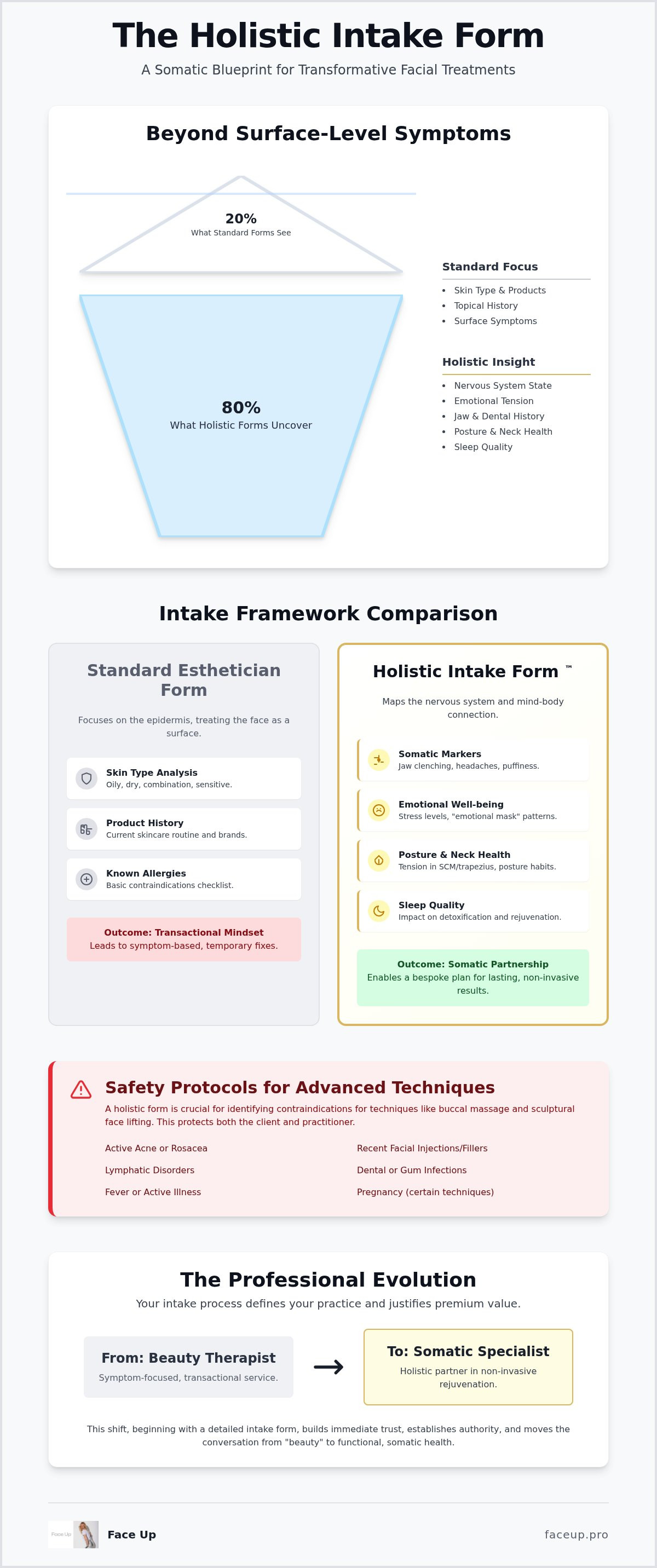
Most traditional esthetician forms are designed as checklists for surface-level aesthetics. They prioritize product history and skin type, which are useful but ultimately insufficient for a somatic approach. A client intake form for holistic facials is a comprehensive somatic assessment tool. Within the broader framework of Holistic medicine, we recognize that the face is the most visible expression of the nervous system. If your intake process only focuses on the epidermis, you're missing roughly 80% of the information required to facilitate lasting change.
Standard forms treat the face as a flat surface, ignoring the complex musculature and fascia that lie beneath. While topical history provides context, it's only a small fraction of the story. To achieve the results promised by the Face Up Method™, you must understand the client’s internal state. This shift in perspective moves the practitioner away from a transactional mindset toward a specialized, high-standard partnership with the client.
The Problem with Topical-Only Assessments
Knowing a client’s favorite moisturizer brand won't help you release their chronic jaw tension or address deep-set nasolabial folds caused by a hypertonic masseter. Traditional forms often miss the "Somatic Signature," which is the way unique stress patterns manifest as facial asymmetry or persistent puffiness. When you rely on clinical, symptom-based forms in a wellness-focused studio, the experience feels cold. You lose the opportunity to investigate the root causes of facial aging, such as a dysregulated nervous system or long-held emotional tension. This limitation prevents you from creating a truly bespoke treatment plan that addresses the mind-body connection.
Transitioning from Beauty Therapist to Somatic Specialist
The intake process sets the tone for your entire professional relationship. For those offering a high-ticket Face Up Sculpting Treatment, the form acts as the first step in a proprietary ecosystem of care. Deep, investigative questioning builds immediate trust. It signals to the client that you're an organized, global-minded facilitator who takes their identity and well-being seriously. By asking about sleep quality, dental history, and emotional triggers, you establish authority before the client even touches the treatment table. This investigative approach justifies premium pricing and positions you as a mentor in their journey toward non-invasive rejuvenation. It moves the conversation beyond "beauty" and into the realm of functional, somatic health.
The Anatomy of a Holistic Facial Intake Form
A truly effective client intake form for holistic facials serves as a diagnostic blueprint. It moves beyond simple skin types to map the intersections of lifestyle, somatic markers, dental history, and emotional well-being. By gathering this data before the session begins, you can identify the root causes of facial tension rather than just treating the visible symptoms. This structured approach is essential for practitioners who wish to move beyond basic beauty therapy and enter a professional ecosystem that values deep, non-invasive rejuvenation.
One of the most overlooked elements in facial work is the impact of posture and neck health. Chronic tension in the sternocleidomastoid (SCM) or the trapezius muscles can restrict blood flow and lymphatic drainage, leading to puffiness or a dull complexion. Your form should also pinpoint "Stress Storage" zones. The jaw, brow, and temples are primary areas where the nervous system holds onto emotional weight. Furthermore, collecting data on sleep quality is vital. Poor sleep disrupts the body's natural detoxification processes, directly impacting the effectiveness of lymphatic drainage during a Face Up Sculpting Treatment.
Somatic and Muscular Assessment Questions
To understand the client's internal state, you must ask targeted questions about their physical habits. Do they clench or grind their teeth? This reveals a potential TMJ connection that requires specific jaw-release techniques. Frequent headaches or neck tension often signal a dysregulated nervous system that will affect how the skin responds to touch. Assessing the "Emotional Mask" is equally important. By asking about recent high-stress periods, you can tailor your approach to help the client transition from a state of fight-or-flight into deep relaxation. Following a professional code of ethics ensures that these sensitive inquiries are handled with the necessary integrity and care.
Dental and Medical History for Deep Tissue Work
Detailed dental history is non-negotiable for advanced techniques like the Face Up Method™. You must identify recent dental implants or wisdom tooth extractions, as these are critical contraindications for buccal massage. A history of jaw clicking or lockjaw requires a modified approach to prevent discomfort or injury. While many clients may have sought invasive procedures in the past, your intake process provides an opportunity to highlight natural alternatives that respect the body's structural integrity. If you are ready to elevate your practice with these specialized insights, exploring a Face Up Method Certification can provide the formal training needed to integrate this data into your treatments effectively.
Comparing Standard vs. Holistic Intake Frameworks
Standard intake forms usually begin and end with a list of topical products. They ask "What are you using?" to determine if your current serum is compatible with their backbar. In contrast, a client intake form for holistic facials shifts the focus to "How are you feeling?" This isn't just a polite inquiry; it's a root-cause investigation. By moving beyond surface-level symptoms, you adopt the role of a tension detective, searching for the physical and emotional origins of facial aging. You are looking for the story written in the muscles and connective tissue rather than just the condition of the epidermis.
This investigative depth is precisely why a holistic form is necessary to justify the duration and value of a Face Up Sculpting Treatment. Clients understand that a 90-minute session isn't just about longer massage times. It's about a targeted somatic intervention based on the data they provided. It transforms the appointment from a generic service into a professional, high-standard partnership. When a client sees the level of detail in your assessment, they recognize the expertise required to execute the Face Up Method™ effectively.
The "Nervous System" Section
Standard forms completely ignore the Vagus nerve, yet its tone directly influences facial expression and skin health. Your intake process must include questions that identify if a client is stuck in a "Fight or Flight" state. Do they feel constantly rushed? Do they have difficulty switching off at night? This data allows you to adjust your somatic bodywork pressure. A client in a state of high sympathetic arousal may require a slower, more grounding touch to encourage nervous system regulation before deep tissue work can be effective. If the nervous system is guarded, the muscles will not release, making aggressive sculpting counterproductive.
Environmental and Lifestyle Factors
We live in a world of constant screen time, which has given rise to the structural issue of "Tech Neck." Assessing a client's daily device usage helps you understand the structural strain on their jawline and neck. It's not just about surface hydration, either. You must assess fascia health through lifestyle choices. Dehydrated fascia becomes brittle and prone to "sticking," which creates deeper wrinkles and restricted movement. Additionally, digestive health plays a significant role in facial inflammation. Identifying gut-related sensitivities helps you understand why certain areas of the face might be prone to redness or puffiness. This allows for a more accurate treatment plan that addresses the body as a whole, global system.
Safety and Legal Considerations for Advanced Somatic Techniques
When your practice evolves beyond traditional skincare into advanced somatic work, your legal protections must evolve with it. A standard liability waiver is insufficient for the deep tissue manipulation and intra-oral techniques involved in the Face Up Method™. Your client intake form for holistic facials must serve as a rigorous safety screening tool that explicitly addresses the unique risks associated with sculptural face lifting. By documenting clear consent and understanding, you establish a professional environment that prioritizes both client safety and practitioner integrity.
Managing client expectations is a vital part of this process. Many individuals enter a studio expecting a traditional, pampering experience, but somatic release often involves intense sensations or unexpected emotional shifts. You must clearly differentiate between a relaxation-focused facial and a functional somatic session. Reviewing and updating your administrative forms every six months ensures your practice remains aligned with evolving global standards and local regulations.
Buccal Massage and Deep Tissue Contraindications
Intra-oral work requires specific screening that standard forms often overlook. You must identify active oral infections, severe gum disease, or recent dental work such as extractions and implants. For clients with a history of injectables or facial surgeries, established wait times are mandatory to prevent the displacement of materials or interference with healing tissues. Pregnancy also requires a specialized approach. While somatic work is generally safe, the practitioner must be aware of how hormonal changes affect skin sensitivity and blood pressure. These details allow you to provide a high-standard, non-invasive rejuvenation experience without compromising the client's health.
The Legal Release: Protecting Your Practice
A comprehensive "Somatic Release" clause is a necessary addition to your documentation. Because the Face Up Method™ targets deep-seated muscular and emotional tension, it's common for clients to experience emotional outbursts or a "healing crisis" during or after treatment. Your form should state that these responses are a natural part of the somatic process. Additionally, you must ensure clients understand the non-invasive nature of your work, clearly stating that you do not offer medical procedures or chemical interventions.
Data protection is another critical pillar of a modern practice. Since you are collecting sensitive health information, your forms must comply with global standards like GDPR or the Australian Privacy Principles (APPs). For practitioners in the United States, it's vital to remember that covered entities must update their Notice of Privacy Practices by February 16, 2026, to remain compliant with federal confidentiality changes. Elevate your professional standards and ensure your practice is fully prepared for these advanced techniques by joining the Face Up Method Certification.
Implementing Your Form: From Intake to Treatment Plan
Implementing your client intake form for holistic facials is where administrative data transforms into tangible clinical results. The process begins well before the client enters your studio. A pre-arrival digital intake significantly reduces studio admin time, allowing you to review somatic markers and health history in a calm, focused environment. This proactive management ensures you're prepared to lead a sophisticated, high-standard session from the first minute. It positions you as an organized mentor rather than just a service provider.
Once the client arrives, the journey moves into a targeted 10-minute somatic consultation. This conversation isn't a mere repetition of the form. Instead, it's a strategic verification of the data provided. You then customize the Face Up Method™ protocols based on these specific findings. The process concludes by establishing a home-care ritual using the Face Up App, which bridges the gap between professional sessions and daily maintenance.
Conducting the Holistic Consultation
During this phase, practice active listening. You need to hear what isn't written on the paper, such as the cadence of their speech or subtle hesitations when discussing emotional stress. Perform a detailed visual assessment by comparing the form data with the client's resting face. If they reported low stress but exhibit a heavily furrowed brow or tight temples, there's a somatic disconnect to explore. Always explain the "Why" behind your treatment choices. Connecting their reported tension to your planned techniques builds professional authority. It also helps the client understand the value of their investment in a specialized professional landscape.
Long-Term Client Success and the Face Up App
The intake form serves as a vital baseline for tracking rejuvenation over time. If a client identifies chronic clenching or TMJ discomfort, you can use that data to recommend specific modules in the Jaw Release Course. This level of personalized care is what separates a transactional service from a proprietary ecosystem of well-being. By tracking progress against the initial intake, you provide clear evidence of the transformation. Encouraging daily rituals via the app ensures sustained somatic results. This steady, invitational flow guides the client toward long-term success and cements your role as a reliable partner in their rejuvenation journey.
Elevate Your Professional Standards
Transitioning from a traditional esthetician to a somatic specialist requires a fundamental shift in how you gather client data. By implementing a comprehensive client intake form for holistic facials, you move beyond surface-level aesthetics to address the structural and emotional root causes of facial aging. This investigative approach not only ensures safety during advanced techniques like buccal massage; it also establishes a high-standard partnership that justifies premium, non-invasive treatments. You're no longer just providing a service; you're facilitating a deep, mind-body transformation.
As you refine your practice, remember that a well-designed intake process is the foundation of the Face Up Method™. Trusted by practitioners globally, our proprietary Somatic Sculpting protocols offer a clear path toward professional advancement. With expert guidance from Olga Newman, you can move away from transactional services and toward a unique environment of holistic care. Master the art of somatic assessment with Face Up Method™ Certification. We look forward to supporting your journey as you lead the way in somatic facial rejuvenation.
Frequently Asked Questions
What is the most important question to ask on a holistic facial intake form?
The most critical question identifies where the client holds tension and their current state of nervous system regulation. Ask, "Where do you notice physical tightness when you feel stressed?" or "Do you feel like you're currently in a state of high alert?" This goes beyond surface concerns and helps you map the somatic connections required for a Face Up Sculpting Treatment. Understanding their internal state is the foundation for effective, non-invasive rejuvenation.
How do I ask about emotional stress without sounding unprofessional?
Frame emotional stress as it relates to physical symptoms and muscular patterns. Use clinical yet compassionate language such as, "How has your stress level impacted your sleep or jaw tension recently?" This approach validates the client's experience while keeping the focus on somatic indicators. It establishes you as a professional mentor who understands the deep link between emotional well-being and facial tone without crossing into therapeutic counseling boundaries. It keeps the session focused on somatic results.
Should I include a section for Botox and fillers on a holistic form?
Yes, you must include a section for injectables to ensure the safety and integrity of your somatic work. Knowing the history of Botox or fillers is essential because deep tissue manipulation can displace these materials or cause complications. While our method focuses on non-invasive rejuvenation, identifying previous invasive procedures allows you to adjust your pressure and technique. This ensures you maintain high professional standards while protecting the client's previous cosmetic investments and health.
How often should a returning client fill out a new intake form?
A returning client should update their information every six months or whenever a significant health change occurs. A client intake form for holistic facials isn't a one-time document; it's a dynamic baseline for tracking progress. Regular updates allow you to adjust protocols based on their current nervous system state or new dental history. This consistency ensures your treatments remain targeted and effective as the client progresses through their long-term rejuvenation journey within your practice.
What are the specific contraindications for buccal massage I should list?
Specific contraindications for buccal massage include active oral infections, severe gum disease, and recent dental surgeries like implants or wisdom tooth extractions. You should also list recent facial surgeries or injectables as critical indicators for required wait periods. Identifying these on your intake form prevents injury and ensures that the Face Up Method™ is applied safely. Always verify these details during the 10-minute somatic consultation to confirm the client is a suitable candidate for intra-oral work.
How can I make my intake form look professional and high-end?
Focus on a clean, minimal design that mirrors a sophisticated and modern aesthetic. Use clear, declarative headings and avoid cluttered layouts that might overwhelm the client. A professional form should feel like an invitation into a proprietary ecosystem rather than a transactional chore. High-quality digital platforms can help maintain this polished look while ensuring data security. This organized approach builds immediate trust and justifies the premium pricing associated with specialized somatic bodywork sessions and expert guidance.
Do I need a separate form for somatic bodywork vs. facial sculpting?
You don't necessarily need separate forms if your primary intake is comprehensive enough to cover both modalities. A well-designed client intake form for holistic facials should already include somatic markers like posture, neck tension, and nervous system health. However, if you offer distinct Somatic Bodywork Sessions that involve the full body, you might include a supplemental section for specific physical injuries or chronic pain patterns. Integration often provides a more seamless and professional client journey.
Can I use a digital intake form for holistic facials?
Using a digital intake form is highly recommended to streamline your studio operations and reduce administrative burden. Sending the form before the appointment allows the client to answer questions in a relaxed environment, which often leads to more accurate and detailed data. It also gives you time to review their history and plan a bespoke treatment before they even arrive. This modern approach aligns with global standards for professional practice and enhances the overall efficiency of your studio.


