

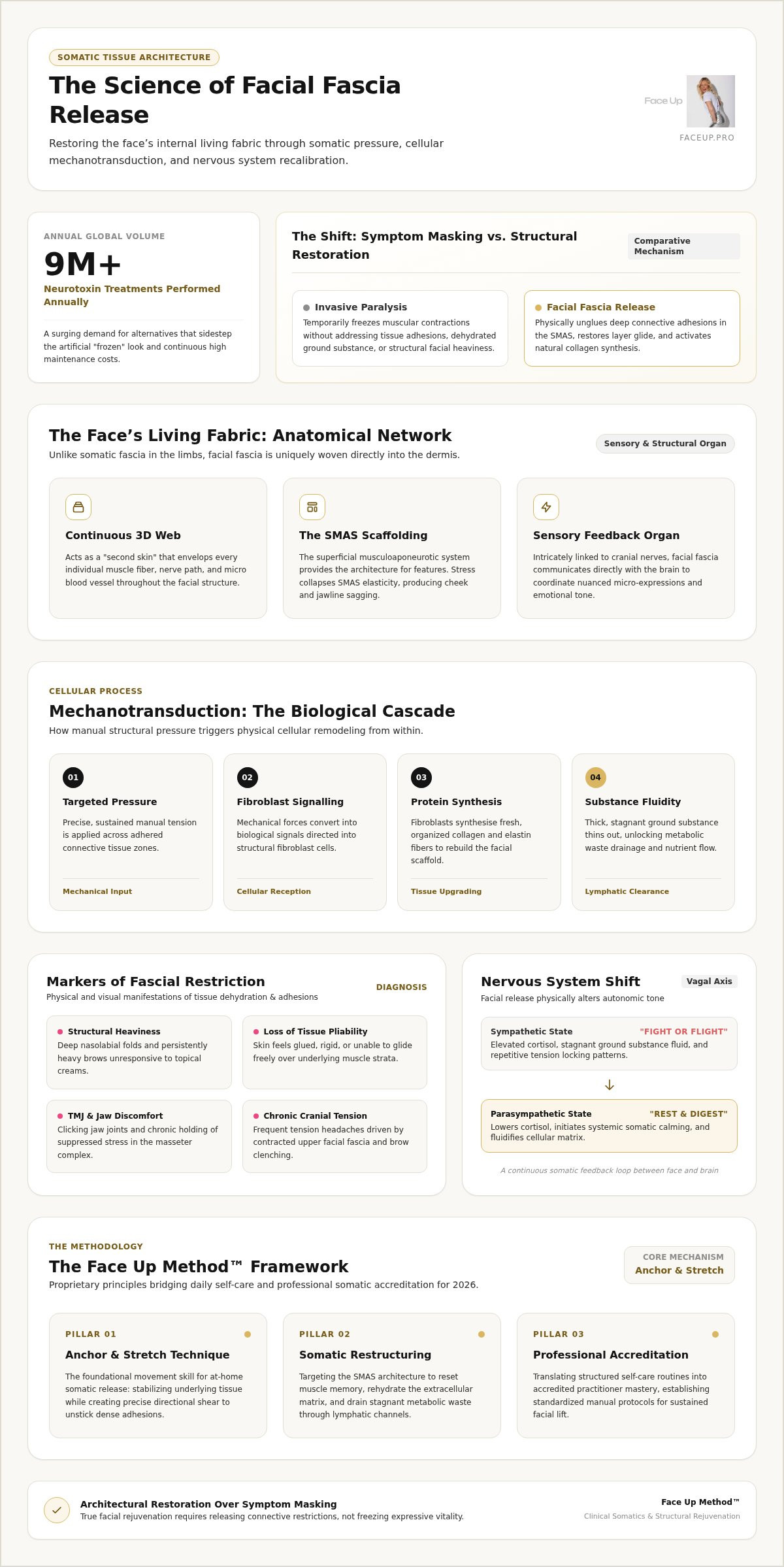
What if the heavy, tired sensation in your jaw and the persistent lines on your forehead aren't just signs of ageing, but a physical record of stored emotional stress? It's a common frustration to feel that your face no longer reflects your internal vitality, especially when chronic TMJ tension makes every expression feel like a strain. You aren't alone in feeling wary of invasive procedures. With over 9 million neurotoxin treatments performed annually, a growing movement is now seeking a more authentic way to restore their glow without the "frozen" look or the high cost of maintenance.
By understanding the science of facial fascia release, you can unlock a somatic secret that transforms your appearance while calming your nervous system. This approach doesn't just mask symptoms; it physically unglues the adhesions in your connective tissue to lift and sculpt your features naturally. We will explore how somatic fascia work addresses the root of facial heaviness, the connection between your emotions and your structure, and how the Face Up Method™ is redefining rejuvenation for 2026. You'll discover how to trade chronic tension for a relaxed, radiant complexion that feels as good as it looks.
Key Takeaways
- Learn how facial fascia release acts as a manual architecture restoration, ungluing deep-seated tension to restore a natural, lifted appearance.
- Discover the biological process of mechanotransduction, which allows physical pressure to signal your cells to increase collagen and elastin production naturally.
- Understand the vital connection between facial structure and the autonomic nervous system to trigger a restorative "rest and digest" state that reduces chronic stress.
- Identify the core principles of the "anchor and stretch" technique, a fundamental skill for achieving sustainable results in somatic facial work at home.
- Explore the three pillars of the Face Up Method™ and how this proprietary system bridges the gap between daily self-care and professional accreditation.
What is Facial Fascia Release? Understanding the Face’s Living Fabric
At its core, facial fascia release is a specialized manual therapy that moves beyond the surface of the skin to target the intricate network of connective tissue beneath. While traditional beauty massages often focus on the epidermis or simple lymphatic drainage, this somatic approach works with the body’s internal architecture. By applying precise, sustained pressure, practitioners can unstick habitual patterns of tension and restore the natural glide between tissue layers. This process doesn't just relax the face; it physically reorganizes the structural foundation to provide a visible, sustainable lift.
Think of fascia as a "second skin" or a continuous 3D web that encases every muscle, nerve, and blood vessel. In the face, this tissue is uniquely delicate and complex. Unlike the fascia in your limbs, which primarily connects muscle to bone, facial fascia is intricately woven into the skin itself. This allows for the nuanced micro-expressions that define human communication. When this fabric becomes restricted, it doesn't just affect how you look; it changes how your face moves and how you feel internally.
The Anatomy of Facial Tension
Every time you squint at a screen, furrow your brow in concentration, or clench your jaw during a stressful meeting, your fascia records that data. Over time, these repetitive expressions "freeze" the tissue into place, creating restrictive adhesions. This deep structural layer, known as the superficial musculoaponeurotic system (SMAS), acts as the scaffolding for your features. When the SMAS loses its elasticity due to chronic stress, the result is visible sagging and a loss of definition along the jawline and cheeks. Fascia functions as a sophisticated sensory organ that communicates directly with the brain to coordinate movement and emotional expression.
Signs Your Facial Fascia Needs Release
Recognizing the need for facial fascia release often begins with a feeling of heaviness or "stuckness" that no amount of topical cream can fix. You might notice that your skin feels tight or less pliable when you try to move it, or perhaps you see deep nasolabial folds and heavy brows that persist even after a good night's sleep. Physical symptoms are equally telling. Chronic headaches, a clicking jaw, or persistent TMJ discomfort are clear indicators that your facial architecture is under strain. These visual and physical markers are simply the body’s way of signaling that the underlying "living fabric" has become dehydrated and compressed, requiring a somatic intervention to regain its fluidity.
The Science of Somatic Rejuvenation: How Fascia Release Works
The biological impact of facial fascia release is rooted in a process called mechanotransduction. When specific manual pressure is applied to the connective tissue, it sends a mechanical signal to the fibroblasts, the cells responsible for structural integrity. These cells respond by synthesising fresh collagen and elastin, effectively remodelling the face from the inside out. This isn't a temporary surface change; it's a cellular upgrade that restores the tissue's natural spring and resilience. By engaging with these deeper layers, we invite the body to repair its own architectural foundation.
Clinical research into myofascial release therapy highlights how targeted manipulation addresses the "ground substance," a gel-like fluid that surrounds our cells. When we are stressed or dehydrated, this fluid thickens and becomes stagnant, leading to a dull, heavy appearance. Somatic work thins this substance, allowing nutrients to flow and metabolic waste to drain via the lymphatic system. This shift also signals the autonomic nervous system to move from a sympathetic "fight or flight" state into a parasympathetic "rest and digest" mode, lowering cortisol levels and inviting a deep sense of calm efficiency that radiates through your expression.
Beyond the Surface: The Somatic Connection
The face and brain exist in a constant feedback loop. Persistent facial tension doesn't just reflect mental stress; it can actually reinforce it. This is particularly evident in the jaw, where many of us store years of suppressed frustration or holding patterns. Releasing these areas often triggers an emotional offloading that feels like a profound weight being lifted. If you struggle with chronic clenching, exploring The Ultimate Guide to TMJ Massage Therapy can provide deeper insights into how this physical release supports emotional equilibrium.
Fascia vs. Muscle: Why Standard Massage Isn’t Enough
While muscles are designed to contract and relax, fascia has a tendency to "glue" together when neglected. Standard massages often utilise quick, rhythmic strokes that soothe the muscles but fail to penetrate the fascial adhesions that cause sagging and deep lines. To achieve a true natural lift, one must use slow, sustained pressure to melt these "glued" areas. This architectural approach is a core component of the Face Up Method™, which focuses on restoring the 3D glide of the tissue. By addressing both the muscle and the surrounding web, you create a structural harmony that provides a more lasting and refined aesthetic result than muscle-only work could ever achieve.
Facial Fascia Release vs. Botox: The Natural Alternative Debate
The choice between facial fascia release and invasive neurotoxins often centres on a fundamental aesthetic preference: the "frozen" look versus a "fluid" expression. While Botox chemically interrupts the signal between nerve and muscle to smooth dynamic lines, it does nothing to improve the health of the underlying tissue. In contrast, somatic work restores the natural elasticity of the superficial musculoaponeurotic system (SMAS) fascia. This layer is the true governor of facial tone and mobility. By choosing manual release, you aren't just masking a wrinkle; you're rehabilitating the structural network that prevents sagging in the first place.
Long-term outcomes also reveal a stark contrast in tissue health. Regular neurotoxin use can lead to muscle atrophy, as the lack of movement causes the muscle fibres to weaken and thin over time. Dermal fillers, while effective for immediate volume, can sometimes migrate or cause lymphatic stasis, leading to a "heavy" or puffy appearance. Facial fascia release acts as a form of tissue hygiene. It improves microcirculation and ensures that the ground substance remains fluid, which prevents the "glued" look associated with premature ageing. While many wonder if manual work can truly provide a visible lift, the answer lies in the architecture. When you release the downward pull of restricted fascia, the face naturally rebounds to a more elevated position.
Why Practitioners are Switching to Somatic Methods
There is a significant shift in the aesthetic industry as clients move away from pharmaceutical interventions toward "clean beauty" and holistic sculpting. Professionals are increasingly seeking a Facial Sculpting Certification: Master the Face Up Method™ to meet this demand. This transition empowers both the practitioner and the client, turning a passive treatment into an educational journey. Instead of relying on recurring injections that can cost between $1,500 and $3,200 annually, clients learn to understand their own anatomy and manage their facial tension through sustainable, somatic habits.
The Limitations of Invasive Procedures
Invasive procedures often fail to address the root cause of facial "collapse," which is frequently held tension. For example, Botox in the forehead may smooth lines, but it can cause compensatory tension in the jaw or neck as other muscles struggle to maintain balance. There is also a profound psychological benefit to somatic work. By "feeling" the face rather than numbing it, clients can process the emotional stress that caused the tension in the first place. This creates a sense of internal peace that no pharmaceutical can replicate, resulting in a glow that is both structural and soulful.
How to Practise Facial Fascia Release: At Home and Professionally
Successful facial fascia release requires more than just physical contact. It begins with a somatic environment. Before you begin, dim the lights and focus on your breath. Sit with an upright, neutral posture to ensure your neck and shoulders aren't holding unnecessary tension. These small adjustments signal the nervous system that it's safe to move into a restorative state. When the body feels secure, the connective tissue becomes more pliable, allowing for a deeper and more effective release.
The cornerstone of this practice is the "anchor and stretch" technique. Unlike a superficial massage that slides over the skin, this method requires you to pin a section of tissue with one hand (the anchor) while the other hand moves slowly away (the stretch). This creates a gentle shear force that melts fascial adhesions. It's a slow, intentional process. If you rush, the tissue will simply resist. By moving at a measured pace, you allow the fascia to hydrate and reorganize, resulting in a visible change in the face's contour.
Safety is paramount when working with deep tissue. You should avoid facial fascia release if you have acute inflammation, active acne, or have had facial surgery or dental procedures within the last eight weeks. Consistency is far more valuable than intensity. A ten-minute daily ritual is significantly more effective than an occasional ninety-minute session. Daily micro-rituals prevent the "glue" from resetting, ensuring that your results are cumulative and sustainable over time.
Essential Tools for the Practice
Your hands are your most sensitive and versatile tools. Knuckles provide the necessary pressure for deep masseter work, while fingertips allow for precision around the eyes. Many practitioners also integrate specialized tools to enhance the experience. A stone gua sha can improve glide and lymphatic drainage, while intra-oral (buccal) techniques reach the deep muscles of the jaw that are inaccessible from the outside. If you're looking to expand your toolkit, Choosing the Best TMJ Massage Tool offers a comprehensive guide to selecting the right instrument for your needs.
A Simple 5-Minute Daily Ritual
This simple sequence targets the most common areas of holding to provide immediate relief and a natural lift:
- Step 1: Open the lymphatic pathways by gently stroking down the sides of the neck toward the collarbone.
- Step 2: Release the masseter by placing your knuckles just below the cheekbone and slowly dragging them down toward the jawline while slightly opening your mouth.
- Step 3: Sculpt the cheekbones using the anchor and stretch method, pinning the tissue near the nose and stretching outward toward the ears.
- Step 4: Smooth the forehead by unsticking the galea aponeurotica, using firm circular motions with your fingertips across the entire brow and hairline.
To deepen your practice or find a certified professional to guide you, explore the Face Up Method™ practitioners in our global directory.
Mastering the Face Up Method™: From Self-Care to Certification
The transition from basic self-care to professional mastery begins with a fundamental shift in perspective. Founded by somatic specialist Olga Newman, the Face Up Method™ is a proprietary system designed to treat the face as a dynamic, living structure rather than a static surface. It stands as the gold standard for facial fascia release, offering a clear path for those who seek to move beyond temporary beauty fixes toward lasting structural health. By analysing the face from the bottom up, this method addresses the postural foundations of the neck and chest that ultimately dictate facial tone.
This method is built upon three essential pillars: Facial Sculpting, Somatic Bodywork, and Nervous System Regulation. While sculpting defines the visible contours, the somatic bodywork element unglues the deep restrictions within the connective tissue. Most importantly, regulating the nervous system ensures that the tissue actually accepts the work. Without this parasympathetic shift, the body often tenses back into old patterns within hours. By integrating these three disciplines, the method achieves a level of rejuvenation that traditional massage simply can't reach, bridging the gap between aesthetic beauty and internal well-being.
The Face Up App: Your Daily Somatic Mentor
Daily consistency is the only way to prevent fascial adhesions from returning. The Face Up App provides a library of guided rituals specifically designed to target jaw tension and facial heaviness. These aren't just repetitive exercises; they're somatic rituals that build internal awareness. The app guides you through 10-minute daily protocols that fit into a busy schedule, helping you track progress through visual changes and your evolving somatic map. This allows you to feel and release tension before it manifests as a permanent line or chronic jaw pain.
Becoming a Certified Professional
For those in the wellness industry, facial fascia release is a rapidly growing specialty. The Face Up Method™ Certification offers a comprehensive curriculum covering advanced anatomy of the SMAS layer, somatic theory, and proprietary sculptural techniques. This programme is designed for aestheticians, massage therapists, and holistic health coaches who want to offer a truly needle-free alternative in a global wellness market. Upon completion, practitioners join an elite global community and gain a listing in the official directory, positioning them as verified experts who take their role in the industry seriously.
Explore the Face Up Method Certification and transform your practice today.
Embracing the Future of Somatic Aesthetic Health
The journey toward natural rejuvenation is a transition from passive intervention to active, somatic participation. By prioritising facial fascia release, you address the architectural foundations of your face, ungluing years of stored tension to reveal a more lifted and authentic version of yourself. This shift doesn't just improve your appearance; it recalibrates your nervous system, allowing you to move through the world with a sense of calm efficiency and structural grace.
Redefining beauty through somatic science means moving beyond the "frozen" aesthetic of the past. Whether you are a professional seeking globally recognised training programmes or an individual looking for a daily ritual that works, the Face Up Method™ provides the tools to succeed. Founded by Auckland-based specialist Olga Newman, our proprietary system bridges the gap between clinical excellence and deep emotional offloading. It's time to reclaim the fluid, vibrant expression that reflects your true vitality.
Start Your Somatic Journey: Explore Face Up Courses and Certification
Your face is a living record of your resilience. By nurturing its fabric, you invite a level of rejuvenation that is as profound as it is visible.
Frequently Asked Questions
Is facial fascia release painful?
Facial fascia release should never be painful. While you may experience a sensation of "productive discomfort" as deep adhesions begin to melt, the process should remain within your comfort zone. Sharp pain is a signal that you are applying too much pressure or moving too quickly. By maintaining a slow, steady pace, you allow the tissue to hydrate and release without triggering a defensive muscular contraction that could hinder your results.
How often should I perform facial fascia release for best results?
For the most sustainable results, you should engage in daily micro-rituals rather than long, infrequent sessions. A consistent 10-minute practice prevents the connective tissue from "gluing" back into old holding patterns. Most practitioners notice significant cumulative benefits when they use the Face Up App for daily guided sequences. This regular engagement keeps the ground substance fluid and ensures the nervous system remains in a restorative, parasympathetic state to support long-term rejuvenation.
Can I do facial fascia release if I have Botox or fillers?
You must wait a minimum of four to six weeks after receiving Botox or fillers before performing deep fascial work in those areas. This allows the product to settle completely. It's important to understand that facial fascia release increases local circulation and metabolic activity, which may cause your body to process and break down neurotoxins or fillers faster than usual. Always consult your professional practitioner before beginning a new somatic routine after any cosmetic procedure.
What is the difference between facial fascia release and a standard facial?
A standard facial primarily focuses on the health of the epidermis through cleansing, exfoliation, and topical treatments. In contrast, facial fascia release targets the structural architecture beneath the skin. By working with the SMAS layer and connective tissue, this method addresses the root causes of sagging and deep-seated tension. It is a somatic intervention that reorganises the tissue's internal web to provide a natural lift that topical products and surface-level massages cannot achieve.
Can this technique help with chronic TMJ or jaw clicking?
This technique is highly effective for managing chronic TMJ discomfort and jaw clicking. By releasing the masseter and pterygoid muscles through targeted fascial melting, you can significantly reduce the pressure on the temporomandibular joint. Many individuals find that the Face Up Jaw Release Course provides a specific, step by step protocol for decompressing the jaw area. This process not only relieves physical pain but also helps release the emotional stress often stored in the lower face.
Do I need special tools to start releasing my facial fascia?
You don't need any specialized equipment to begin your practice; your hands are your most effective tools. The warmth and sensitivity of your fingertips allow for precise feedback from the tissue that mechanical devices cannot replicate. While you might eventually choose to integrate a stone gua sha or utilise gloves for intra-oral techniques, the core principles of the Face Up Method™ can be mastered using only manual sculptural techniques and intentional, focused breathwork.
How long does it take to see a visible lift in the face?
Many people notice an immediate "glow" and a softening of their features after a single session due to improved circulation and lymphatic drainage. However, a sustainable structural lift typically requires four to eight weeks of consistent daily practice. This timeframe allows the fibroblasts to produce new collagen and elastin through mechanotransduction. As the fascia reorganises and hydrates, the face begins to hold its new, more elevated position with greater resilience and ease over time.
Is facial fascia release safe for sensitive skin?
This practice is safe for sensitive skin, provided you adjust your technique to be more gentle. Because the focus is on the deeper layers rather than aggressive surface friction, it's often less irritating than traditional scrubs or peels. You should avoid deep work during active inflammatory flare-ups, such as rosacea or cystic acne. By using a light touch and focusing on the "melt" rather than the "rub," you can achieve structural results safely.


