
A soothing facial ritual may help you unwind, but that doesn’t prove reflexology treats stress. Facial reflexology for stress relief uses gentle, targeted pressure on facial points, based on the traditional idea that facial zones correspond with parts of the body. Evidence does not establish reflexology as a treatment for medical conditions, so it’s best understood as a possible relaxation practice, not a substitute for care.
If facial tension and a busy mind leave you looking for a calmer moment, it’s understandable to wonder whether pressure points can help. Gentle facial massage may ease physical tension and give you time to focus on yourself, even though the specific claims behind reflexology go beyond what research can establish.
Here, you’ll learn how the reflexology model works, how facial massage and pressure may support relaxation, and what the evidence says about stress relief. This will help you understand what the practice may offer and where its limits are.
Key Takeaways
- Understand how facial reflexology maps points to body areas, and distinguish that traditional model from established medical evidence.
- Learn how gentle, rhythmic facial massage may ease facial tension and support a relaxing self-care pause.
- Explore simple, light-pressure self-massage as a way to focus attention on physical sensations without treating it as medical care.
- See what research does and doesn’t show about reflexology, so you can weigh its potential for relaxation realistically.
What is Facial Reflexology and How Does It Work?
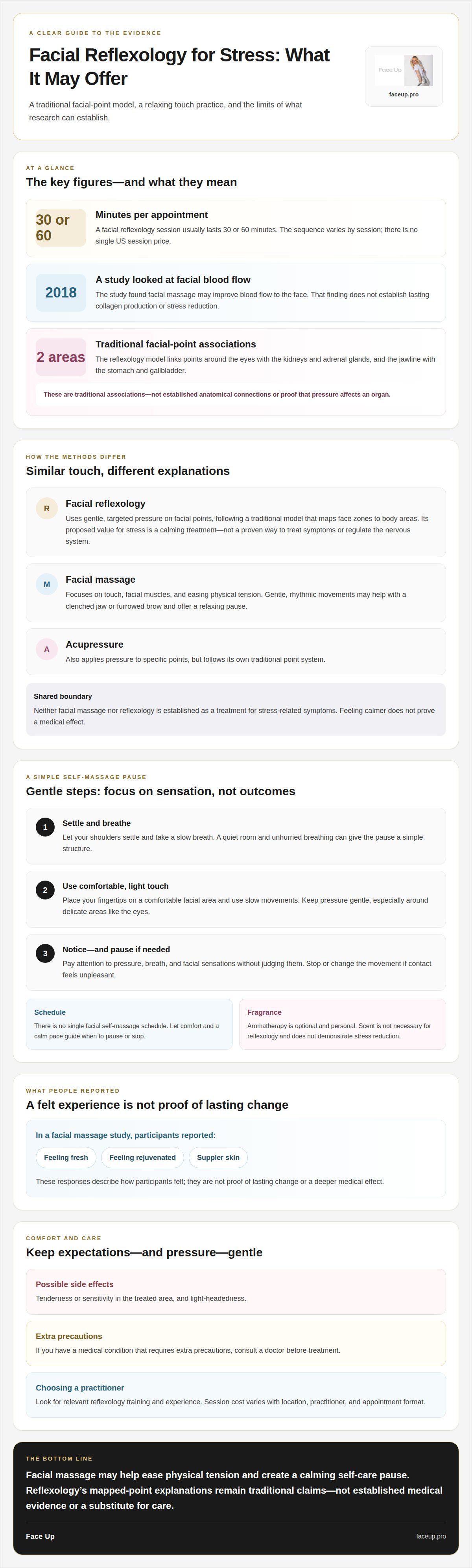
Facial reflexology applies gentle pressure to facial points, using a traditional model that maps zones of the face to body areas. For stress, its proposed value is a calming treatment, not a proven way to treat symptoms or regulate the nervous system.
Circulation and Lymphatic Drainage
Facial massage uses gentle movements across the skin and underlying tissues, which may support local circulation and fluid movement. A 2018 study found facial massage may improve blood flow to the face. Lymphatic drainage refers to moving fluid through lymph vessels; gentle massage may encourage that movement, but reflexology claims about drainage shouldn’t be confused with evidence of a medical effect.
Comparisons With Massage and Acupressure
Facial reflexology uses targeted pressure based on mapped body zones, while facial massage focuses on relaxing facial muscles and easing tension. Acupressure also applies pressure to specific points, but uses its own traditional point system. For stress, the practical difference is the method’s focus: reflexology links points with body areas, while massage emphasizes touch and physical relaxation. Neither is established as a treatment for stress-related symptoms.
Claims that facial pressure boosts collagen or changes muscle tone go beyond what the reflexology model establishes. Facial massage may increase blood flow, but that alone doesn’t show lasting collagen production or stress reduction. The proposed link between a facial point and body energy is part of reflexology’s traditional framework, not proof that pressure affects an organ.
A facial reflexology appointment usually lasts 30 or 60 minutes. The practitioner applies gentle pressure to selected facial points; the exact sequence depends on the session. There’s no single US session price: the cost varies with location, practitioner, and appointment format.
Possible side effects include tenderness or sensitivity in the treated area and light-headedness. People with medical conditions that require extra precautions should consult a doctor before treatment. To find a practitioner, look for relevant reflexology training and experience.
Facial massage and physical relaxation
Facial massage uses touch and movement to work with the muscles and tissues beneath the skin. Gentle, rhythmic techniques can help ease facial tension, such as a clenched jaw or furrowed brow. This physical focus makes massage a relaxing pause, though feeling calmer doesn’t establish it as a treatment for stress. The experience can still help you notice where you’re holding tension.
In a facial massage study, participants reported feeling fresh and rejuvenated, with suppler skin. Those responses describe how participants felt, not proof of lasting change or a deeper medical effect. For example, someone whose jaw feels tight after a demanding day might find slow, comfortable strokes soothing. Keep pressure gentle, especially around delicate areas like the eyes.
Stress relief can also come from setting aside time for one calming activity. A quiet room, unhurried breathing, and steady touch create a simple structure for that pause. The aim is to notice sensations rather than force a particular outcome. If facial contact feels uncomfortable, stop or change the movement so the experience remains supportive.
Aromatherapy can add fragrance to a massage ritual, but scent is a personal preference, not a necessary part of reflexology. One person might enjoy a familiar scent; another may prefer an unscented setting. A comfortable environment helps keep the massage in focus. Fragrance itself doesn’t demonstrate that the treatment reduces stress or changes facial tissues.
Reflexology adds a specific idea: facial points are traditionally associated with areas elsewhere in the body. Massage, by contrast, can focus simply on relaxing facial muscles without those mapped connections. Both approaches involve touch, but their explanations differ. If you want a structured facial ritual, explore this facial sculpting approach as one way to make deliberate time for facial care.
Self-massage pressure points
Self-reflexology applies gentle, targeted pressure to facial points within a traditional body-mapping model. It can also create a focused pause to notice tension and breathing.
Pressure Points for Self-Reflexology
In this model, points around the eyes relate to the kidneys and adrenal glands, while the jawline relates to the stomach and gallbladder. These are traditional associations, not established anatomical connections. For a self-care ritual, use light fingertip pressure and slow movements rather than pressing hard. If your jaw feels tense, notice the sensation as you gently touch the area.
Try a simple sequence: settle your shoulders, take a slow breath, then place your fingertips on a comfortable facial area. Keep the touch gentle and pause if it feels unpleasant. The aim is attention, not correcting an emotional state or changing how an organ functions. Facial points can act as prompts to notice where your body holds tension.
Practice Duration and Frequency
There is no single facial schedule that suits every routine. Choose a brief period that allows gentle pressure and unhurried breathing. Frequency can depend on your comfort and whether the practice fits naturally into your day. For instance, you might use a quiet moment before bed to notice your jaw and brow, without treating the ritual as a medical intervention.
Hand reflexology is a separate practice with its own timing guidance, which should not be treated as a schedule for facial self-massage. Those figures refer to hands, not facial self-massage, so don’t use them as a prescribed facial duration. For your face, let comfort and a calm pace guide when to pause or stop.
Mindfulness gives the practice a clear focus: notice pressure, breath, and facial sensations without judging them. For example, observe whether your brow feels furrowed before and after gentle touch. This attention can make a self-care pause more deliberate, while the reflexology point map remains a traditional framework, not proof of a physical or emotional effect.
Evidence for facial reflexology and stress relief
The key distinction is between feeling soothed and treating a health condition. Facial reflexology may be a calming part of a self-care routine, but that experience alone doesn’t demonstrate that mapped facial points reduce stress medically. The traditional model links points to body areas; research must test outcomes separately from those explanations.
Three systematic reviews found that available evidence did not support reflexology as an effective treatment for any medical condition. This finding concerns reflexology broadly, rather than proving that everyone has the same experience with facial touch. It does, however, set a clear limit: reflexology shouldn’t replace medical care for persistent stress, anxiety, or other symptoms.
Evidence about psychological effects also needs careful interpretation. One review of reflexology’s psychological benefits included 17 studies. That number describes the studies reviewed, not the number showing a reliable stress benefit. Differences in methods, participants, and outcomes can make findings difficult to combine. A report of temporary calm, for example, doesn’t establish lasting improvement or show that facial reflexology caused it.
Claims about circulation, muscle tension, immune function, or emotional balance also require evidence for each specific outcome. A soothing treatment may support your sense of wellbeing, but that feeling doesn’t prove changes to immunity or treatment of a medical condition. A holistic approach can include enjoyable self-care alongside appropriate health support, while keeping their roles distinct.
For a practical decision, consider what you want from a session: a calming ritual or treatment for ongoing distress. Reflexology may suit the first goal as a complementary practice; the available review findings don’t support relying on it for the second. Notice how you feel afterward, and treat any relaxation as a personal response rather than proof of a clinical effect.
If you’d like to explore practitioner-led facial work, find a practitioner through the Practitioner Directory Listing.
Face Up
Face Up offers facial and bodywork options for people interested in a considered approach to facial tension and relaxation. The Face Up Sculpting Treatment focuses on facial sculpting, while the Jaw Release Course and Face Up App Subscription support guided learning and self-practice. These offerings can complement a personal wellbeing routine, but they don’t change the evidence limits around reflexology or replace care for ongoing stress or health concerns.
Choose the format that fits your aim: a treatment, a course, or app-based practice. If you’re a practitioner seeking professional training, Face Up Method Certification is another pathway. Each option has a different focus, so consider whether you want guided self-practice, facial sculpting, or practitioner education.
To discuss which Face Up option may suit your interests, contact Face Up.
Make Your Next Step Intentional
If facial reflexology for stress relief appeals to you, let your next step reflect what you need most: a quiet personal ritual, guided learning, or hands-on support for facial tension. Start by noticing how gentle touch fits into your routine and whether it helps you feel more present. Keep expectations grounded, and seek appropriate professional care if stress is persistent or interferes with daily life.
There’s no need to turn self-care into another obligation. A few mindful moments can be a meaningful starting point, while a structured approach may suit you better if you want more guidance. Choose at your own pace, with your comfort and wellbeing at the centre.
Contact Face Up to explore your next step, and move forward with a practice that feels considered and manageable.
Frequently Asked Questions
Who Can Benefit?
People looking for a gentle self-care pause may find it appealing, especially if they notice jaw or brow tension after focused work. It can fit a routine centered on comfort and mindful touch, rather than treatment of a condition. If you have persistent anxiety, significant distress, or a health concern, prioritize appropriate clinical support; reflexology isn’t a replacement for that care.
What is facial reflexology and how is it supposed to relieve stress?
Facial reflexology applies pressure to selected facial points, interpreted through a traditional map linking parts of the face with body regions. Its proposed stress benefit is relaxation through focused touch and attention, not a demonstrated effect on a specific organ. The point map provides a framework for a session, while any sense of calm remains a personal experience.
What does scientific research say about facial reflexology for stress relief?
Current reviews don’t establish reflexology as an effective treatment for medical conditions, which limits claims about stress outcomes. Evidence about reflexology generally cannot, by itself, prove that facial pressure points relieve stress. Distinguish between someone reporting a soothing session and research showing that a method reliably changes symptoms. Consider it a complementary relaxation practice, not an established stress treatment.
How can you perform a basic facial reflexology routine at home?
Wash your hands, sit comfortably, and choose an area that feels comfortable to touch, such as your temples or jawline. Use light fingertip pressure in slow, small movements, avoiding sore or irritated spots. Breathe steadily and notice whether you’re tensing your brow or clenching your teeth. Stop if the touch feels uncomfortable; don’t press to cause pain or chase a particular result.


