
What if the most powerful tool for facial rejuvenation isn't found in a syringe, but in the skilled hands of a practitioner who understands the nervous system? As the "overfilled" aesthetic of the past decade continues to decline, clients are increasingly seeking natural, manual alternatives that offer both visible lifting and deep emotional release. If you're looking for a way to stand out in a saturated market, learning how to become a facial sculpting practitioner is the most strategic move you can make in 2026. You probably recognize that standard esthetics often stop at the skin's surface, which can leave both you and your clients searching for deeper, more transformative results.
This roadmap provides the definitive path to mastering the Face Up Method, a proprietary approach that merges deep tissue sculpting with somatic bodywork. You'll discover the specific certifications required to practice with global readiness, the vital difference between simple massage and true myofascial release, and how to address the emotional tension stored within the jaw. We'll walk through the transition from entry-level treatments to high-value rituals. This ensures you have the clarity and professional standing needed to launch a successful career in holistic rejuvenation while meeting the highest industry standards.
Key Takeaways
- Understand the critical distinction between traditional surface-level esthetics and advanced facial sculpting to position yourself as a specialized professional in the modern market.
- Master the integration of deep tissue anatomy and somatic bodywork to provide clients with both visible lifting and restorative emotional release.
- Discover the structured roadmap for how to become a facial sculpting practitioner by selecting accredited, holistic training programs that meet global standards.
- Learn how to address chronic facial tension as a symptom of stress, moving beyond beauty to facilitate genuine nervous system regulation.
- Explore how leveraging a recognized protocol like the Face Up Method™ allows you to command premium rates and build a successful, high-impact practice.
Defining the Role of a Modern Facial Sculpting Practitioner
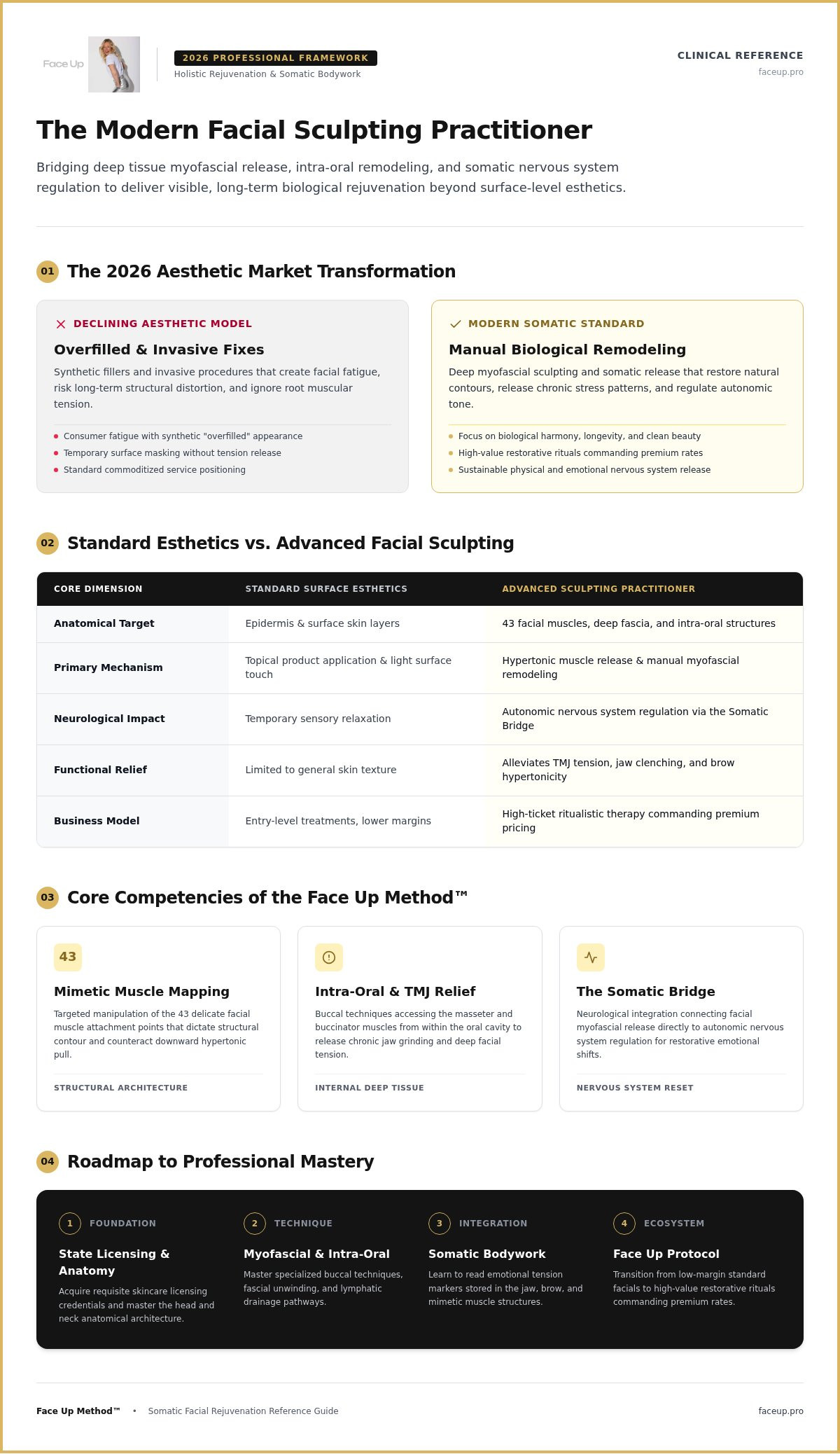
Facial sculpting is far more than a skin-deep treatment. It involves the intentional manipulation of the muscles and fascia to reshape the face from within. If you're researching how to become a facial sculpting practitioner, it's essential to understand that this role sits at the intersection of beauty and somatic bodywork. While a traditional esthetician primarily focuses on the health and appearance of the epidermis, a specialist sculpting practitioner works with the underlying architecture. This evolution represents a shift toward Somatic Facial Therapy, where the face is treated as a direct reflection of the nervous system.
Aesthetic Results vs. Therapeutic Release
Sculpting achieves visible lifting by addressing hypertonic muscles that pull the features downward. Unlike dermal fillers that add synthetic volume, manual sculpting releases deep-seated tension to restore natural contours and youthful vitality. Practitioners must master facial anatomy and muscle structure to target the mimetic muscles effectively. Lymphatic drainage also plays a supporting role by clearing metabolic waste and reducing puffiness. However, the true mastery lies in understanding emotional anatomy. Releasing the masseter or the brow doesn't just change a look; it can shift a client's entire state of being by easing the physical markers of stress.
The 2026 Market Demand for Natural Rejuvenation
The global aesthetic market is undergoing a massive transformation. In 2026, consumer fatigue with "overfilled" faces has reached a peak. Clients now prioritize longevity and clean beauty over quick, invasive fixes that can lead to long-term distortion. This shift creates a lucrative, high-ticket niche for those who know how to become a facial sculpting practitioner. By positioning yourself as a holistic specialist rather than a generalist, you move away from low-margin facials toward premium, ritualistic experiences. The demand for manual remodeling is no longer a trend. It's a fundamental requirement for the modern wellness consumer who values integrity and biological harmony.
By adopting a methodology like the Face Up Method, you enter a proprietary ecosystem that values both professional authority and welcoming accessibility. This approach ensures you aren't just providing a service, but are inviting clients into a community focused on sustainable, high-standard care. Transitioning into this specialized field requires a commitment to understanding the body's subtle signals, positioning you as a reliable partner in your client's long-term rejuvenation journey.
The Essential Skill Set: Beyond Basic Massage
Professional facial sculpting isn't just about applying pressure; it's about understanding the anatomical and emotional layers of the face. To master how to become a facial sculpting practitioner, you have to transition from a generalist to a specialist who understands how the face stores life experiences. While standard beauty programs provide a baseline, advanced sculpting requires a deep dive into the underlying architecture of the head and neck. It’s a precision-based craft where every movement serves a functional and aesthetic purpose.
Anatomy and Physiology of the Face
Mastery begins with mapping the 43 muscles of the face. Unlike the large muscle groups in the body, facial muscles are often delicate and intricately connected to the skin and each other. A practitioner must understand these attachment points to effectively lift and contour. Equally important is the fascia, the connective tissue that holds everything in place. When fascia becomes restricted, it creates the appearance of sagging or deep wrinkles. Understanding state licensing requirements for skincare specialists is your first step, but true expertise comes from studying these deep muscular layers. The Somatic Bridge represents the physical and neurological intersection where facial muscle tension acts as a direct gateway to the body’s autonomic nervous system.
Lower-face sculpting often requires more than external touch. Proficiency in intra-oral, or buccal, techniques allows you to access the muscles from the inside. This is particularly effective for releasing the masseter and buccinator muscles, which are common sites for chronic tension. Integrating tmj massage therapy into your practice provides functional relief for clients who suffer from jaw clenching or grinding. It’s a high-value skill that sets you apart from practitioners who only offer surface-level treatments.
Somatic Bodywork and Nervous System Regulation
Modern clients seek more than a glow; they want to feel regulated. Facial sculpting is a powerful tool for nervous system regulation because of the face's high density of nerve endings. By using specific techniques to calm the vagus nerve, you help clients shift from a "fight or flight" state into a parasympathetic "rest and digest" state. This somatic-first mindset is what defines the next generation of practitioners. You aren't just changing a face; you're facilitating an emotional release that can be felt throughout the entire body. Learning how to become a facial sculpting practitioner in 2026 means becoming a facilitator of both beauty and balance. Professionals looking to master this sophisticated blend of skills often find their path through the Face Up Method Certification, which bridges the gap between manual sculpting and somatic healing.
Step-by-Step Path to Professional Certification
Transitioning from a curious observer to a certified expert requires a structured and transparent approach. The journey of learning how to become a facial sculpting practitioner begins with a commitment to high-standard education that transcends basic beauty school. You'll need to move through foundational anatomy, master specialized manual techniques, and eventually validate your skills through rigorous assessment. This path ensures you're prepared for the administrative and clinical realities of a specialized practice, positioning you as a reliable facilitator in a global market.
Choosing the Right Certification Program
Your choice of training defines your future professional standing and the level of trust you build with clients. While many entry-level courses exist, you should look for a facial sculpting certification that offers a proprietary, somatic-based curriculum. A comprehensive program in 2026 should cover three vital pillars:
- Intra-oral (Buccal) Mastery: Precision techniques for internal muscular release and lower-face remodeling.
- Fluid Dynamics: Mastery of manual lymphatic drainage techniques to ensure treatment safety and reduce tissue puffiness effectively.
- Somatic Integration: Understanding the nervous system's role in facial tension to facilitate genuine emotional release.
Advanced programs now utilize high-definition digital modules combined with live practical assessments. This ensures you're ready for the international market without the immediate burden of travel. This hybrid model allows you to enter the Face Up Method ecosystem at a measured pace, maintaining a high standard of decorum while mastering complex manual skills.
Accreditation and Professional Standards
Once you've completed your foundational training, the next step is formal accreditation. In 2026, the gold standard for specialized work remains CPD-accredited programs that are recognized across multiple jurisdictions. Global recognition is essential for securing professional indemnity insurance, which is a mandatory requirement for performing deep tissue and intra-oral work. Understanding how to become a facial sculpting practitioner also involves joining a professional community. Certification usually grants you a listing in a global practitioner directory, which acts as a symbol of verified quality for clients. This professional mentorship ensures you're never navigating the industry alone, providing a clear path forward as you launch your specialized practice.
Bridging Aesthetics and Somatic Bodywork
Aesthetics and somatics are often treated as separate disciplines, but in a professional sculpting practice, they're inseparable. When you learn how to become a facial sculpting practitioner, you quickly realize that the face is a physical map of a person's stress history. Chronic jaw clenching or a furrowed brow aren't just repetitive habits; they're somatic responses to a life lived in high gear. By addressing these physical markers, you aren't just changing a client's appearance. You're helping them unwind a lifetime of physicalized stress.
Physicalized stress often settles in the jaw and brow, leading to a "heavy" or tired look that no topical cream can fix. Releasing this stored tension provides an immediate aesthetic lift while offering the client a profound sense of emotional relief. This dual benefit is what makes the Face Up Method so effective in the 2026 market. Practitioners who integrate a specialized tmj massage tool into their sessions can provide a level of precision that manual touch alone sometimes misses. This approach ensures the longevity of aesthetic results because you're treating the underlying cause of facial sagging and tension rather than just the surface symptoms.
The Science of Facial Somatics
The masseter muscle is one of the strongest in the human body and acts as a primary sensor for the stress response. When a practitioner applies pressure to this area, it's common for clients to experience a sudden shift in their breathing or a sense of emotional release. It's your job to guide them through this process with professional authority and calm efficiency. Mastering a focused Jaw Release protocol is the fundamental skill that bridges the gap between superficial beauty and deep functional health. This mindset helps you explain to clients that their "beauty" treatment is actually a vital part of their nervous system maintenance.
Creating a Holistic Treatment Environment
Setting the stage for a somatic healing session requires more than just a clean room. It demands an atmosphere of calm efficiency and global readiness where the client feels safe enough to let go of their physical armor. Combining manual sculpting techniques with guided breathwork allows the client's nervous system to accept the work more deeply. Trust is built through transparent and inclusive communication, ensuring the client understands the "why" behind every movement. This professional mentorship creates a sense of belonging, transforming a standard appointment into a proprietary experience.
Ready to elevate your professional standing and master these advanced somatic skills? Start your journey with the Face Up Method Certification today.
Launching Your Practice with the Face Up Method™
Establishing your specialized practice is the final, most rewarding phase of the roadmap for how to become a facial sculpting practitioner. This stage marks your transition from a student of anatomy to a professional facilitator within a proprietary ecosystem. By leveraging the reputation of the Face Up Method™, you enter the market with immediate professional authority. High-end clients in 2026 are specifically looking for verified quality and trademarked protocols that offer a sense of security and predictable results. Aligning your brand with a recognized method provides the reassurance these clients need to choose manual rejuvenation over invasive alternatives.
Success in this field relies heavily on a robust portfolio of non-invasive rejuvenation case studies. Documenting the visible lifting, improved facial symmetry, and structural changes achieved through manual remodeling serves as a direct, honest representation of your skill. These results prove that a somatic-first approach can achieve significant aesthetic impact. This evidence-based marketing helps you build a community of loyal clients who value long-term biological harmony over quick, synthetic fixes.
Business Foundations for Sculpting Practitioners
When setting your rates, it's vital to price your services based on your specialized somatic expertise rather than standard beauty market averages. You aren't just providing a facial; you're facilitating a complex release of physicalized stress. Marketing your practice effectively requires transparent communication about the "why" behind your techniques. One of the most effective ways to build visibility is through a Practitioner Directory Listing. This global platform connects you with an international network of professionals and helps local clients find a verified provider in their jurisdiction. It eases the administrative burden of client acquisition by placing you within a specialized community of excellence.
Continuing Education and Specialization
The journey of professional advancement is ongoing. To remain a leader in the specialized wellness landscape, you should consider expanding into niche areas like the Jaw Release Course or advanced lymphatic protocols. Staying updated with the latest somatic research ensures your practice remains at the forefront of the industry. You can also add significant value to your service model by incorporating digital tools. Recommending the Face Up App Subscription allows your clients to support their results with self-practice rituals between sessions. This holistic approach ensures that the structural changes you initiate in the treatment room are maintained through consistent home care. It builds deep trust and positions you as a reliable, high-standard partner in your client's long-term rejuvenation journey.
Your Future in Somatic Facial Rejuvenation
The evolution of the aesthetic industry in 2026 demands a new kind of expert. You've seen that professional success requires more than manual dexterity; it necessitates a deep understanding of the somatic bridge between facial tension and the nervous system. By mastering the Face Up Method, you position yourself at the forefront of this holistic shift. You're no longer just providing a beauty service. You're facilitating a restorative experience that clients can't find through invasive procedures, building a practice rooted in biological harmony and visible results.
Understanding how to become a facial sculpting practitioner is the first step toward a career defined by integrity and professional scale. With a globally recognized certification and direct mentorship from Olga Newman, you gain the authority needed to command premium rates in an international market. You'll also secure a place in the Face Up Practitioner Directory, connecting you with a specialized community and high-end clients seeking verified quality. It's time to transition from a generalist to a recognized facilitator of natural beauty. Join the next Face Up Method™ Certification intake and begin your professional journey today. We're excited to welcome you into our global ecosystem.
Frequently Asked Questions
Do I need prior massage experience to become a facial sculpting practitioner?
Prior massage experience isn't a mandatory prerequisite. While a background in bodywork is helpful, the Face Up Method Certification is designed to guide you through the specific anatomical and somatic skills required. You'll learn how to become a facial sculpting practitioner by mastering deep tissue manipulation and nervous system regulation from the ground up. This ensures even those new to manual therapy can achieve professional standards through our structured curriculum.
What is the difference between facial sculpting and a regular facial?
A regular facial focuses on the health and appearance of the skin's surface, involving cleansing and topical treatments. In contrast, facial sculpting targets the underlying muscular and fascial architecture. It uses intentional manipulation to lift features and release deep-seated tension. This somatic approach addresses the root causes of sagging and puffiness, providing structural changes that go far beyond the epidermal results of a standard aesthetic treatment.
How long does it take to get certified in the Face Up Method?
The Face Up Method Certification is structured as a 5-day continuing professional development program. It combines comprehensive digital theoretical modules with practical hands-on assessments. This timeline allows you to absorb complex anatomical data while practicing the manual techniques required for certification. After completing the curriculum and passing your assessments, you'll be ready to join our global directory and begin offering high-ticket treatments to your own clients.
Can I learn facial sculpting online, or do I need in-person training?
You can learn the theoretical and foundational manual techniques through our global digital training platform. Modern technology allows us to provide high-definition modules that you can study from anywhere. To ensure high standards, the Face Up Method Certification includes practical video assessments where your technique is reviewed by specialists. This hybrid model offers the flexibility of online learning without compromising the professional integrity and rigor of traditional in-person training.
Is facial sculpting a regulated industry?
Regulation varies significantly by jurisdiction. In the United States, practitioners often need an active Esthetician or Massage Therapist license to legally touch the public for compensation. Some regions have specific rules regarding intra-oral or buccal work, often requiring a massage therapy license. It's essential to verify your local state or regional laws before you begin your journey of learning how to become a facial sculpting practitioner to ensure full compliance.
What equipment or tools do I need to start my practice?
Your primary tools are your hands, as the Face Up Method relies on manual tissue manipulation. However, you'll need medical-grade nitrile gloves for performing intra-oral or buccal techniques to maintain strict hygiene standards. Some practitioners also choose to integrate a specialized TMJ massage tool or lymphatic drainage aids to enhance their results. Most of your initial investment will focus on high-quality training and certification rather than expensive mechanical equipment or machinery.
How much can a certified facial sculpting practitioner earn?
Earnings for specialized practitioners are significantly higher than for general estheticians. In the U.S., the national average salary for specialized facial therapists is approximately $89,460 per year. Top earners in high-demand metropolitan markets can make between $108,500 and $130,000 annually. By offering trademarked, signature sculpting protocols like the Face Up Method, you can command premium rates per session. This professional path offers a lucrative alternative to standard skincare services.
Can I integrate facial sculpting into my existing beauty or massage business?
Yes, facial sculpting is an excellent addition to an existing beauty or massage business. It allows you to transition from low-margin, entry-level facials to high-ticket, specialized rituals. This integration attracts a more discerning clientele looking for natural, non-invasive rejuvenation. By adding somatic bodywork to your menu, you differentiate your brand from standard competitors and provide a unique service that addresses both the aesthetic and emotional needs of your clients.


