

What if facial rejuvenation is less about changing your features and more about how your face feels and looks? Facial massage for skin rejuvenation uses hands-on techniques to work with facial tension, circulation, and fluid-related puffiness. It may support a temporarily fresher, fuller appearance, but evidence for these effects is limited.
It’s understandable to expect a massage to ease tightness or leave your skin looking more refreshed. The key is understanding what facial massage for skin rejuvenation may realistically affect, and how a professional approach differs from a dramatic or permanent change.
This guide explains how massage may affect facial tension, puffiness, and surface blood flow, what to expect from an at-home routine, and when professional support may be a better fit.
Key Takeaways
- Understand how professional facial massage works with facial contours without changing your underlying features.
- Learn what massage may do for tension, circulation, and temporary puffiness, and how to interpret the limited evidence.
- Get a clearer sense of what happens during a professional session and which factors shape the experience.
- See what a gentle at-home routine involves and when professional support may better suit your goals.
What Is a Facial Massage?
A professional facial massage uses hands-on techniques on the face and neck, sometimes extending to the upper shoulders. Practitioners may use flowing strokes, kneading, or pressure-point work around the jaw, cheeks, brow, and temples.
Professional Facial Massage Techniques
Facial massage techniques are hands-on movements applied to facial tissues and contours. The movements shape the session’s focus, whether that is relaxing a tense jaw or addressing temporary fluid-related puffiness. A practitioner may combine gentle strokes, kneading, and pressure-point work. The sequence depends on the areas being treated and your comfort, rather than following one fixed routine.
Working with Facial Contours and Pressure
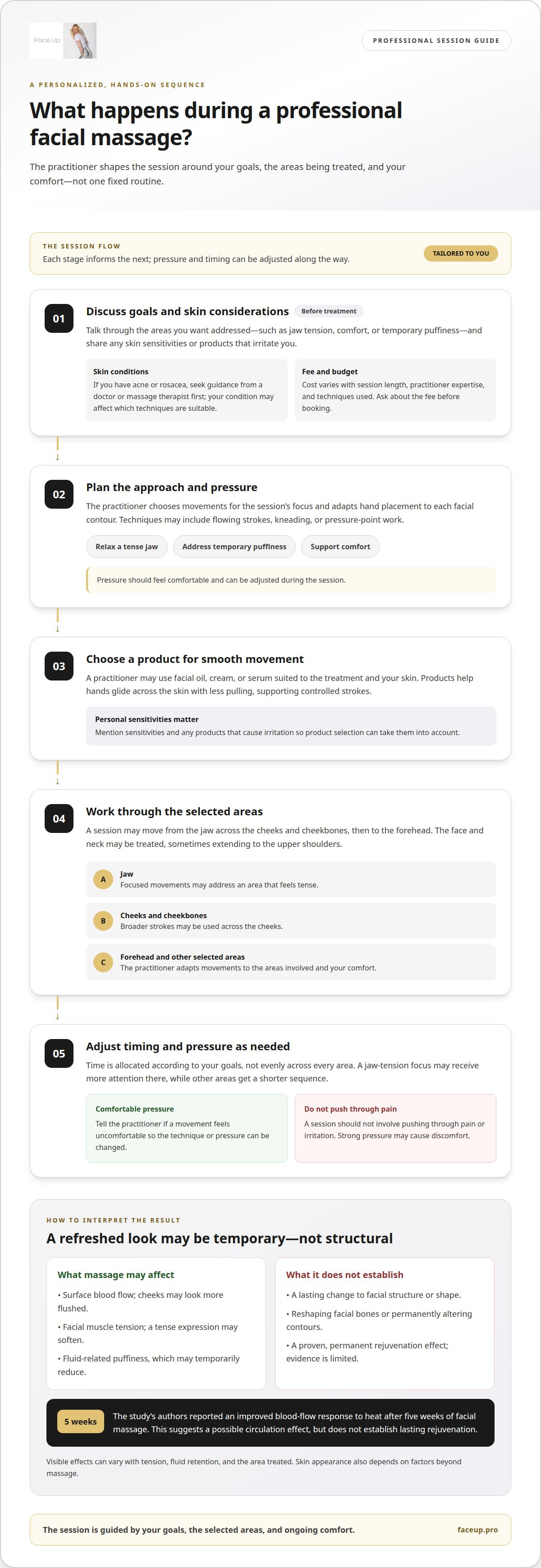
Working with facial contours means adapting hand placement, movement, and pressure to different areas. The cheeks, brow, and jaw have distinct shapes and needs, so a practitioner might use broader strokes across the cheeks and more focused movements near the jaw or pressure points. The pressure should feel comfortable and can be adjusted during the session.
In the United States, the cost of a professional facial massage varies with factors such as session length, practitioner expertise, and techniques used. Ask about the fee before booking so you can compare it with your goals and budget.
Possible side effects include discomfort if the pressure is too strong. Tell the practitioner if a movement feels uncomfortable so they can adjust their technique or pressure. A session should not involve pushing through pain or irritation.
If you have acne or rosacea, seek guidance from a doctor or massage therapist before facial massage, as your condition may affect which techniques are suitable. For concerns such as acne, a practitioner can tailor the approach to the affected area and your comfort.
Skin fullness, tension, and blood flow
Facial massage may affect how full or tense your face looks and feels by influencing surface blood flow, facial muscle tension, and fluid movement. These effects relate to appearance and sensation, not lasting changes to facial structure.
Blood Flow and Circulation
Facial massage can affect circulation through the pressure and movement applied to the skin. This matters because blood flow influences the skin’s appearance and response to warmth. A practitioner might use gentle strokes across the forehead and cheeks, then focus on areas that feel tense. The technique influences how the skin and underlying facial muscles respond during treatment.
Circulation and Skin Appearance
Circulation and skin appearance are linked because blood carries oxygen and nutrients through the body’s tissues. A temporary change in blood flow may help explain why the face looks different after massage. The cheeks, for example, may appear more flushed, while relaxed muscles around the jaw may soften a tense expression. Neither effect changes the face’s underlying shape.
Facial fullness can also reflect fluid around the tissues. Techniques that encourage lymphatic movement may temporarily reduce fluid-related puffiness beneath the eyes or along the cheeks. This is not the same as increasing permanent facial volume. The visible effect can vary depending on tension, fluid retention, and the area treated.
Stress and anxiety can contribute to facial tension. Some people notice tightness around the jaw, temples, or forehead, where muscles may stay contracted. Gentle massage may ease that sensation. Any effect on visible lines depends on their cause and on facial expression, not pressure alone.
The study’s authors reported an improved blood-flow response to heat after five weeks of facial massage. This finding points to a possible circulation effect, but it does not establish that massage produces lasting rejuvenation. Skin appearance also depends on factors beyond massage, including tension and puffiness.
The practical distinction is between a short-term change in appearance and a structural change. Massage may affect surface circulation, muscle tension, and fluid-related fullness. It does not reshape facial bones or permanently alter facial contours.
What to expect during a professional facial massage for skin rejuvenation
A professional session follows a planned sequence, starting with a discussion of your goals and moving on to techniques for specific facial areas. The routine may focus on comfort, muscle release, or a refreshed appearance.
A Professional Facial Massage Session
A professional facial massage is hands-on care tailored to the areas being treated. A clear focus helps determine the movements and pressure used. The practitioner might begin with the jaw, work across the cheeks and cheekbones, then address the forehead. Gentle strokes or focused movements guide the session.
Throughout the session, the practitioner adjusts hand placement and pressure to your comfort. Tightness near the jaw, for example, may call for focused work, while the cheeks may receive broader strokes. This allows each area to be addressed without treating every part of the face identically.
Session Timing
Session timing refers to how the practitioner allocates time across the areas and goals you discuss. A routine focused on jaw tension differs from one that covers the cheeks, forehead, and neck. The practitioner plans the sequence around the areas involved and the techniques needed.
Timing can shift during the session if an area needs more attention or the pressure needs adjusting. The practitioner may spend longer on the jaw when tension is the priority, then use a shorter sequence across the cheekbones. The aim is a coherent treatment, not equal time for every area.
Oils and Products Used in Professional Massage
Products used during facial massage help the practitioner’s hands glide across the skin with less pulling. Smooth movement supports controlled strokes on areas such as the cheeks and forehead. A practitioner may use facial oil, cream, or serum suited to the treatment and your skin.
Before the session, tell the practitioner about any sensitivities or products that irritate your skin. This helps guide product selection and keeps the focus on massage rather than discomfort. Products support the technique, but hands-on movements remain central to the treatment.
Planning starts with your goals, such as easing jaw tension or working across the cheekbones. The practitioner uses that focus to plan the sequence, choose movements, and adjust pressure as the session progresses. Clear communication about comfort helps guide those adjustments.
Facial massage does not treat acute sinusitis or a sinus infection. If congestion or pressure is part of your concern, distinguish symptom relief from treatment of the underlying condition. A well-planned routine stays within the purpose of massage and the areas being addressed.
Facial massage and skin rejuvenation
Facial rejuvenation describes a fresher-looking appearance and a more relaxed feel, not a change to facial structure. Massage may address temporary puffiness, muscle tension, and surface blood flow, but these effects have limits.
Research on Facial Massage
Research on facial massage examines outcomes such as circulation, muscle mobility, and fluid-related puffiness. These outcomes help distinguish short-term changes in appearance from lasting rejuvenation. Findings suggest massage can increase blood flow in treated skin and support lymphatic movement, which may temporarily reduce excess fluid.
These outcomes do not establish that massage reverses skin ageing or permanently reshapes facial contours. A massage therapist can use movements to address tension or encourage relaxation, but the research base remains limited. Temporary cheek de-puffing, for example, is different from changing the cheekbones or creating deeper, lasting fullness.
Skin Rejuvenation Claims
Claims about skin rejuvenation describe possible changes in how the face looks or feels after massage. This distinction matters because terms such as “lift” can imply structural change, while massage effects relate more closely to surface circulation, relaxation, and fluid movement.
Facial lymphatic drainage may temporarily reduce excess fluid that contributes to puffiness, but it does not change the shape of your face. A more rested appearance may reflect that temporary shift or the release of tension around the jaw and forehead. It is not a permanent lift.
For a professional routine, cleansing prepares the skin before the massage begins. The therapist then selects movements for the areas being treated, such as gentle strokes across the cheeks or focused work around a tense jaw. Pressure and sequence shape the experience, but stronger pressure does not mean better rejuvenation.
The clearest takeaway is to view massage as supportive care, not a structural procedure. It may address temporary puffiness and tension while offering time to relax. Claims of lasting changes to facial shape or deeper skin structure go beyond these effects.
Face Up
If you want hands-on facial sculpting or support with facial tension, Face Up offers Face Up Sculpting Treatment. The Face Up™ Method addresses facial and jaw tension through fascia, breath, posture, and nervous-system-led techniques, with a focus on releasing muscular and emotional tension.
If you want to explore self-practice, the Face Up App Subscription and Jaw Release Course offer options for building facial rituals into your routine. The right path depends on whether you’re seeking a professional treatment or learning practices to use yourself.
For an approach that connects facial massage with tension release and mindful practice, contact Face Up to discuss your goals.
Choose a practice that fits your next step
Treat facial massage as part of a thoughtful approach to wellbeing, not a promise of permanent change. If you’re considering facial massage for skin rejuvenation, first identify what matters most: a professional treatment, guided self-practice, or deeper learning about facial techniques.
Face Up offers options for both personal practice and professional development. The Face Up™ Club and Face Up™ Jaw Release support self-guided practice and learning, while Face Up™ Method Training is for practitioners developing their professional skills. Choose the option that aligns with your interests and the support you want.
Taking time to clarify your goals can make the next step feel more considered and personal. Contact Face Up to discuss how its approach may fit what you’re looking for.
Frequently Asked Questions
What is facial rejuvenation?
Facial rejuvenation describes approaches intended to create a fresher-looking or more rested appearance. Facial massage for skin rejuvenation works with facial tension and temporary changes such as fluid-related puffiness; it does not change bone structure. Someone seeking a softer jaw expression, for example, has a different goal from someone expecting a permanent change in facial shape.
How Often Should You Have a Professional Facial Massage?
Plan professional sessions around the areas you want addressed, the techniques used, and how your face responds. No single schedule suits every goal. A session focused on jaw tension may differ from broader facial work. For ongoing care, discuss a suitable cadence with the practitioner and adjust it if your goals or comfort change.
Skin Rejuvenation Techniques: What’s Right for You?
Choose techniques according to your goals and the areas involved. Gentle, flowing movements may suit a broad, relaxing session, while focused pressure-point work can address specific areas such as the jaw or temples. A practitioner can shape the approach around your comfort and priorities. Massage is not designed to create lasting structural change.
What are the benefits of facial massage for skin rejuvenation?
Facial massage may ease a feeling of tightness, encourage relaxation, and temporarily reduce puffiness linked to excess fluid. Some people also notice a short-lived change in skin appearance. These are distinct effects: feeling less tense does not necessarily mean the skin’s structure has changed. Consider which outcome matters most before choosing a session focus.
Does facial massage improve wrinkles, firmness, or skin tone?
Massage may temporarily affect skin tone through changes in surface blood flow, and relaxed facial muscles may soften a tense expression. It does not establish lasting improvements in wrinkles or firmness, or permanently change facial contours. A brief flushed appearance after treatment, for example, differs from a durable change in skin texture or elasticity.
What facial massage techniques can a professional perform?
A practitioner may use flowing strokes, kneading, pressure-point work, or techniques influenced by Japanese and Indian massage traditions. Some approaches also draw on facial reflexology. The practitioner selects movements for the area and session goal, such as broader strokes across the cheeks or focused work near the jaw. Technique and pressure can be adjusted during treatment.


