
What if the key to unlocking years of chronic jaw pain isn't found on the surface of your skin, but from within the emotional vault of your mouth? If you're one of the 10 million Americans suffering from jaw dysfunction, you know the frustration of stuck stress. Buccal massage for tmj is emerging as a sophisticated solution that moves beyond surface-level beauty trends to address the somatic roots of your discomfort.
It's exhausting to live with the constant clicking, popping, and facial fatigue that shadows your day. You've likely felt that your stress is physically anchored in your jaw, creating a cycle of clenching that traditional relaxation techniques can't seem to break. You'll discover how this specialized intra-oral technique targets deep-seated tension and emotional holding patterns to provide a lasting, non-invasive alternative to more aggressive interventions.
We will explore the science behind the Face Up Method and how it regulates the nervous system while restoring facial symmetry. By understanding the mind-body connection of your pain, you can move toward a more relaxed and balanced version of yourself. This guide provides a clear, professional path for anyone seeking to transition from chronic discomfort to a state of calm efficiency.
Key Takeaways
- Understand why buccal massage for tmj is the only manual therapy capable of reaching the deep lateral pterygoid muscles from inside the oral cavity.
- Learn how the jaw acts as a survival center, storing fight-or-flight stress that requires a somatic approach to truly release.
- Compare the long-term benefits of somatic retraining against temporary solutions like Botox or dental night guards.
- Discover practical steps for safe intra-oral self-massage and the specific tools that enhance your home practice.
- Explore the Face Up Method™ as a professional standard for achieving lasting jaw relief and improved facial symmetry.
What is Buccal Massage for TMJ and How Does It Work?
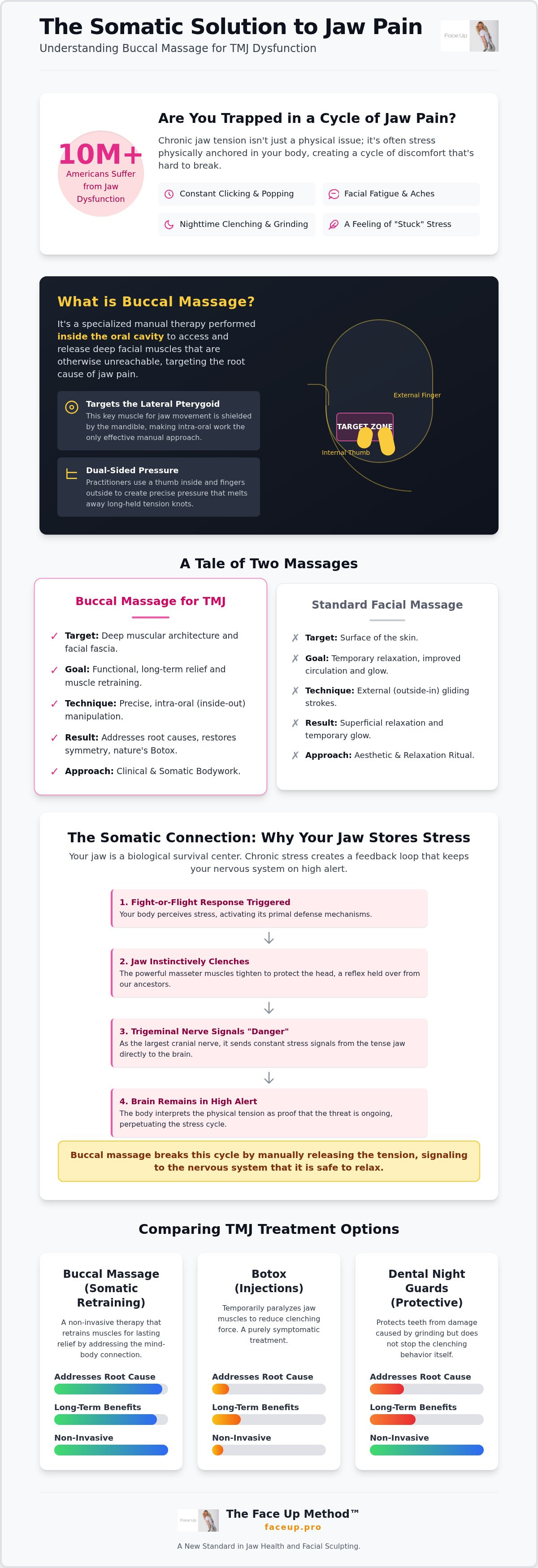
Buccal massage for tmj is a specialized manual therapy performed inside the oral cavity to release deep facial muscles that are otherwise inaccessible. While it began as a technique for sculptural face lifting, it has evolved into a powerful clinical solution for Temporomandibular joint dysfunction. By working from the inside out, practitioners can address the root causes of jaw pain rather than just managing the symptoms on the surface. This dual-sided approach ensures that every layer of the facial structure is addressed with professional precision.
The primary advantage of this method is its ability to reach the lateral pterygoid muscle. This muscle is a major player in jaw movement and tension, yet it's shielded by the mandible, making external massage largely ineffective. By placing a thumb or finger inside the mouth, the practitioner can pin the muscle against the fingers on the outside of the cheek. This creates a dual-sided pressure that effectively melts away knots that have been building for years. During a session, you can expect a professional environment where your practitioner uses sterile gloves to apply firm, rhythmic pressure. While the sensation is more intense than a standard facial, the immediate relief from long-held tension is often transformative.
The Anatomy of the Buccal Cavity
The buccal cavity houses the muscles of mastication, including the masseter and the pterygoids. These muscles are the primary culprits behind chronic clenching and grinding. By accessing these tissues intra-orally, the Face Up Method allows for a 360-degree stretch of the facial fascia. This isn't just about the jaw; it's about the entire structural support of the mid-face. This approach also targets the buccinator muscle, which forms the wall of the cheek. Releasing the buccinator helps clear the stuck feeling many people experience when they're under high levels of stress, allowing for better lymphatic flow and reduced puffiness.
Buccal Massage vs. Standard Facial Massage
A standard facial massage typically focuses on the skin's surface to improve circulation and glow. It's a wonderful ritual for relaxation, but it rarely reaches the source of structural pain. In contrast, buccal massage for tmj targets the deep muscular architecture of the lower face. This focus is why many refer to the technique as nature's Botox. It doesn't just relax the face; it retrains the muscles to rest in a more neutral position. By specifically addressing the function of the temporomandibular joint, this therapy provides a functional benefit that traditional beauty treatments cannot match. It bridges the gap between aesthetic sculpting and clinical physical therapy.
The Somatic Connection: Why Your Jaw Stores Emotional Stress
The human jaw serves as a biological survival center. During a fight-or-flight response, the masseter muscles instinctively tighten to protect the head and prepare for defense. This reflex is useful in a crisis, but it becomes a burden when stress is chronic. Buccal massage for tmj provides a unique somatic intervention that reaches the core of this tension. By manually releasing these deep-seated holding patterns from within the oral cavity, we can effectively signal to the nervous system that it's safe to disarm. This "inside-out" approach ensures that the most stubborn knots, often held for years, are finally addressed.
Chronic clenching does more than just cause pain; it creates a feedback loop that keeps your brain in a state of high alert. When the jaw remains tight, the body interprets this physical state as proof that a threat still exists. The Face Up philosophy recognizes that facial sculpting is inseparable from somatic bodywork. We don't just treat the muscle; we treat the person. This integrated approach can ease symptoms of TMJ disorders by addressing the psychological weight stored in the fascia and muscles of mastication.
The Science of Somatic Facial Therapy
The trigeminal nerve acts as a direct communication line between your jaw and the brain's stress centers. It's the largest cranial nerve, responsible for both sensation and motor function in the face. Constant tension in the mouth sends a perpetual "danger" signal, keeping the body in a state of unrest. Somatic facial therapy is the bridge between physical manipulation and nervous system regulation. This process helps dissolve "body armoring," a term used to describe the rigid muscular structures we build to shield ourselves from emotional discomfort. By relaxing these muscles, we give the brain permission to exit the stress cycle.
Releasing Emotional Trauma Through the Jaw
Many people are surprised to find themselves laughing or crying during their first deep buccal release. This emotional catharsis isn't accidental. The jaw is a primary site for suppressed communication and unvoiced feelings. When we hold back words, swallow our pride, or stifle our reactions, that energy is stored in the muscles of the mouth. Releasing these tissues can feel like opening a floodgate. This is why buccal massage for tmj is increasingly recognized as a vital somatic tool. Reading about somatic massage therapy can provide a deeper framework for why your body reacts this way. If you are seeking a professional path to this level of release, the Face Up Method™ provides a structured ecosystem for somatic healing and long-term relief.
Buccal Massage vs. Traditional TMJ Treatments
Traditional approaches to jaw pain often focus on protecting the teeth or masking the pain rather than addressing the underlying muscular dysfunction. While dental and pharmaceutical interventions have their place, they frequently fall short of providing a permanent solution for those with chronic tension. Buccal massage for tmj offers a shift in perspective, moving from reactive symptom management to proactive somatic retraining. By comparing this manual therapy to common clinical treatments, it becomes clear why an inside-out approach is essential for long-term recovery.
Mechanical Relief vs. Symptom Management
Night guards are the most common prescription for jaw clenching, yet their primary function is to act as a physical barrier to prevent tooth wear. They don't stop the clenching itself. In fact, some patients find that a night guard increases their discomfort because the presence of the device in the mouth can trigger a masticatory reflex, giving the jaw something to "chew" on throughout the night. This reinforces the very tension you're trying to escape.
Anti-inflammatory medications and muscle relaxants provide temporary relief, but they cannot reshape the fascia or release the "body armoring" discussed in previous sections. These chemicals address the inflammation caused by tension, but they leave the root cause, the shortened and hyperactive muscles, completely untouched. Manual release through buccal massage for tmj targets the deep muscular architecture directly, offering a functional improvement that medication simply cannot replicate.
Is Buccal Massage Safer Than Injections?
Empowering yourself with the right techniques is a vital step toward long-term recovery. While professional sessions provide deep structural changes, a consistent home ritual ensures that your nervous system remains regulated between appointments. Incorporating buccal massage for tmj into your daily life allows you to address tension the moment it arises, preventing the cumulative "body armoring" that leads to chronic pain. Success in home care relies on a gentle, steady approach rather than aggressive force. Your goal is to invite the muscles to release, not to command them.
Choosing the right approach often depends on the level of tension you're experiencing. For most daily maintenance, your own hands are the most sensitive and effective instruments. They provide immediate biofeedback, allowing you to feel exactly where the tissue is most resistant. However, if you find your hands tiring or if you require more specific leverage, using a specialized tmj massage tool can enhance your practice. These tools are designed to mimic the professional pressure of a practitioner, helping you reach the deeper attachments of the masseter without straining your wrists.
The Face Up Self-Care Ritual
Before beginning, ensure your hands are thoroughly sanitized and you are in a quiet, calm environment. This isn't just a physical task; it's a somatic reset. Start by placing your thumb inside your cheek and your fingers on the outside, gripping the thick masseter muscle. Use the 'hook and pull' method: gently hook the muscle from the inside and slowly pull downward toward the jawline. Pair this movement with deep, rhythmic breathing. As you exhale, imagine the tension leaving your face. If you experience sharp, shooting pain or if your jaw becomes "locked" in position, stop immediately and consult a professional. These red flags indicate that your condition may require clinical intervention.
Finding a Certified Buccal Practitioner
Because there are no government-mandated regulations for this specific therapy, the quality of care can vary significantly. It's essential to seek out a therapist who holds a verified facial sculpting certification. This ensures they have undergone rigorous training in intra-oral safety and somatic anatomy. When interviewing a potential therapist, ask about their experience with the lateral pterygoid and their approach to nervous system regulation. With over 200 Face Up Method™ practitioners globally, you can use our professional directory to find an expert who understands the delicate balance of this work. To begin your journey from the comfort of home, you can enroll in the Jaw Release Course for a comprehensive, guided experience.
The Face Up Method™: A New Standard in Jaw Health
The Face Up Method™ represents a paradigm shift in how we approach facial wellness and pain management. Founded by Olga Newman, this proprietary system moves beyond the limitations of local clinics to offer a global standard in somatic bodywork. While previous sections explored the "why" behind buccal massage for tmj, this method provides the "how" through a structured, science-based framework. It's designed to empower individuals to take control of their healing journey while providing professionals with the tools to offer transformative results for their clients. By inviting you into this proprietary ecosystem, we ensure that your path to relief is both professional and sustainable.
Consistency is the cornerstone of nervous system regulation. This is why the Face Up ecosystem includes comprehensive digital solutions designed for accessibility and effectiveness. These tools are built to bridge the gap between clinical sessions and daily life, ensuring that you have the support you need regardless of your location. Whether you're a long-time sufferer or someone just beginning to explore somatic healing, these resources provide a clear and governed user journey toward a more relaxed state of being.
Digital Solutions for Daily Relief
For many, visiting a specialized studio isn't always feasible. The Jaw Release Course serves as a digital deep-dive into the somatic theory and practical techniques required to manage TMD at home. This course isn't a simple collection of tips; it's an educational progression that covers the anatomy of the muscles of mastication and the specific movements required for a 360-degree stretch. To complement this, the Face Up App offers subscription-based daily guided rituals. These short, focused sessions prevent tension from accumulating, ensuring that the progress you make isn't lost to the daily grind. This subscription model creates a rhythmic "gateway" experience that makes jaw health a natural part of your lifestyle.
Becoming a Face Up Practitioner
As the public's interest in holistic and non-invasive treatments grows, so does the demand for skilled somatic facial therapists. Professionals in the beauty and wellness industries are increasingly seeking ways to differentiate their services through high-impact, specialized techniques like buccal massage for tmj. Transitioning from personal healing to professional mastery is a natural progression within our community. It allows you to facilitate the same life-changing relief for others while advancing your own professional standing.
The certification process is rigorous yet accessible, guiding you from foundational online modules to practical mastery of the Face Up Method™. This isn't just technical training; it's an invitation into a global network of certified providers who value integrity and proactive management. You'll learn how to navigate complex client needs, from aesthetic sculpting to clinical pain relief, all while maintaining the highest standards of decorum. If you're ready to transform your practice and join a specialized professional landscape, you can Explore the Face Up Method™ Certification and begin your journey as a facilitator of lasting relief.
Reclaiming Your Natural State of Ease
Moving beyond the limitations of surface-level treatments is the first step toward true functional recovery. You've discovered that buccal massage for tmj isn't just a physical manipulation; it's a profound somatic intervention that unlocks the emotional vault of the jaw. By accessing the deep architecture of the masticatory muscles from the inside out, we break the cycle of clenching and nervous system alarm. This holistic approach ensures that your relief is rooted in long-term structural change rather than temporary symptom masking.
Founded by somatic expert Olga Newman, the Face Up Method™ provides a reliable gateway to this specialized care. Whether you're accessing our global community of certified practitioners or beginning your journey with our digital tools, you're choosing a path of professional integrity and lasting wellness. It's time to stop managing symptoms and start addressing the somatic roots of your pain. Release your jaw tension today with the Face Up Method™ and experience the calm efficiency of a body in balance. Your journey toward a more symmetrical, pain-free life begins with this single, courageous choice. We're here to facilitate your progress every step of the way.
Frequently Asked Questions
Is buccal massage painful for someone with severe TMJ?
Buccal massage for tmj involves deep tissue work that can feel intense, but it should never be sharp or unbearable. For those with severe dysfunction, the practitioner will adjust the pressure to match your tolerance. You might experience a sensation of "productive discomfort" as long-held knots finally melt away. If you feel any acute distress, your therapist will modify the technique to ensure a safe and restorative experience.
How many sessions of buccal massage are needed to see results for TMJ?
Most clients report a noticeable reduction in jaw clicking and tension after their very first session. However, achieving lasting structural change typically requires a series of four to six treatments spaced one to two weeks apart. This frequency allows the fascia to remodel and the nervous system to adopt new, relaxed patterns. Consistency is the primary driver of success in somatic retraining and long-term pain management.
Can I perform buccal massage on myself safely at home?
You can safely perform intra-oral self-massage if you follow a professional methodology. Using the Face Up Method™ as a guide ensures you're targeting the correct muscles without causing irritation to the delicate oral tissues. Our Jaw Release Course provides the step-by-step training needed to maintain your results between professional appointments. Always ensure your hands are sanitized and move with a gentle, invitational pressure rather than aggressive force.
Does buccal massage change the shape of my face or just help with pain?
This technique addresses both functional pain and aesthetic concerns by relaxing hyperactive muscles. When the masseters are chronically clenched, they can become bulky, creating a wider or more "square" jawline. Buccal massage for tmj helps slim the lower face by reducing this muscular hypertrophy and improving lymphatic drainage. The result is a more contoured, lifted appearance and improved facial symmetry alongside the primary benefit of pain relief.
Is it sanitary to have a buccal massage during a regular facial?
Professional hygiene standards are a non-negotiable part of the Face Up Method™. Your practitioner will always use new, sterile, medical-grade gloves before beginning any intra-oral work. This level of care mirrors the strict protocols found in top-tier body art studios like Beautyrella, where safety and precision are paramount. This portion of the treatment is typically performed at a specific stage of the facial to maintain a clean field. If you're receiving this as part of a broader sculpting session, your therapist will ensure all protocols meet global health and safety standards.
These terms are frequently used interchangeably, though "intra-oral" is a broader clinical descriptor for any work done inside the mouth. "Buccal" specifically refers to the cheek area and the buccinator muscle. In the context of buccal massage for tmj, both terms describe the process of reaching the deep muscles of mastication from within the oral cavity. The Face Up Method™ integrates these techniques into a cohesive somatic framework.
Can buccal massage help with tension headaches and migraines?
Many tension headaches and migraines are directly linked to trigger points in the jaw and neck. When the masseter and pterygoid muscles are tight, they refer pain upward into the temples and behind the eyes. By releasing this primary source of tension, buccal massage can significantly reduce the frequency and intensity of these headaches. It's an effective, non-invasive way to break the physical cycle of chronic cranial discomfort.
Is buccal massage safe if I have dental implants or braces?
Buccal massage is generally safe for those with dental work, but your practitioner must be informed of any implants, braces, or recent extractions. The technique can actually help relieve the pressure and discomfort often associated with orthodontic adjustments. Your therapist will avoid direct pressure on sensitive hardware while still addressing the surrounding muscular tension. We always recommend consulting your dental professional before beginning a new manual therapy.


