

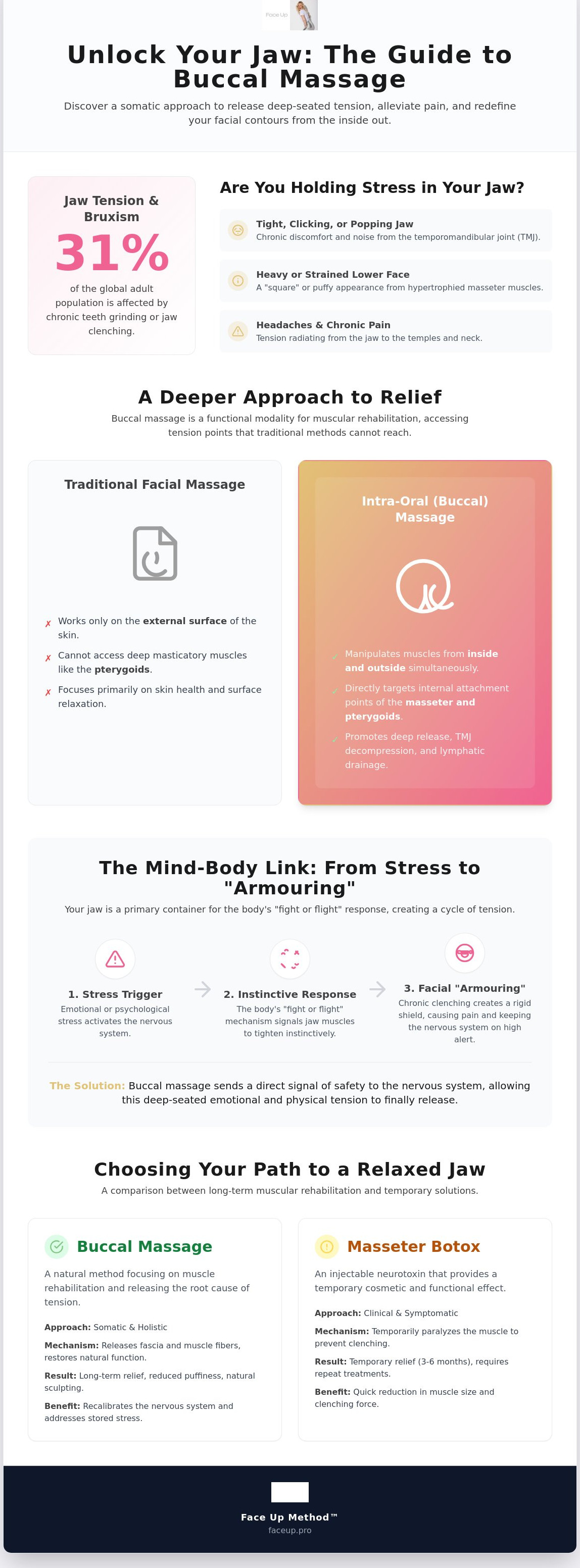
What if the chronic ache in your jaw isn't just a physical misalignment, but a silent archive of every stressor you've held onto for years? Many professionals find that buccal massage for jaw tension offers the first real breakthrough for bruxism, a condition estimated to affect up to 31% of the global adult population. You likely know the exhaustion of waking up with a tight, clicking jaw or noticing your lower face looks heavy and strained after a demanding week. It's a common struggle, yet few realize the profound emotional release that's possible through targeted intra-oral work.
We understand that living with persistent TMJ pain feels like an unnecessary weight on your daily performance. This article explores how a unique somatic approach releases deep-seated emotional and physical tension by working from the inside out. You'll learn how this specialized technique recalibrates the nervous system, reduces facial puffiness, and provides lasting relief from stored stress. We'll preview the path toward facial freedom within the Face Up ecosystem and show you how to transition from chronic discomfort to a state of calm, professional readiness.
Key Takeaways
- Understand why targeting the deep masseter and pterygoid muscles through intra-oral manipulation is essential for reaching tension that traditional massage cannot access.
- Discover how buccal massage for jaw tension serves as a somatic gateway to releasing stored emotional stress and recalibrating your nervous system.
- Compare the long-term benefits of muscle rehabilitation against the temporary effects of Botox to achieve a more natural, sculpted appearance.
- Learn the essential preparation and breathwork techniques required to safely perform effective jaw release rituals within your own home environment.
- Explore the professional advantages of the Face Up Method™ Certification for practitioners looking to integrate high-standard somatic bodywork into their service offerings.
What is Buccal Massage for Jaw Tension?
Buccal massage for jaw tension is a specialized deep-tissue technique that addresses the complex musculature of the lower face and jaw from both the external surface and the internal oral cavity. Unlike traditional manual therapies that only glide over the skin, this method involves simultaneous manipulation from both sides of the cheek. This dual-access approach is gaining significant momentum in 2026 as a sophisticated, non-invasive alternative to masseter Botox. It offers a path to structural relief that respects the body's natural movement rather than temporarily paralyzing the muscle tissue. By working within the mouth, practitioners can release tension that remains entirely untouched by standard external massage.
The Anatomy of the Jaw and Masticatory Muscles
The jaw is home to the masseter, which is the strongest muscle in the human body by weight. When an individual experiences excessive teeth grinding or jaw clenching, this muscle often enters a state of chronic hypertonicity. Over time, this constant engagement leads to muscle hypertrophy, which can create a "square" or heavy appearance in the lower face that many find aesthetically burdensome. This tension doesn't just affect the jawline; it places immense strain on the temporomandibular joint (TMJ). This often results in the clicking, popping, and localized pain that professionals struggle to manage through traditional rest or simple topical treatments. Understanding this anatomy is the first step toward reclaiming a sense of ease in your facial structure.
How the Intra-Oral Technique Differs from Standard Facials
While a standard facial focuses on skin health and surface-level relaxation, buccal therapy is a functional modality designed for deep muscular rehabilitation. It prioritizes the release of the fascia and muscle fibers over the absorption of topical products. Because the practitioner works within the oral cavity, strict sterile protocols and the use of high-quality gloves are non-negotiable standards within the Face Up Method™. Accessing the internal attachment points of the jaw muscles is the "secret" to relief for several reasons:
- Internal Isolation: It allows for the direct manipulation of the lateral and medial pterygoid muscles, which are inaccessible from the outside.
- Decompression: The technique helps decompress the TMJ by relaxing the muscles that pull the joint out of alignment.
- Fluid Drainage: By working the muscles from both sides, practitioners can more effectively move stagnant lymph, reducing the "heavy" look of a stressed lower face.
This method ensures that the treatment is not just a temporary escape but a proactive step toward long-term facial health. By integrating these techniques, buccal massage for jaw tension provides a comprehensive solution for those who have found little success with conventional surface-level treatments. It creates a bridge between clinical necessity and the luxury of professional somatic care.
The Somatic Connection: Why Your Jaw Stores Emotional Stress
The jaw serves as a primary holding container for the body's "fight or flight" response. When we experience stress, frustration, or repressed anger, our nervous system instinctively signals the muscles of mastication to tighten. This is a biological relic designed to protect the head and neck during physical confrontation. In our modern environment, these stressors are often psychological and ongoing, leading to chronic Temporomandibular disorders (TMDs). Buccal massage for jaw tension addresses this by acknowledging that the physical knot in your cheek is often an emotional signature waiting to be decoded.
The Body-Mind Link in Facial Tension
Somatic Bodywork: Beyond Just a Massage
True somatic bodywork is the practice of "listening" to the signals the body sends. It requires a practitioner who understands that a release in the jaw can trigger a corresponding release in the hips or the breath. Face Up practitioners receive specialized training to facilitate these emotional releases safely and professionally within our proprietary ecosystem. They act as facilitators for holistic recovery, guiding you through the layers of stored stress. For those seeking a deeper understanding of how these techniques compare to other modalities, The Ultimate Guide to TMJ Massage Therapy provides an excellent foundation for restoring balance.
If you are looking to address these patterns personally, our Jaw Release Course serves as a comprehensive starting point for your somatic journey.
Buccal Massage vs. Botox: Choosing a Natural Path for Jaw Tension
The choice between neurotoxins and manual therapy often defines a person's long-term facial health strategy. While masseter Botox has been a popular solution for thinning the jawline, it functions by temporarily paralyzing the muscle tissue. In contrast, buccal massage for jaw tension works to rehabilitate and relax the muscles without compromising their functional integrity. By 2026, we've seen a decisive shift away from the "frozen" aesthetic of the past decade. Discerning individuals are now seeking the "sculpted" look, which prioritizes muscle vitality and natural expression over static perfection.
Addressing the root cause of discomfort is where these two paths diverge most significantly. Botox masks the symptom by reducing the size of the muscle, yet the underlying nervous system patterns that cause clenching often remain unchanged. Buccal therapy targets the tension itself. It encourages the muscle to return to its natural resting length, providing a sustainable solution rather than a temporary pharmaceutical block. When comparing costs, one-time clinical injections may seem efficient, but they lack the cumulative benefits of a long-term ritual maintenance program that supports the body's innate healing capacity.
The Pros and Cons of Non-Invasive Sculpting
Choosing a manual somatic approach offers several physiological advantages that needles simply cannot replicate. Buccal techniques stimulate profound circulation and lymphatic drainage, resulting in a vibrant "glow" that stems from oxygenated tissue. Conversely, repeated Botox use carries the risk of muscle atrophy. Over time, this can lead to the premature appearance of jowls as the masseter loses the strength required to support the overlying skin. A somatic release provides a holistic lift, ensuring the face looks energized and resilient rather than artificially weakened.
Is Buccal Massage Right for You?
Ideal candidates for this work include chronic clenchers, teeth grinders, and anyone seeking a natural method of facial rejuvenation. It is particularly effective for those who feel their face carries the physical weight of their professional stress. However, there are specific contraindications to consider before booking a session:
- Recent Dental Work: You should wait at least 4 to 6 weeks after major procedures or oral surgeries.
- Active Inflammation: Avoid treatment during flare-ups of active acne or cold sores.
- Dermal Fillers: It's standard practice to wait 4 weeks after filler injections to ensure the product has fully integrated into the tissue.
Integrating buccal work into a broader holistic beauty routine ensures that your aesthetic goals align with your physical well-being. By choosing a path of rehabilitation, you're investing in a facial structure that remains expressive, healthy, and authentically yours.
Practical Guidance: Releasing Jaw Tension at Home
Lasting relief from chronic clenching isn't achieved through occasional interventions alone. It requires a dedicated daily ritual. While professional treatments provide the deep structural shifts discussed earlier, performing a simplified version of buccal massage for jaw tension at home ensures that your nervous system remains in a state of regulated safety. Before you begin, create a calm environment. Ensure your hands are thoroughly cleaned, and select a high-quality facial oil to provide the necessary glide without irritating the delicate oral mucosa.
Breathwork is the most critical element of any somatic practice. As you work on the muscles, maintain a slow, diaphragmatic breath. This signals to your brain that the pressure you're applying is safe, preventing the muscles from bracing against your touch. For those who prefer a guided experience, the Face Up App Subscription offers daily sessions that synchronize movement with breath, ensuring your home practice meets professional standards of efficacy.
Self-Massage Techniques for Immediate Relief
Begin with an external masseter release. Locate the angle of your jaw and apply firm, circular motions with your fingertips. Move slowly, feeling for areas of localized density. Once the external tissue is warmed, you can move to a gentle intra-oral "hooking" technique. Place your thumb inside your cheek, reaching toward the back molars, while your index finger remains on the outside. Gently "hook" the muscle and breathe into the sensation, allowing the medial pterygoid to soften under the warmth of your touch.
Holistic relief involves more than just the face. Tension in the jaw is rarely isolated; it often communicates with the neck and shoulders. Combine your facial work with gentle side-to-side neck stretches and shoulder rolls to ensure the entire upper chain is addressed. If you're looking to enhance your ritual with specialized equipment, our guide on Choosing the Best TMJ Massage Tool provides expert recommendations for somatic tools that complement manual work.
Guided Rituals with the Face Up App
Consistency is far more important than intensity when it comes to somatic bodywork. Overworking the tissue can lead to temporary soreness, whereas a gentle, 5-minute daily practice creates sustainable change. Our Jaw Release Course provides a structured, 5-step path to tension-free living, taking the guesswork out of your recovery. By following these professional protocols, you move beyond simple exercises and into a sophisticated lifestyle of facial health. This disciplined approach is the most effective way to prevent the return of "heavy" facial features and chronic TMJ discomfort.
Elevating Your Practice: Face Up Method™ Certification
Professional wellness landscapes are shifting rapidly in 2026. Beauty and wellness practitioners are increasingly pivoting toward somatic facial sculpting as a primary offering. This move responds to a sophisticated client base that demands high-performance, non-invasive results. The Face Up Method™ stands at the forefront of this evolution, offering a proprietary blend of deep structural sculpting and somatic bodywork that addresses the physical and emotional layers of the face. Unlike standard training programs that focus solely on manual dexterity, this certification prioritizes the practitioner's ability to facilitate a nervous system reset.
The journey to becoming a certified practitioner is rigorous and structured. It begins with foundational anatomy and moves through the complex intra-oral techniques required for effective buccal massage for jaw tension. Students undergo comprehensive assessments to ensure they meet our Red Dot-calibre professional training standards. For those ready to lead in this specialized field, our Facial Sculpting Certification: Master the Face Up Method™ provides the essential roadmap for professional advancement and mastery.
The Benefits of Professional Buccal Training
Expanding your service menu with somatic treatments isn't just about learning a new skill; it's a strategic business decision. Holistic beauty specialists often see higher client retention rates when they offer solutions that provide both aesthetic refinement and physical relief. Buccal massage for jaw tension is currently one of the most requested non-invasive treatments globally. By joining our community, you gain access to a network of professionals dedicated to natural rejuvenation and global standards of care. We provide guidance on pricing and client management to ensure your practice thrives within this high-demand niche. This professional ecosystem supports your growth as a facilitator of holistic health.
How to Find a Certified Face Up Provider
For individuals seeking treatment rather than training, finding a qualified specialist requires discernment. A qualified therapist should possess a deep understanding of facial anatomy and somatic principles. You can use our global directory of certified practitioners to find trusted specialists who have mastered these protocols. This directory ensures that you are entering a safe, professional environment where your wellbeing is the priority. Every practitioner listed has undergone the same rigorous training, ensuring a consistent standard of care regardless of your location. If you are a professional ready to join this movement, you can become a certified Face Up Practitioner today and begin your journey toward professional excellence.
Embracing a Future of Facial Freedom
Reclaiming your facial ease starts with the realization that your jaw is more than just a joint; it's a reflection of your internal nervous system. By opting for buccal massage for jaw tension, you're choosing a path of rehabilitation over temporary pharmaceutical blocks. This somatic approach, developed by specialist Olga Newman, ensures that you address the root causes of clenching while achieving a naturally sculpted aesthetic. Whether you're seeking relief from chronic TMJ discomfort or looking to refine your lower face, the integration of intra-oral work provides a level of release that surface treatments simply cannot match.
Our proprietary ecosystem is built on Red Dot-calibre training standards, ensuring that every ritual and session meets the highest professional benchmarks. You can explore our global directory of certified practitioners to find expert support or begin your own practice today. We invite you to start your journey with the Jaw Release Course or the Face Up App to experience the profound benefits of somatic bodywork. A life free from persistent tension is a sustainable reality, and we're here to guide you toward a state of lasting calm and physical readiness.
Frequently Asked Questions
Is buccal massage painful for someone with severe jaw tension?
Buccal massage for jaw tension should not be painful; it should feel like a deep, productive release. While you might experience intensity in highly congested areas, a qualified practitioner will work within your comfort threshold to ensure your nervous system doesn't enter a defensive state. If the pressure is too aggressive, the muscles will instinctively brace, which defeats the purpose of somatic relaxation and prevents the tissue from truly letting go.
How many sessions of buccal massage are needed to see results for TMJ?
Most individuals notice an immediate reduction in tightness after a single session, though a series of 6 to 10 treatments is typically recommended for lasting structural change. This timeframe allows the fascia to remodel and the nervous system to adopt new, relaxed patterns. Consistency is vital to moving beyond temporary relief and achieving a state of permanent ease in the masticatory muscles, especially for those with chronic clenching habits.
Can I do buccal massage on myself if I have dermal fillers?
You must wait at least 4 weeks after receiving dermal fillers before performing any intra-oral massage techniques on yourself. Applying deep pressure too soon can potentially displace the filler material or interfere with the integration process. Once this waiting period has passed, you can safely resume your ritual, though it's always advisable to consult with your aesthetic injector before beginning deep-tissue work to ensure the product has fully settled.
What is the difference between buccal massage and sculptural face lifting?
The primary difference lies in the access point; sculptural face lifting focuses on external manipulation, while buccal massage involves working from inside the oral cavity. While sculptural techniques excel at lifting the superficial tissue and skin, the buccal approach is necessary to reach the deep-seated masseter and pterygoid muscles. The Face Up Method™ integrates both modalities to provide a comprehensive, 360-degree approach to facial health and structural balance.
Will buccal massage make my face look thinner or more defined?
Yes, buccal massage for jaw tension can create a more defined and "thinner" appearance by reducing muscle hypertrophy and draining stagnant fluid. Chronic clenching often causes the masseter muscles to bulk, creating a squareness in the lower face that can look heavy. By relaxing these muscles and encouraging lymphatic drainage, the natural contours of your jawline and cheekbones become more prominent, resulting in a refined and energized look.
Can buccal massage help with tension headaches and migraines?
Buccal massage is highly effective for relieving tension headaches and migraines that originate from jaw dysfunction. Because the muscles of the jaw are connected to the temporal region through shared fascial chains, releasing the masseter often provides immediate relief for temple pressure. Many clients report a significant reduction in the frequency of their headaches once their primary jaw tension is addressed through consistent somatic bodywork and intra-oral release.
What should I expect during my first professional Face Up session?
During your first professional Face Up session, you can expect a thorough consultation followed by a sequence of external and internal muscle manipulation. Your practitioner will use sterile gloves to access the internal attachment points of your jaw muscles while maintaining a rhythmic, invitational flow. The session is designed to be a "gateway" experience that guides you from a state of high stress into deep somatic relaxation, leaving your face feeling light and spacious.
How does the Face Up app differ from generic jaw exercise videos?
The Face Up app differs from generic videos by offering proprietary, somatic sequences that prioritize nervous system regulation over simple muscle exercises. While generic tutorials often focus on repetitive movements, our app provides a structured environment with guided breathwork and professional-grade techniques. It ensures you are performing each movement with the precision required to signal safety to your body rather than causing further strain or accidental tissue irritation.


