

Your jaw isn't just a joint; it's a vault where your nervous system stores every unspoken frustration and every moment you've had to grit your teeth through stress. If you're struggling with chronic TMJ pain or feel like your lower face is permanently locked in a state of high alert, you aren't just dealing with tight muscles. You're experiencing a physical archive of emotional survival. Exploring somatic bodywork for jaw tension offers a way to unlock these deep-seated patterns, moving beyond the surface to address the root cause of your discomfort.
We understand how exhausting it is to wake up with headaches or notice premature tension-based aging that doesn't reflect how you feel inside. It's frustrating when traditional massage provides only temporary relief. This article will show you how to bridge the gap between nervous system regulation and deep facial tissue sculpting to achieve lasting results. You'll discover the Face Up Method™ approach to restoring your natural facial contours, gaining practical tools for emotional regulation and a more youthful, relaxed expression that radiates from the inside out.
Key Takeaways
- Understand how the "survival jaw" acts as a physical archive for stress and why somatic bodywork for jaw tension is the key to addressing the emotional roots of chronic TMJ pain.
- Learn about the role of the vagus nerve and facial fascia in storing tension and how to release these mechanical memories for a naturally youthful expression.
- Discover why somatic facial sculpting provides a sustainable alternative to Botox and night guards by healing nervous system patterns rather than simply masking symptoms.
- Explore how daily rituals and micro-practices within the Face Up App empower you to regulate your nervous system and maintain facial release throughout the day.
- Gain insight into the Face Up Method™ Certification for practitioners looking to integrate buccal massage and somatic emotional release into a high-standard professional practice.
The Root of the Clench: Why Jaw Tension is a Somatic Signal
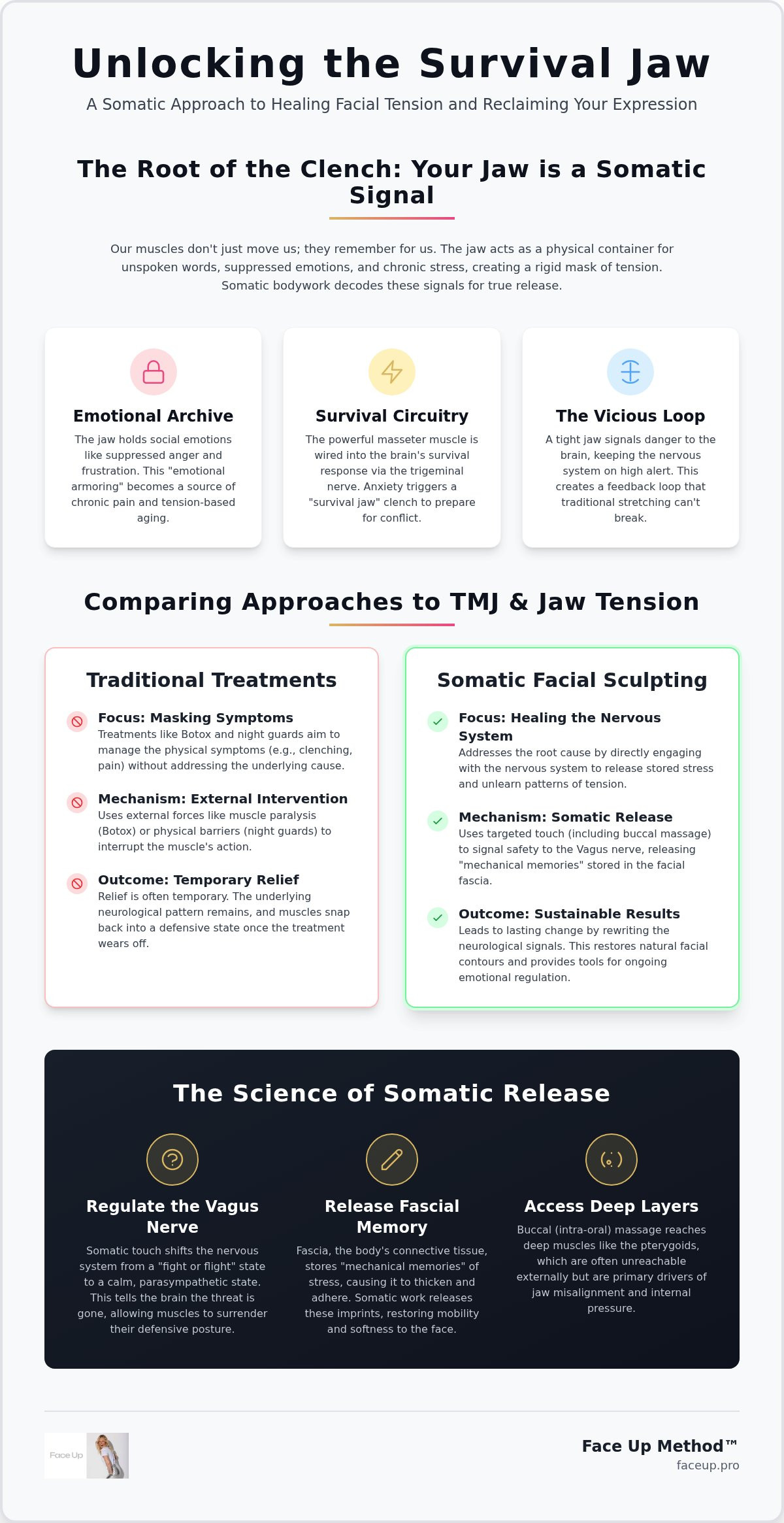
Somatic bodywork is a transformative practice that addresses the body-mind connection through the direct lens of physical sensation. It operates on the core principle that our muscles don't just move us; they remember for us. When we explore somatic bodywork for jaw tension, we're looking at the face as a living map of our internal state. Emotional armoring often begins in the jaw and neck, creating a rigid mask that protects us from perceived vulnerability or external pressure. This physical shielding might feel like safety initially, but it eventually becomes a prison of chronic pain. Your jaw acts as a profound physical container for unspoken words and suppressed emotional stress that the body hasn't yet processed.
The Nervous System and the Masseter Muscle
The masseter is one of the strongest muscles in the human body, and it's directly wired into your survival circuitry. The trigeminal nerve, which controls the muscles of mastication, serves as a primary highway for stress signals. When you're anxious, your brain triggers a "survival jaw" response, clenching the teeth to prepare for impact or conflict. This creates a relentless feedback loop. A tight jaw signals the brain that you're still in danger, which keeps your nervous system locked in a state of high alert. This neurological loop is the reason why traditional stretching often fails to provide long term relief. Without addressing the underlying neurological signal through somatic awareness, the muscle simply snaps back into its defensive posture the moment you stop pulling on it.
Emotional Archive: What Your Jaw is Holding
In somatic theory, the jaw and the pelvic floor share a deep developmental and fascial connection. Tension in one often mirrors tension in the other, creating a full body pattern of constriction. Your jaw frequently holds specific social emotions like suppressed anger, chronic determination, or the "good girl" syndrome. This happens when we bite back our true feelings to maintain a polite or professional exterior. While Temporomandibular joint dysfunction (TMD) can have structural components like disc displacement, a significant portion of chronic pain is actually somatic tension stored in the soft tissue. Recognizing this distinction is the first step toward true release. Utilizing somatic bodywork for jaw tension allows you to decode these signals and reclaim your natural ease of expression.
The Science of Somatic Bodywork for TMJ and Facial Stress
The biological mechanics of a clenched jaw extend far beyond simple muscle fatigue. When we apply somatic bodywork for jaw tension, we're engaging directly with the nervous system's control center. The vagus nerve, specifically the ventral vagal complex, governs our ability to feel safe, calm, and socially connected. Chronic stress keeps this nerve in a state of sympathetic arousal, which manifests as a rigid, unyielding lower face. By using targeted somatic touch, we signal the brain that the threat has passed. This facilitates a vital shift from the "fight or flight" response to the parasympathetic state, allowing the facial muscles to finally surrender their defensive posture.
Fascia plays a critical role in this biological architecture. This connective tissue acts as a sophisticated sensory organ, storing "mechanical memories" of every stressful event we've endured. Over time, these memories cause the fascia to thicken and adhere, creating a literal mask of tension that limits range of motion. Addressing TMJ disorders through a somatic lens ensures that we aren't just treating the symptom, but releasing the energetic and physical imprints left behind by life's challenges. It's a process of unlearning the habit of restriction.
Buccal Massage: Accessing the Deep Somatic Layers
Accessing the pterygoid muscles from inside the oral cavity is a primary differentiator for those with persistent clenching. These deep muscles are often unreachable through external massage alone, yet they're the primary drivers of jaw misalignment and internal pressure. The unique emotional release that occurs during deep intra-oral work is often profound. Many individuals experience a sudden letting go of long-held grief or frustration as these deep layers are reached and acknowledged. This level of clinical precision is exactly what differentiates the Face Up Method™ from standard aesthetic facials. It's a holistic intervention that prioritizes the internal landscape as much as the external appearance.
Fascial Release and Facial Contouring
The aesthetic benefits of somatic work are a direct result of improved physiological health. Chronic tension restricts blood flow and inhibits lymphatic drainage, which eventually contributes to the premature breakdown of collagen and elastin. This often results in a heavy, "locked" appearance or premature sagging in the lower face. By releasing the "tension mask," we naturally lift and sculpt the facial contours without the need for invasive procedures. Somatic bodywork serves as a powerful preventative measure, keeping the tissues supple and the expression vibrant. For those ready to begin their journey toward a more relaxed profile, the Face Up App provides accessible daily rituals to maintain this essential release.
Comparing Approaches: Somatic Facial Sculpting vs. Traditional TMJ Treatments
Traditional interventions for jaw pain often focus on mechanical protection or temporary paralysis. While these methods provide a necessary buffer for some, they rarely address the underlying neurological habit of clenching. Most people are familiar with "top-down" approaches like talk therapy, which helps you intellectually understand your stress. Somatic bodywork for jaw tension functions as a "bottom-up" intervention. It communicates directly with the nervous system through the physical tissue, releasing the physiological charge of stress before it can settle into chronic pain. By combining functional release with aesthetic sculpting, this holistic method offers a path that supports both your physical comfort and your natural beauty.
Why Mouthguards Aren’t a Cure
Mouthguards are essentially defensive shields. They're designed to prevent your teeth from wearing down, but they don't teach your jaw how to stop clenching. For many, having a foreign object in the mouth actually provides a "chew toy" effect, which can increase the intensity of nighttime biting. True resolution requires more than just a physical barrier. It involves retraining the tongue's resting posture and restoring a neutral jaw position. When you address the root cause rather than just the symptoms, you move away from a lifetime of dental repairs and toward a state of genuine muscular ease.
Botox vs. Somatic Release: The Long-Term View
Botox has become a common quick fix for masseter tension, yet it carries significant long-term trade-offs. By paralyzing the muscle, you effectively silence the symptom without changing the behavior. Over time, repeated injections can lead to muscle atrophy and a "frozen" facial expression that lacks emotional vitality and natural lift. Somatic bodywork, on the other hand, restores healthy muscle tone and improves local circulation. Choosing tmj massage therapy offers a more sustainable and empowering solution. It doesn't just numb the area; it actively heals the nervous system patterns that drive tension, ensuring your face remains both expressive and relaxed.
Practical Somatic Rituals: Your Daily Path to Jaw Release
True transformation occurs in the quiet moments between professional sessions. While a deep dive into somatic bodywork for jaw tension provides the necessary foundation for healing, it's the daily repetition of micro-practices that ultimately rewires the nervous system. The Face Up App offers a structured ecosystem of "Daily Rituals" designed to move you from a state of reactive clenching to proactive relaxation. By integrating these practices, you stop treating your jaw as a problem to be solved and start seeing it as a gateway to emotional regulation. Utilizing a specialized tmj massage tool during these rituals can significantly enhance your ability to reach stubborn fascial adhesions that manual work alone might miss.
A critical component of this journey is establishing a somatic "anchor." This is a mental check-in point where you pause to notice the space between your upper and lower teeth. Most people don't realize they're clenching until the pain becomes a distraction. By setting an anchor, such as every time you check your phone or sit at a red light, you begin to recognize the subtle "pre-clench" signals. This awareness allows you to release the tension before it manifests as a headache or facial fatigue.
The 5-Minute Morning Jaw Release
Start your day by acknowledging the state of your masseter muscles before the demands of the world take hold. Begin with three deep, diaphragmatic breaths, focusing your attention entirely on the hinge of your jaw. Once you've established this connection, perform gentle external fascial sweeping. Use the flats of your fingers to move from the chin toward the ears in slow, rhythmic strokes. The final step involves the Face Up "Jaw Release" approach to intra-oral work. By gently placing a clean thumb inside the cheek and massaging the masseter from both sides, you access the deep somatic layers where "survival" tension lives. This practice clears the night's clenching and sets a neutral tone for the day ahead.
Integrating Somatics into Your Professional Life
High-stress environments often trigger an immediate "survival jaw" response. You can counter this at your desk with the "tongue-to-palate" trick. Simply rest the tip of your tongue gently against the roof of your mouth, just behind the front teeth. This position naturally prevents the teeth from touching and sends an immediate signal to the brain to down-regulate the nervous system. It's a discreet, effective way to maintain ease during difficult meetings or long hours of focus. Consistency is the primary challenge for most, which is why the Face Up App Subscription is a vital resource for staying committed to your somatic journey. It provides the guidance needed to ensure these rituals become a permanent part of your lifestyle rather than a temporary fix.
The Face Up Method: Professional Somatic Training and Certification
The Face Up Method™ represents a significant evolution in how we approach facial wellness, moving beyond surface aesthetics to a model of deep neurological facilitation. For professionals in the wellness and beauty industries, the Face Up Method Certification provides a comprehensive framework to master somatic bodywork for jaw tension. This proprietary system isn't a single technique but a sophisticated integration of buccal massage, manual lymphatic drainage, and somatic emotional release. As the global demand for "holistic estheticians" and specialized somatic facial therapists continues to rise, practitioners who can address the intersection of physical tension and emotional health are becoming highly sought after leaders in their fields. Joining our global network of certified providers allows you to offer a service that is both clinically effective and deeply restorative.
Expanding Your Practice with Somatic Facial Therapy
Traditional massage therapists and estheticians are increasingly moving toward somatic work as they recognize the limitations of purely mechanical treatments. Clients are no longer just looking for a temporary glow; they're looking for a nervous system reset. The curriculum for our training is rigorous, covering everything from advanced facial anatomy to the nuances of emotional intelligence and trauma-informed touch. This ensures that every practitioner can hold space for the emotional releases that frequently occur during deep jaw work. Earning your facial sculpting certification is a career-defining move that elevates your practice into the specialized world of somatic healing.
The Face Up Philosophy: Rejuvenation Without Invasion
The Face Up philosophy is rooted in the belief that true rejuvenation doesn't require invasion. We prioritize the health of the nervous system as the foundation for all facial beauty, proving that when the body feels safe, the face naturally reflects that ease. This approach offers a powerful alternative for those seeking results without the risks associated with more aggressive procedures. For those looking to experience this work firsthand, our global practitioner directory connects you with certified experts who embody these high standards of care. Whether you're a professional looking to evolve your career or a client seeking lasting relief, it's vital to recognize that your face is the primary gateway to your nervous system. Treating it with dedicated somatic bodywork for jaw tension is an act of profound self-respect and a commitment to long-term vitality.
Reclaim Your Natural Ease and Expression
We've explored how the jaw acts as a physical archive of stress and why traditional treatments often fail by ignoring the underlying nervous system patterns. By integrating somatic bodywork for jaw tension, you move beyond temporary relief toward a profound restoration of both your facial contours and your emotional well-being. This journey is about more than just physical comfort; it's about unlearning defensive patterns and releasing the emotional weight that has settled into your tissue over time. When you address the root cause, you allow your face to reflect a state of genuine safety and vitality.
Founded by somatic specialist Olga Newman, the Face Up Method™ offers a proprietary, Red Dot award-winning approach used by practitioners worldwide to achieve lasting results. Whether you're seeking personal relief through our digital courses or looking to elevate your professional career with a high-standard certification, our ecosystem provides the tools you need for success. We invite you to Explore the Face Up Method™ Certification and Digital Courses to begin your own path toward physical and emotional release. You have the power to let go of the "tension mask" and rediscover the vibrant, relaxed expression that is your natural birthright.
Frequently Asked Questions
What is the difference between regular facial massage and somatic bodywork for the jaw?
Regular facial massage primarily focuses on superficial muscle relaxation and skin aesthetics. In contrast, somatic bodywork for jaw tension goes deeper by addressing the nervous system and the emotional imprints stored in the fascia. It's a process of re-education that helps the brain stop sending clenching signals. While traditional massage might feel good for an hour; somatic work aims to change your baseline state of tension.
Can somatic bodywork really help with chronic TMJ disorders?
Somatic bodywork is highly effective for chronic TMJ disorders because it targets the neurological root of the clench. Using somatic bodywork for jaw tension allows us to address the dysregulated nervous system that stays in "fight or flight" mode. By signaling safety to the trigeminal nerve, we can interrupt the pain cycle. This approach provides a sustainable alternative to mouthguards that only protect the teeth without stopping the muscle activity.
How many sessions of somatic jaw release are needed to see a difference?
You'll likely notice a decrease in physical pressure after your first session; however, chronic habits require time to unlearn. Most individuals see significant, lasting shifts within three to six sessions. The total number depends on how long you've held the tension and your commitment to daily rituals between appointments. Consistent micro-practices are the key to ensuring your nervous system adopts these new, relaxed patterns permanently.
Is somatic jaw release painful if my muscles are very tight?
Somatic release should never be painful. If a technique causes pain, your nervous system will naturally contract to protect itself, which is the opposite of our goal. The work is often described as an intense or productive sensation. We focus on staying within your window of tolerance so the body feels safe enough to let go. You're always in control of the depth and pace of the session.
Can I learn somatic jaw release techniques at home?
Yes, you can effectively practice these techniques at home using guided resources. The Face Up App Subscription provides daily rituals that make somatic release accessible and consistent. For more targeted help, the Jaw Release Course offers deep dives into the specific anatomy and emotional release techniques needed for long term relief. These digital tools empower you to manage your own nervous system regulation wherever you are.
Does releasing jaw tension actually change the shape of my face?
Chronic jaw tension often leads to a wider, more squared lower face due to masseter hypertrophy. It can also cause the skin to look pulled or prematurely aged. When you release this tension, the muscles return to their natural size and the facial contours soften. This results in a more lifted, youthful appearance that reflects a state of ease rather than a state of survival.
Is somatic facial therapy safe for people with dental implants or braces?
Somatic facial therapy is generally safe for those with dental hardware, but your practitioner will need to adjust their technique. We avoid direct, heavy pressure on implants or braces to ensure your comfort and the integrity of the work. The focus often shifts more toward external fascial release and very gentle, specialized intra-oral touch. Always inform your provider about any dental work before your session begins.
How does the Face Up Method differ from other buccal massage trainings?
Many buccal trainings focus strictly on the mechanical manipulation of muscles for aesthetic gain. The Face Up Method™ is a proprietary, award-winning system that balances physical sculpting with deep somatic emotional release. We treat the face as a gateway to the entire nervous system. This holistic approach ensures that the results aren't just visible on the surface but are felt deeply throughout the entire body.


