

Gentle massage may ease the feeling of tension around tired eyes, but it’s a comfort measure rather than a way to correct eyesight. To learn how to relieve tired eyes with massage, wash your hands, close your eyes, and use light circular motions over the lids for up to 30 seconds. Keep pressure gentle and stop if you feel pain or unusual discomfort.
Screen use can add to discomfort: concentrating on a screen may reduce blinking, allowing tears to evaporate and leaving your eyes feeling dry. A quick, soothing reset can help, but massage works best as part of a broader routine, not as a cure for persistent symptoms.
This guide explains what eye massage may and may not do for vision, then walks you through a careful self-massage for your eyelids and the surrounding areas. You’ll also learn how screen breaks and deliberate blinking can support eye comfort, and when ongoing dryness or discomfort calls for medical advice.
Key Takeaways
- Massage may ease tension around tired eyes, but it doesn’t correct vision problems; use light pressure and avoid dragging the delicate skin.
- Gentle massage around the eyelids and temples may support relaxation and eye comfort. Stop if it causes pain or unusual discomfort.
- Screen breaks and deliberate blinking can help counter reduced blinking during focused screen use, which may contribute to dryness.
- Wash your hands before massaging closed eyelids, and seek medical advice if dryness or discomfort keeps returning.
1. Can Eye Massages Improve Vision?
Eye massage may ease tension around your eyes, but it shouldn’t be treated as a way to correct eyesight. A 2021 randomized controlled trial examined acute and chronic periocular massage in relation to ocular blood flow and vision. That research question doesn’t make massage a substitute for vision correction or an eye examination. Think of massage as a gentle comfort technique, not a fix for blurred vision.
Use three-point massage around the nose and eyebrows to focus on the surrounding tissues, not the eyeballs. Place your thumb and middle finger on either side of the bridge of your nose, then rest your index finger between your eyebrows. Press lightly, release, and repeat the gentle press-and-release between the eyes 5 times. Keep your touch controlled; pressing harder won’t make the technique more effective.
For the brow area, use a fingertip to press gently beneath the brow bone near the inner eyebrow for 3 seconds, then release. You can also trace the eye socket bones with light fingertip contact, moving toward the bridge of your nose. Avoid dragging fingers across delicate skin. If the skin shifts or the pressure feels sharp, lighten your touch or stop.
At the temples, make small circles with your fingertips for about 30 seconds. This gentle movement can help relax facial tension and support blood circulation around the eyes. It doesn’t establish that massage improves sight, delivers more nutrients to eye tissues, or removes dark circles. Those concerns have different causes and shouldn’t be judged by how relaxed your temples feel afterward.
When learning how to relieve tired eyes with massage, use clean hands, close your eyes, and keep pressure off your eyeballs. Stop if you feel pain or unusual discomfort. Persistent blurry vision or ongoing eye discomfort needs more than a massage routine: arrange an eye assessment instead of repeating pressure-point techniques.
2. What Are the Health Benefits of Regular Eye Massages?
A short eye massage can break up focused work and help ease eye strain. With your eyes closed, use your fingertips around your eyelids, temples, cheekbones, and forehead, keeping the pressure light. Pair the touch with slow breathing to make the pause more comfortable. The aim is to ease facial tension and fatigue, not force a change in eyesight.
There’s a practical reason to focus gently on the eyelids. A 2019 study found that eyelid massage can stimulate the meibomian glands. These glands produce protective oil that helps retain water in the eye. A warm compress before massage is another suggested step for eyelid relaxation. Neither step should involve pressing on the eyeball.
Regularity matters more than force. Take a massage break twice a day, or massage the surrounding areas at least once or a few times each day. Keep each pass comfortable, moving your middle fingers lightly along your brow and cheekbones. Don’t rub the skin back and forth, as this can create friction rather than ease tension. Massage doesn’t directly supply oxygen or nutrients to the eyes.
Pause massage after eye surgery or during an eye infection. Avoid touching the area and follow your treating clinician’s instructions before resuming. If massage causes pain or unusual discomfort, stop immediately.
Eye-massage tools aren’t essential; clean fingers make it easier to control pressure. A tool should never press on your eyeball or pull at the delicate eyelid skin. Use only gentle contact around closed eyes, and stop if the tool causes discomfort. Massage can offer a brief break, but it doesn’t address every cause of dryness or fatigue. For persistent discomfort, seek medical advice, especially if it keeps returning or affects daily activities.
3. Screen exposure and reduced blinking
During focused screen work, you may blink less, giving tears more time to evaporate. This can leave your eyes feeling dry or strained, while sustained close focus may tire the muscles around your eyes. The American Optometric Association attributes most dry-eye cases to decreased tear production or tears evaporating quickly. A screen break interrupts prolonged focus, but it doesn’t replace care for persistent discomfort.
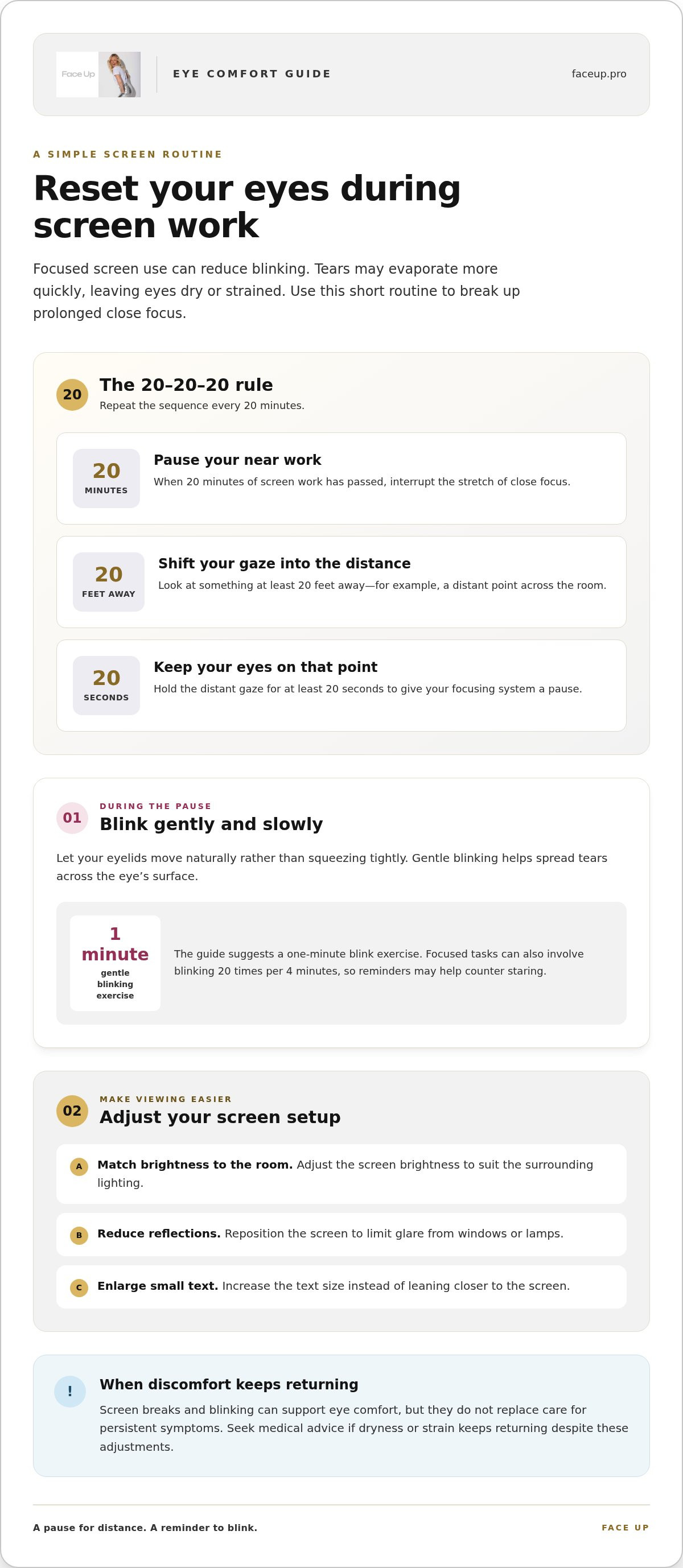
Use the 20-20-20 rule as a simple routine: every 20 minutes, look at something at least 20 feet away for at least 20 seconds. For example, shift your gaze from a laptop to a distant point across the room. This change gives your focusing system a pause and helps break up long periods of near work.
During each pause, blink deliberately and slowly. A practical exercise is to blink gently for one minute, allowing the eyelids to spread tears across the eye’s surface. Focused tasks can involve blinking 20 times per 4 minutes, so regular blinking reminders may help counter the habit of staring. Keep each blink relaxed rather than squeezing tightly.
Make your screen easier to look at, too. Adjust its brightness to suit the room’s lighting, and reposition it to reduce reflections from windows or lamps. If text looks small, enlarge it instead of leaning closer. These changes can make sustained viewing more comfortable, though they don’t directly restore tear production or correct vision.
A healthy screen routine combines distance, blinking, and brief pauses. Place a reminder near your monitor or take a regular eye break between tasks. During the pause, relax your brow and jaw instead of squinting at a nearby screen. If dryness or strain keeps returning despite these adjustments, seek medical advice to assess possible causes.
4. Self-massage for tired and dry eyes
For a safe routine, wash your hands with soap and water for at least 20 seconds. Keep your eyes closed, use gentle pressure, and stop immediately if you feel pain or unusual discomfort. Massage can give tired eyes a pause and ease eye strain, but it doesn’t correct vision or replace care for persistent dryness.
- Place a warm, damp cloth over closed eyes for about 5 minutes. Use water at 86°F to 110°F (30°C to 43°C), and make sure the cloth feels comfortable.
- With clean fingertips, make small circles over closed eyelids for up to 30 seconds. Avoid pressing on the eyeballs or pulling the delicate skin.
- Trace the eye socket bones gently, moving toward the bridge of the nose. Repeat this path 10 times, keeping the motion light.
- Use your fingertips to massage the temples, cheekbones, and forehead. Breathe slowly as you work, and keep contact comfortable.
These techniques offer a quiet break and may ease tension around your eyes. Eyelid massage may also stimulate the meibomian glands, which produce protective oil that helps retain water on the eye’s surface. That’s not the same as restoring vision or treating every cause of dryness. Gentle touch around the temples may encourage circulation, but don’t press hard to try to increase blood flow.
Keep the routine brief: massage closed eyelids for up to 30 seconds, and take an eye-massage break twice a day if dryness is a concern. If you’d like a structured approach to facial self-practice, explore guided facial self-practice.
A warm compress can relax strained muscles before massage; use it over closed eyes for about 5 minutes. Some people may notice temporary blur or light sensitivity after massage. Stop if discomfort occurs, and seek medical advice for recurring symptoms that affect eye health.
Face Up: Face Up Method Certification
Face Up Method Certification is a next step for practitioners who want to develop their facial-sculpting knowledge. It focuses on Face Up’s method of working with facial and neck tension, extending beyond a brief eye-massage routine.
For personal practice, the Face Up App Subscription offers daily self-practice rituals, while the Jaw Release Course focuses on jaw tension. These options may suit you if you want to build a broader facial wellness practice, but they aren’t treatments for vision problems or persistent dry-eye symptoms. Massage can support relaxation, while ongoing eye discomfort calls for appropriate medical advice.
If you’re ready to explore facial sculpting or guided self-practice, visit faceup.pro to learn more about Face Up’s approach.
Make Your Next Step a Sustainable Practice
A comfortable routine is most useful when it fits naturally into your day. Let your response guide your next step: if gentle self-massage feels soothing, keep it light; if eye discomfort persists, prioritize medical advice instead of increasing pressure. Massage is for facial relaxation, not for correcting vision or treating an eye condition.
If you want to explore facial wellness beyond a brief eye routine, choose the path that matches your goal. Face Up Method Certification is for practitioners developing their practice, while the Face Up App Subscription supports self-practice. The Jaw Release Course focuses on jaw tension. Each option has a different purpose, so consider whether you’re looking for professional development or a personal practice.
Learning how to relieve tired eyes with massage can be one small part of a broader approach to facial care. Contact Face Up to discuss your next step, and continue building a thoughtful, comfortable routine at your own pace.
Frequently Asked Questions
Can Eye Massages Improve Vision?
No. Massage may feel soothing, but it doesn’t correct eyesight or treat vision conditions. A 2021 randomized controlled trial examined periocular massage in relation to ocular blood flow and vision; that research question isn’t proof that massage improves sight. If your vision changes or becomes blurry outside a massage, don’t rely on facial techniques to resolve it. Arrange an eye assessment for persistent changes.
Eye Massage for Dry Eyes: Is It Effective?
Massage may support comfort, but it isn’t a complete dry-eye treatment. A 2019 study found eyelid massage can stimulate the meibomian glands, which produce oil that helps retain water on the eye’s surface. If dryness is a regular problem, artificial tears may be an option. Pay attention to recurring symptoms, since their cause affects which approach is appropriate.
How Can I Tell if I Have Eye Strain?
Notice whether eye discomfort or fatigue appears during or after close-focus tasks, such as reading on a laptop, and whether it eases when you pause. Headache or temporary blur after massage can also occur, so don’t assume every symptom has the same cause. Track the activity and timing; persistent or recurring discomfort deserves medical advice.
What Are the Best Remedies for Relieving Eye Strain?
Start by changing the conditions around the task: take a screen break, look into the distance, and blink deliberately instead of staring. If dryness is your main complaint, artificial tears may help, while a warm cloth can offer a relaxing pause. Try one adjustment at a time, such as reducing glare during laptop work, so you can notice what improves comfort.
What Are the Health Benefits of Regular Eye Massages?
The potential benefits are mainly comfort and relaxation. Gentle massage around the eyes and temples may ease facial tension, and eyelid massage may stimulate oil-producing glands that help slow moisture loss. It isn’t a way to improve vision or cure dry eyes. Treat it as a brief relaxation practice, and notice whether symptoms persist after the massage.
What Are the Risks of Massaging Around the Eyes?
Too much pressure, rubbing, or dragging your fingers can irritate the delicate skin around the eyes. Massage may also be followed by temporary blurry vision or light sensitivity. Keep contact gentle, avoid pressing directly on your eyeballs, and stop immediately if you feel pain or unusual discomfort. If symptoms continue after you stop, seek medical advice rather than trying a stronger technique.


