

What if the most profound breakthrough for your client's chronic neck tension isn't located in the cervical spine at all, but within the complex, emotional architecture of the jaw? Many dedicated practitioners find themselves stuck in a cycle of treating the same stubborn TMJ symptoms with limited success. You likely recognize the frustration of seeing a client return with the same tightness; it's a reminder of the limitations of standard protocols in a market that increasingly rewards specialized expertise. Integrating jaw release into massage therapy practice is no longer just an elective skill; it's the somatic missing link that differentiates a generalist from a high-level specialist.
We understand that you want to provide more than just temporary relief. You're looking for a way to offer visible facial rejuvenation while addressing the deep-seated emotional patterns held in the body. This professional guide explores how to seamlessly blend advanced techniques into your workflow to deliver transformative results. We'll examine the Face Up Method™, the benefits of the Jaw Release Course, and the path toward achieving a professional certification that establishes you as a leader in holistic, non-invasive rejuvenation. By mastering these advanced somatic methods, you can elevate your professional standing and provide the lasting change your clients deserve.
Key Takeaways
- Understand the evolution from clinical TMJ relief to holistic rejuvenation by addressing the jaw as a primary site for stored emotional stress and nervous system regulation.
- Learn a structured framework for integrating jaw release into massage therapy practice, utilizing somatic palpation and a specialized "jaw-first" treatment sequence.
- Discover how to achieve "the visible lift" for your clients, providing natural facial sculpting and rejuvenation alongside deep somatic tension release.
- Transition from a generalist to a high-value specialist by leveraging the somatic link in facial work to justify premium service pricing and improve client retention.
- Identify the professional path toward becoming a certified provider and joining a global community through the Face Up Method™ Practitioner Certification.
The Evolution of Jaw Release in Modern Massage Therapy
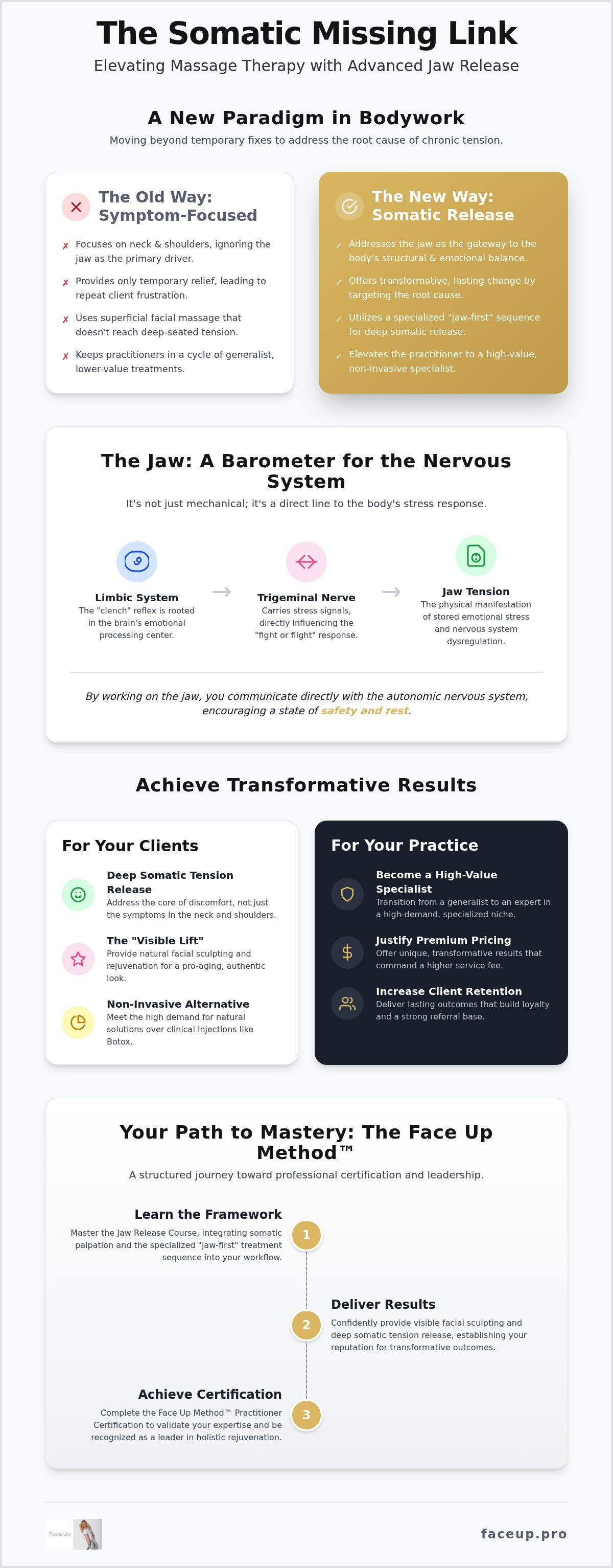
The professional landscape of bodywork is witnessing a significant transition. We've moved beyond simple clinical relief for Temporomandibular joint dysfunction (TMD) into a more nuanced, holistic approach. Modern clients aren't just looking for basic pain management; they want a total rejuvenation that addresses both physical tension and the emotional holding patterns that define their daily lives. This "Jaw Tension Epidemic" is particularly prevalent among high-stress professionals who carry the weight of their responsibilities in their masseters. By integrating jaw release into massage therapy practice, you address the root cause of discomfort rather than just chasing symptoms in the neck and shoulders.
Why Standard Protocols Aren't Enough
Traditional massage often focuses on the trapezius and levator scapulae when a client complains of neck pain. While this provides temporary relief, it frequently ignores the primary driver: the jaw. Superficial facial massage doesn't reach the deep-seated tension held in the pterygoids or the masseters. This tension affects the entire kinetic chain of the body. When the jaw is tight, the head often tilts forward, the shoulders round, and the cervical alignment suffers. True somatic release requires a more targeted, anatomical understanding that goes beyond general relaxation techniques. It's about recognizing that the jaw is the gateway to the body's structural and emotional balance.
Meeting the Demand for Non-Invasive Solutions
We're seeing a massive shift in client preferences toward natural, non-invasive results. Many individuals are moving away from invasive procedures like Botox or fillers for masseter tension, seeking instead the "pro-aging" benefits of natural therapy. They want results that look authentic and feel transformative. Specializing in this niche allows you to position your practice as a sophisticated environment for holistic health. By mastering these methods, you provide:
- A high-value, non-invasive alternative to clinical injections.
- Visible facial sculpting and rejuvenation alongside therapeutic relief.
- A specialized service model that differentiates you from generalists.
- Professional advancement within a global community of high-standard practitioners.
This evolution isn't just about adding a new technique; it's about refining your identity as a practitioner. Clients are searching for therapists who understand the somatic link between facial tension and the nervous system. Establishing yourself in this field provides a clear path to professional growth and a more sustainable, high-demand career. It ensures your services remain relevant in an international market that values integrity, proactive management, and visible, lasting outcomes.
The Somatic Connection: Understanding Jaw Tension and the Nervous System
The jaw isn't just a mechanical hinge; it's a sophisticated barometer for the human nervous system. When we experience stress, the body's immediate response often manifests as a clench, a primal reflex mediated by the trigeminal nerve. This nerve carries significant sensory information to the brain, directly influencing the "fight or flight" response. By integrating jaw release into massage therapy practice, you aren't just rubbing muscles; you're communicating with the client's autonomic nervous system to encourage a state of safety and rest. This neurological approach transforms a standard session into a profound somatic experience.
Recent research supports this shift toward neurological manual therapy. A 2024 clinical trial on massage for TMD demonstrated that targeted manual work significantly reduces pain and improves function, validating the efficacy of specialized jaw protocols. This evidence moves the conversation beyond simple relaxation into the territory of clinical results and nervous system regulation. When you address the jaw, you're often addressing the very center of a client's chronic stress response.
The Emotional Anatomy of the Jaw
The "clench" reflex is deeply rooted in the limbic system, the brain's emotional processing center. For many clients, this isn't a conscious choice but a form of "facial armor" developed over years of chronic stress or suppressed expression. Somatic therapy focuses on helping the client "unlearn" these habitual patterns by bringing conscious awareness to the tension. Somatic jaw release serves as a tool for emotional and physical recalibration, allowing the body to release the physiological remnants of past stressors. Practitioners who understand this link can facilitate a much deeper level of healing than those who focus solely on the physical masseter muscle.
Beyond Anatomy: The Face Up Perspective
In the proprietary Face Up Method™, we view the face as a living map of a person's internal states. Every line and area of tension tells a story of the nervous system's history. Effective work requires more than technical skill; it demands practitioner presence and "somatic listening." You must be able to feel the subtle shifts in tissue density and temperature that indicate an emotional release is occurring. Understanding the connection between facial tension and emotions is essential for any therapist looking to move beyond a transactional service model.
If you're ready to deepen your understanding of these somatic links, our Jaw Release Course offers a comprehensive entry point into this specialized field. By refining your touch and presence, you create a proprietary experience that clients cannot find elsewhere, bridging the gap between clinical results and emotional well-being. This specialized knowledge allows you to guide your clients through a journey of both physical release and internal regulation.
A Framework for Integrating Jaw Release into Your Practice
Successfully integrating jaw release into massage therapy practice requires a shift from reactive "spot treatments" to a systemic, somatic protocol. It isn't enough to simply add a few minutes of jaw work at the end of a session. To achieve transformative results, the jaw must be treated as the cornerstone of the body's structural and emotional balance. This structured approach ensures a high standard of care while positioning you as a specialized professional in a crowded market.
The Initial Assessment and Somatic Intake
A professional session begins with a detailed visual and somatic assessment. Observe the client's facial symmetry and tension patterns while they speak. Are the masseters visibly hypertrophied? Is there a noticeable pull in the platysma? During the intake, ask specific questions about their "clench" habits and stress levels. This somatic listening allows you to tailor the session to their unique nervous system needs. Establishing clear professional boundaries is also vital, especially when performing deep work around the face and mouth, to ensure the client feels safe and supported throughout the process.
Step-by-Step Integration Protocol
To maximize the impact of your work, follow a logical flow that prepares the tissues for deeper release. A "jaw-first" sequence often yields the best results for the entire body. Use the following steps as a guide:
- Foundation: Start by warming the cervical spine and the platysma. Releasing the front of the neck is essential before addressing the jaw directly.
- External Release: Perform targeted myofascial work on the masseter and temporalis muscles to reduce superficial guarding.
- Intra-oral (Buccal) Techniques: Introduce gentle buccal work to access the lateral pterygoid muscles. This is often the "missing link" for clients with chronic tension.
- Sculpting: Finish with the signature Face Up Method™ sculpting strokes. These define the jawline and provide the visible rejuvenation clients seek.
Tools of the Trade
While your hands are your primary instruments, specialized tools can enhance the somatic experience and protect your own joints from fatigue. Knowing when to use manual techniques versus specialized implements is a hallmark of an advanced practitioner. If you're unsure which equipment fits your style, consider choosing the best TMJ massage tool based on your specific practice needs. Always prioritize safety and hygiene, particularly during intra-oral work.
The session shouldn't end when the client leaves the table. Empower them with a Face Up App Subscription to provide daily somatic maintenance at home. This proactive management strategy ensures the work you do in the clinic is reinforced daily, leading to better long-term outcomes and higher client retention. It positions you not just as a therapist, but as a professional mentor in their wellness journey.
Elevating Your Practice: Marketing and Client Outcomes
Transitioning from a generalist to a specialist requires more than just technical skill; it demands a strategic shift in how you present your value to the market. By integrating jaw release into massage therapy practice, you move away from competing on price and start competing on results. This specialized work addresses a high-demand, low-supply niche, allowing you to establish a premium service tier that reflects your advanced expertise. When clients see that you can solve chronic issues that others have missed, their loyalty becomes a foundational asset for your business.
One of the most effective ways to demonstrate this value is through the "Visible Lift." While clinical massage often focuses solely on pain relief, the Face Up Method™ emphasizes the aesthetic benefits of releasing deep-seated tension. Releasing the masseter and pterygoid muscles doesn't just reduce discomfort; it physically reshapes the lower face. By addressing muscle hypertrophy and fluid stagnation, you provide a non-invasive slimming and lifting effect. Using "Before and After" somatic assessments allows you to prove this value instantly, turning a subjective feeling of relief into a visible, marketable outcome.
Positioning Your New Specialty
To attract the right clientele, your service naming must reflect the sophisticated nature of the work. Instead of listing "TMJ Massage," consider names like "Somatic Jaw Sculpting" or "The Face Up Sculpting Treatment." These titles appeal to high-value niches, such as corporate professionals dealing with high-stress environments, or brides seeking natural rejuvenation before their wedding day. When communicating with existing clients, explain how jaw work is the missing link in their progress. You aren't just adding a service; you're offering a more complete solution to the tension they've carried for years.
The Business of Somatic Beauty
Integrating these techniques into your business model allows for creative packaging and improved retention. You can offer specialized somatic series or include jaw release as a high-value add-on to standard sessions. Because this is a high-skill service, you can justify a higher hourly rate, effectively increasing your revenue without increasing your physical workload. The transformative nature of the work often leads to powerful word-of-mouth referrals. A client who finally finds relief from years of jaw tension won't just come back; they'll tell everyone they know about the practitioner who finally understood their body.
If you're ready to command higher rates and join an elite group of specialists, the first step is achieving professional recognition. We invite you to explore the Face Up Method™ Certification to gain the credentials and skills necessary to lead in this growing field. This certification provides the global standing you need to build a thriving, specialized practice that stands out in any market.
Mastering the Face Up Method™: Your Path to Certification
Achieving professional certification is the definitive step in transitioning from a general bodyworker to a recognized specialist. While many therapists experiment with basic techniques, integrating jaw release into massage therapy practice at an advanced level requires a validated, high-standard framework. The Face Up Method™ Practitioner Certification provides this foundation, moving beyond simple manual skills into the territory of somatic nervous system regulation and sculptural artistry. By earning this credential, you signal to your clients and peers that you operate within a proprietary ecosystem of professional integrity and global readiness.
This path isn't just about learning a new sequence; it's about adopting a professional identity that values proactive management and reliable outcomes. As the industry moves toward increased regulation and higher standards of online training, having a certification that includes practical assessments and technical rigor is essential. It moves your practice away from the transactional nature of general massage and into a specialized professional landscape where your expertise is both verified and highly sought after.
What the Face Up Certification Covers
The certification program is designed as a comprehensive journey through the physical and emotional landscapes of the face. You'll engage in a deep-dive into somatic anatomy, learning to identify the specific emotional release protocols that resolve chronic guarding in the jaw. The curriculum includes advanced buccal massage and sculptural face lifting techniques, ensuring you can deliver both therapeutic relief and the visible rejuvenation discussed in previous sections. Beyond the treatment table, we provide the business and marketing support necessary to launch your specialized practice with confidence. For a detailed breakdown of the curriculum, you can consult our Master the Face Up Method: Certification Guide.
Joining the Global Face Up Community
Certification serves as an invitation into a specialized professional community. As a certified practitioner, you gain a listing in our global practitioner directory, connecting you with clients specifically seeking the Face Up Method™. This network offers access to ongoing education and the latest somatic research, ensuring your practice remains at the forefront of the industry. Networking with other high-level holistic practitioners fosters a sense of belonging and professional growth that isn't found in traditional massage circles. It's a clear path forward for those who seek order, reliability, and a sophisticated trajectory for their careers.
The evolution from a general massage therapist to a Face Up specialist is a journey toward professional mastery. If you're ready to embrace this organized, global-minded approach to bodywork and elevate your standing in the market, we invite you to begin the process. Apply for the Face Up Method™ Certification today and join a community dedicated to the highest standards of somatic facial therapy.
Lead the Future of Somatic Facial Therapy
The transition from a standard bodywork practice to a specialized somatic center requires a commitment to both technical excellence and professional integrity. We've explored how the jaw serves as a vital barometer for the nervous system and why addressing this area provides a unique somatic-aesthetic bridge that general neck work simply cannot match. Integrating jaw release into massage therapy practice isn't just an elective skill; it's the most direct route to solving chronic TMJ tension while delivering the visible rejuvenation your clients now expect. This high-value niche allows you to command premium rates and move away from the transactional nature of a crowded generalist market.
Success in this field is built on a foundation of verified quality and a sense of belonging to a high-standard professional landscape. You have the opportunity to master the proprietary method founded by Olga Newman and differentiate your practice with results that are both felt and seen. By joining a global directory of elite somatic practitioners, you position yourself for long-term growth and international reach. Elevate your practice with the Face Up Method™ Certification today. We look forward to welcoming you into our specialized community as you take this courageous step toward professional mastery.
Frequently Asked Questions
Is intra-oral (buccal) massage safe for all clients?
Intra-oral work is safe for most clients when performed by a trained professional using proper hygiene standards. You must screen for contraindications such as active infections, recent dental implants, or oral sores before beginning. Integrating jaw release into massage therapy practice via the buccal route provides direct access to deep muscles like the medial and lateral pterygoids. Always establish clear communication and consent before performing this specialized somatic work to ensure client comfort.
How long does it take to see results from integrating jaw release?
Clients often experience immediate neurological relief and increased range of motion after a single session. However, addressing chronic tension patterns and achieving visible sculpting results typically requires a series of three to five treatments. This cumulative approach allows the nervous system to unlearn deep-seated stress responses. Consistent use of the Face Up App for daily self-maintenance significantly accelerates these outcomes and helps maintain the "visible lift" between your professional appointments.
Do I need a specific license to perform jaw release in my state?
Licensing requirements vary significantly by jurisdiction and international market. In many regions, jaw release falls under a standard massage or bodywork license, though some areas have specific regulations regarding intra-oral techniques. We recommend checking with your local regulatory board or professional association for the most current guidelines in your area. Achieving a Face Up Method™ Certification ensures you meet high-standard professional requirements while operating within a globally recognized framework of expertise.
Can I integrate jaw release into a standard 60-minute massage?
You can certainly incorporate these techniques into a standard 60-minute session by dedicating a specific 15 to 20-minute segment to the jaw and neck. This targeted approach is often more effective than a general full-body massage for clients struggling with chronic TMJ tension. By prioritizing the jaw, you address a primary source of structural imbalance, which frequently leads to spontaneous relaxation in the shoulders and lower back without requiring additional time.
What is the difference between TMJ massage and somatic jaw release?
Traditional TMJ massage focuses primarily on the mechanical function of the joint and pain relief. In contrast, somatic jaw release addresses the emotional holding patterns and nervous system regulation behind the tension. The Face Up Method™ creates a unique somatic-aesthetic bridge, combining deep tissue release with natural facial sculpting. This holistic approach doesn't just treat physical symptoms; it recalibrates the body's stress response while providing visible rejuvenation and a sense of internal calm.
How much can I charge for a specialized jaw release session?
Specialized jaw release is positioned as a high-value, premium service due to the advanced skill and training required. While we don't set specific pricing for our practitioners, many specialists charge a significant premium above their standard massage rates. This reflects the specialized nature of somatic bodywork and the visible, non-invasive results provided. Offering this as a distinct service tier allows you to increase your hourly revenue while catering to high-demand niches like corporate professionals.
Is the Face Up Method™ Certification available online?
Yes, the Face Up Method™ Certification is available as a professional 5-day intensive online program. It features a structured curriculum that includes deep-dive somatic anatomy, practical assessments, and technical feedback to ensure global standards are met. This digital format allows practitioners from diverse international markets to join our proprietary ecosystem without the need for extensive travel. The program is designed to be a rhythmic experience, moving you toward professional mastery at a measured pace.
What tools are recommended for professional jaw release?
Your hands are the most sophisticated tools for somatic listening, but specialized somatic tools can enhance the experience and reduce practitioner fatigue. We recommend using high-quality, professional-grade implements designed specifically for facial sculpting and myofascial release. These tools help in navigating the complex contours of the jawline and zygomatic arch with precision. Integrating these into your workflow demonstrates a commitment to professional integrity, providing a more refined and effective experience for your clients.


