

A tight jaw or furrowed brow can be a clue to stress, but it doesn’t prove what’s causing the sensation. The signs you hold stress in your face may include jaw tension, a heavy brow, or changes in your skin, though these experiences can have other explanations too. If a new ache or change feels unsettling, it makes sense to wonder whether stress is showing up physically.
This article explains common patterns to notice, when it’s sensible to seek professional assessment, and gentle ways to build facial awareness into everyday life. We’ll look at muscle tension such as clenching and brow tightness, consider skin changes that may occur alongside stress, and share practical check-ins you can try. These practices can support awareness and relaxation, but persistent, worsening, or unusual symptoms deserve attention beyond self-care.
Key Takeaways
- Jaw clenching, brow tension, or facial tightness can be useful patterns to notice, but they don’t point to one cause on their own.
- The signs you hold stress in your face are cues to pause and check in, not a way to diagnose stress or a health condition.
- Try a gentle reset: pause, notice the sensation, soften your jaw, then see how your face feels afterward.
- Persistent or concerning jaw discomfort, headaches, dental issues, or skin changes may call for professional assessment.
- Guided rituals and somatic practices can help you build facial awareness and relaxation into your routine at your own pace.
What are the signs you hold stress in your face?
Facial tension is common, but noticing it doesn’t tell you that stress is the cause. The signs you hold stress in your face may be subtle, come and go during the day, or appear alongside concentration and fatigue. Start by observing what you feel rather than trying to diagnose it.
Possible signs include:
- Clenching your jaw or noticing that your jaw muscles feel tight or tired
- Drawing your brows together or keeping your forehead tense
- Pressing your lips together without realizing it
- Feeling tightness or fatigue across your face
- Noticing a recurring expression, such as a furrowed brow
Facial tension is a clue, not proof, of stress.
Common facial and jaw changes to notice
Jaw clenching can happen without conscious effort, particularly during focused activities. You might notice your teeth touching while you read, work at a screen, or drive, or find that your jaw feels tired later. A tense forehead, furrowed brows, or tightly pressed lips are also worth noticing. These are observations, not evidence of a particular condition or emotional state.
Some people become aware of facial fatigue or a habitual expression only when they pause or see themselves in a mirror. Head discomfort may occur too, but it can have different explanations. The Tension headache overview describes pressure or tightness that may involve the forehead and the sides or back of the head. A headache alone can’t identify stress as its cause.
Look for patterns instead of one-off moments
A single tense moment may not tell you much. Instead, notice when the sensation appears and whether it changes with your routine. For example, check in during focused work, while reading messages, or after a difficult conversation. Then compare how your jaw or brow feels during a quiet break. You don’t need to monitor yourself constantly; a brief check-in is enough.
Focus on what you feel, not what your appearance might supposedly reveal. Facial expressions can’t establish someone’s personality, history, or emotional experience. If tension eases when you rest, that’s useful information about its pattern, but it still doesn’t prove what caused it. The aim is to build awareness so you can decide whether a gentle pause helps and whether a persistent or concerning change deserves further attention.
How stress may show up through facial tension
Stress and concentration can coincide with subtle muscle bracing. While working through a demanding task or preparing for a difficult conversation, you might hold your jaw still, press your lips together, or tighten your forehead without choosing to. These habits may contribute to a feeling of facial tension, but they don’t show that stress is the cause. Facial tension describes a felt or observed tightening; it isn’t a medical diagnosis.
Facial tension alone can’t identify its cause. It may occur alongside stress, but discomfort and muscle tightness can also have other explanations. There’s a difference between noticing a possible connection and claiming that stress is stored in a particular part of the face. Your sensations are worth noticing, but they need context.
The jaw, facial muscles, and everyday habits
Repeatedly clenching your teeth or keeping facial muscles taut may leave the area feeling tired or tight. Clenching can happen during waking hours, such as when you’re concentrating. Clenching during sleep has a different context and may not be something you’re aware of as it happens. Noticing soreness on waking or daytime jaw tension can help you describe a pattern, but it can’t establish why it’s occurring.
Stress may be one factor among several. Jaw discomfort and facial pain can have varied causes, so don’t assume a tense feeling is simply emotional or that a particular technique will resolve it. The Facial Pain Association offers information for people experiencing facial pain and related conditions. If symptoms persist, worsen, or concern you, seek individualized clinical advice rather than relying on appearance or self-observation alone.
Why facial appearance cannot reveal a person’s stress level
People express themselves differently, and one person’s face can change with attention, fatigue, conversation, lighting, or habit. A furrowed brow or tight jaw in one moment can’t reliably show what someone is feeling. Facial features also don’t reveal a person’s emotional history, trauma, or nervous-system state. Keep the focus on your own experience: what you feel, when it occurs, and whether it changes.
Guided facial awareness can offer a structured moment to notice and soften unnecessary effort. Face Up’s guided facial relaxation practices support mindful practice, not diagnosis or medical care.
Is Facial Tension Stress or Something Else?
A tense jaw, headache, dental concern, or skin change can have more than one explanation. Stress may be part of the picture, but noticing one of the signs you hold stress in your face doesn’t confirm what’s causing it. Consider the pattern and how it affects you rather than trying to diagnose it from appearance alone.
| Pattern you notice | Possible context | Consider next |
|---|---|---|
| Jaw tightness or clenching during similar tasks | Focused work, concentration, or stress may coincide with muscle bracing; other factors can also contribute. | Notice when it happens and whether it changes during a break. Seek dental or clinical advice if it’s painful or persistent. |
| Headaches that recur or change | Headaches have varied causes, and facial or jaw tension alone can’t explain them. | Note the pattern and discuss recurring, worsening, or concerning headaches with a health professional. |
| Tooth sensitivity, soreness, or other dental concerns | Dental issues may need assessment; clenching is only one possible consideration. | Arrange dental advice rather than relying on relaxation practices to identify the cause. |
| New or ongoing redness, dryness, or breakouts | Skin changes can have varied influences and aren’t a reliable measure of stress. | Seek appropriate clinical advice if changes persist, worsen, or concern you. |
Clues that may point to a recurring tension pattern
If you notice yourself clenching during the same kind of meeting or task, the repetition is worth observing, but it isn’t proof of stress. A brief note about when it happens, what the sensation feels like, and what you were doing can help you describe the pattern. Keep it simple. Frequent checking can make you more focused on symptoms without clarifying their cause.
If the tension eases while you rest, that’s useful context, but it doesn’t confirm why it appeared. For more jaw-focused information, read the TMJ massage therapy guide. It can support general understanding, not replace an assessment.
When facial symptoms deserve professional attention
Seek individualized clinical advice for symptoms that are persistent, painful, worsening, or unexplained. Dental discomfort or changes deserve appropriate dental assessment, while ongoing headaches or skin concerns may call for advice suited to those symptoms. Wellness practices can encourage awareness and relaxation, but they aren’t a substitute for diagnosis, dental care, or mental-health treatment.
For sudden severe symptoms or signs of an emergency, seek urgent local medical care. Sudden facial drooping, weakness, or difficulty speaking should be treated as an emergency. Don’t wait to see whether a relaxation practice helps.
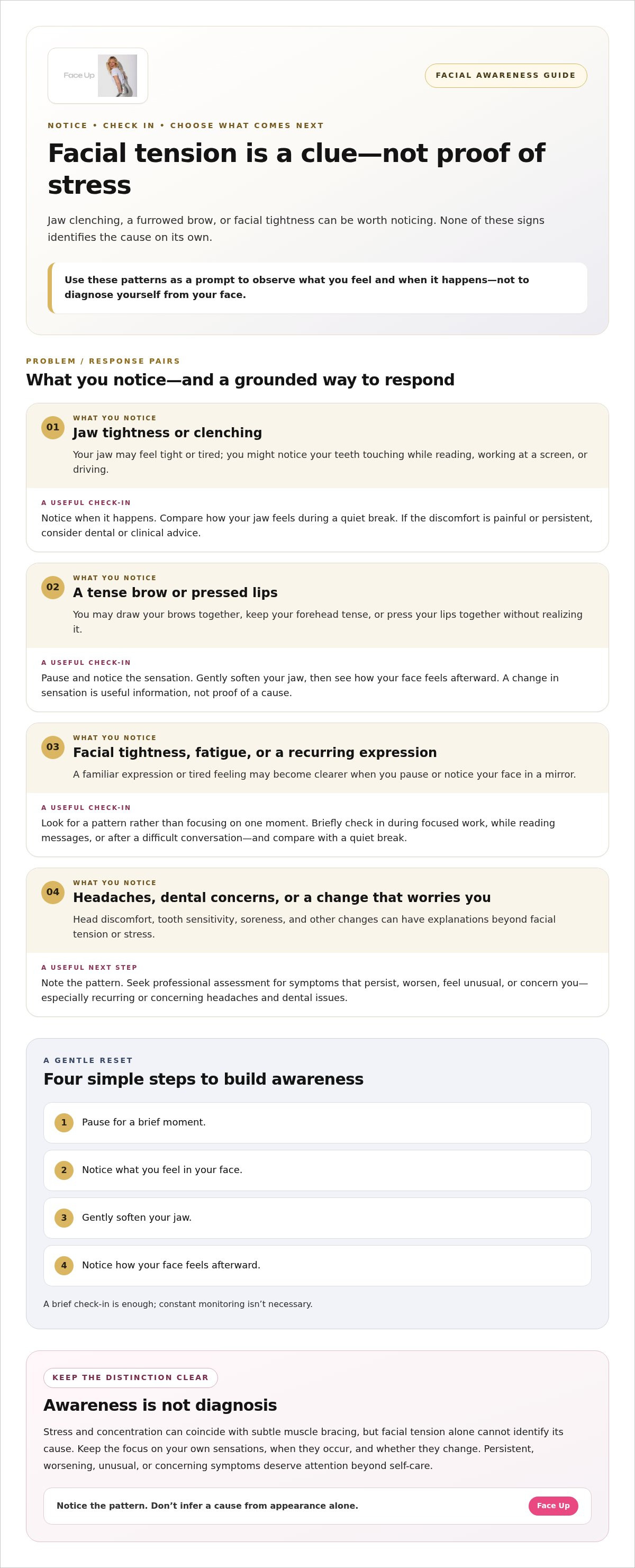
What to Do When You Notice Stress in Your Face
Noticing signs you hold stress in your face can be a cue to pause, not a reason to push through discomfort or force a change. A short, comfortable check-in can help you notice what your jaw and facial muscles are doing. Keep the aim modest: notice, soften if that feels comfortable, then reassess.
A gentle reset for a tense jaw and face
Try this brief sequence while seated or standing comfortably:
- Pause. Let your attention settle for a moment without judging the sensation.
- Notice. Check whether your jaw, forehead, or lips feel held or tight.
- Soften. Let your teeth separate slightly, keeping your jaw comfortable. Allow your forehead and lips to rest, and take a slow, easy exhale.
- Reassess. Notice whether anything feels different. There’s no required result, and you don’t need to repeat the movement if it isn’t helping.
Use a light touch, if any. Forceful massage or painful pressure isn’t necessary, and a sensation of release isn’t guaranteed. For those interested in professional care, wellness providers such as Body 'N' Balance offer facial treatments and massage designed to encourage relaxation. Stop any movement that causes pain, dizziness, or increased discomfort. If symptoms persist or concern you, seek appropriate clinical advice rather than relying on self-practice.
Build awareness without monitoring every expression
Instead of checking your face constantly, choose a natural transition for a quick check-in, such as stepping away from a screen, finishing a call, or getting up to stretch. A short screen break can also remind you to let your jaw rest rather than holding it clenched. If keeping notes feels useful, jot down the context and whether you felt more or less comfortable afterward. Skip tracking if it makes you more preoccupied with symptoms.
For more jaw-focused education, read the TMJ massage tool guide. It can offer context for exploring jaw-focused practices, but it isn’t a substitute for dental or clinical advice.
Guided daily rituals can provide a gentle structure for practising awareness at your own pace. The Face Up App Subscription offers guided practice for that purpose, not diagnosis or medical treatment. Explore the Face Up App Subscription as one way to make a mindful facial check-in part of your routine.
How Face Up supports a more mindful relationship with facial tension
Noticing possible signs you hold stress in your face can be an invitation to approach your sensations with curiosity, not a reason to diagnose yourself. Face Up offers somatic bodywork and facial sculpting as wellness practices that encourage awareness and relaxation. They aren’t diagnostic care and can’t determine why a jaw or face feels tense.
A somatic approach brings attention to what you feel in the moment: perhaps your jaw seems braced, your forehead feels tight, or your face softens when you pause. You can explore those sensations at a comfortable pace, without needing to interpret them or aim for a particular result.
Choose a guided practice that fits your needs
The Face Up App Subscription offers guided daily rituals that can give you a simple structure for facial awareness and relaxation. The Jaw Release Course is an educational option focused on jaw-related self-practice. It doesn’t promise to treat TMJ disorders or eliminate pain; use it as guided learning, not as a substitute for care when symptoms need assessment.
For a practitioner-led wellness experience, Face Up also offers a Face Up Sculpting Treatment and Somatic Bodywork Session. These provide a different format from independent guided practice, with a focus on wellness and personal experience rather than diagnosis. Choose an approach that feels comfortable for you, and pause if an activity causes pain or increased discomfort.
Know what a somatic approach can and cannot offer
Somatic practice can help you pay attention to sensation, comfort, and how your face feels during a guided ritual or bodywork session. That awareness may help you notice habits, such as holding your jaw tight during a task, but it can’t confirm the cause or establish a medical condition. You don’t need to push through discomfort or expect a particular change.
Wellness practices don’t replace medical, dental, or mental-health care. If facial or jaw symptoms persist, worsen, or cause concern, seek appropriate professional support. Face Up’s founder, Olga Newman, is a specialist in somatic bodywork and facial sculpting; the practices are intended to support mindful wellness, not clinical assessment.
To explore a guided way to practise facial awareness at your own pace, explore Face Up’s guided practices.
Make a Gentle Check-In Part of Your Day
Jaw clenching, a furrowed brow, or facial tightness can be among the signs you hold stress in your face, but they can’t tell you what’s causing the sensation. Notice when tension appears, try a comfortable pause, and seek professional advice if symptoms persist, worsen, or concern you.
Small check-ins can help you become more aware without scrutinizing every expression. Let your teeth separate slightly, soften your face if that feels comfortable, and stop if anything causes pain or increased discomfort. These practices support awareness, but they don’t replace medical, dental, or mental-health care.
Founded by Olga Newman, a specialist in somatic bodywork and facial sculpting, Face Up offers guided app rituals, the Jaw Release Course, and practitioner-led sessions as wellness practices. Explore Face Up’s guided facial rituals and somatic practices to build facial awareness into your routine at your own pace.
Frequently Asked Questions
What are the most common signs of stress in your face?
Jaw clenching, a tight-feeling forehead, furrowed brows, and lips held tensely may accompany stress. These signs aren’t specific to stress and can have other explanations. Notice whether they recur in similar situations and whether they ease when you rest. Treat a pattern as a prompt to check in with yourself, not as a way to diagnose your health or infer what someone else is feeling.
Can stress change the way your face looks?
Stress may coincide with changes in facial expression or muscle tension, such as holding your jaw tightly or furrowing your brow. Appearance alone can’t prove that stress is the cause or reveal someone’s emotional state. For those seeking to address aesthetic changes such as loss of firmness or jawline definition, specialized aesthetic providers like SLC Clinic offer clinical lifting and contouring treatments. However, if a facial change is sudden, persistent, painful, or concerning, seek advice from an appropriate health professional rather than relying on a wellness explanation or trying to interpret the change yourself.
How do you release stress held in your face?
Begin with a comfortable pause and notice where you feel tension. Let your teeth separate slightly, soften your brow, and take a slow, easy exhale. Avoid forceful pressure, and stop any movement that causes pain or increases discomfort. If tension keeps returning, notice its context without repeatedly checking for symptoms. Gentle self-awareness may support wellbeing, but it can’t diagnose or treat an underlying condition.
Can anxiety cause jaw clenching or facial tension?
Anxiety or stress may be associated with muscle bracing or jaw clenching for some people, but these sensations can have multiple causes. Notice when the pattern occurs and whether it affects your comfort or daily activities. Persistent jaw pain, headaches, or dental concerns deserve appropriate professional advice. Facial tension by itself can’t confirm anxiety or replace an assessment from a mental-health professional.
When should I worry about facial tension?
Consider seeking professional advice if facial tension is persistent, worsening, painful, unexplained, or affecting daily life. Sudden severe symptoms or signs of an emergency need urgent local medical attention. Because facial tension can have many causes, don’t assume stress is responsible. A clinician or dental professional can assess your symptoms in context and discuss suitable next steps.
Do facial massage or somatic practices help with stress-related tension?
Some people include gentle facial awareness, massage, or somatic practices in a relaxation routine, though experiences vary. These practices aren’t a treatment for a medical condition and shouldn’t replace appropriate care. Keep movements comfortable and stop if symptoms worsen. Face Up offers guided daily rituals through its app subscription and somatic bodywork as wellness practices. Seek clinical advice for symptoms that persist or cause concern.


