

What if the persistent tightness in your jaw and the deepening lines on your brow aren't inevitable signs of aging, but a silent SOS from your nervous system? Many professionals spend their days wearing a "mask" of stress, unaware that their facial muscles are locked in a protective state of high alert. Truly understanding how to release tension in face muscles requires more than a superficial rub; it demands a somatic shift that addresses the root of the contraction within your internal ecosystem.
It's exhausting to wake up with a sore jaw or feel like your expressions are fixed in a permanent state of worry. We recognize that this chronic tension impacts both your physical comfort and your professional presence. Within this guide, we'll show you how to bridge the gap between emotional wellness and physical aesthetics through high-standard somatic practices. You'll discover professional techniques designed to unlock your jaw, soften your brow, and restore a naturally lifted appearance. We will explore the emotional triggers behind your tension and provide a clear, governed path toward a more relaxed and authentic version of yourself.
Key Takeaways
- Understand how facial tension acts as a somatic "armouring" that signals your nervous system to remain in a state of high alert.
- Discover professional somatic techniques and the Face Up Method™ to learn how to release tension in face muscles by reaching the deep musculature.
- Identify your primary stress zones using a tension map to address the physical manifestations of intellectual overwhelm in the brow and forehead.
- Implement a structured daily ritual through the Face Up App to maintain a soft and relaxed presence during demanding work meetings.
- Learn to use intentional breathwork and the "exhale of the jaw" to achieve immediate relief and a more lifted facial appearance.
Understanding the Somatic Science of Facial Muscle Tension
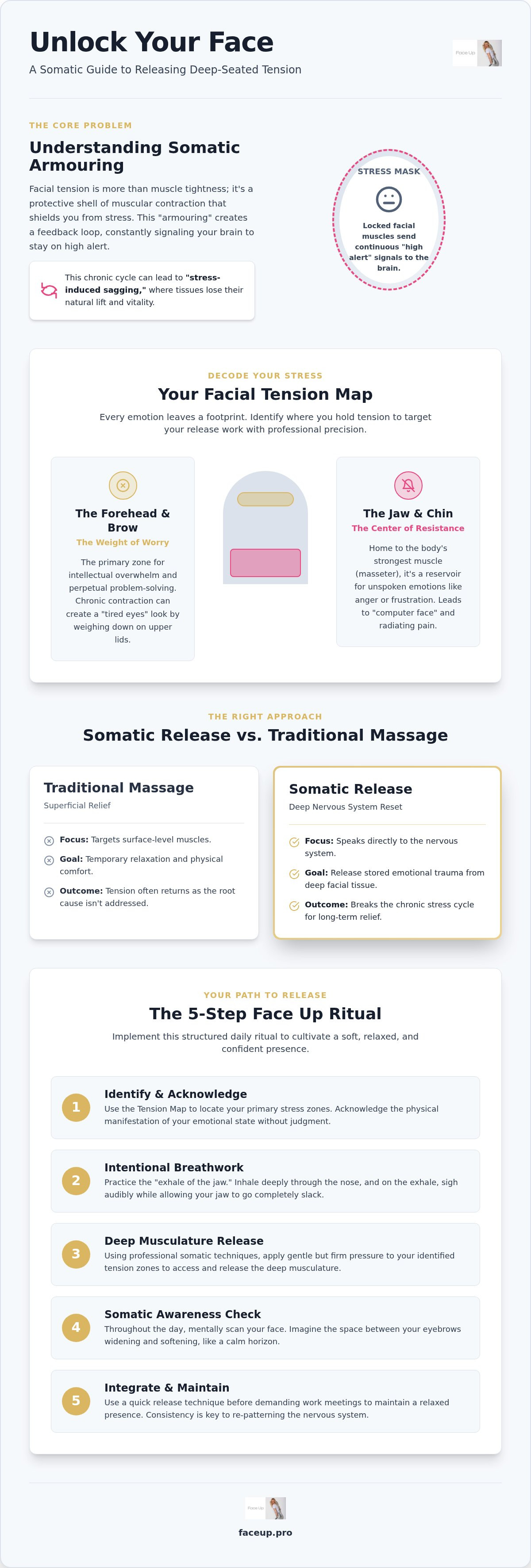
Facial tension is rarely just a physical ailment; it's a form of somatic armouring. This term describes the way our bodies create a protective shell of muscular contraction to shield us from emotional or environmental stressors. When you consistently hold stress in your brow or jaw, these muscles don't just get tired. They actually reshape your facial structure over time. This chronic state of contraction often leads to what professionals call "stress-induced sagging," where the constant downward pull of tight muscles causes tissues to lose their natural lift and vitality.
The relationship between your brain and your face is a sophisticated, bidirectional loop. While your brain sends signals to tense your face during a difficult conversation, the reverse is also true. A face locked in a "mask" of stress sends a continuous signal to your brain that it needs to stay in high alert. This feedback loop makes it incredibly difficult to find genuine peace. Understanding how to release tension in face muscles is not just about aesthetics. It's a strategic intervention in your nervous system that helps break the cycle of chronic stress.
The Nervous System and Your Face
Your facial expressions and jaw movements are governed largely by the trigeminal nerve, a major player in your cranial nervous system. This nerve acts as a high-speed data highway, carrying both motor commands and sensory information. When you are under pressure, the trigeminal nerve becomes a primary conduit for stress signals. Many people find that simply telling themselves to "relax" doesn't work because the muscles are stuck in a physiological "on" position. This is where Somatic Experiencing principles become vital. Somatic facial therapy is the practice of releasing emotional trauma through physical manipulation of facial tissues. By working directly with the tissue, we can bypass the conscious mind and speak directly to the nervous system, allowing the muscles to finally surrender their grip.
The Fight-or-Flight Response in the Jaw
The jaw is often the first place we store unspoken emotions, particularly suppressed anger or frustration. From a biological perspective, clenching the jaw is a primal preparation for combat or defense. In our modern professional lives, this manifests as "computer face," the unconscious habit of clenching while navigating high-stakes digital tasks or complex emails. This habit places immense strain on the temporomandibular joint. If you find yourself waking up with a tight jaw or experiencing midday headaches, you may benefit from exploring the ultimate guide to TMJ massage therapy. Learning how to release tension in face muscles by targeting these specific jaw triggers can restore balance to your entire facial profile and your spirit.
The Tension Map: Where You Hold Stress and Why
Every emotion you experience leaves a distinct footprint on your face. By viewing your face as a somatic map, you can begin to decode the specific messages your nervous system is sending. This self-diagnosis is the first step in understanding how to release tension in face muscles effectively. Identifying where you hold your "armouring" allows you to target your release work with professional precision. When we understand the "why" behind the "where," we can move from superficial rubbing to deep, intentional restoration.
The Forehead and Brow: The Weight of Worry
We often furrow our brows even when we aren't consciously thinking about a specific problem. The frontalis (forehead) and corrugator (brow) muscles are the primary zones of intellectual overwhelm. When these muscles contract, they don't just create physical lines; they signal to your brain that you are in a state of perpetual problem-solving. This connection is a key part of various facial tension causes and exercises that practitioners use to restore calm. This chronic tension often leads to a "tired eyes" look, as the heavy brow weighs down on the upper lids. For an instant release, try a simple awareness check: imagine the space between your eyebrows widening and softening, like a calm horizon at dusk.
The Jaw and Chin: The Center of Resistance
The jaw is home to the masseter and pterygoid muscles, which act as the body's survival centers. The masseter muscle is the strongest muscle in the body relative to its size, making it a primary reservoir for tension. When these muscles are locked, they create a "blocked" energetic state that can radiate pain into the neck and shoulders. Similarly, the mentalis muscle in the chin often tightens during emotional suppression, such as when we hold back words or frustration. This resistance creates a physical barrier to the "exhale" your nervous system desperately needs. If you find yourself clenching during the day, the guided rituals in the Face Up App provide a structured way to soften these high-resistance zones before they become chronic.
Finally, we must consider the platysma. This thin, broad muscle in the neck acts as a bridge between the chest and the face. When the platysma is chronically tight, it physically pulls down on your facial features, creating a sagging or exhausted appearance. True facial rejuvenation requires addressing this downward pull from the neck up. By mapping these zones, you move from general discomfort to a governed, proactive approach to your own somatic wellness. Learning how to release tension in face muscles becomes a journey of rediscovering your natural, unmasked expression.
Somatic Release vs. Traditional Facial Massage
Traditional facial massage often prioritizes the skin's surface, focusing on lymphatic drainage and an immediate aesthetic glow. While these treatments are undeniably relaxing, they rarely address the deep-seated "armouring" held within the musculature. Somatic release operates on a different frequency. It aims to recalibrate the nervous system's baseline by targeting the fascia and deep muscle fibers that regular facials miss. Understanding how to release tension in face muscles means moving beyond the epidermis and engaging with the body's primary stress reservoirs through the Face Up Method™.
This professional approach recognizes that more pressure isn't always the answer. In fact, aggressive deep-tissue work on a stressed face can trigger even more guarding. We favor a philosophy of "invitation" rather than force. By creating a safe environment for the tissue, we allow the muscles to surrender their defensive grip at their own pace. This ensures a long-term shift in facial posture rather than a temporary fix.
Why Superficial Rubbing Isn’t Enough
There is a critical difference between moving the skin and releasing the underlying fascia. Fascia is the connective tissue that wraps around every muscle; when it's tight, it acts like a restrictive suit that prevents true relaxation. Traditional facials can sometimes over-stimulate the nervous system through brisk, repetitive movements. This can be counterproductive for those seeking the causes and treatment of facial tension, as a stressed brain may interpret fast movements as a threat. We utilize a "melting" technique instead. By applying slow, steady intent and natural warmth, we bypass the muscle's initial resistance and reach the deeper layers of the face.
The Power of Buccal (Intra-Oral) Release
For individuals with chronic jaw clenching, external work only addresses half the equation. Buccal massage is the gold standard for deep jaw release because it involves working from inside the oral cavity. This allows a practitioner to sandwich the masseter and pterygoid muscles, providing a 360-degree release that is physically impossible from the outside alone. It's an incredibly effective way to learn how to release tension in face muscles that have been locked in a survival state for years. This sophisticated technique is a core component of the Face Up Method™ Certification, equipping professionals with the tools to restore both facial harmony and emotional ease.
The Face Up Ritual: 5 Steps to Release Tension at Home
Establishing a daily ritual is the most effective way to achieve lasting changes in your facial posture and emotional resilience. When you are learning how to release tension in face muscles, consistency matters more than intensity. This ritual is designed to signal safety to your nervous system, allowing your face to "unmask" and return to its natural, vibrant state. Remember to maintain a "less is more" approach; your goal is to invite the tissue to soften, not to force it into submission or cause bruising.
The "exhale of the jaw" is a vital component of this practice. As you perform each movement, ensure your breath is deep and rhythmic. Every time you release a point of contact, imagine you are exhaling the stored stress from that specific muscle group. This somatic connection ensures you are working with your body rather than against it.
Step 1-3: Opening the Drainage and the Brow
We begin with the "clearance" phase. Use gentle, downward neck strokes starting from behind the ears toward the collarbone. This opens the lymphatic pathways and ensures that any fluid released during the ritual has a clear exit route. Once the neck feels spacious, move to the frontalis. Using the soft pads of your fingers, perform an "unfurling" motion from the center of your forehead out toward the temples. This helps smooth the "weight of worry" often held in the brow.
Finish this first phase with slow, deliberate temple circles. The temples are a high-traffic area for the nervous system; soothing this zone helps lower your overall stress response. Keep your touch light and your intent focused on melting away the day's intellectual overwhelm.
Step 4-5: Deep Jaw Release and Integration
The jaw requires a more specific, structural approach. For the masseter muscle, use the "hook and hang" technique. Place your knuckles or a properly designed TMJ massage tool just below your cheekbone. Allow the weight of your head to sink into the tool or your hands, letting your jaw hang open naturally. This passive release is often more effective than active rubbing for deep clenchers. It provides a professional standard of relief that reaches the core of the contraction.
If you feel comfortable, perform a gentle intra-oral "sweep" by placing a clean thumb inside your cheek and your fingers on the outside. Gently massage the cheek muscles to achieve a 360-degree release. This is a primary secret in how to release tension in face muscles that have become chronically tight. Conclude the ritual by cupping your entire face in your hands for thirty seconds. This final act of self-containment signals to your brain that the work is done and you are safe to remain relaxed.
To deepen your practice with guided, daily support, explore the Face Up App for professional somatic rituals tailored to your needs.
Integrating Facial Release into Your Professional Life
Maintaining a composed professional presence often requires more than just mental focus; it requires physical regulation. When you are in the middle of a high-stakes negotiation or a complex presentation, your face often betrays your internal stress. By learning how to release tension in face muscles, you can maintain a "soft face," which signals to both your brain and your colleagues that you are in control. This calm efficiency is a hallmark of a high-standard professional, allowing you to navigate obligations with grace rather than visible strain.
Integrating these practices into a busy schedule doesn't require hours of dedication. It's about finding small, governed windows of time to reset your nervous system. This proactive management of your physical state ensures that stress doesn't accumulate into chronic discomfort or "stress aging" by the end of the work week. By treating your facial relaxation as a professional obligation, you preserve both your appearance and your energy levels.
The Face Up App: Your Daily Somatic Guide
Consistency is the foundation of any successful somatic practice. The Face Up App serves as a professional mentor in your pocket, providing guided, 5-minute daily rituals that fit seamlessly into a lunch break or a morning commute. These sessions are specifically designed to help you build a habit of "checking in" with your body before tension becomes an administrative burden. For those struggling with chronic clenching, the specialized Jaw Release course offers targeted relief that addresses the root of the contraction. Having these tools readily available on your phone ensures that you never have to navigate professional pressure without a clear path toward relaxation.
Becoming a Certified Somatic Facial Practitioner
As the global demand for non-invasive, holistic beauty solutions grows, there is a significant opportunity for professionals to expand their reach. Facial sculpting is the future of aesthetics, bridging the gap between physical appearance and emotional wellness. If you have experienced the transformative power of these techniques, you might consider transitioning from personal self-care to a career helping others navigate their own somatic journeys.
The Face Up Method™ Certification is designed for existing therapists, beauty professionals, or career-changers who seek to master results-driven somatic techniques. This certification provides a comprehensive understanding of facial anatomy and nervous system regulation, positioning you as a reliable partner in the specialized landscape of somatic bodywork. We invite you to explore the Face Up Method™ Certification and join our global community. By becoming a certified practitioner, you can offer a unique environment for clients, helping them discover how to release tension in face muscles through a verified, high-quality approach that honors the deep connection between the mind and the body.
Reclaim Your Natural Expression and Vitality
True transformation begins when you stop fighting your body and start listening to its signals. By shifting from superficial treatments to a deep somatic approach, you address the root causes of facial "armouring" rather than just the symptoms. You've learned that understanding how to release tension in face muscles is a gateway to both physical comfort and emotional clarity. This journey allows you to shed the mask of stress and present a more authentic, regulated version of yourself to the world.
Our method is 100% natural and provides non-invasive results that honor your unique anatomy. Guided by somatic bodywork expert Olga Newman and used by hundreds of certified practitioners worldwide, our proprietary ecosystem offers the structure you need for lasting change. Whether you seek immediate relief from a tight jaw or a more lifted, relaxed appearance, the path forward is clear and well-governed. You deserve to inhabit a face that feels as vibrant and open as your spirit.
Start your journey to a tension-free face with the Face Up App and experience the restorative power of professional somatic rituals today. We look forward to welcoming you into our global community of professionals dedicated to holistic wellness.
Frequently Asked Questions
How often should I perform facial tension release exercises?
You should aim to perform these exercises daily for approximately five to ten minutes. Consistency is the most important factor when you are learning how to release tension in face muscles because your nervous system requires regular signals of safety to stay relaxed. Short, daily rituals are much more effective for long-term results than one long session per week. The Face Up App provides guided programs to help you maintain this vital habit.
Can releasing face tension actually help with my headaches?
Yes, releasing facial tension can significantly reduce the frequency and intensity of tension-type headaches and migraines. Many headaches originate from chronic contraction in the masseter and temporalis muscles. When these muscles are tight, they refer pain to the forehead and temples. By using somatic techniques to soften these areas, you address the physical root of the pain rather than just masking the symptoms with temporary relief measures.
Is it normal for my face to feel sore after a somatic release session?
Mild tenderness is a normal response after a deep somatic release session as your tissues adjust to the new state of relaxation. This is often the result of releasing years of chronic muscular contraction or "armouring." The sensation should feel like a healthy release rather than sharp pain. If you experience intense soreness, it's a sign to use a lighter touch during your next practice to ensure you aren't over-stimulating the tissue.
What is the difference between facial yoga and somatic facial therapy?
Facial yoga primarily focuses on strengthening and toning the muscles through repetitive active movements and expressions. In contrast, somatic facial therapy, such as the Face Up Method, prioritizes the release of deep-seated tension and the regulation of the nervous system. While yoga builds muscle, somatic work focuses on softening the fascia and clearing the emotional "mask" of stress. This approach creates a more naturally relaxed and rejuvenated appearance without repetitive strain.
Can I release jaw tension if I have dental implants or veneers?
You can safely perform jaw release exercises with dental work, provided you focus on the external muscles rather than the teeth themselves. When learning how to release tension in face muscles with implants or veneers, avoid any movements that involve pulling or putting pressure directly on the dental structures. Focus your work on the masseter and pterygoid muscles. This ensures you get the somatic benefits of relaxation without compromising your dental health or hardware.
How long does it take to see a physical difference in my face after starting these rituals?
Most individuals experience immediate physical relief in their jaw and brow after a single session. For visible aesthetic changes, such as a more "lifted" and open facial appearance, you can typically expect to see results within two to four weeks of consistent daily practice. The time it takes depends on the depth of your chronic tension and how quickly your nervous system adapts to the new, relaxed baseline we establish through rituals.
Do I need special oils or tools to release facial tension at home?
You don't strictly need specialized tools to begin your practice, as your hands are incredibly effective instruments for somatic release. While we often recommend a properly designed TMJ massage tool to reach deeper trigger points in the jaw, it isn't a requirement for starting. We don't suggest using physical skincare products as a primary solution for tension. Your focus should remain on the quality of your touch and the depth of your breath.


