

The most profound transformations in a client’s appearance don't begin at the skin's surface; they start within the emotional and physical architecture of the fascia. You've likely noticed that standard treatments often fail to address the structural sagging or chronic TMJ tension that your clients struggle with daily. If you feel like your current techniques are reaching a plateau, it's because you're treating the symptom rather than the somatic source. Finding the right myofascial release facial course is the catalyst for moving beyond superficial care into high-level structural sculpting.
Key Takeaways
- Understand the fundamental shift from surface-level massage to deep structural manipulation for superior aesthetic and functional results.
- Learn to address the "emotional armoring" stored in facial tissues by mastering techniques that regulate the client's nervous system.
- Evaluate the essential criteria for a comprehensive myofascial release facial course, focusing on intra-oral buccal mastery and professional accreditation.
- Master the art of sculptural lifting to naturally reposition facial fat pads and restore muscle tone without the need for invasive procedures.
- Explore how the Face Up Method™ Certification differentiates your practice, allowing you to charge premium rates and join a global professional community.
Understanding Myofascial Release for Facial Rejuvenation in 2026
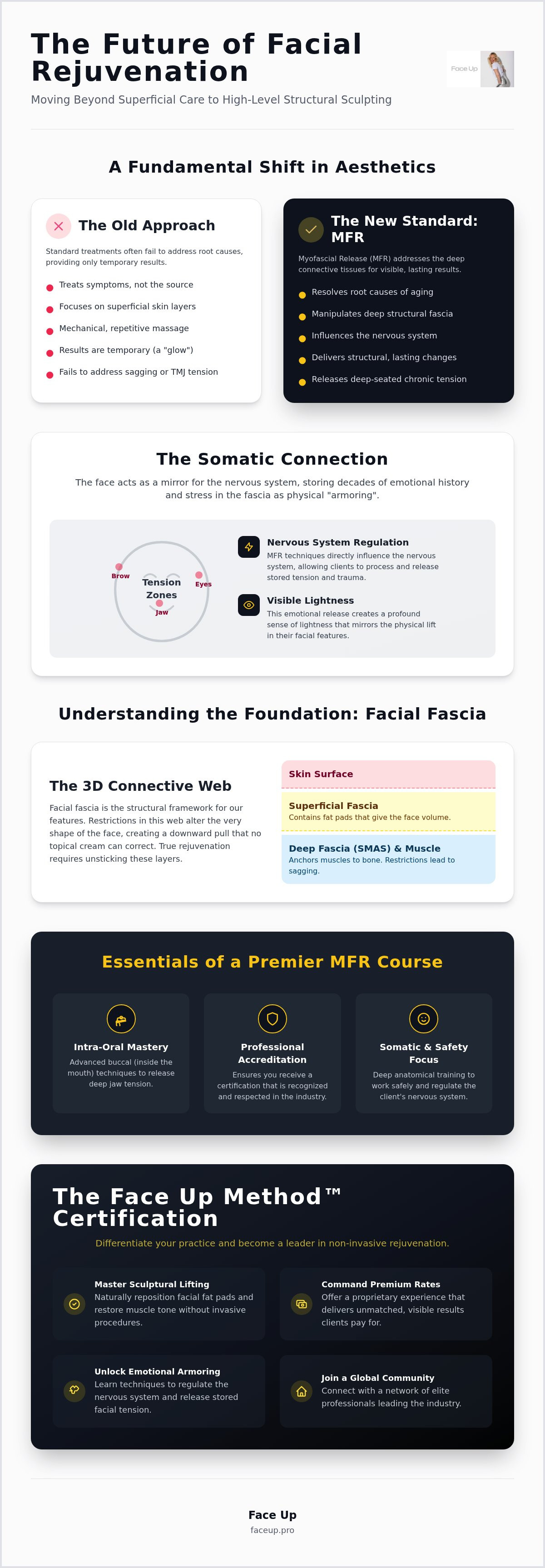
Facial aesthetics is undergoing a significant evolution. While the previous decade focused heavily on temporary fillers and surface-level skincare, 2026 marks a decisive shift toward structural integrity and somatic health. Myofascial release (MFR) has emerged as the cornerstone of this movement. Unlike traditional facial massage, which primarily targets blood flow and lymphatic drainage at the surface, MFR addresses the deeper connective tissues to resolve the root causes of aging and tension. Facial fascia is the three-dimensional web of connective tissue that provides the structural framework for our features. When this web becomes restricted, it doesn't just affect the skin; it alters the very shape of the face.
The industry's pivot toward non-invasive, somatic-based rejuvenation reflects a growing demand for treatments that respect the body's natural physiology. Practitioners are moving away from mechanical massage, which can often be repetitive and superficial. Instead, they're adopting techniques that influence the nervous system and release emotional armor held within the tissues. This transition is why a comprehensive myofascial release facial course has become an essential asset for any modern practitioner looking to provide results that go beyond a temporary glow.
The Anatomy of Facial Fascia
To master these techniques, you must understand the distinction between superficial and deep fascial layers. The superficial fascia contains the fat pads that give the face its volume, while the deep layer anchors the muscles to the bone. Restrictions in these layers, particularly within the SMAS (Superficial Musculo-Aponeurotic System) and the platysma muscle, lead to the heavy features and sagging jawlines often attributed solely to age. When fascia loses its elasticity, it creates a downward pull that no amount of topical cream can correct. True rejuvenation requires manual intervention to unstick these layers and restore their natural sliding capacity.
Why a Specialized Course is Necessary
The face is home to a complex network of delicate nerves and blood vessels. Without precise training, applying deep pressure can lead to unintended inflammation or even nerve damage. Standard esthetician training in 2026 often lacks the anatomical depth required to navigate these structures safely. This is where a specialized myofascial release facial course provides the necessary clinical foundation. It bridges the gap between basic skincare and advanced structural therapy, allowing you to achieve long-lasting changes in facial contour while ensuring client safety and comfort. Moving beyond skin-deep treatments isn't just a trend; it's a professional requirement for those aiming to lead in the high-end wellness market.
The Somatic Connection: Why Facial Fascia Stores Emotional Tension
Your face tells a story that goes far deeper than the fine lines on your forehead or the depth of your nasolabial folds. It acts as a living mirror for the nervous system, reflecting decades of emotional history and habitual stress responses. Psychological pressure often translates into physical "armoring", a process where the body creates a protective shield through chronic muscular contraction. In the face, this armoring typically clusters around the jaw, brow, and eyes, creating a rigid appearance that no topical treatment can soften. Understanding this emotional reservoir is what separates a standard technician from a true somatic practitioner.
Standard training programs often treat the face as a mechanical puzzle to be solved through repetitive strokes. However, a truly transformative myofascial release facial course must address the mind-body integration that defines our physical state. When we experience trauma or chronic stress, the fascia tightens to protect us. As noted by Johns Hopkins Medicine on fascia pain, this connective tissue can become a source of significant discomfort when it loses its fluidity. Releasing this "stuck" energy through specialized touch allows the client to process and let go of stored tension, leading to a profound sense of lightness that mirrors the physical lift in their features.
The Jaw-Pelvis Connection
There's a fascinating physiological link between the jaw and the rest of the body, often referred to as the jaw-pelvis connection. During embryonic development, these two areas develop simultaneously, and they remain neurologically linked throughout life. Chronic clenching in the masseter muscles frequently mirrors tension in the pelvic floor; you can't truly relax one without addressing the other. By integrating tmj massage therapy into your holistic protocols, you provide a systemic release that calms the entire body's stress response. If you're ready to bridge this gap, exploring the Face Up Method Certification can help you integrate these somatic principles into your professional practice.
Nervous System Regulation in Facial Therapy
Effective facial therapy isn't just about repositioning tissue; it's about nervous system regulation. The Vagus nerve, which governs our "rest and digest" state, has branches that are highly accessible through targeted work on the face and neck. When a practitioner creates a "safe container", the client's body moves out of a state of high alert and into a state of receptivity. This is the crucial difference between "fixing" a face and "holding space" for rejuvenation. A high-level myofascial release facial course teaches you how to facilitate this shift, ensuring that the structural changes you achieve are supported by a balanced, regulated internal environment.
Choosing a Myofascial Release Facial Course: Key Criteria for Practitioners
Selecting the right professional path is a pivotal decision that defines the trajectory of your practice. As the wellness industry evolves in 2026, a high-quality myofascial release facial course must offer more than just a sequence of manual techniques. It should provide a comprehensive framework that integrates physiological science with somatic awareness. When evaluating potential programs, prioritize curriculum depth that includes intra-oral (buccal) work. This specialized technique is the gold standard for resolving deep-seated jaw tension and structural imbalances that external massage simply cannot reach.
Professional recognition is another critical factor. Ensure the certification is issued by a body that values both clinical accuracy and holistic integrity. Beyond the initial training, consider the ecosystem the course provides. A valuable program doesn't end with a certificate; it invites you into a community. Look for offerings that include a practitioner directory listing and ongoing mentorship. These elements ensure you aren't just learning in isolation but are joining a global network of specialists who maintain high standards of care.
- Curriculum Depth: Does the program cover the emotional-somatic connection alongside anatomical manipulation?
- Accreditation: Is the certification recognized by industry leaders and professional bodies?
- Practical Application: Is there a balanced mix of high-definition video demonstrations and rigorous anatomical study?
- Community Access: Does the course offer a path to being featured in a professional directory?
Online vs. In-Person Training in 2026
The evolution of digital education has transformed how we master physical therapies. Modern training now utilizes ultra-high-definition video and interactive assessments that allow you to visualize fascial layers with more clarity than a crowded classroom might permit. Mastering the "feel" of fascia through remote learning is entirely possible when the instruction focuses on developing your sensory awareness. Choosing a self-paced facial sculpting certification allows you to revisit complex anatomical lessons as often as needed, ensuring total proficiency before you move to client work.
The Importance of Assessment Skills
A fixed routine is rarely the answer for a client with unique structural needs. The most effective practitioners are those who can "read" a face to identify postural and emotional imbalances before they ever begin the physical work. This requires developing "listening hands," a term for the heightened sensitivity needed to feel where fascia is restricted or dehydrated. Your myofascial release facial course should emphasize these assessment skills, teaching you to create bespoke protocols rather than following a one-size-fits-all script. When you treat the face as a dynamic, living system, your results become both visible and transformative.
Advanced Techniques: From Buccal Massage to Lymphatic Activation
Deepening your expertise requires a shift from superficial relaxation to targeted structural manipulation. While many practitioners focus solely on skin quality, a comprehensive myofascial release facial course provides the tools to bridge the gap between aesthetic sculpting and clinical pain relief. Advanced techniques like buccal massage and sculptural lifting allow you to reach the deep-seated musculature that defines facial structure. By integrating these methods, you don't just improve a client's appearance; you restore the functional balance of their entire facial ecosystem.
Intra-oral work, or buccal massage, stands as the gold standard for deep jaw release. It allows for direct access to the medial and lateral pterygoids, muscles that are often the primary culprits in chronic TMJ disorders. When combined with sculptural lifting, which involves repositioning facial fat pads and toning dormant muscles, the results are both immediate and profound. This dual approach ensures that the "lift" is supported by healthy, released tissue. To further enhance these results, integrating lymphatic drainage is essential. This process clears the path for nutrient delivery, ensuring that the newly sculpted tissues are properly nourished and detoxified.
While manual work remains the foundation of our practice, knowing when to incorporate technology is vital. For instance, using a specialized tmj massage tool can provide consistent, targeted pressure that complements your hand techniques, particularly during the initial release phases. If you're ready to master these advanced protocols and offer a truly unique service, the Face Up Method Certification offers the definitive training path for professionals seeking to lead in this niche.
Mastering the Buccal Technique
Working inside the oral cavity requires a high degree of precision and ethical awareness. Safe protocols are paramount to ensure client comfort and maintain a professional environment. By addressing the masseters and pterygoids from both sides of the cheek, you can achieve a level of tension release that external work alone cannot replicate. This technique is particularly effective for clients who have become resistant to traditional therapies, providing a breakthrough in both their physical comfort and facial symmetry.
Sculpting the Oval and Neck
Defining the jawline and reducing the appearance of a "double chin" involves more than just skin tightening. It requires releasing the tight connective tissues in the neck, specifically the sternocleidomastoid (SCM) and the scalenes. Releasing these structures allows for neck elongation and a more refined profile. By combining traction and torsion techniques, you can achieve maximum fascial remodeling. This process doesn't just address a single feature; it restores the natural, youthful alignment of the face and neck, creating a visible structural shift that lasts.
Elevate Your Practice with the Face Up Method™ Certification
Choosing the right myofascial release facial course is a defining moment for your professional trajectory. The Face Up Method™ Certification isn't merely a collection of techniques; it is a proprietary ecosystem that blends advanced sculptural lifting with deep somatic bodywork. While many certifications focus on the mechanical aspects of tissue manipulation, this method prioritizes the integration of high-end aesthetics and profound emotional healing. By joining this specialized community, you transition from being a generalist to a recognized facilitator of structural and nervous system rejuvenation.
This certification differentiates you in a crowded wellness market by providing a clear, brand-recognized career path. As clients increasingly seek non-invasive alternatives to traditional injectables, the demand for practitioners who understand the "Face Up" philosophy continues to grow. Your journey through the certification process moves you from foundational anatomical knowledge toward advanced somatic mastery, ensuring you have the confidence to handle complex cases of chronic tension and structural sagging. Upon completion, you gain access to the global practitioner directory, a vital resource that connects you with a community of specialists and high-intent clients seeking these exact results.
Why the Face Up Method™ is Different
Next Steps: Enrollment and Professional Growth
Building a premium service menu requires more than just new skills; it requires a shift in how you position your expertise. The Face Up Method™ allows you to move away from the high-volume, low-margin model of traditional esthetics and toward a specialized therapy model. When you apply for the program, you are entering a structured environment designed to support your growth through detailed assessments and ongoing mentorship. If you are ready to redefine your professional identity and lead the future of somatic sculpting, Apply for the Face Up Method™ Certification today. Your evolution into a high-level facial specialist begins with this single, decisive step toward mastering the myofascial release facial course curriculum.
- Proprietary Protocols: Gain access to the unique Face Up Method™ sequences.
- Professional Standing: Secure your place in a global directory of certified specialists.
- Somatic Expertise: Learn to facilitate emotional release alongside physical sculpting.
- Premium Positioning: Command higher rates by offering a specialized, high-demand therapy.
Leading the Future of Somatic Facial Therapy
The transition from traditional aesthetics to deep structural rejuvenation represents the next frontier for beauty and wellness professionals. By mastering the relationship between facial fascia and the nervous system, you provide more than just a surface-level glow; you offer a path to lasting physical and emotional release. This journey begins with choosing a specialized myofascial release facial course that prioritizes both clinical precision and somatic awareness. You've explored how advanced techniques like buccal massage and sculptural lifting can redefine your results and elevate your practice into a premium, high-demand niche.
Now is the time to solidify your standing as a leader in this field. Our program provides a proprietary somatic sculpting curriculum and high-definition video training with lifetime access to ensure your mastery. Upon completion, you'll join an elite global community with a verified Face Up practitioner directory listing to connect with clients seeking your unique expertise. Join the Face Up Method™ Certification Program to start your transformation today. We're excited to support your professional evolution and see the incredible results you'll achieve for your clients.
Frequently Asked Questions
Is a myofascial release facial course suitable for beginners?
A myofascial release facial course is accessible to beginners, though a basic understanding of facial anatomy provides a helpful head start. The Face Up Method™ is structured to guide you from foundational principles to advanced somatic techniques, ensuring that even those new to manual therapy can develop the "listening hands" required for effective practice. This inclusive framing allows for professional entry and steady progression toward mastery.
How long does it take to become certified in the Face Up Method™?
The time required to complete your certification varies based on your chosen learning pace and previous experience. While some intensive workshops are completed in a few days, the comprehensive Face Up Method™ Certification is designed to allow for deep integration of both physical and somatic skills over several weeks. This ensures you master the nuances of fascial manipulation and nervous system regulation before beginning professional client work.
Can I practice buccal massage without a medical degree?
You don't need a medical degree to practice buccal massage, but you must adhere to the licensing requirements for massage therapy or esthetics in your specific jurisdiction. As a non-invasive manual therapy, intra-oral work is a specialized skill within the scope of practice for many licensed bodyworkers and beauty professionals who seek to provide advanced structural lifting and deep jaw relief for their clients.
What equipment or tools do I need for a facial sculpting course?
Your primary tools are your hands, but specific accessories are necessary for advanced protocols. You'll need high-quality, powder-free gloves for intra-oral buccal techniques and a natural, high-glide oil or balm to ensure smooth tissue manipulation. While the focus remains on manual dexterity, some practitioners also incorporate a specialized TMJ massage tool to provide targeted, consistent pressure during deep fascial release sessions.
How does myofascial release for the face differ from a standard facial?
Myofascial release for the face differs from a standard facial by targeting the deep connective tissues rather than just the skin's surface. While a standard facial focuses on complexion and relaxation, a myofascial release facial course teaches you to reposition facial fat pads, release muscular adhesions, and address the somatic "armoring" that causes structural sagging. It's a decisive shift from temporary maintenance to lasting structural transformation.
Will this course help me treat clients with chronic TMJ disorders?
Yes, this course is specifically designed to provide practitioners with the tools to address chronic TMJ disorders and jaw-related tension. By mastering intra-oral techniques and releasing the masseter and pterygoid muscles, you can offer clients significant relief from the physical pain and emotional stress often stored in the temporomandibular joint. This specialty allows you to provide functional results that go far beyond traditional beauty treatments.
Is the Face Up Method™ certification recognized internationally?
The Face Up Method™ certification is recognized globally, providing you with a credential that carries weight across diverse international markets. Certified practitioners are invited into a proprietary ecosystem that includes a listing in our global directory, positioning you as a high-standard partner in the specialized landscape of somatic facial sculpting. This global readiness ensures your skills are valuable and respected regardless of your professional jurisdiction.
Can I learn the somatic components of the course online?
You can effectively learn the somatic components of the course through our high-definition digital platform. The curriculum utilizes detailed video demonstrations and interactive assessments to guide you through the process of nervous system regulation and emotional release. This structured approach ensures that you can master the mind-body integration of the Face Up Method™ from any location, allowing for a flexible and professional learning journey.


