
The psycho-emotional aspect of skin aging describes how visible skin changes can affect stress, body image, feelings of attractiveness, and mental well-being. Skin aging is a normal part of life, but people experience it differently depending on how they see themselves and feel about those changes. The direct connection between psychological stress and skin aging is not yet fully established.
It’s understandable if a new line, a change in texture, or a skin condition affects your confidence. Skin is visible and personal, and often tied to how we present ourselves. Emotional reactions deserve attention without treating normal aging as a problem to fix. This article explores how skin aging and conditions can affect body image and stress, why distress matters to well-being, and what a balanced view of the evidence looks like.
Key Takeaways
- Notice whether stress coincides with changes in an existing skin condition, while recognizing that a flare can have more than one influence.
- Separate personal worth and attractiveness from changing skin; beauty standards can shape how aging is perceived, but they don’t define your value.
- Pay attention to persistent distress about appearance, since it can affect confidence, relationships, and day-to-day well-being.
- Take depression or thoughts of suicide associated with skin disease seriously and seek appropriate mental health support.
- Approach normal skin aging with self-compassion, and explore gentle face and body practices as support for relaxation and well-being, not as a measure of success or a substitute for mental health care.
Stress-related flare-ups of existing skin conditions
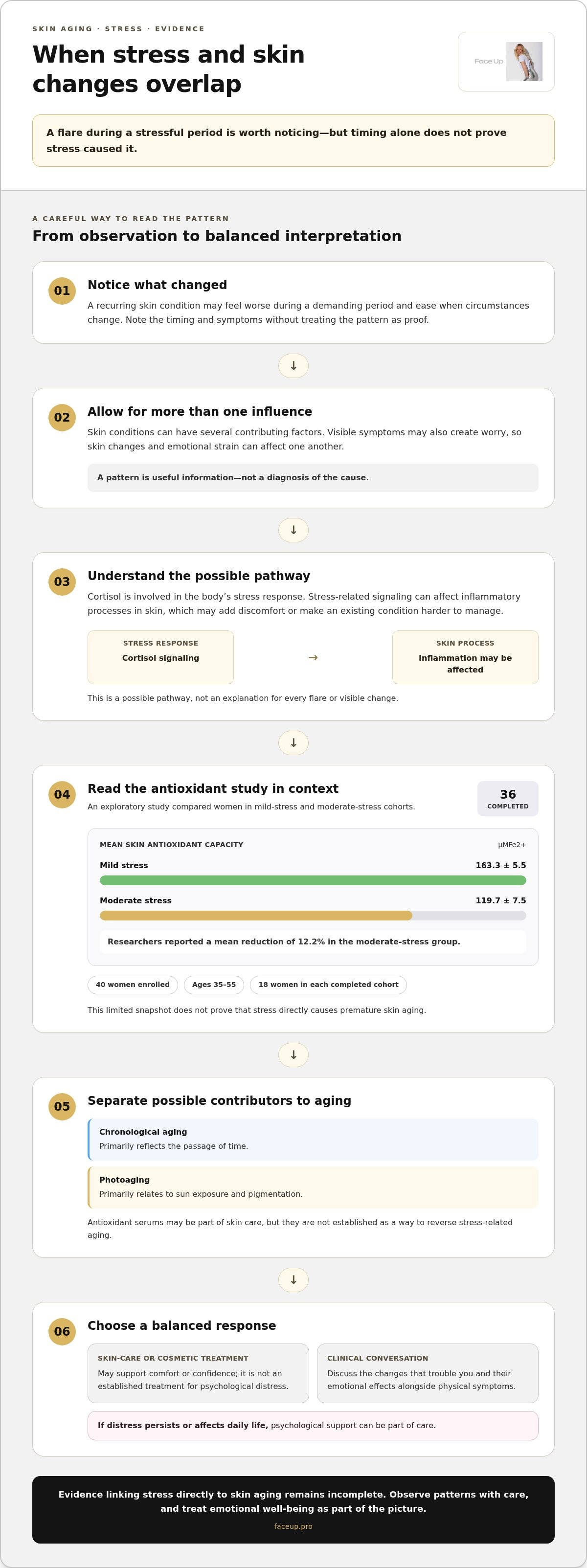
Stress can coincide with flare-ups of existing skin conditions, and ongoing distress may influence skin processes linked with aging. The relationship is complex: a flare doesn’t prove stress caused it, and evidence directly linking stress to skin aging remains incomplete.
For example, someone with a recurring skin condition may notice symptoms worsen during a demanding period, then ease when circumstances change. That pattern is worth observing, but it doesn’t prove stress is the only cause. Skin conditions can have several contributing factors, and visible changes may themselves cause worry, creating a cycle between symptoms and emotional strain.
Cortisol and Skin Inflammation
Cortisol is a hormone involved in the body’s response to stress, and stress-related signaling can affect inflammatory processes in the skin. Inflammation may contribute to discomfort and make an existing condition feel harder to manage. A flare during a stressful period is a reason to notice the timing and symptoms, not to assume cortisol explains every change.
Chronic psychological stress may also affect skin antioxidant capacity. An exploratory study enrolled 40 women aged 35 to 55, divided equally between mild-stress and moderate-stress cohorts. Thirty-six completed the study, with 18 women in each cohort. The moderate-stress group had mean skin antioxidant capacity of 119.7 ± 7.5 μMFe2+, compared with 163.3 ± 5.5 μMFe2+ in the mild-stress group. Researchers reported a mean reduction of 12.2% in the moderate-stress group. These findings offer a limited snapshot, not proof that stress directly causes premature skin aging.
Persistent stress is associated with processes such as inflammation, oxidative stress, and DNA damage, which may contribute to aging. Chronological aging, however, primarily reflects the passage of time, while photoaging is primarily related to sun exposure and pigmentation. Antioxidant serums may be part of a skin-care routine, but they should not be presented as a proven way to reverse stress-related aging. The effects of a topical product and the causes of an individual flare are separate questions.
Treatments and Emotional Well-Being
Skin-care and cosmetic treatments may support comfort or confidence, but they are not established treatments for psychological distress. Evidence directly linking stress and skin aging remains incomplete, so a visible change alone cannot show whether a treatment will improve emotional well-being. Consider the outcome you want, such as easing discomfort or feeling more at ease with your appearance.
Clinicians can support patients by asking which skin changes trouble them most, using neutral language, and discussing emotional effects alongside physical symptoms. If distress persists or affects daily life, psychological support can be part of care. Appearance need not be the only concern.
Beauty and physical attractiveness
Ideas about beauty shape how people interpret visible signs of aging, but they are not fixed measures of attractiveness. One person may see fine lines as evidence of experience, while another feels self-conscious about the same change before a work presentation. Context matters: lighting, comments from others, and personal expectations can all affect what someone notices in the mirror.
In the United States, youth-centered images in advertising, entertainment, and beauty culture can make smooth skin seem like a standard to maintain. Ageism can reinforce that message when older faces are treated as less relevant or attractive. These pressures may affect how someone feels about a new line or change in texture, but they do not define a universal standard of beauty.
Social media can intensify comparison through a steady stream of edited portraits, filters, and anti-aging messages. Someone scrolling through polished images may start seeing ordinary texture or facial lines as flaws, especially when product marketing frames aging as a problem with a simple fix. These images are curated, not neutral examples of how real skin should look.
Attractiveness depends on more than skin. Someone may feel confident in a familiar outfit and relaxed conversation, then fixate on a forehead line in a close-up photograph. That shift shows how setting and attention can affect self-perception. It does not mean the person’s appearance changed between the photograph and the conversation.
To understand how beauty standards affect your well-being, notice what prompts comparison. Is it a filtered selfie, a product claim, a family comment, or a particular social setting? Naming the trigger can help separate your preferences from pressure to look younger. You can also consider what you value in appearance beyond smoothness, such as expression, individuality, or a sense of ease.
Cosmetic choices may feel meaningful when they reflect personal preference rather than fear of losing social value. Before pursuing a change, describe the outcome you want in plain terms, such as feeling more comfortable in photographs. Consider whether the goal comes from your own wishes or from repeated messages that aging should be hidden.
Clinicians can discuss appearance without reinforcing ageism by asking what concerns the patient, listening without judgment, and avoiding language that labels normal features as defects. A patient who mentions avoiding video calls because of facial lines may need a conversation about confidence as well as treatment options. For readers drawn to a reflective, body-aware practice, facial sculpting as a mindful practice can be one way to engage with the face without making youth the measure of success.
Body image dissatisfaction
Body image dissatisfaction means feeling troubled by how you perceive your appearance. With aging skin, the concern might focus on a line, uneven tone, or changing facial contours. Someone may feel comfortable meeting friends, then avoid a video call after noticing a line in its preview. That reaction reflects a personal experience, not an objective measure of attractiveness or worth.
Concern about appearance becomes troubling when thoughts about a feature repeatedly interrupt everyday activities. Someone might inspect the same area in several mirrors, cancel plans, or seek repeated reassurance after taking photographs. These patterns can increase distress and narrow attention around appearance. Excessive anti-aging treatments may bring disappointment, emotional strain, or repeated focus on perceived flaws, especially when each change leads to another desired correction.
Separate a specific preference from outside pressure by naming the concern in everyday language. “I want to look less tired in photographs” is more concrete than “I must stop aging.” Then consider what would count as a satisfying outcome and whether it depends on changing your skin or avoiding judgment. If the main worry is a colleague’s comment, for instance, another cosmetic change may not resolve the underlying discomfort.
A brief observation exercise can clarify what is driving dissatisfaction. For several days, note when the concern appears, what happened beforehand, and what you do next. A trigger could be a close-up selfie, a filtered image, or a relative’s remark. Record whether you compare, conceal, seek reassurance, or withdraw. This can make patterns easier to discuss without turning normal skin changes into a diagnosis.
Consider the effect on daily life, not just how often you notice a feature. If concern about a forehead line repeatedly affects work calls, social plans, or mood, tell a trusted clinician what you are avoiding. Be specific: “I skip video meetings because I keep checking my face” gives more context than “I dislike aging.” A clinician can discuss the physical concern while taking its emotional impact seriously.
Support can include setting limits on mirror checks, curating social feeds, and choosing activities that are not focused on appearance. For example, move comparison-heavy accounts out of your regular feed, then notice whether your mood changes. If distress continues to interfere with relationships, work, or daily routines, discuss it with a mental health professional. The aim is not to dismiss your concern, but to keep appearance from directing your whole day.
Eustress is described as acute, mild psychological or physical stimulation. It can mobilize the body and have anti-aging effects. This description includes both psychological and physical forms of stimulation, and characterizes the stimulation as acute and mild. It distinguishes the term from the idea that every demanding experience is harmful: it identifies possible effects rather than promising a result. When considering appearance concerns, keep that description separate from conclusions about a particular line, treatment, or person. The stated anti-aging effect concerns eustress as described, not a guaranteed change in visible skin or an individual outcome.
Depression and suicidal ideation associated with skin disease
A visible or uncomfortable skin disease can affect more than physical comfort. Itching, pain, or noticeable changes may disrupt sleep, make social situations difficult, and increase emotional strain. This does not mean everyone with a skin condition will become depressed, but it makes emotional well-being a relevant part of care.
The impact can build through ordinary daily moments. Someone with a facial condition might avoid photographs, decline invitations, or worry that others will stare. A person with persistent itching may struggle to concentrate at work after a poor night’s sleep. These changes can reduce connection and enjoyment, important signals to notice rather than dismiss as vanity.
Depression involves more than sadness about appearance. Someone may lose interest in usual activities, feel persistently hopeless, or find daily responsibilities harder to manage. If these changes continue, describe them plainly to a healthcare professional. For example, say, “My skin symptoms keep me awake, and I’ve stopped seeing friends.” That gives a clearer picture than discussing the visible condition alone.
Suicidal thoughts need prompt attention, whether or not they seem connected to a skin disease. If you’re thinking about suicide, tell someone you trust now and contact a crisis service or emergency services in your country. If you may act soon, stay with another person and move away from anything you could use to hurt yourself. When safety is at risk, a skin concern should not be the only subject discussed.
Clinicians can make emotional care easier to discuss by asking direct, respectful questions. They might ask how symptoms affect sleep, relationships, work, or time outside the home. If a patient discloses depression or thoughts of self-harm, listen without judgment, take the disclosure seriously, and help connect them with appropriate mental health support. Addressing skin disease and emotional distress together recognizes their full effect on daily life.
Friends and family can offer practical support without focusing on appearance. They might accompany someone to an appointment, help with daily tasks during a difficult flare, or keep inviting them to social plans without pressure. Avoid comments such as “It’s only skin” or promises that a treatment will solve everything. A more helpful response is, “I can see this is affecting you. Would you like me to stay with you while we find support?”
If you’re supporting a loved one, treat a marked change in mood or withdrawal as a reason to check in. Ask what would help today, listen carefully, and act promptly if safety concerns arise. Emotional distress deserves attention alongside symptoms, not only after every skin treatment has been tried.
For anyone supporting a person through this, noticing stress can be helpful, without assuming it explains depression or suicidal thoughts. One study divided participants into mild-stress and moderate-stress cohorts, with 20 women in each cohort. Thirty-six of the 40 women in the study completed it, with 18 women in each stress cohort.
The mild-stress cohort had a mean Perceived Stress Scale score of 12.0 ± 0.4, compared with 23.1 ± 0.6 in the moderate-stress cohort. These scores describe the study cohorts; they do not replace listening to someone’s individual concerns or responding promptly when safety is at risk.
Psychological effects of normal skin aging
Normal skin aging can bring mixed feelings, from acceptance to self-consciousness. The psycho-emotional aspect of skin aging includes how personal expectations shape reactions to visible changes. A new line may feel unimportant one day and prominent in a close-up photograph the next.
Anxiety and Depression
Anxiety and depression can accompany distress about aging skin, but a changing face alone does not establish either condition. Worry may grow when someone repeatedly checks a feature, avoids photographs, or fears judgment at work. Understanding the psycho-emotional aspect of skin aging matters because persistent distress can affect daily life, not just feelings about appearance.
Emotional experiences vary across age groups, genders, and skin tones because personal expectations and social messages differ. One person may focus on forehead lines, while another notices changes in pigmentation or texture; neither response represents everyone in that group.
Pay attention to the effects on daily life, not only the skin change. If concern about a new facial feature leads someone to cancel plans or dread a family photograph, that pattern may signal emotional strain worth discussing with a clinician.
Emotional Coping with Skin Changes
Emotional coping means responding to skin changes without letting appearance concerns dominate self-worth or daily choices. Considering the psycho-emotional aspect of skin aging can make room for personal care while keeping relationships, work, and interests in view.
Try naming the feeling and its trigger: “I feel uneasy after comparing my face with filtered photos.” Then choose a practical response, such as stepping away from the feed or talking with someone supportive. These actions address the moment without requiring you to deny your feelings.
A useful reflection is to separate what you notice from what you assume it means. “I see lines around my eyes” describes a feature; “I look unprofessional” predicts other people’s judgments. Ask what evidence supports that conclusion, and consider another explanation, such as fatigue or harsh lighting.
People also cope through routines that support comfort and self-connection. Pausing to breathe before looking in the mirror, taking a walk with a friend, or choosing a hobby that absorbs your attention can shift focus beyond appearance. These practices may help keep concerns in proportion without requiring them to disappear.
If thoughts about aging skin keep disrupting sleep, social plans, or mood, share a specific example with a healthcare professional. You might say, “I avoid photographs because I keep focusing on my skin.” For a mindful way to engage with facial tension, explore facial self-practice as one part of a broader well-being routine.
Face Up: Face Up Method Certification
Face Up™ Training is for practitioners who want to learn Face Up’s approach to facial sculpting and somatic bodywork. It may suit you if you work with clients exploring facial tension, self-image, and well-being, and want to bring this method into your professional practice.
The method focuses on releasing muscular and emotional tension in the face and neck through non-invasive practices. It is not a treatment for depression, anxiety, or skin disease, but offers a body-aware approach to facial care. For personal support with facial tension, Face Up bodywork sessions are another option.
Explore Face Up™ Training to see whether its practitioner focus fits your goals, or visit faceup.pro to learn more.
Choose a Next Step That Feels Right for You
Your relationship with your appearance can change over time, and you can choose what support feels useful now. The psycho-emotional aspect of skin aging is not a personal failing. Noticing its influence can help you choose a response that respects both your physical comfort and emotional needs.
If you’re drawn to face-focused practices, Face Up offers the Face Up App Subscription and Jaw Release Course for personal practice, alongside Face Up Method Certification for practitioners. These offerings center on facial sculpting and body-aware methods, giving you options that match different intentions. They aren’t a measure of how successfully you age, and they don’t define your worth.
For a conversation about whether Face Up’s approach fits what you’re looking for, contact Face Up to discuss your concerns. Take the next step at your own pace, with self-respect guiding the way.
Frequently Asked Questions
What psychological and emotional effects are associated with visible skin aging?
Visible skin aging can bring self-consciousness, grief, frustration, or acceptance, and feelings may shift with context. Someone may feel at ease with a familiar friend but uneasy at a professional event where appearance feels especially visible. Notice whether the feeling passes or starts shaping your choices, such as avoiding activities you value. Naming the feeling and situation can help you decide what support would be useful.
How does skin aging affect self-esteem, body image, and confidence?
Skin changes can affect self-esteem when someone treats appearance as a measure of personal value or social acceptance. Confidence may vary by setting: a person might feel comfortable leading a discussion yet become self-conscious during a new social introduction. Consider which parts of your identity still feel steady, such as humor, expertise, or kindness. Keeping those qualities in view can help prevent appearance concerns from defining your overall self-image.


