

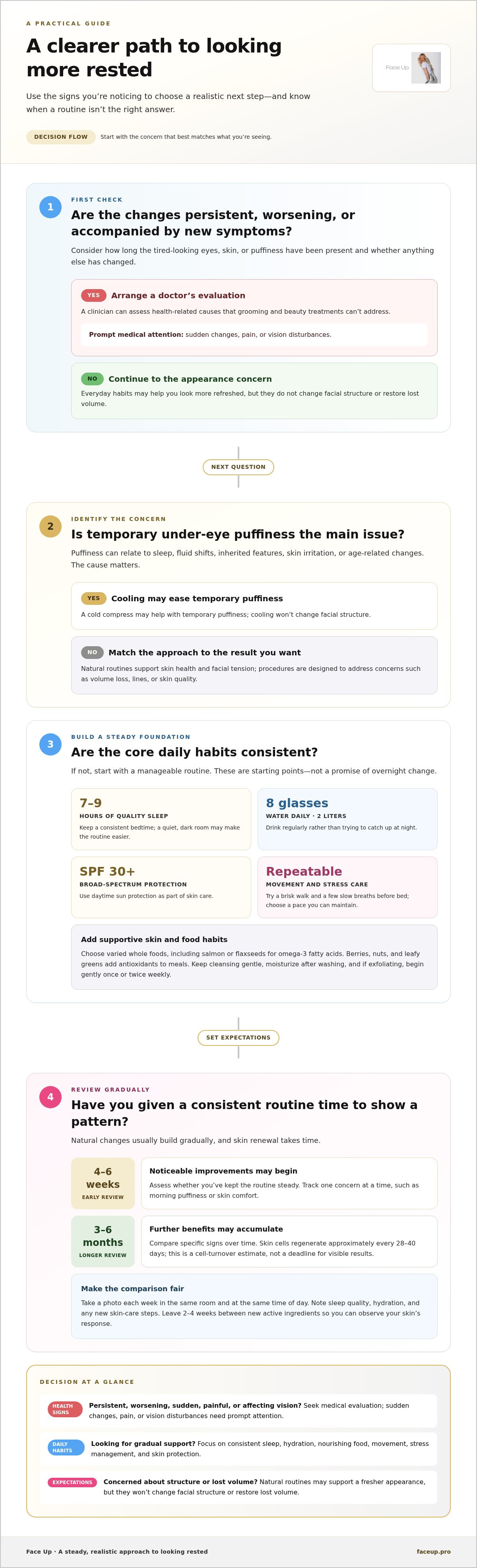
A rested-looking face isn’t always a matter of choosing between natural habits and aesthetic procedures. A practical approach to how to look rested and rejuvenated naturally is to build steady routines around quality sleep, hydration, nourishing food, stress management, and movement. Aim for 7-9 hours of quality sleep and at least 8 glasses (2 liters) of water daily as starting points.
It can be frustrating to feel well but still look tired. Everyday habits may help you look more refreshed, but they won’t change your facial structure or restore lost volume. This guide explains how sleep, diet, hydration, exercise, and stress management can affect your appearance, and how to make realistic changes over time.
You’ll also learn how antioxidant-rich foods fit into a balanced routine, how natural approaches differ from procedures, and where facial tension and massage may fit. The goal is to help you choose methods that suit your needs without expecting them to do the same job.
Key Takeaways
- Build consistent sleep, hydration, movement, and stress-management habits to support a fresher appearance over time.
- Set realistic expectations: visible changes from natural routines may begin after 4-6 weeks, with further benefits accumulating over 3-6 months.
- Add antioxidant-rich foods such as berries, nuts, and leafy greens to varied meals rather than relying on a single ingredient.
- Understand the difference between habits that support skin and facial tension, and procedures designed to address volume loss, lines, or skin quality.
- Use gentle facial massage as part of a routine, and consider guided jaw-release practice if facial tension is part of what makes you look tired.
1. Sleep, hydration, diet, stress, and exercise
Start with sleep: aim for 7-9 hours of quality rest nightly. Skin repair happens during sleep, with regeneration described as peaking between 11 pm and 4 am. A consistent bedtime and a quiet, dark room can make that routine easier to maintain. Sleep supports skin health, but it cannot replace hydration, balanced meals, or sun protection.
Hydration is another daily foundation. The suggested target is at least 8 glasses (2 liters) of water daily; drink regularly rather than trying to catch up at night. In the morning, some routines add half a lemon to warm water, though this is optional. For daytime skin protection, use broad-spectrum SPF 30 or higher.
Keep cleansing gentle. A sulfate-free cleanser removes dirt without stripping natural oils, and moisturizer after washing helps support the skin barrier. If you exfoliate, start gently once or twice weekly and follow with moisturizer. You can also apply a few drops of a preferred natural oil after showering. Together, these simple steps support a cleansing and hydration routine.
A HydraFacial is a professional facial treatment focused on cleansing and hydration. It may suit someone looking for surface freshness, while home care helps maintain a consistent daily routine. A consultation can help you decide whether a facial treatment suits your skin type and goals. Neither a HydraFacial nor a home routine replaces sleep, a balanced diet, or sun protection.
Build meals around varied whole foods. Salmon and flaxseeds provide omega-3 fatty acids, while chamomile or green tea can be part of a calming evening ritual. Meditation or deep breathing offers a practical stress-management step: try a few slow breaths before bed. Regular movement, such as a brisk walk, supports general wellbeing and may help stimulate circulation. Choose a pace you can repeat, rather than an intense routine you quickly abandon.
Simple grooming can also help you look more refreshed without makeup. Neatly shaped brows, clean hair, and a style that lifts hair away from the face can make your features look more open. For example, smooth flyaways and choose a part that suits your face.
Persistent under-eye bags, dark circles, or facial puffiness can be related to sleep, fluid shifts, inherited features, skin irritation, or age-related changes. The cause matters: cooling may ease temporary puffiness, but it won’t change facial structure.
Arrange a doctor’s evaluation if tired-looking eyes or skin persist despite consistent routines, worsen, or appear alongside other new symptoms. Sudden changes, pain, or vision disturbances also call for prompt medical attention. A clinician can assess health-related causes that grooming and beauty treatments can’t address.
2. Expected timelines for visible results
Natural changes usually build gradually, not overnight. Noticeable improvements from natural rejuvenation methods typically begin after approximately 4-6 weeks. More significant results from consistent care accumulate over 3-6 months. A realistic plan for how to look rested and rejuvenated naturally starts with patience and one clear goal. Better sleep may affect how rested you appear before fine lines or uneven texture shift. Track one concern at a time, such as morning puffiness or skin comfort.
Skin renewal also takes time. Human skin cells regenerate approximately every 28 to 40 days, depending on factors such as age and health. Other descriptions give an age-specific comparison: 28 days in youth and 45-60 days in older adults. These estimates describe cell turnover, not a deadline for visible results. A facial routine may support skin health, but collagen changes and fine lines follow their own gradual course.
Consistency makes changes easier to assess. Keep your basic routine steady and account for differences in lighting and daily conditions. For example, take a photo each week in the same room and at the same time of day. Note your sleep quality, hydration, and any new skincare steps. This gives you a clearer comparison than relying on memory or judging your face in different lighting.
Introduce active skincare ingredients slowly. Leave 2-4 weeks between new ingredients so you can observe how your skin responds. Changing several products at once makes it difficult to identify what helped or caused irritation. If you add an exfoliant, keep the rest of your routine stable. Follow with moisturizer, then assess comfort and texture before making another change.
Different approaches work on different timelines because they act in different ways. A hydration-focused routine can support skin comfort, while changes in texture take time as the skin renews. Treatments such as microneedling are designed to prompt a healing response and stimulate collagen and elastin production. Their results won’t follow the same schedule as everyday habits, so don’t use one approach’s timeline to judge another.
Use a simple review schedule: assess routine consistency after 4-6 weeks, then review longer-term changes over 3-6 months. Look for specific signs, such as skin feeling less dry or makeup sitting differently across fine lines. For anyone learning how to look rested and rejuvenated naturally, a steady record helps distinguish gradual progress from day-to-day variation. If the routine causes ongoing irritation, stop the new active ingredient and simplify your steps.
3. Antioxidant-rich foods
Berries, nuts, and leafy greens are easy antioxidant-rich additions to meals. Try blueberries at breakfast, walnuts as a snack, or spinach at lunch. A varied plate is more useful than expecting one ingredient to transform your skin. Antioxidants contribute to a nourishing eating pattern, while skincare and sun protection play different roles.
Lemons provide vitamin C, which supports collagen production. Collagen helps give skin structure, while wrinkles reflect several influences, including age and sun exposure. Add lemon to water or dressings for flavor, rather than treating it as a wrinkle remedy. Warm lemon water can be enjoyable, but it doesn’t replace a varied diet.
Cabbage offers vitamins A, C, and E, along with fiber. Add shredded cabbage to a salad or cook it with a meal. Beets contain betacyanin, the pigment that gives them their deep color. Roast beets or grate them into a bowl with leafy greens. These are simple ways to include antioxidant-rich foods regularly.
No particular food is established as a reliable remedy for dark circles. Berries, leafy greens, and nuts can contribute to a balanced diet, but they shouldn’t be expected to erase circles. Because dark circles can have different causes, dietary changes may not address what’s behind them.
Aim for variety across meals. Pair leafy greens with nuts, add berries to breakfast, and choose cabbage or beets at dinner. This simple rotation brings different plant foods into your week without making eating restrictive. Adequate hydration supports general wellbeing, but drinking extra water won’t necessarily restore the under-eye area or change pigmentation.
Be wary of claims that a single ingredient can make skin look younger or reverse wrinkles. Lemon, beet, and berries can complement meals, but they don’t replace broader habits. To get started, add one antioxidant-rich food to a meal you already enjoy, then build variety from there.
Food choices work alongside consistent skincare, not instead of it. Keep meals varied, protect your skin from daily sun exposure, and give routines time to have gradual effects. If dark circles persist, focus on identifying their likely cause rather than relying on a “beauty food” promise. This keeps expectations realistic and makes nutrition part of a useful, balanced approach.
Lemons are rich in vitamin C; the claim is that vitamin C helps fight wrinkles and keep skin rejuvenated. Beets contain betacyanin; the claim is that they support liver and lymphatic health.
4. Comparing natural approaches with invasive procedures
Everyday habits and aesthetic procedures address different concerns. Sleep, nutrition, sun protection, and stress management support overall skin health and gradual changes. Procedures target specific features, such as lost facial volume, dynamic wrinkles, or uneven texture. If you’re considering how to look rested and rejuvenated naturally, first identify the change you want: softer expression lines, improved texture, or more facial fullness.
Hyaluronic acid fillers can restore volume in areas that have thinned over time and smooth lines. Traditional fillers last 6-18 months, depending on the filler and location. Neuromodulators, including Botox, temporarily relax targeted muscles that create dynamic wrinkles. A conservative approach aims to soften creases while preserving natural movement and facial-expression harmony.
Skin rejuvenation treatments focus on texture and skin quality rather than volume. Options may include medical-grade skincare, laser therapies, microneedling, or regenerative treatments. Microneedling creates tiny, controlled injuries in the skin, prompting a healing response that stimulates collagen and elastin production. These procedures differ from daily skincare, which supports the skin without deliberately creating controlled injury.
Natural injectables or biostimulators, such as Sculptra, are listed as lasting 1.5-2+ years with maintenance. Their purpose differs from a home routine or a treatment that relaxes facial muscles. A personalized plan considers bone structure, muscle movement, skin type, and personal goals. A qualified medical aesthetician or dermatologist assesses those factors before recommending a facial rejuvenation plan.
Let the concern guide your comparison. A routine may support a healthy-looking complexion and help maintain skin comfort. Fillers address volume loss, while neuromodulators target muscle-driven creases. Microneedling focuses on texture through the body’s healing response. Knowing what each approach is designed to change makes it easier to weigh your options.
Procedures also involve different considerations from lifestyle habits. A procedure is chosen for a specific area or concern, while sleep, food, and stress management shape broader routines. During a consultation, discuss your desired changes, skin type, facial movement, and treatment goals. This can clarify whether your priority is improving texture, softening expression lines, or restoring volume.
These approaches don’t have to compete. If you’re deciding how to look rested and rejuvenated naturally, begin with habits that suit your daily life, then assess any procedure against a specific concern. Some people start with everyday routines; others consider a targeted treatment. The key question is which method addresses the change you want.
5. Do cold compresses or facial massage help reduce under-eye puffiness?
A cool compress can be a simple option when under-eye puffiness seems temporary. Use a clean, cool cloth and rest it gently over closed eyes. Treat it as a soothing part of your routine, not a way to change facial structure. If puffiness keeps returning, note when it appears and whether it coincides with sleep, meals, or seasonal irritation.
Facial massage offers a different approach. Gentle massage may stimulate blood circulation and support skin elasticity. With clean hands, glide lightly around the orbital area without pulling the delicate skin. Keep pressure soft, especially beneath the eyes. Aim for comfortable, controlled movement, not forceful kneading or a dramatic immediate change.
Try a short sequence in front of a mirror. Start at the inner under-eye area and sweep gently outward toward the temples. Repeat with light strokes on each side, keeping your fingers on the skin rather than pressing into the eye. Stop if the movement feels uncomfortable or increases irritation. A simple sequence is easier to repeat than an elaborate technique.
Massage and cooling affect appearance differently from medical treatment. A cool cloth provides a calming sensation, while massage may encourage circulation and support elasticity. Neither method addresses every cause of under-eye bags or dark circles. For example, a routine may improve the appearance of temporary morning puffiness, while persistent changes call for closer attention to their cause.
Consistency matters more than pressure. Add gentle massage after cleansing, or use a cool compress as part of your morning routine. Keep the rest of your skincare steps familiar so you can notice whether the new technique suits your skin. Avoid vigorous rubbing, which can leave the area feeling sensitive rather than refreshed.
Compare results under similar conditions. Check your face in the same mirror and lighting before and after using a compress or massage. Note whether puffiness changes, stays the same, or returns later. This helps you distinguish a temporary change in appearance from a persistent concern, without relying on a single glance or a different light source.
If you find it difficult to massage gently, guided facial sculpting can help you learn controlled movements. Face Up Sculpting Treatment focuses on facial sculpting and releasing muscular tension. It may suit people seeking support with facial tension or a guided, hands-on experience, but it isn’t a treatment for persistent swelling or a medical eye concern.
A cool compress may soothe the area, while gentle massage may encourage circulation and support skin elasticity, potentially improving the appearance of temporary puffiness. These methods don’t address every cause of dark circles or persistent changes.
Face Up: Face Up Method Certification
Face Up Method Certification is a professional pathway for practitioners interested in facial sculpting and somatic bodywork. For personal practice, the Face Up App Subscription supports daily self-practice rituals, while the Jaw Release Course offers focused learning around releasing jaw tension. Face Up Sculpting Treatment provides a guided, hands-on option for people seeking facial sculpting and tension release.
Choose the format that fits your goal: practitioner education, guided self-practice, jaw-focused learning, or an individual treatment. These natural approaches can complement everyday habits, but they aren’t substitutes for medical evaluation of persistent swelling or other health concerns.
For details about Face Up’s approach, visit Face Up online.
Choose a practice that feels sustainable
Approach a refreshed appearance as an ongoing practice, not a demand for perfection. Choose one habit you can maintain and notice how it fits into your daily life. If facial tension is part of your concern, focused jaw-release practice may be a useful place to begin. Face Up offers the Face Up App Subscription and Jaw Release Course for guided self-practice, while Face Up Method Certification is designed for practitioners.
Learning how to look rested and rejuvenated naturally also means choosing methods that match your goals. Daily routines can support general wellbeing, while hands-on facial sculpting focuses on facial tension and sculpting. Keep expectations realistic, and seek medical advice for health concerns rather than relying on beauty practices to address them.
If you’d like to explore which Face Up option fits your interests, contact Face Up to discuss your options. A thoughtful next step can help you build a routine with clarity and care.
Frequently Asked Questions
What habits help you look more rested and refreshed naturally?
Consistent routines make everyday changes easier to maintain. Keep a regular bedtime, take a brief walk, and choose varied meals rather than skipping them. In the morning, notice whether your face looks different after late nights, salty meals, or long screen sessions. This simple observation can help you decide which habit to adjust first instead of changing everything at once.
How much sleep do adults need to look and feel rested?
Aim for 7-9 hours of quality sleep, then consider how rested you feel during the day. A steady sleep schedule can be more practical than trying to compensate for short nights with a long weekend sleep. If you regularly wake unrefreshed despite allowing enough time for rest, note the pattern and discuss it with a doctor, especially if other symptoms appear.
What morning skincare steps reduce puffiness and dullness naturally?
Use a simple sequence: cleanse gently, apply moisturizer, and finish with broad-spectrum SPF 30 or higher. For temporary morning puffiness, place a clean, cool cloth over closed eyes, then pat the area dry without rubbing. Keep the routine consistent so you can tell how your skin responds. Skip a new exfoliant on mornings when your skin feels irritated.
How can hydration and diet affect tired-looking skin?
Regular fluids and varied meals support general wellbeing, while a single drink or “beauty food” can’t target every cause of tired-looking skin. For example, pair leafy greens with nuts at lunch, and choose berries with breakfast. Salmon or flaxseeds can add omega-3 sources to meals. Use water as your usual drink, adjusting your routine to your thirst and daily activities.
How do lifestyle changes compare with cosmetic treatments for a refreshed appearance?
Lifestyle habits support broad, gradual wellbeing, while cosmetic treatments target particular features. Fillers, for example, address volume loss, while neuromodulators target muscle-driven expression lines. Microneedling focuses on skin texture through a controlled healing response. Start by identifying your goal, such as softer lines or improved texture. A qualified medical aesthetician or dermatologist can assess your skin type, facial movement, and goals.
What natural remedies help dark circles, and what evidence supports them?
No particular food is established as a reliable remedy for dark circles. Berries, leafy greens, and nuts can support a balanced diet, but shouldn’t be expected to erase circles.


