

What if the secret to a sharp, defined jawline isn't about building more muscle, but finally letting go of the tension you've been holding for years? It's a common frustration to wake up with a tight jaw or notice a softening profile, leading many to consider high-resistance biting tools as a quick fix. However, when we look at jaw release exercises vs jaw exercise ball devices in 2026, the evidence suggests that more resistance often leads to more dysfunction. If you've been struggling with chronic clicking or facial puffiness, you aren't alone; research shows that up to 15% of adults experience TMJ disorders, and the wrong 'workout' can significantly worsen that strain.
In this guide, you'll discover why a somatic approach to jaw health is both safer and more effective for natural facial sculpting than aggressive biting tools. We'll explore how the Face Up Method™ prioritizes deep muscular release to restore your natural contours without the risk of joint damage. You'll learn how to transition from a cycle of bruxism and pain toward a daily ritual that delivers a naturally defined, tension-free jawline. We're moving beyond the trend of 'jaw fitness' to embrace a sophisticated, body-first philosophy that respects both your anatomy and your aesthetic goals.
Key Takeaways
- Understand why high-resistance biting tools can inadvertently widen the lower face and exacerbate TMJ discomfort rather than creating a lean, sculpted profile.
- Discover the somatic science behind the Face Up Method™ and how releasing deep muscular tension signals safety to your nervous system for holistic rejuvenation.
- Compare the long-term outcomes of jaw release exercises vs jaw exercise ball tools to determine which approach aligns with your health and aesthetic goals.
- Learn how to identify hidden tension patterns and use targeted breathwork to soften both the jaw and the pelvic floor for comprehensive stress relief.
- Establish a sustainable daily ritual through guided somatic practices that prioritize joint safety and natural facial definition.
The 2026 Jawline Debate: Why Tension Release is Replacing High-Resistance Training
The year 2026 has marked a significant turning point in how we approach facial aesthetics. For years, the conversation was dominated by high-resistance tools designed to "bulk up" the face. Today, a more sophisticated understanding of anatomy is taking hold. The debate between jaw release exercises vs jaw exercise ball usage is no longer just about which one works faster; it's about which one respects the delicate biological systems of the head and neck. While resistance tools focus on muscle hypertrophy, somatic release focuses on the restoration of natural function and form.
This shift comes at a critical time. As the global market for managing Temporomandibular Joint Dysfunction (TMD) is projected to reach over $641 million this year, the consequences of the "hard workout" facial trend are becoming clear. Many individuals seeking a chiseled look have inadvertently traded their comfort for chronic pain. The biological reality is that your masseter muscle is likely already over-active. Between daily stress and nighttime bruxism, most jaws are in a state of constant contraction. Adding more resistance to an already cramped muscle doesn't lead to definition; it leads to dysfunction and a "heavier" facial appearance.
At Face Up, we view beauty as a direct reflection of a balanced nervous system. When the jaw is held in a state of high tension, it sends signals of distress to the rest of the body. True sculpting happens when we remove the "noise" of chronic tension, allowing the natural bone structure to emerge. It's a move away from forced muscle growth toward an elegant, functional alignment.
The Rise of the 'Jaw Workout' Culture
Social media platforms popularized silicone biting tools by promising "face gains" that mimic the results of a bodybuilder in the gym. This culture grew from the misconception that facial muscles should be trained exactly like biceps or quads. However, the muscles of mastication are unique. They're designed for the varied, rhythmic movements of eating and speaking, not for the repetitive, high-intensity biting required by resistance balls. Modern diets already lack the tough, fibrous foods our ancestors ate; attempting to "fix" this with artificial resistance often puts a level of stress on the joint that the human body simply wasn't built to sustain.
Why 'Release' is the New 'Workout' in Holistic Beauty
Somatic facial therapy is gaining ground in 2026 because it delivers results through the "less is more" approach. By using the Face Up Method™ to release deep muscular blocks, you achieve a more refined look than resistance training could ever provide. Releasing the masseter and surrounding tissues naturally reveals the jawline's underlying architecture without adding the bulky width associated with muscle hypertrophy. This tool-free rejuvenation path reduces facial puffiness and restores a sense of calm efficiency to the face, proving that a relaxed muscle is always more attractive than a strained one.
The Risky Rise of the Jaw Exercise Ball: Can You Really Bite Your Way to Beauty?
The marketing for silicone biting devices is undeniably seductive. These tools promise a "non-invasive facelift" through sheer force, tapping into the desire for a sharp, chiseled profile. However, the mechanical reality of these devices is often at odds with long-term facial health. When evaluating jaw release exercises vs jaw exercise ball usage, we must consider what happens when you apply upwards of 40 pounds of resistance to a joint that isn't designed for heavy lifting. The primary goal of these balls is masseter hypertrophy, which means growing the muscle size. For the majority of people, however, the masseter is already the most overworked muscle in the face due to daily stress.
Dental professionals have raised significant alarms regarding the repetitive use of high-resistance biting tools. Constant high-pressure biting can lead to enamel wear, unexpected tooth movement, and even structural fractures. Because the FDA hasn't cleared these devices for remodeling the jaw or treating joint issues, users are essentially participating in an unregulated experiment with their own dental alignment. Excessive force doesn't just impact the teeth; it can actually displace the articular disc within the jaw joint, leading to permanent damage. If you're looking for a safer, professional path to facial refinement, exploring the Face Up ecosystem offers a sophisticated alternative rooted in somatic release.
The Hidden Impact on the Temporomandibular Joint
The jaw is a complex sliding hinge, not a simple pivot. It's built for precision movements like speaking and varied chewing, not for the power-lifting mechanics required by resistance balls. When you force the joint to bite down on a high-resistance object hundreds of times, you risk overloading its delicate structures. Signs of strain often manifest as clicking, locking, or persistent earaches. These aren't "growing pains" like you might feel in a bicep; they're warning signals that the joint is being pushed beyond its biological limits, potentially leading to chronic dysfunction.
Hypertrophy vs. Definition: A Fashionable Mistake
Many individuals turn to jaw balls to achieve a "slim" look, but the biological result is often the opposite. Masseter hypertrophy creates a wider, more square lower face by adding bulk to the jaw angles. This can lead to an unintended "heavy" appearance that obscures natural elegance. Additionally, the chronic inflammation caused by over-training these muscles often results in facial puffiness. This fluid retention can hide the very bone structure you're trying to reveal. True definition is a byproduct of a relaxed, high-functioning system, not an abundance of muscular bulk.
Somatic Jaw Release Exercises: The Science of Letting Go for Facial Sculpting
While the previous sections highlighted the mechanical risks of resistance, the Face Up Method™ offers a sophisticated alternative focused on neurological recalibration. When comparing jaw release exercises vs jaw exercise ball protocols, the most profound difference lies in how we treat the nervous system. Somatic work isn't just about physical manipulation; it's about releasing the deep-seated emotional and muscular patterns that cause the jaw to lock in the first place. By shifting the focus from "working out" to "letting go," we address the root cause of tension rather than just masking the symptoms.
The jaw often acts as a biological storage locker for stress. For many, clenching is a subconscious response to suppressed frustration or the persistent need to "hold it together." By using somatic techniques, we tap into the Vagus Nerve, the primary highway of the parasympathetic nervous system. Releasing the jaw sends an immediate signal of safety to the entire body, lowering cortisol levels and allowing the facial tissues to soften. This softening isn't just a feeling. It has immediate aesthetic benefits, as relaxed muscles allow for better lymphatic drainage. This process significantly reduces facial puffiness and reveals the natural, sharp angles of your bone structure that were previously obscured by inflammation.
How Somatic Release Works on a Biological Level
A standard stretch only targets the physical tissue, but a somatic release involves the brain's motor cortex. Through the Face Up Method, we help the brain unlearn chronic tension patterns like bruxism and clenching. This process addresses sensory-motor amnesia, which is why people often feel "stuck" in a cycle of pain; their brains have literally forgotten how to fully relax the masseter. Somatic jaw release is a nervous-system-led approach to muscle length. By moving with awareness rather than force, we restore the muscle's ability to lengthen and rest naturally without the need for external tools.
Natural Contouring Through Tension Removal
Sculpting the face doesn't require adding bulk. In fact, many people find their most defined jawline is already there, just hidden beneath a tight platysma and a perpetually contracted masseter. When these muscles are released, the lower face appears leaner and more lifted. We also focus on buccal tension, or the tightness held inside the cheeks, which often contributes to a heavy or "sunken" appearance. For those looking to dive deeper into these manual techniques, The Ultimate Guide to TMJ Massage Therapy provides a comprehensive roadmap for restoring balance. By prioritizing release over resistance, you reveal a face that looks both younger and more at peace.
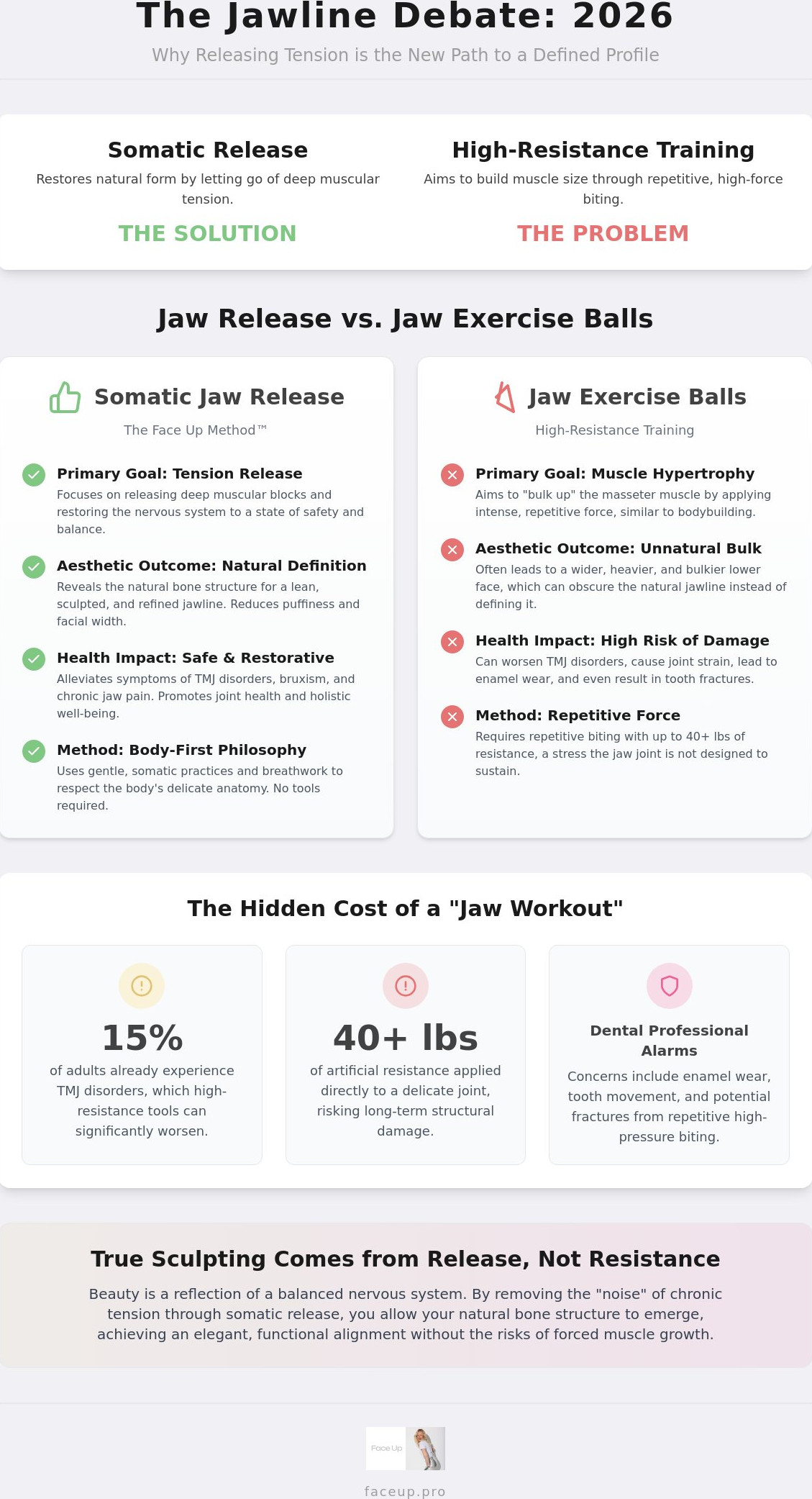
Direct Comparison: Resistance Training vs. Somatic Release for TMJ and Aesthetics
Choosing between jaw release exercises vs jaw exercise ball devices requires an honest assessment of your current physical state. Most individuals seeking a more defined profile are already operating from a state of high tension; they clench during the day and grind at night. In this tense entry state, adding external resistance is like trying to fix a knotted muscle by lifting heavy weights with it. Resistance tools assume the jaw is weak and needs strengthening, but for the modern professional, the jaw is almost always over-active and exhausted.
The results timeline also differs vastly. Resistance training often provides a quick "pump" or masseter growth within weeks, but this peaks early and usually brings significant discomfort. Somatic release works on a compounding curve. As you unlearn tension, the inflammation subsides, and the natural jawline becomes more prominent every month. Safety is perhaps the most stark contrast. While biting tools carry a documented risk of joint displacement and dental fractures, somatic exercises offer a therapeutic benefit that extends to the neck and shoulders. Your hands are the most precise, cost-effective tools you possess, requiring no silicone refills or high-pressure resistance levels.
- Resistance: Increases muscle bulk, risks joint displacement, and applies high dental pressure.
- Somatic Release: Reduces inflammation, restores joint alignment, and remains tool-free and safe.
- Cost: Resistance tools require recurring purchases; somatic release is a lifelong skill.
Which Approach is Right for Your Goals?
Evaluating your mindset is crucial. An "aesthetic-first" approach might tempt you toward quick fixes, but a "health-first" approach ensures those aesthetic gains are sustainable and pain-free. If you currently experience clicking, popping, or chronic earaches, you should strictly avoid resistance balls. These symptoms indicate the joint is already struggling. The Face Up recommendation focuses on a balanced, tension-free face where beauty is a byproduct of functional health rather than forced muscular growth.
The Verdict on Jaw Balls in 2026
The beauty industry in 2026 has largely moved away from aggressive external tools in favor of somatic health. Professional practitioners now favor methods that respect the body's internal signals rather than overriding them with force. If you're looking for guidance on manual aids that support this transition, Choosing the Best TMJ Massage Tool offers a somatic perspective on selecting items that assist release rather than force resistance. The verdict is clear: sustainable facial sculpting begins with the nervous system. Ready to experience the professional-grade alternative? Join the Face Up ecosystem to begin your journey toward a tension-free life.
Creating Your Jaw Release Ritual: The Face Up Approach to Lasting Relief
Establishing a sustainable routine is the final step in moving away from the high-pressure world of resistance tools. When we evaluate the long-term impact of jaw release exercises vs jaw exercise ball usage, the most successful results come from consistent, gentle rituals rather than sporadic, intense workouts. A ritual isn't just a series of movements; it's a commitment to checking in with your nervous system. By replacing the bite-force of a silicone ball with the precise touch of the Face Up Method™, you create a environment where your jaw can finally rest. This transition requires a structured approach that prioritizes awareness and biological synergy.
Your journey toward a tension-free face follows four foundational steps designed to recalibrate your body's stress response:
- Step 1: Awareness. Throughout the day, identify where you hold tension. Are your teeth touching while you type? Is your tongue pressed against the roof of your mouth? Awareness is the first tool of somatic release.
- Step 2: Breathwork. There is a profound somatic connection between the pelvic floor and the jaw. Using deep, diaphragmatic breathing helps soften both areas simultaneously, signaling safety to the brain.
- Step 3: Manual Release. Utilize gentle intra-oral and extra-oral techniques. By working on the muscles from the inside of the cheek, you reach the deep fibers of the masseter that external tools simply cannot access.
- Step 4: Consistency. Somatic changes happen through repetition. The Face Up App serves as your daily ritual coach, providing guided sessions that ensure you stay on track without the risk of over-training.
The Face Up Jaw Release Course: A Deep Dive
For those seeking a professional-grade transformation, our specialized Jaw Release Course offers an intensive online workshop experience. This program bridges the gap between aesthetic beauty and deep somatic therapy, providing you with the technical knowledge to manage chronic tension independently. It isn't just about "exercises"; it's a comprehensive education in facial anatomy and nervous system regulation. For beauty professionals and bodywork practitioners, this course also offers a path toward Face Up Method Certification, allowing you to bring these life-changing techniques to your own clients.
Daily Rituals for a Sculpted, Pain-Free Face
Integrating these rituals doesn't require hours of your time. A simple 5-minute morning and evening routine can significantly alter your facial profile by reducing chronic inflammation and "softening" a jawline that has become bulky from clenching. The long-term benefits of a Face Up lifestyle extend far beyond the jaw; you'll likely notice reduced headaches, better sleep quality, and a more radiant, relaxed expression. True facial sculpting is an act of care, not a feat of strength. If you're ready to leave the risks of resistance behind, Experience the Jaw Release Course and free your face today.
Embrace a Future of Functional Beauty
The landscape of facial aesthetics has shifted toward a more intelligent, body-first philosophy. We've seen that the choice between jaw release exercises vs jaw exercise ball devices is ultimately a choice between force and flow. While resistance tools prioritize muscle bulk at the cost of joint health, somatic release focuses on unlearning the tension patterns that obscure your natural bone structure. True sculpting is the byproduct of a balanced nervous system and a relaxed masseter muscle.
By choosing non-invasive, somatic techniques used by professional facial sculptors, you protect your dental health and restore functional alignment. You don't have to settle for chronic clicking or facial puffiness. Instead, you can join a global community of practitioners certified in the Face Up Method™ and access daily guided rituals on the Face Up App to sustain your results. It's time to trade high-pressure biting for professional-grade release and lasting relief. Your face deserves a path rooted in safety and sophisticated, global standards of care.
Start your journey to a tension-free face with the Jaw Release Course and rediscover the elegance of a naturally defined jawline. We're ready to help you move forward with confidence and ease.
Frequently Asked Questions
Is a jaw exercise ball safe for people with TMJ?
No, jaw exercise balls are generally not considered safe for those with existing Temporomandibular Joint (TMJ) issues. These devices apply significant repetitive resistance that can displace the articular disc and worsen joint inflammation. For individuals already experiencing clicking or pain, the high-pressure biting mechanics often exacerbate the condition rather than providing relief, potentially leading to chronic dysfunction.
How long does it take to see results from jaw release exercises?
You will often feel an immediate sense of relief and improved mobility after a single session of somatic work. When comparing jaw release exercises vs jaw exercise ball protocols, the aesthetic results of release usually become visible within two to four weeks of consistent practice. As chronic inflammation subsides and the masseter muscle softens, the natural contours of your jawline begin to emerge more clearly.
Can jaw release exercises actually change the shape of my face?
Yes, jaw release exercises can refine your facial shape by reducing masseter hypertrophy and fluid retention. Chronic clenching often makes the lower face appear wider or more square. By releasing this deep-seated tension, you allow the muscles to return to their natural length, which reveals the underlying bone structure and creates a leaner, more lifted appearance without adding artificial bulk.
Why does my jaw feel tighter after using a jaw exercise ball?
Your jaw likely feels tighter because the high-resistance biting has triggered protective muscle guarding or acute inflammation. When an already stressed muscle is forced to work against heavy resistance, it often responds by contracting further to protect the joint. This increased tension is a warning sign that the masseter and temporalis muscles are being over-trained, which can lead to long-term stiffness.
What is the difference between buccal massage and jaw release?
Buccal massage is a specific technique involving manual manipulation from inside the mouth to release the cheek muscles. Jaw release, particularly within the Face Up Method™, is a broader somatic approach that includes buccal work alongside breathwork and nervous system regulation. While buccal massage targets the tissue directly, jaw release aims to recalibrate the neurological patterns that cause the tension in the first place.
Can I do jaw release exercises if I have Botox or fillers?
Yes, you can practice jaw release exercises if you have injectables, though it's essential to wait at least two weeks after your treatment to allow the product to settle. Somatic release can actually complement Botox by helping you unlearn the clenching habits that the neurotoxin is temporarily masking. Always consult with your practitioner to ensure your specific healing timeline allows for manual facial work.
Do I need any special tools for the Face Up Jaw Release ritual?
No special tools are required for the Face Up Jaw Release ritual; your own hands are the most precise instruments for this work. Unlike the requirement for silicone devices in the jaw release exercises vs jaw exercise ball debate, somatic therapy relies on your sense of touch and internal awareness. This makes the practice highly accessible and safe, as you can adjust the pressure based on your body's feedback.
How often should I practice somatic jaw release for best results?
For the best results, we recommend integrating a five-minute jaw release ritual into your daily morning or evening routine. Consistency is key to neurological recalibration. By practicing daily, you help your brain maintain a new baseline of relaxation for the facial muscles. Many users find that using the Face Up App provides the necessary guidance to keep these daily rituals effective and sustainable.


