

The hardest workout isn't always the best for your face; in fact, biting down on high-resistance silicone might be the quickest way to a TMJ flare-up rather than a defined profile. You likely started this journey seeking a sharper, more youthful look, but you have probably noticed that constant clenching leads to more than just a tired jaw. Many people find that these tools cause unnatural masseter bulging, dental strain, or even debilitating headaches. It's exhausting to deal with chronic tension when all you wanted was a more confident reflection, which is why searching for jaw exercise ball alternatives is a vital step for your long-term health.
If you are looking for methods that actually respect your anatomy, you are in the right place. We believe that true facial rejuvenation comes from release and alignment, not brute force. You will discover why mechanical resistance can be risky for your joints and teeth. We will also explore professional somatic practices, such as the Face Up Method, and daily rituals designed to sculpt your jawline while melting away the stress of clenching. It's time to transition from high-impact gimmicks to a sustainable, expert-led routine that leaves you feeling as good as you look.
Key Takeaways
- Understand why high-resistance tools often lead to masseter hypertrophy and joint strain rather than the refined, youthful aesthetic you desire.
- Explore professional-grade jaw exercise ball alternatives like the Face Up Method™ to sculpt your facial architecture without risking dental or joint damage.
- Learn how somatic bodywork and vagus nerve stimulation address the "clench culture" that causes chronic tension and premature facial aging.
- Discover how to implement sustainable daily rituals using the Face Up App to maintain a tension-free and naturally defined jawline.
- Find out how the Jaw Release Course provides a structured, non-invasive path to balancing your nervous system and releasing deep-seated muscular stress.
The Hidden Risks of Jaw Exercise Balls
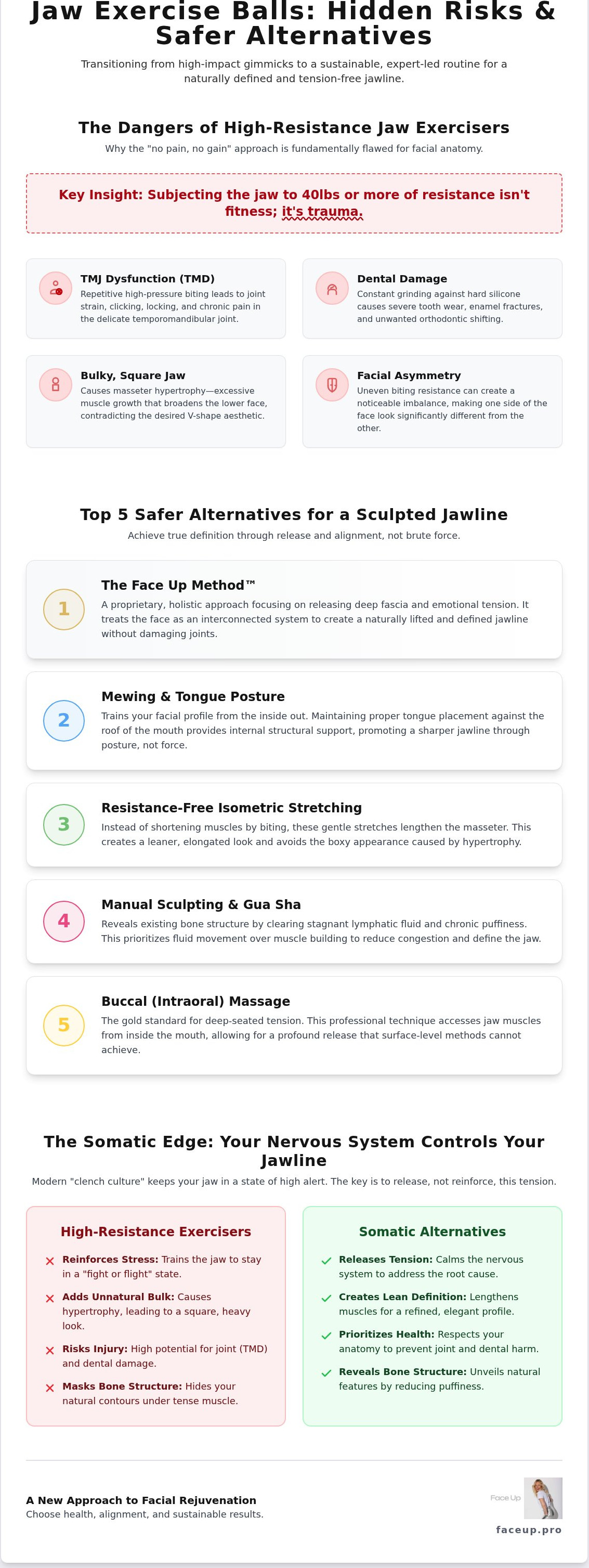
The marketing behind jaw exercisers often relies on a simple, persuasive analogy: your face has muscles, so you should train them like a bicep. This comparison is fundamentally flawed. Unlike your limbs, the jaw is a delicate hinge joint designed for sophisticated, low-resistance tasks like speaking and chewing. Subjecting it to 40lbs or more of resistance isn't fitness; it's trauma. Repetitive, high-pressure biting can quickly lead to Temporomandibular joint dysfunction (TMD), a condition characterized by clicking, locking, and chronic pain. Beyond the joint itself, the dental risks are severe. Constant grinding against hard silicone can cause tooth wear, enamel fractures, and even unwanted orthodontic shifting. These complications are why many people eventually seek safer jaw exercise ball alternatives that prioritize health over high-impact resistance.
Anatomy of a Stressed Jaw
Your masseter and temporal muscles are among the strongest in the human body, but they're also primary tension magnets. In a modern environment, these muscles often stay semi-contracted due to stress. When you use a jaw ball, you aren't just building muscle; you're reinforcing a fight or flight response in your nervous system. This type of repetitive biting is considered a parafunctional habit, similar to bruxism or teeth grinding. It teaches your brain to keep the jaw in a state of high alert. This constant activation prevents the muscles from ever fully lengthening, which is the opposite of the relaxed, elegant profile most users hope to achieve.
Aesthetic vs. Functional Outcomes
While some users see initial changes, the long-term aesthetic impact is often disappointing. Over-exercising the lower face leads to masseter hypertrophy, which is the excessive growth of the primary chewing muscle that broadens the lower face, often resulting in a square silhouette that contradicts the desired youthful V-shape. This bulk often hides the natural bone structure you were trying to reveal. Additionally, uneven biting resistance can create facial asymmetry, making one side of the face look significantly different from the other. True definition comes from removing the "puffiness" of tension and fluid, not by adding bulk to an already overworked muscle group. This realization is a key reason to transition toward professional jaw exercise ball alternatives that focus on structural alignment and somatic release.
Top 5 Safer Jaw Exercise Ball Alternatives for Sculpting
Moving away from the "no pain, no gain" mentality allows for a more refined and sustainable aesthetic. True facial architecture is built on the foundation of healthy tissue and balanced tension, not just muscle bulk. These professional jaw exercise ball alternatives deliver visible results while respecting the delicate anatomy of your lower face.
- The Face Up Method™: This proprietary approach treats the face as a holistic system. It focuses on releasing deep fascia and emotional tension to create a naturally lifted and defined jawline.
- Mewing and Tongue Posture: By maintaining proper tongue placement against the roof of the mouth, you provide internal structural support. This trains your facial profile through posture rather than aggressive external resistance.
- Resistance-Free Isometric Stretching: Instead of shortening the muscle through biting, these stretches gently lengthen the masseter. This creates a leaner, more elongated look that avoids the boxy appearance often caused by hypertrophy.
Manual Sculpting and Gua Sha
Achieving a chiseled profile doesn't always require building more muscle. In many cases, what obscures the jawline is stagnant lymphatic fluid and chronic puffiness. Manual sculpting and Gua Sha are superior jaw exercise ball alternatives because they prioritize fluid movement. By clearing the "congestion" around the jaw, you reveal the bone structure that's already there. This practice is particularly effective for addressing the platysma muscle, which often contributes to "tech neck" and sagging when it becomes tight. When practicing at home, always use a high-quality oil to ensure your tools glide effortlessly. Dragging the skin without enough slip can cause irritation or bruising, which defeats the purpose of a gentle, somatic routine.
The Power of Buccal Massage
If you want to address deep-seated tension, intraoral or buccal massage is the gold standard. This technique involves accessing the jaw muscles from the inside of the mouth, allowing for a total collapse of chronic tension that external gadgets simply can't reach. While chewing balls only tighten the masseter, buccal massage releases it, providing both aesthetic refinement and physical relief. For those looking to master this art at a professional level, pursuing buccal massage training online offers a structured path that far exceeds the results of DIY gadgets. You can also explore foundational release techniques through the daily rituals provided in the Face Up App.
Therapeutic Alternatives for TMJ and Tension Relief
Seeking a chiseled jawline shouldn't come at the cost of your comfort or long-term joint health. For many, the goal isn't just aesthetic; it's finding lasting relief from the persistent ache of a tight jaw. In this context, relaxation is far more productive than exertion. While traditional tools focus on strengthening, professional jaw exercise ball alternatives prioritize the restoration of natural function through release. By shifting the focus from "working out" to "letting go," you address the root causes of tension rather than just masking the symptoms with more intense muscle activity.
Your nervous system plays a decisive role in facial tension. The vagus nerve, a key component of the parasympathetic nervous system, helps regulate your body's ability to rest and recover. When this system is balanced, the muscles of the face and jaw naturally soften. Mechanical massagers often provide temporary relief by vibrating the surface tissue, but they rarely reach the deeper neurological patterns that cause clenching. Somatic therapy offers a more sophisticated solution by retraining the brain to release these patterns. Using a specialized tmj massage tool correctly involves applying gentle, static pressure to the masseter muscle while focusing on slow exhalations, encouraging the tissue to "melt" rather than fight back against the pressure.
Somatic Jaw Release Techniques
Professional Somatic Bodywork
Sometimes, self-care rituals need to be supplemented by expert intervention. During a professional tmj massage therapy session, a practitioner works to release the deep fascia and intraoral muscles that are inaccessible through standard exercise. This isn't a typical spa treatment; it's a targeted session focused on neurological retraining. By guiding the body through specific release sequences, the practitioner helps the nervous system "unlearn" the habit of clenching. These professional jaw exercise ball alternatives create long-term benefits that far outweigh the temporary pump of a facial workout. If you're ready to move beyond DIY gadgets, exploring our Practitioner Directory Listing can connect you with certified experts who specialize in the Face Up Method™ and somatic bodywork.
The Somatic Edge: Why Your Nervous System Controls Your Jawline
There's a quiet paradox at the heart of "clench culture": the harder you work your jaw, the older your face tends to look. Chronic tension compresses the soft tissue around the mandible, reduces circulation, and creates a rigid, set quality to the lower face that no amount of muscle definition can counteract. A jaw that's perpetually braced reads as stressed, not sculpted. Releasing that tension, by contrast, allows the face to lengthen naturally, softening the harsh angles that accumulate from years of unconscious clenching.
This is the central insight behind the Face Up Method™, founded by somatic bodywork specialist Olga Newman. True facial rejuvenation isn't achieved by adding more effort; it's achieved by removing the chronic stress patterns that obscure your natural bone structure in the first place. When your nervous system shifts from a sympathetic, high-alert state into a parasympathetic, rest-and-restore mode, the muscles of the jaw, temples, and neck physically lengthen. The face that emerges is one that no jaw exercise ball alternative built on resistance training could ever produce.
Breaking the Clenching Cycle
Most clenching happens in micro-doses throughout the day: a tight email, a difficult meeting, a moment of concentration. These brief contractions rarely register consciously, yet they accumulate into a baseline of permanent tension. Awareness is the first intervention. Begin noticing the state of your jaw every time you sit down at your desk or pick up your phone. Is there space between your back teeth? Is your tongue resting against the roof of your mouth?
That second question matters enormously. The tongue-to-roof resting position, sometimes called the "N position," provides internal scaffolding for the midface without requiring any active effort. It's a passive jawline trainer that works continuously. The Face Up App builds on this foundation with structured five-minute daily reset rituals that guide users through breathwork and somatic release sequences, making consistent nervous system regulation genuinely achievable within a busy schedule.
Defining the Lower Face Holistically
Jaw tension rarely exists in isolation. The deep front line of fascia connects the jaw through the throat, sternum, and hip flexors all the way to the pelvic floor. This is why practitioners trained in the Face Up Method™ often find that clients carrying pelvic floor tension also present with locked, immovable jaws. Addressing only the jaw is like treating a symptom while ignoring its source.
This holistic perspective reframes the entire conversation around jaw exercise ball alternatives. The goal isn't to "fix" a jawline as though it were a broken appliance; it's to nurture the full postural and neurological system that the jaw lives within. Neck alignment, diaphragmatic breathing, and fascial continuity all contribute to the profile you see in the mirror. When these systems are in balance, the face naturally assumes its most refined, relaxed, and youthful expression.
Implementing the Face Up Method™ at Home
Transitioning from mechanical gadgets to manual mastery is more than a change in technique; it's a commitment to long-term facial health. While silicone devices offer a "quick fix" through muscle fatigue, the Face Up Method™ prioritizes the structural integrity of your face. The Jaw Release Course serves as a comprehensive guide for this transition, providing the somatic tools necessary to decompress the joints and lengthen the masseters. For individuals seeking jaw exercise ball alternatives, this course offers a professional-grade education that replaces brute force with anatomical precision, ensuring your results are as healthy as they are visible.
The journey toward a chiseled profile is most effective when integrated into your existing lifestyle. The Face Up App Subscription acts as your daily mentor, guiding you through curated rituals that prevent tension from accumulating. Instead of the high-impact stress of a jaw workout, these rituals focus on neurological retraining and fascial release. You'll learn to recognize the subtle signals of a bracing jaw before they turn into chronic pain or aesthetic bulk. This proactive management is the hallmark of a sophisticated self-care routine.
The Daily Jaw Ritual
Consistency is the quiet engine of facial change. A simple, three-step evening routine can undo the day's "clench culture" and set the stage for overnight recovery. First, begin with gentle manual palpation to soften the tissue. Second, use manual sculpting techniques or a Gua Sha tool to move stagnant fluid away from the jawline. Finally, stabilize the system by checking your tongue posture and neck alignment. This ritual doesn't just sculpt; it signals to your nervous system that the day's stressors are over.
Using the app to track your progress allows you to see how your facial architecture shifts over time. You aren't just looking for a "pump" in the muscle; you're looking for the return of natural symmetry and the disappearance of tension-induced puffiness. This steady, measured approach ensures that your jawline remains defined and youthful without the risk of joint displacement or dental fractures associated with high-resistance tools.
Professional Growth with Face Up
For those who find themselves passionate about these somatic techniques, the path forward extends beyond personal practice. Our facial sculpting certification is designed for beauty professionals, massage therapists, and wellness advocates who want to master the Face Up Method™ at a practitioner level. This program provides deep dives into facial anatomy, lymphatic drainage, and the neurological foundations of somatic bodywork. It's an invitation to join a global community of specialists dedicated to non-invasive rejuvenation.
This path is ideal for professionals who seek to offer their clients a higher standard of care, moving away from temporary topical treatments toward deep, structural changes. By becoming a certified practitioner, you gain access to a proprietary ecosystem of knowledge and a global network of like-minded experts. Whether you are looking to enhance your own routine or start a new professional chapter, we invite you to join the Face Up community and start your jaw release journey today. Your path to a tension-free, naturally defined jawline begins with the first step of somatic awareness.
Embrace a Sustainable Path to Facial Architecture
True facial definition is never the result of brute force. As we have explored, the mechanical stress of biting down on silicone can lead to unintended consequences like TMJ dysfunction and an aged, boxy aesthetic. Shifting your focus toward jaw exercise ball alternatives that prioritize somatic release and nervous system regulation is the most effective way to achieve a chiseled, youthful profile. By addressing the deep front line of fascia and retraining your brain to release chronic tension, you reveal the natural bone structure that high-impact workouts often obscure.
The Face Up Method™ represents a holistic approach to non-invasive beauty, developed by somatic bodywork specialist Olga Newman and utilized by certified practitioners worldwide. It's a system designed to support your anatomy rather than fight against it. Whether you're seeking relief from chronic clenching or a more refined jawline, the tools for transformation are already within your reach. Start your journey to a tension-free jaw with the Face Up App and experience the power of a relaxed, aligned face. You deserve a routine that nurtures your health while delivering the aesthetic results you desire.
Frequently Asked Questions
Do jaw exercise balls actually work for jawline definition?
Jaw exercise balls work by inducing muscle hypertrophy, but this often results in a bulky, square lower face rather than the refined V-shape many desire. While you might see increased muscle size, these tools don't address the lymphatic drainage or postural alignment necessary for a truly chiseled look. For those seeking a more balanced aesthetic, exploring professional jaw exercise ball alternatives like manual sculpting is often a more effective and anatomically respectful choice.
Can jaw exercisers cause TMJ or jaw popping?
Yes, the repetitive, high-pressure biting required by these devices can easily lead to joint strain. The temporomandibular joint is not designed for heavy resistance training. Overloading it can cause the protective disc to slip, resulting in painful clicking, popping, or even a locked jaw. This is why many specialists recommend therapeutic release techniques instead of aggressive mechanical exercise to maintain joint health and facial symmetry.
How can I get a sharper jawline naturally without tools?
You can achieve significant definition by mastering tongue posture and optimizing your neck alignment. Keeping the tongue pressed against the roof of the mouth provides internal support for the midface and jawline. Additionally, manual lymphatic drainage helps clear stagnant fluid that often obscures the underlying bone structure. These methods provide a sustainable way to sculpt the face without the dental or joint risks associated with external resistance tools.
Is chewing gum a safe alternative to jaw exercise balls?
Chewing gum is generally safer than high-resistance balls, but it still carries risks if used excessively. Constant chewing is a parafunctional habit that can overwork the masseters and lead to joint fatigue or headaches. If you're looking for jaw exercise ball alternatives, focusing on somatic release is more productive. It's better to train your jaw to relax and sit in its natural, aligned position rather than keeping it in a state of constant exertion.
What is the best massage technique for a tight jaw?
Intraoral or buccal massage is widely considered the most effective technique for releasing deep-seated jaw tension. By accessing the masseter and pterygoid muscles from inside the mouth, you can achieve a level of release that external massage cannot match. This technique is a core part of the Face Up Method™ and is essential for anyone dealing with chronic clenching. It helps restore the natural length of the muscles for a leaner profile.
How long does it take to see results from somatic jaw release?
Most individuals experience immediate physical relief after their first somatic release session. From an aesthetic standpoint, you'll likely notice reduced puffiness and improved jawline clarity within two to four weeks of consistent daily practice. Unlike the temporary "pump" from exercise, somatic results are cumulative. As your nervous system learns to maintain a relaxed state, the structural changes become more permanent and your facial features appear more balanced and youthful.
Are there any professional treatments for jawline sculpting?
Are there any professional treatments for jawline sculpting?
Stress is a primary driver of masseter hypertrophy, which can fundamentally change your facial shape. When you're stressed, you likely engage in "micro-clenching" throughout the day, which functions like a constant workout for your jaw muscles. Over time, this makes the masseters grow larger and stronger, leading to a wider, more boxy lower face. Somatic practices help break this cycle by teaching your nervous system to stay in a calm, relaxed state.


