
Most facial treatments stop at the skin's surface, but the most profound transformation is held within the muscles of the mouth. You've likely noticed that basic buccal massage courses are saturating the market, yet your clients still struggle with chronic jaw pain and emotional tension that standard techniques cannot reach. It's frustrating to offer generic services when you know your hands are capable of much more. By pursuing a specialized intraoral massage certification, you can finally provide the natural facelift and somatic relief your clients are searching for.
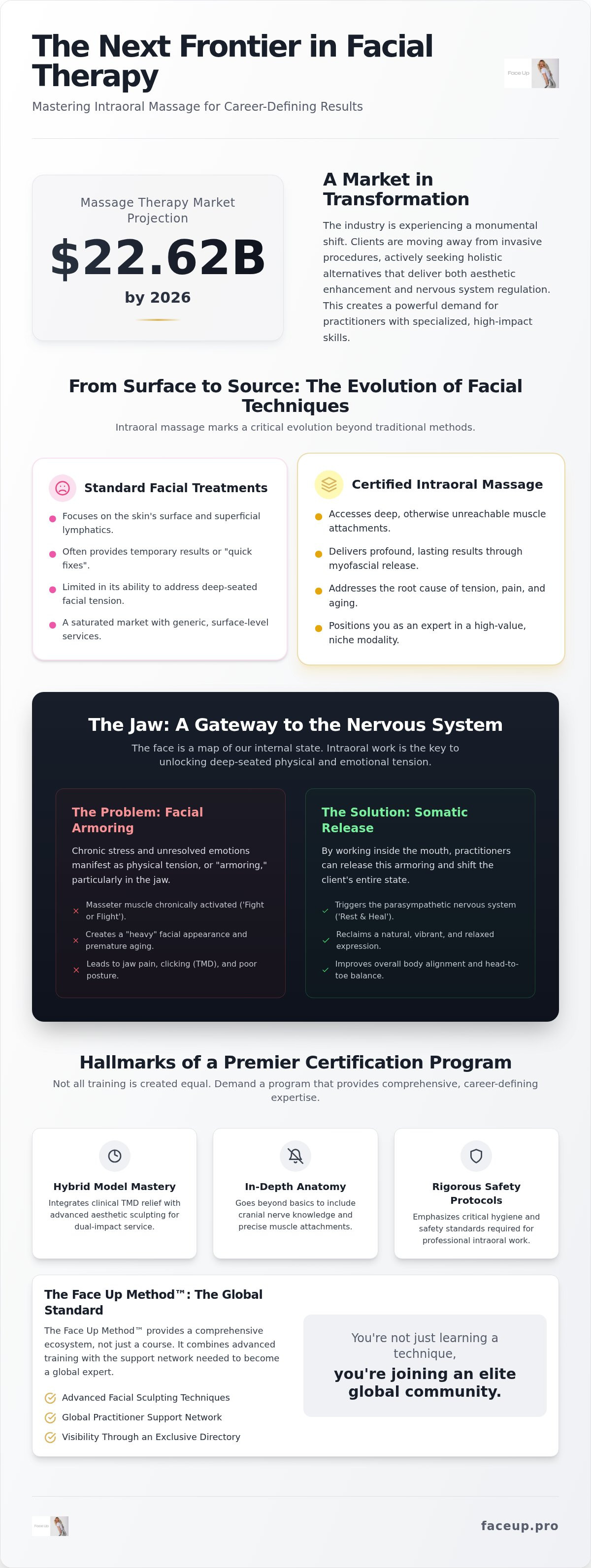
With the massage therapy market projected to reach $22.62 billion in 2026, the demand for niche, high-value modalities has never been higher. This guide explores how to choose a certification that bridges the gap between aesthetic sculpting and nervous system regulation. We will look at the latest 2026 regulatory updates, the emerging trend of neurocosmetics, and how the Face Up Method™ positions you as a global expert in a crowded industry. You'll learn exactly what to look for in a program to ensure you are offering more than just a beauty treatment, but a career-defining somatic experience.
Key Takeaways
- Understand why the shift from surface-level beauty trends to professional intraoral massage certification is essential for practitioners seeking long-term career growth.
- Discover how the jaw acts as a map for the nervous system and how somatic techniques release deep-seated emotional tension alongside physical tightness.
- Identify the critical safety and anatomical standards required for a high-quality program, including cranial nerve knowledge and hygiene protocols.
- Learn how to assess client tension patterns and effectively communicate the profound benefits of internal manual manipulation to your audience.
- Explore the Face Up Method™ as a comprehensive ecosystem that combines advanced facial sculpting with global practitioner support and directory visibility.
Intraoral Massage Certification: Why It Matters in 2026
Intraoral massage is the precise manual manipulation of facial muscles from within the oral cavity. While it gained initial popularity as the "buccal" trend, 2026 marks a turning point where a formal intraoral massage certification is the dividing line between a social media fad and a professional therapeutic practice. Consumers are moving away from invasive procedures, seeking holistic alternatives that provide a natural facelift while regulating the nervous system. This shift reflects a broader market trend where the massage therapy service market is expected to reach $22.62 billion in 2026. Professionals who embrace this specialty, such as estheticians, RMTs, and somatic therapists, find themselves at the forefront of a growing demand for non-invasive, high-impact care.
The Evolution of Facial Sculpting Techniques
Traditional facial massage has historically focused on the skin's surface and superficial lymphatics. Modern practice has evolved into deep tissue intraoral work that utilizes myofascial release to address the root of facial tension. In 2026, the industry is prioritizing "Somatic Beauty" over temporary quick fixes. This approach recognizes that facial muscles hold onto stress and repetitive movements, requiring a deeper level of intervention than surface-level stroking can provide. By working inside the mouth, you can access muscle attachments that are otherwise unreachable, leading to more dramatic and lasting results. It's about releasing the holding patterns that define a person's expression.
Clinical vs. Aesthetic Intraoral Training
Many practitioners struggle to decide between a purely clinical focus or a beauty-centric approach. Clinical training often centers on treating Temporomandibular joint dysfunction (TMD), providing much-needed relief for chronic jaw pain and clicking. However, the most successful practitioners in the current market are those who adopt a hybrid model. This integration is why choosing an intraoral massage certification that balances clinical anatomy with aesthetic artistry is so vital. You'll be equipped to help a client suffering from physical discomfort while simultaneously lifting the cheekbones and defining the jawline. This dual capability makes your service indispensable. It's not just about the mechanics of the jaw; it's about understanding how the structural release of the face contributes to a more youthful, relaxed appearance and improved emotional well-being.
The Somatic Connection: Releasing Emotional Tension through the Jaw
The face is more than an aesthetic surface. It's a dynamic interface for the nervous system. Somatic bodywork suggests that our tissues, particularly the jaw, store unresolved emotional trauma and daily stress. When we clench our teeth, we aren't just engaging a muscle; we're reinforcing a survival mechanism. This is where an intraoral massage certification becomes truly transformative. By accessing the masseter and lateral pterygoid muscles from within, practitioners can trigger the parasympathetic nervous system. This shifts the client from a state of high alert to deep, restorative healing. The 'Face Up' philosophy views the face as a map of the nervous system, where every line and tension point tells a story of the client's internal state. Interestingly, this internal release often correlates with improved body alignment. The jaw's position directly influences the cervical spine, meaning that releasing facial tension can actually improve overall posture and head-to-toe balance.
Why Your Clients Are Storing Stress in Their Faces
The masseter is one of the strongest muscles in the human body. It's also the primary responder during a 'fight or flight' event. Chronic activation of this muscle doesn't just cause physical pain; it leads to a 'heavy' facial appearance and signs of premature aging. Tissues lose their natural elasticity under constant strain, pulling down the features and deepening folds. Facial armoring is the physical manifestation of suppressed stress that creates rigid, mask-like expressions. Addressing this through specialized training allows for a natural rejuvenation that topical treatments simply cannot achieve. By softening these 'armored' areas, you help the client reclaim their natural, vibrant expression while easing the load on their nervous system.
The Practitioner's Role in Emotional Regulation
During a somatic bodywork session, the practitioner acts as a facilitator for the client's internal environment. Deep intraoral work can occasionally trigger unexpected emotional releases. These might manifest as deep sighs, tearing, or a sudden, profound sense of relief. Practitioners must maintain a safe, professional space to hold these experiences with calm efficiency. This level of care requires more than just technical dexterity. It requires intraoral massage certification that emphasizes emotional intelligence and nervous system regulation. When evaluating certification standards, look for programs that prioritize these somatic principles over purely mechanical techniques. This holistic approach is the missing link in traditional training. If you're ready to elevate your practice, consider how the Face Up Method™ can bridge the gap between beauty and deep emotional wellness.
Evaluating Certification Standards: What to Look for in a Program
Choosing the right intraoral massage certification requires a discerning eye. It isn't merely about learning a sequence of movements; it's about mastering the complex landscape of the human face. A high-quality program should provide a deep dive into functional anatomy. This must include a focus on the cranial nerves and precise muscle attachments that govern facial expression and jaw function. Without this foundation, you're simply performing a routine rather than a targeted therapy.
Safety protocols are non-negotiable. Since this work involves contact with mucous membranes, the training must cover strict hygiene standards, proper gloving techniques, and a comprehensive list of contraindications. You should leave the course feeling confident in your ability to protect both yourself and your client. Beyond the technical skills, look for a program that offers a long-term ecosystem. Does it include a Practitioner Directory Listing? Having your name in a global directory helps you stand out in a saturated market and connects you with clients seeking verified, high-end expertise.
Online vs. In-Person Training
Modern buccal massage training online has bridged the gap for global practitioners. High-definition video allows for technique precision that often exceeds what you might see from the back of a crowded workshop room. Digital flexibility means you can learn at your own pace while still receiving the rigorous assessment needed for certification. While in-person workshops are valuable for final somatic refinements, a robust online foundation is often the most accessible entry point for international professionals who value calm efficiency in their learning journey.
Accreditation and Professional Recognition
Verify if the course offers continuing education (CE) credits recognized by your local or national board. For instance, some states require a specific 16-hour endorsement for licensed massage therapists. However, a proprietary "Method" certification, like the Face Up Method™, offers a distinct competitive advantage. It signals to your clients that you've mastered a specific, high-end philosophy rather than just a generic technique. International recognition is particularly important if you plan to practice across different jurisdictions. It ensures your credentials carry weight wherever your career takes you, providing a clear path forward in a specialized professional landscape.
Integrating Intraoral Techniques into Your Professional Practice
Successful integration of these techniques requires more than just manual skill. It demands a shift in how you present your expertise to the world. Once you obtain your intraoral massage certification, your focus shifts toward reading the face as a structural and emotional map. Before the treatment begins, observe the client's resting face for signs of asymmetry or masseter hypertrophy. These physical markers indicate where the nervous system is holding tension. By identifying these patterns during the initial assessment, you can tailor each session to the client's unique holding patterns, moving away from generic protocols that offer only temporary relief.
Communication is essential when introducing such an intimate service to a first-time client. Explain the benefits clearly, focusing on the dual outcome of deep muscular release and a natural, lifted appearance. Position this as a premium "sculptural" service rather than a standard facial. While a single session provides immediate visible results, lasting transformation requires consistency. Building a series of treatments, typically six to ten sessions, allows the muscles to "unlearn" chronic tension and maintain a more youthful, relaxed state. This approach doesn't just improve aesthetics; it fosters long-term client retention by providing a solution that standard massage cannot match.
From Generalist to Somatic Facial Specialist
Rebranding your service menu is the first step in reflecting your new expertise. Move away from generic descriptions and highlight the somatic nature of your work. You can enhance your in-studio results by incorporating specialized tools that support your manual work. For instance, using a tmj massage tool during the external portion of the treatment can help warm the tissues before you move to intraoral work. Marketing this as a "Natural Facelift" allows you to appeal to clients seeking rejuvenation without the need for invasive terminology. It shifts the conversation from "fixing" a problem to "restoring" natural vitality.
The Client Journey: Expectations and Aftercare
The "Face Up" experience is often a revelation for clients. During their first session, they may feel a profound shift as the jaw releases, often describing a sense of lightness that extends through the neck and shoulders. Aftercare is vital to maintain this progress. You can empower your clients by providing guided rituals through the Face Up App Subscription. These app-based exercises ensure they continue to regulate their nervous system between professional visits. By tracking their somatic progress over time, you build a relationship based on measurable well-being and visible refinement. If you're ready to start this journey, apply for the Face Up Method™ certification today and join a global community of specialists.
The Face Up Method™: The Global Standard for Intraoral Excellence
The Face Up Method™ represents a paradigm shift in facial therapy. By merging high-level anatomical precision with intuitive somatic principles, this proprietary ecosystem empowers practitioners to deliver results that transcend traditional beauty standards. Founded by Olga Newman, the method focuses on the profound intersection of muscular release and emotional regulation. It's a career-defining move for those who want to move beyond generic treatments. The intraoral massage certification provided through this program ensures you aren't just performing a technique, but facilitating a deep restorative process. This curriculum is meticulously designed to cover everything from the intricate pathways of the cranial nerves to the nuances of emotional intelligence. It prepares you to handle the complex needs of high-end clients who seek a natural alternative to invasive procedures.
The core of the Face Up Method™ is the 'Jaw Release' ritual. This isn't a mere clinical exercise; it's a somatic experience designed to reset the nervous system. The certification process provides access to an expansive ecosystem of ongoing education, including the Face Up App Subscription. This tool allows you to support your clients' journeys long after they leave your studio. The method itself blends New Zealand-born somatic wisdom with rigorous global aesthetic standards, creating a unique environment for professional growth. It’s this balance of calm efficiency and technical excellence that makes the intraoral massage certification through Face Up the preferred choice for elite practitioners.
How to Start Your Certification Journey
Entering the Face Up Method™ program requires a foundation in professional bodywork or esthetics. The journey begins with comprehensive online modules that establish your theoretical knowledge of facial anatomy and somatic theory. These digital components use high-definition guidance to ensure you grasp every technical detail. Following the theory, you'll undergo practical assessments to verify your technique precision and clinical readiness. This structured approach ensures that every certified practitioner maintains the high standards the brand is known for globally. If you're ready to elevate your practice and join a specialized professional community, you can Join the next Face Up Method™ Certification intake and begin your transformation today.
Lead the Future of Somatic Facial Sculpting
The landscape of facial therapy is shifting toward a holistic model where aesthetic results and emotional well-being are inseparable. By mastering the art of internal release, you move beyond generic trends and provide a service that truly transforms your clients' lives. Choosing a high-standard intraoral massage certification is the most direct path to establishing yourself as a leader in this high-demand, specialized field. It's about offering a deeper level of care that addresses the root of tension rather than just the symptoms on the surface.
The Face Up Method™ offers more than just technical training; it's a gateway into a global community of experts. You'll gain access to proprietary techniques developed by Olga Newman and earn a place in the international Practitioner Directory, ensuring you're visible to clients seeking the highest level of care. This is your opportunity to bridge the gap between beauty and somatic healing with a globally recognised method. By joining this ecosystem, you position your practice at the forefront of the industry's evolution.
Apply for the Face Up Method™ Professional Certification and take the first step toward a career-defining professional journey. Your hands have the power to unlock deep relief and natural radiance for every client you touch.
Frequently Asked Questions
Is intraoral massage legal for estheticians to perform?
Legality varies significantly by jurisdiction and your specific professional license. In states like Washington, licensed massage therapists must obtain a 16-hour endorsement to practice within the oral cavity. Estheticians should verify with their local state board to determine if internal manipulation falls within their scope of practice. Always ensure you have the required intraoral massage certification and appropriate insurance coverage before adding this specialized modality to your service menu.
What is the difference between buccal massage and intraoral massage?
While "buccal massage" often refers to the aesthetic trend of cheek manipulation, intraoral massage is the professional clinical term for manual work performed from within the oral cavity. The Face Up Method™ goes beyond surface-level beauty by integrating somatic principles that address deep muscular holding patterns and nervous system regulation. Choosing a formal certification ensures you understand clinical anatomy and safety protocols rather than just following a temporary social media trend.
How long does it take to get certified in the Face Up Method™?
The Face Up Method™ Certification is a comprehensive 5-day training program designed for high-end practitioners. This timeline allows for a deep dive into facial sculpting, somatic bodywork, and the proprietary "Jaw Release" techniques. The curriculum balances theoretical online modules with rigorous practical assessments to ensure technical precision. Once you complete the requirements, you'll join a global directory of certified experts, marking a career-defining transition into specialized somatic facial therapy.
Can I learn intraoral massage online effectively?
Yes, you can effectively master the foundational techniques through high-definition digital modules. Modern online training platforms provide detailed, close-up views of muscle attachments and manual movements that are often clearer than in-person demonstrations. While advanced somatic refinements benefit from workshops, the core intraoral massage certification curriculum is designed for global accessibility. This allows international professionals to learn at a measured pace while maintaining the highest standards of professional integrity.
Does intraoral massage really help with TMJ pain?
Intraoral techniques are highly effective for managing symptoms of Temporomandibular joint dysfunction (TMD). By accessing the lateral pterygoid and masseter muscles from inside the mouth, practitioners can release tension that external massage cannot reach. This physical release often provides immediate relief from jaw clicking and chronic pain. The somatic approach also helps clients regulate their nervous system, addressing the emotional stress that frequently causes teeth grinding and persistent jaw clenching.
What are the contraindications for intraoral massage therapy?
Safety is paramount when working within the oral cavity. Primary contraindications include active oral infections, cold sores, or recent dental surgeries and extractions. Clients with acute inflammation, severe periodontal disease, or undiagnosed lumps should also avoid treatment. A professional certification program provides a comprehensive screening protocol to identify these risks. Always obtain clear, informed consent and perform a thorough health assessment before beginning any session to ensure client safety and professional decorum.
How much can I charge for a certified intraoral massage session?
Certified practitioners typically position this as a premium sculptural service rather than a standard facial. Pricing often reflects the specialized nature of the skill set and the profound somatic results delivered. Because this modality bridges the gap between aesthetic rejuvenation and clinical relief, it commands higher value in the luxury wellness market. Your rates should align with your local market's high-end service tier and the unique, career-defining expertise you provide as a certified specialist.
Will this certification help me work with clients who have Botox or fillers?
The Face Up Method™ serves as a powerful natural alternative for clients seeking rejuvenation without invasive procedures. For those who already use Botox or fillers, these techniques can complement their results by improving tissue health and circulation. However, you must wait until the injectables have fully settled, usually two to four weeks, before performing deep manual work in those areas. Certification teaches you how to navigate these boundaries safely while helping clients transition toward holistic facial health.


