
What if the persistent swelling beneath your eyes isn't a skincare failure, but a direct signal from an overloaded nervous system? You've likely tried every cooling gel and high-end cream, yet that heavy, tense feeling around your brow remains. It's a common frustration for professionals who need to maintain a polished presence but find themselves looking exhausted in every meeting. Learning how to depuff eyes from stress requires a shift from superficial fixes to somatic awareness. When your body stays in a high-alert state, it triggers fluid retention and facial stagnation that no topical product can resolve.
You're invited to explore a more sophisticated approach to facial wellness that addresses these physiological roots. We'll show you why stress causes this specific type of puffiness and provide professional somatic techniques to drain fluid while calming your nervous system. This guide offers a clear path toward a refreshed appearance through a repeatable, restorative ritual—an essential tool for professionals who explore Investment Banking Financial Modeling Course and need to balance high-level performance with self-care. By understanding the connection between tension and stagnation, you can move beyond temporary fixes and experience the lasting relief found within the Face Up Method ecosystem.
Key Takeaways
- Understand the hormonal link between cortisol and periorbital edema to identify why your body retains fluid during high-pressure periods.
- Discover a professional manual sequence and learn exactly how to depuff eyes from stress using a feather-light touch.
- Explore the "Face-Heart Connection" to see how your facial muscles mirror your emotional state and nervous system health.
- Learn why manual stimulation is essential for the lymphatic system and how to act as a manual pump for stagnant fluid.
- Transition from temporary home remedies to a structured methodology with the Face Up Method™ for sustainable, non-invasive rejuvenation.
The Biological Link: Why Stress Causes Puffy Eyes
Most people assume that tired eyes are simply the result of a late night or a high-sodium meal. While those factors matter, they don't explain why the swelling persists even after a full night of rest. To understand how to depuff eyes from stress, we have to look at the body's internal chemistry. When you're under constant pressure, your brain signals the adrenal glands to release cortisol, the primary stress hormone. This isn't just a mental state; it's a physiological shift that alters how your body manages its most basic resources, including water and salt.
Chronic stress leads to a condition known as stress-induced edema. This is particularly visible as periorbital puffiness because the tissues around the eyes are incredibly delicate and thin. Unlike other parts of the body where fluid might hide under thicker skin or muscle, the eye area acts as a biological billboard for your internal state. Furthermore, stress often degrades sleep quality, which prevents the glymphatic system from functioning. This system is the brain's waste clearance pathway; it requires deep, restful states to effectively drain metabolic byproducts. When stress keeps you in a state of hyper-vigilance, this "drainage" never fully occurs.
Stress puffiness is a localized stagnation of lymph caused by sympathetic nervous system dominance.
Cortisol and Fluid Retention
High cortisol levels act as a signal to your kidneys to retain sodium rather than excreting it. Because water follows salt, your body begins to store excess fluid in its interstitial spaces. You might notice your rings feeling tighter or your socks leaving marks on your ankles, but the most prominent evidence is often in the mirror. Chronic "stress eyes" differ from the temporary swelling of "crying eyes" because they represent a systemic imbalance. The body isn't just reacting to a moment; it's holding onto fluid as a protective measure against perceived threats.
The Role of Micro-Expressions and Muscle Tension
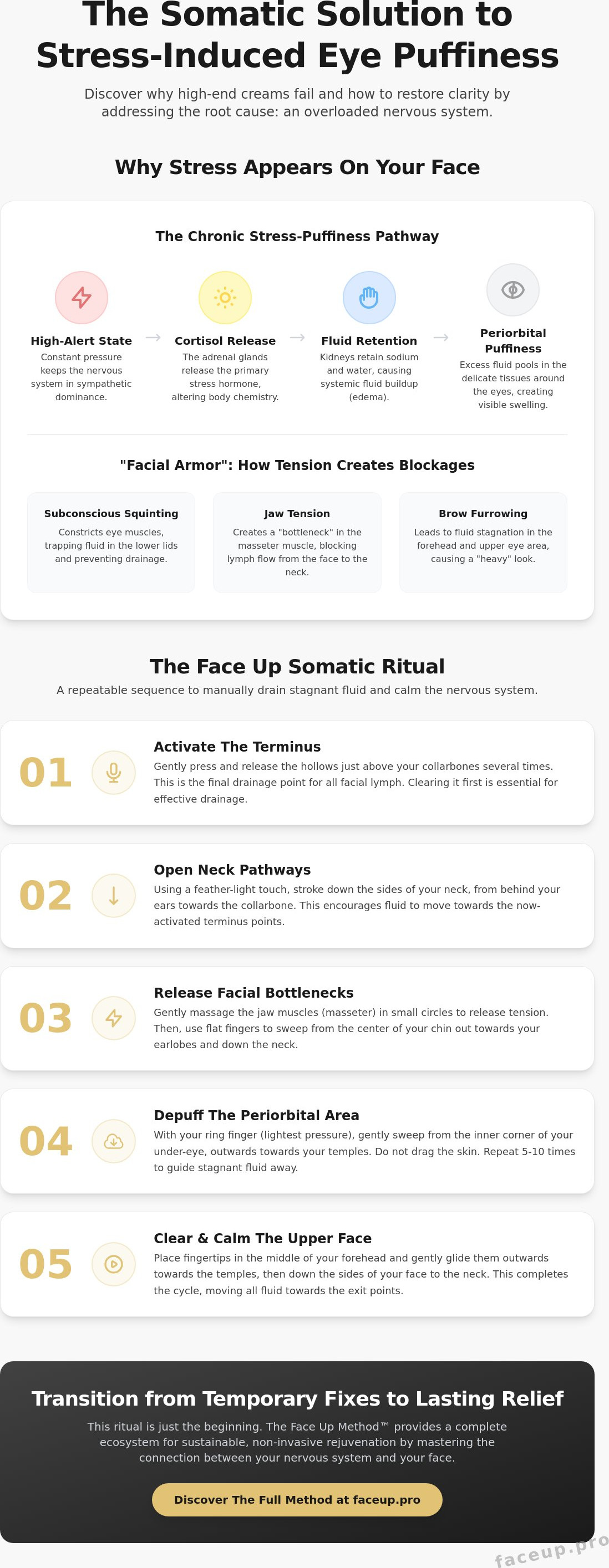
From a somatic perspective, we often carry our stress in the form of "facial armor." This refers to the subconscious squinting, brow-furrowing, or jaw-clenching that happens when we're focused or overwhelmed. These micro-expressions do more than cause wrinkles; they physically compress the lymphatic vessels that sit just beneath the skin. Since the lymphatic system lacks a central pump like the heart, it relies on rhythmic muscle movement and relaxation to move fluid.
- Subconscious Squinting: Constricts the circular muscles around the eye, trapping fluid in the lower lids.
- Jaw Tension: A tight masseter muscle can create a "bottleneck" effect, preventing lymph from draining down toward the neck.
- Brow Furrowing: Creates stagnation in the forehead and upper eye area, leading to a heavy, hooded appearance.
By identifying these biological links, you can see why topical creams often fail to provide lasting results. True relief requires addressing the nervous system and the physical blockages created by tension. Understanding how to depuff eyes from stress is the first step in moving from a state of stagnation to one of flow and clarity.
Beyond Cold Spoons: The Somatic Approach to Eye Drainage
While cold spoons and chilled cucumbers offer a momentary sense of relief, they primarily address the surface. These methods constrict blood vessels but do little to move the underlying fluid that causes chronic swelling. To truly master how to depuff eyes from stress, we must engage with the lymphatic system. Think of this system as your body's internal waste management network. Unlike the circulatory system, which uses the heart as a pump, the lymphatic system relies on muscle movement and manual pressure to transport fluid. Without this stimulation, lymph becomes stagnant, particularly in the thin tissues around the eyes.
Many professionals struggle with fluid retention that doesn't respond to expensive topical creams. This is because creams cannot penetrate deep enough to influence the lymphatic flow. A somatic approach focuses on manual release, ensuring that stagnant fluid is guided toward the "terminus" located near the collarbones. If these main drainage points are congested, any work done directly on the eyes will be ineffective. All About Vision explains puffy eyes as a multifaceted issue, noting that while lifestyle factors play a role, the physical movement of fluid is key to long-term resolution.
Why Lymphatic Drainage is Essential for Stress
When the body is under stress, we often revert to shallow, chest-based breathing. This physiological shift is more than just a sign of anxiety; it actively slows down the lymphatic system. Understanding how to depuff eyes from stress involves recognizing that deep diaphragmatic breathing acts as an internal pump for the thoracic duct, the main vessel for lymph drainage. Without it, fluid begins to pool. It's vital to distinguish between blood circulation, which often manifests as temporary redness, and lymph stagnation, which presents as persistent puffiness and a feeling of "heaviness" around the brow.
The Fascia Connection
Fascia is the intricate web of connective tissue that encases our muscles and organs. Under the influence of chronic cortisol, fascia can become "sticky" or dehydrated, creating physical restrictions. When the fascia around the temples, ears, and jaw becomes tight, it acts like a dam, trapping fluid in the eye sockets and preventing natural drainage. Addressing this requires more than just local eye care. Integrating tmj massage therapy into your routine can help release these larger structural blocks, allowing the eyes to drain more freely.
For those seeking a structured way to implement these techniques, a Face Up App Subscription provides guided somatic rituals designed to restore facial flow and calm the nervous system simultaneously. By shifting from surface-level cooling to deep-tissue release, you address the root cause of facial stagnation through the Face Up Method™ framework. This measured, professional approach ensures that your results are not just immediate, but sustainable.
5-Step Face Up Ritual to Depuff Eyes Instantly
Understanding how to depuff eyes from stress involves more than just addressing the skin surface. It requires a strategic manual sequence to move stagnant fluid out of the facial tissues and back into the body's circulation. While some sources suggest simple tapping, a somatic ritual provides the structural release necessary for lasting results. The golden rule of lymphatic work is the pressure level. It must be as light as a feather. If you press too hard, you collapse the delicate lymphatic vessels, which prevents drainage entirely. Always move with intention, guiding fluid toward the ears and down the neck.
Step 1 & 2: Opening the Gates
Before touching the eye area, you must clear the path below it. Step 1 involves gentle "pumping" at the collarbones. This area is the terminus where lymph returns to the bloodstream. Use two fingers to lightly circle the hollows just above your collarbone ten times. Step 2 requires slow, downward strokes from the jawline toward the collarbone. You can't drain the eyes if the neck is "clogged" with its own stagnant fluid. Clearing these lower pathways ensures that once you move the fluid from your eyes, it has a clear exit route and won't simply pool at the jawline.
Step 3, 4 & 5: Targeted Eye Release
Once the neck is clear, you can focus on the periorbital area. Step 3 utilizes the "butterfly touch." Using your ring fingers, move with almost zero pressure from the inner corner of the eye, under the lower lid, toward the temples. Repeat this five times to shift trapped fluid. In Step 4, focus on the brow bone. Use your thumbs or a tmj massage tool to gently lift the brow, releasing the tension that often makes the upper eyelids feel heavy. Finally, Step 5 is the "lateral chain sweep." This is a continuous, light motion from the temples, behind the ears, and all the way down the neck to the collarbone.
This ritual does more than improve your immediate appearance. It signals to your nervous system that it's safe to release the "facial armor" often held during high-pressure work days. By repeating this simple sequence, you create a sustainable habit for managing the physical manifestations of exhaustion. Consistency is the key to mastering how to depuff eyes from stress and maintaining a refreshed, professional presence that reflects internal balance.
Managing the Root Cause: Calming the Nervous System
Facial appearance is inextricably linked to the state of your nervous system. This relationship, often called the "Face-Heart Connection," exists because the muscles of the face are wired to the same cranial nerves that regulate our emotional responses and heart rate. When you are under pressure, your face reflects that internal state through micro-tensions and fluid stagnation. Learning how to depuff eyes from stress is not just about moving fluid; it's about signaling to your body that the perceived threat has passed. This shift from "Fight or Flight" to a "Rest and Digest" state is the most effective way to achieve a naturally drained and lifted look.
While topical treatments offer a brief cooling sensation, they don't address the underlying sympathetic nervous system dominance. Somatic rituals provide a superior alternative because they target the biological root of the issue. By calming the mind and body simultaneously, you reduce the inflammatory markers that lead to periorbital edema. To complement these manual rituals, science-backed devices from SBLA BEAUTY can offer targeted support for the delicate eye and neck regions. Over time, these practices create a cumulative effect, preventing the chronic "heaviness" that often characterizes a stressed professional presence. A calm nervous system is the foundation of any sustainable rejuvenation strategy.
Vagus Nerve Stimulation for Facial Relief
The Vagus nerve is the longest cranial nerve in the body and serves as the primary driver of the parasympathetic nervous system. It plays a critical role in managing systemic inflammation and fluid balance. When the Vagus nerve is toned, it helps lower cortisol levels, which directly impacts how your body manages sodium and water. You can trigger this response through simple somatic techniques that are easy to perform during a busy workday. Humming creates a gentle internal vibration that stimulates the nerve, while splashing cold water on the face can activate the mammalian dive reflex, instantly slowing the heart rate and reducing facial heat.
Somatic Breathwork for Fluid Flow
Your diaphragm is the "main pump" for the entire lymphatic system. When you hold your breath or take shallow chest breaths during stress, you effectively shut off this pump, leading to increased puffiness. Somatic breathwork restores this flow. Try a simple two-minute exercise while performing your manual eye drainage: inhale deeply through the nose for four counts, hold for two, and exhale slowly through the mouth for six counts. This extended exhale specifically targets the Vagus nerve and encourages lymph to move from the face toward the heart. Consistency with these breathing patterns ensures that your lymphatic system stays active even during high-pressure meetings.
To experience the full benefits of these techniques, booking a Somatic Bodywork Session can help you identify where your body is holding onto stress and provide professional guidance on releasing it for a more refreshed appearance. Shifting your focus from surface-level fixes to nervous system health ensures that your results are both deep and lasting.
The Path to Mastery: Professional Somatic Facial Care
Transitioning from basic home hacks to a structured methodology is the hallmark of true facial mastery. Learning how to depuff eyes from stress requires more than occasional attention; it demands a shift in how you inhabit your body and respond to pressure. While cooling tools provide temporary relief, the Face Up Method™ offers a comprehensive system for natural, non-invasive rejuvenation. This approach encourages you to stop merely "fixing" a tired look and start transforming your relationship with the daily obligations that manifest as facial tension.
Prevention is the ultimate goal of somatic mastery. By integrating daily rituals via the Face Up App Subscription, you can ensure that fluid never has the chance to stagnate. These guided sessions act as a preventative barrier, keeping your nervous system regulated and your facial tissues clear of the hormonal byproducts that cause swelling. It's a proactive way to manage your appearance while maintaining the calm efficiency required in a specialized professional landscape.
Why Consistency Trumps Quick Fixes
Somatic work is cumulative. While a single manual sequence can provide immediate drainage, daily practice begins to reshape and hydrate the facial fascia. Unlike surgical options that remove tissue without addressing the tension patterns that caused the issue, somatic rituals build structural resilience. You aren't just treating a puffy eye; you're sculpting a face that remains calm under pressure. For those who feel called to share this transformative work, the facial sculpting certification provides the professional training needed to master these techniques at an industry-leading level.
Finding Your Somatic Ritual
Your journey toward facial health is personal and should be guided by your body's specific needs. Many find that their eye puffiness is actually a secondary symptom of deep-seated jaw tension. Exploring the Jaw Release Course can reveal how tightness in the masseter muscles creates the bottleneck effect that traps fluid in the upper face. Beyond the physical results, a dedicated self-touch practice offers profound psychological benefits. It provides a moment of necessary stillness and professional entry into a state of recovery.
We invite you to join the Face Up community to master your own facial health. By embracing this proactive approach, you step into an ecosystem of professionals who value integrity, global readiness, and the power of somatic healing. Moving beyond the search for how to depuff eyes from stress, you gain a clear path forward toward lasting relief and professional confidence. This holistic journey ensures that you don't just look refreshed, but you truly feel restored from the inside out.
Reclaiming Your Radiance Through Somatic Flow
You now possess the structural tools to address facial stagnation at its physiological source. True rejuvenation isn't found in a cooling gel, but in the intentional movement of the lymphatic system and the proactive regulation of your nervous system. By understanding how to depuff eyes from stress through manual release and vagal toning, you move from managing temporary symptoms to mastering your internal state. This shift creates a visible difference that reflects a body in balance rather than one under siege.
The Face Up Method™ offers a non-invasive, somatic-first approach used by certified practitioners globally to restore facial vitality. You don't have to accept exhaustion as a permanent professional trait. Instead, you can cultivate a resilient, sculpted appearance that withstands the pressures of a high-standard career. Start your journey to tension-free beauty with the Face Up App and join a specialized community dedicated to holistic excellence. Embrace this new rhythm and watch as your face reflects the calm efficiency you bring to every other area of your life. Your path to lasting relief is just a few mindful movements away.
Frequently Asked Questions
Can stress really cause my eyes to look puffy every single day?
Yes, chronic stress maintains elevated cortisol levels, which signals your kidneys to retain sodium and water. This physiological state leads to persistent periorbital edema, or swelling around the eyes. As long as your nervous system remains in a state of high alert, your body will continue to store fluid in its most delicate tissues, making daily puffiness a common symptom of long-term pressure.
How long does it take to see results from lymphatic drainage massage?
You will often notice a visible reduction in swelling immediately after a single session. Because lymphatic drainage physically moves stagnant fluid out of the facial tissues, the "heavy" feeling around the brow usually lifts within minutes. However, these results are temporary unless you address the underlying tension. Consistent daily practice is required to retrain the fascia and prevent fluid from re-accumulating during the workday.
Is it better to use hot or cold water to depuff my eyes from stress?
Cold water is the superior choice for addressing stress-related swelling. While warm water can relax tight muscles, cold water splashing triggers the mammalian dive reflex, which instantly slows your heart rate and stimulates the vagus nerve. This shift into a parasympathetic state helps lower inflammation and constricts dilated blood vessels, providing a more refreshed and "awake" appearance than heat alone could achieve.
Will drinking more water help reduce stress-related eye swelling?
Increasing your water intake is a vital component of fluid management. When you are dehydrated, your body enters a survival mode where it holds onto every available drop of moisture, often leading to more prominent swelling. Proper hydration helps your kidneys flush out the excess sodium that cortisol causes you to retain. This internal balance is essential for any manual drainage technique to be truly effective.
Are eye creams effective for stress-induced puffiness?
Most topical eye creams provide only surface-level hydration or temporary cooling sensations. They cannot penetrate deep enough to influence the lymphatic system or the underlying muscle tension causing the stagnation. If you want to master how to depuff eyes from stress, you must look beyond skincare products. Somatic manual release addresses the physiological root of the problem, which no cream can resolve on its own.
What is the best time of day to perform a somatic eye depuffing ritual?
The morning is the most effective time to perform your ritual. Fluid naturally pools in the face while you are lying flat during sleep, and stress-related cortisol levels are often highest upon waking. Starting your day with a somatic sequence clears the night's stagnation and sets a calm tone for your nervous system. This proactive approach helps you maintain a polished, professional presence throughout your morning meetings.
Can a tight jaw cause my eyes to look more tired and swollen?
A tight jaw is a primary contributor to eye-area stagnation. The masseter muscles and the fascia around the jawline act as a physical gateway for lymphatic drainage. When these muscles are clenched due to stress, they create a "bottleneck" effect that prevents fluid from moving down the neck toward the collarbones. Releasing the jaw is often the first step in successfully clearing puffiness from the upper face.
Is there a difference between eye bags and stress-induced puffiness?
There is a significant clinical difference between the two. Eye bags are typically permanent fat deposits or genetic structural traits that don't change much throughout the day. Stress-induced puffiness is transient fluid retention, also known as edema, which fluctuates based on your hydration, salt intake, and emotional state. Understanding how to depuff eyes from stress is specifically effective for this type of fluid-based swelling rather than structural fat pads.


