

What if the fine lines and chronic headaches you're fighting aren't just signs of aging, but a physical map of every stressor you've encountered this year? Most high-performers don't realize their face acts as a somatic record of their nervous system state. If you find yourself constantly clenching your jaw or feeling stuck in a stressed expression, you're likely carrying more than just physical fatigue. It's frustrating to feel like your face no longer reflects your inner vitality. This guide introduces you to professional facial tension release exercises designed to dissolve these deep-seated patterns once and for all.
You'll learn how to use the Face Up Method™ to achieve immediate physical relief and a more relaxed, youthful appearance. We'll explore the science of somatic rituals, explain how to identify your specific emotional triggers, and show you how to rewire the brain-to-muscle connection for lasting calm. This isn't about temporary fixes; it's about a professional path to reclaiming your natural radiance and releasing the weight you've been carrying. By understanding the connection between your emotions and your anatomy, you can finally move from a state of constant tension to one of effortless, global readiness.
Key Takeaways
- Understand how the mimetic muscles store emotional records and why true relaxation requires a professional somatic feedback loop.
- Discover why the Face Up Method™ utilizes facial tension release exercises to focus on sculpting and release rather than the repetitive muscle building found in traditional face yoga.
- Master the five-step Face Up Daily Ritual to prepare your nervous system and achieve immediate physical relief from chronic clenching.
- Explore advanced buccal techniques that address deep-seated tension from the inside out, specifically for those struggling with jaw-related stress and TMJ.
- Learn how to integrate these practices into a busy lifestyle using the Face Up App to ensure consistent, high-standard results and a more youthful appearance.
The Science of Facial Tension: Why Your Face Feels "Stuck"
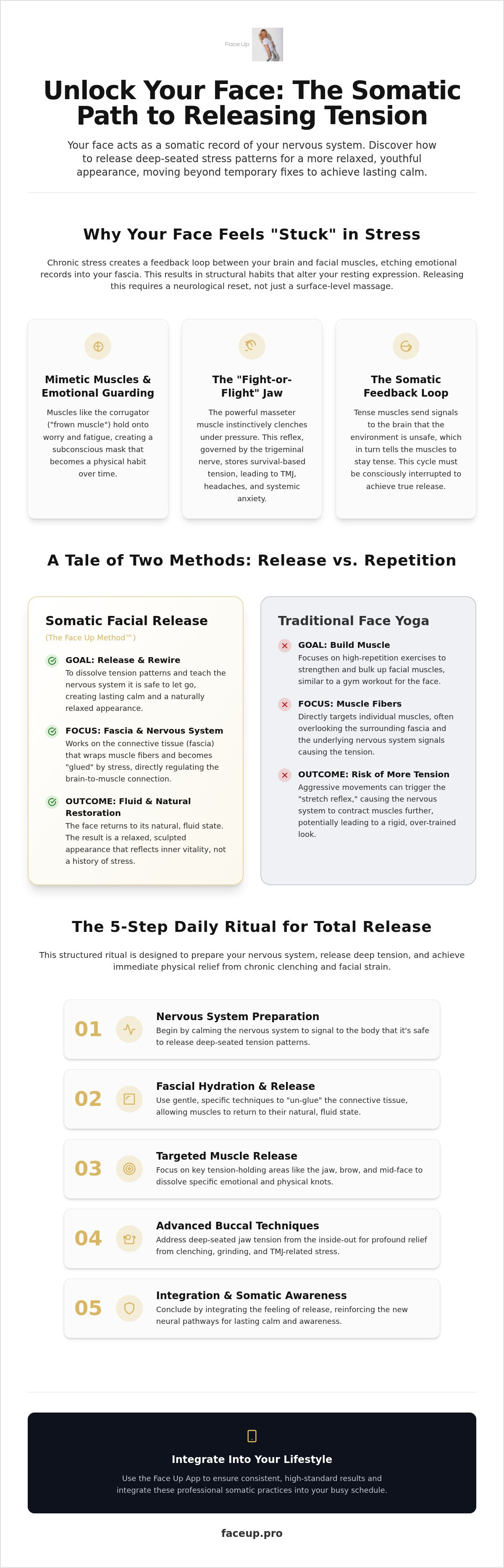
Your face is a living landscape of your emotional history. It doesn't just express how you feel; it stores it. This creates a somatic feedback loop where the nervous system and facial muscles communicate in a continuous cycle. When you experience stress, your brain signals your muscles to contract. Over time, if the stress remains unresolved, those muscles send a signal back to the brain confirming that the environment is still unsafe. This is why facial tension release exercises are more than a beauty routine; they're a neurological reset.
Many people find that Progressive muscle relaxation helps the body, but the face requires a more nuanced approach. Standard techniques often fail because they don't address the specific muscular memory held within the delicate mimetic layers. These muscles are unique because they attach directly to the skin, meaning "stress face" eventually becomes a structural habit that alters your resting expression. It's a pattern that requires a professional somatic intervention to break.
The Fight-or-Flight Response in Your Jaw
The masseter muscle is one of the strongest in the body and serves as the primary storage site for survival-based tension. When you're under pressure, your jaw clenches instinctively. This action is governed by the trigeminal nerve, which acts as a direct line to your brain's anxiety centers. Somatic facial tension is a protective nervous system reflex. By working with the Face Up Method™, we can interrupt this signal. This prevents chronic clenching from manifesting as systemic anxiety or tension headaches, providing a clear path forward for your physical well-being.
Mimetic Muscles and Emotional Guarding
Your mid-face and brow often bear the brunt of "emotional masking," the subconscious effort to maintain a composed exterior during internal turmoil. The corrugator supercilii, or the "frown muscle," is frequently linked to intense mental fatigue and chronic worry. The Face Up Method™ differentiates between surface relaxation and deep somatic release by targeting these specific points of emotional guarding.
- Emotional records: Chronic emotions like worry or anger become etched into the fascia over years.
- Structural habits: Repeated contractions lead to a "stuck" appearance that persists even when you're resting.
- Professional release: Effective facial tension release exercises must reach the deeper layers of tissue where these memories reside.
Somatic Facial Release vs. Traditional Face Yoga
While the popularity of "facial fitness" continues to rise, there's a fundamental difference between building muscle and releasing tension. Traditional face yoga often relies on repetitive, high-tension movements that mimic a gym workout. However, for a professional seeking a relaxed and youthful appearance, this approach can sometimes trigger a protective reflex known as the stretch reflex. When a muscle is stretched too aggressively or tensed repeatedly, the nervous system responds by contracting it further to prevent injury. By contrast, the Face Up Method™ prioritizes somatic exercises for facial muscles that focus on awareness and nervous system regulation rather than brute strength.
The core of the somatic difference lies in addressing the fascia. Fascia is the connective tissue that wraps around every muscle fiber, and in the face, it can become "glued" in place by chronic stress. While traditional exercises target the muscle fibers, somatic facial tension release exercises work to hydrate and release the fascia. This allows the face to return to its natural, fluid state rather than feeling "stuck" in a rigid, over-trained mask. By focusing on the quality of movement rather than the quantity of repetitions, we invite the nervous system to let go of its protective guarding. This shift is essential for those who find that standard exercises only leave their face feeling tighter.
The Problem with Repetitive Face Exercises
Repeating the same strenuous movements can lead to "over-recruitment" of muscles that are already overactive. For example, trying to strengthen the forehead while the brow is already tense from mental fatigue can deepen expression lines rather than smoothing them. We want to transition from "facial fitness" to "facial release." This shifts the focus from building bulk to restoring the natural length and elasticity of the mimetic muscles, ensuring your face looks rested rather than strained.
Why Somatic Sculpting is the Natural Alternative
Somatic sculpting offers a sophisticated path to rejuvenation by working with your body's existing anatomy. By relaxing the muscles that pull the face downward, such as those at the corners of the mouth, we create a natural "lift" without the need for invasive procedures. Softening the brow and releasing the jaw allows the face to settle into a more symmetrical, youthful state. Those looking to begin this journey can explore the Face Up Method™ to discover a proprietary approach to natural beauty and lasting relief.
The Face Up Daily Ritual: 5 Exercises for Total Release
The Face Up Daily Ritual is a structured sequence designed for the modern professional who needs to transition from high-stakes focus to restorative calm. Before beginning these facial tension release exercises, it's vital to prepare your nervous system. Sit with a tall, neutral spine and take three deep, diaphragmatic breaths. This simple act signals safety to the brain, allowing the muscles to move out of a defensive state. We operate on the "Less is More" principle. Using a feather-light touch is often more effective than deep pressure because it bypasses the body's natural guarding response. Acknowledging the various causes of facial tension helps you approach these movements with the necessary mindfulness and professional intent.
1. The Cranial Sweep: Releasing the Scalp Foundation
Scalp tension, specifically within the epicranius muscle, often acts as a hidden anchor that keeps facial tension in place. If the scalp is tight, it pulls the forehead upward, creating a heavy brow and persistent worry lines. To perform the Cranial Sweep, use your fingertips to apply circular friction across the scalp, or try gentle hair tugging at the roots. This wakes up the fascia and creates a foundation of ease that allows the rest of the face to soften. It's a foundational step that many traditional routines overlook, yet it's essential for a truly relaxed expression.
2. The Jaw Decompressor: Somatic Masseter Release
Chronic jaw clenching is perhaps the most common physical manifestation of professional stress. To release this area, employ the "Soft Tongue" method by resting your tongue gently against the roof of your mouth, just behind the front teeth, without touching them. This action naturally encourages the mandible to drop. You can find the masseter ridge by placing your fingers just below the cheekbone and feeling for the thick muscle that contracts when you bite down. For those struggling with more persistent issues, using a specialized TMJ massage tool can provide the targeted support needed for lasting jaw relief.
3. The Brow Softener and 4. The Eye Circle
The brow and eyes are where we "store" our mental fatigue. To soften the brow, use horizontal somatic smoothing, moving your fingers from the center of the forehead toward the temples with minimal pressure. Follow this with the Eye Circle by placing your warm palms over your closed eyes. This "Palm Press" provides total ocular relaxation, giving the optic nerve a much-needed break from digital strain. These movements don't just smooth the skin; they signal the brain to stop "looking" for problems, allowing for a deeper state of somatic peace.
5. The Neck Lengthener: Supporting the Lower Face
The final step in our ritual targets the platysma, the thin muscle that covers the front of the neck. When this muscle is tight, it pulls the corners of the mouth downward and creates a heavy appearance in the lower face. By gently lengthening the neck and moving the chin slightly upward and outward, you release the tension that contributes to a "stuck" expression. This creates the structural support necessary for a naturally lifted and vibrant appearance. Integrating these steps daily ensures you remain a calm, efficient, and global-ready leader in your professional environment.
Advanced Tension Release: The Jaw and Buccal Connection
While a consistent daily ritual establishes a foundation of ease, the most stubborn patterns of tension often reside in the deeper architectural layers of the face. To achieve a comprehensive transformation, we must move beyond surface-level facial tension release exercises and address the musculature from the inside out. This advanced approach is essential because most conventional guides ignore the complex scalp-to-face tension chain. The jaw acts as the critical pivot point in this chain; if the jaw remains locked, tension from the scalp and neck will continue to migrate back into the face, regardless of how much surface work is performed.
In professional somatic therapy, we also recognize a profound functional link between the jaw and the pelvic floor. Tension held in the masseter and pterygoid muscles often mirrors constriction in the lower body, creating a systemic loop of stress that surface massage cannot fully untangle. Furthermore, chronic clenching acts as a physical dam, obstructing the natural lymphatic drainage of the face. This leads to persistent puffiness around the jawline and a heavy, congested appearance. For a deeper understanding of how to address these specific structural issues, our Ultimate Guide to TMJ Massage Therapy provides a detailed roadmap for restoring balance.
Deep Tissue Release: The Buccal Massage Advantage
Buccal massage, or intra-oral sculpting, is a cornerstone of the Face Up Method™ that allows for unprecedented access to the facial structure. By working from inside the mouth, professional practitioners can directly release the lateral pterygoid muscle, a key player in jaw movement that is impossible to reach through the skin alone. This technique doesn't just offer physical relief; it often facilitates a significant emotional release. Because the jaw is a primary storage site for the "fight-or-flight" response, untangling these deep fibers can provide a sense of profound psychological lightness that radiates throughout the entire body.
The Jaw Release Course: A Specialized Solution
For those navigating chronic TMJ issues, general wellness routines may not provide the specificity required for long-term recovery. This is where a dedicated professional framework becomes indispensable. Our Jaw Release Course offers a structured, 5-step program designed to move you from merely managing pain to actively restoring balance. We focus on rewiring the nervous system's response to stress, ensuring that the relief you experience is both deep and sustainable. If you're ready to transition from temporary fixes to a professional standard of care, you can explore the Jaw Release Course to begin your somatic journey.
Integrating Facial Somatics into Your Professional Life
The Face Up App: Your Daily Somatic Mentor
To support your journey, the Face Up App serves as a daily companion for your facial tension release exercises. The latest version, 16.0.0, offers a unique environment where you can access guided rituals tailored for morning energy or evening decompression. This isn't just a utility; it's a gateway to a specialized community of professionals committed to natural rejuvenation. By tracking your progress within the app, you'll notice your somatic awareness grow, allowing you to catch and release tension before it becomes a structural habit. It provides a reliable, high-standard framework for maintaining the results achieved during professional treatments.
Mastering the Method: Professional Certification
The shift toward non-invasive, holistic wellness has led many beauty therapists and health professionals to seek specialized training. The Face Up Method™ certification is CPD-accredited and offers a clear path for professional advancement in the somatic beauty industry. Our founder, Olga Newman, has treated over 2,000 faces, and her proprietary method now supports a global network of over 600 certified practitioners across the UK, Canada, Europe, Australia, and New Zealand. Adding this method to your practice allows you to offer deep, science-based results that move beyond surface-level aesthetics. Professionals interested in this evolution can explore our Facial Sculpting Certification Guide to learn how to join this established ecosystem.
For those seeking in-person support, our global practitioner directory makes it simple to find a certified expert in your city. These specialists provide the high-standard, somatic bodywork sessions required to address deep-seated patterns that daily facial tension release exercises might not fully reach. Whether you are a student of the method or a professional seeking to expand your jurisdiction, the Face Up ecosystem provides the order, reliability, and community needed for a well-governed journey toward lasting radiance.
Reclaim Your Natural Radiance through Somatic Mastery
Trusted by certified somatic practitioners worldwide, this non-invasive approach was developed by Olga Newman to help you reclaim your face from the effects of systemic anxiety. Whether you're addressing deep-seated jaw clenching or seeking a more relaxed brow, the journey toward global readiness begins with a single, intentional step. You don't have to navigate this process alone. Download the Face Up App for your daily 10-minute ritual and join a global community of professionals who value order, reliability, and natural rejuvenation. Your face is a map of your potential; it's time to ensure it reflects your inner strength and vitality.
Frequently Asked Questions
Can facial exercises really release emotional trauma?
Yes, somatic practices address the nervous system records held within your mimetic muscles. The face stores emotional records as physical patterns of tension. By performing facial tension release exercises, you signal safety to the brain, which helps process stored stress. This isn't just about surface relaxation; it's about interrupting the feedback loop between your physical state and your emotional history to foster a deeper sense of internal peace.
How long does it take to see results from facial tension release exercises?
You will likely feel immediate physical relief after your first session. However, visible aesthetic results and structural shifts in your resting expression typically become more apparent within three to four weeks of consistent practice. The Face Up Method™ is designed for cumulative benefit, where daily rituals using the Face Up App help rewire your brain-to-muscle connection, leading to a more relaxed and youthful appearance over time.
Will releasing my jaw tension help with my tension headaches?
Releasing jaw tension is highly effective for reducing headaches originating in the scalp and neck. The masseter muscle is neurologically linked to the trigeminal nerve and the epicranius muscle of the scalp. When you soften the jaw, you remove the primary anchor of tension that often pulls on the forehead and temples. This holistic approach addresses the root cause of the discomfort rather than merely managing the temporary symptoms.
Is the Face Up Method™ safe for people who have had dental work?
The Face Up Method™ is safe for most individuals with dental work because it emphasizes a gentle, feather-light touch. Unlike aggressive facial exercises, our approach avoids placing undue strain on the jaw joint or teeth. However, if you have had recent dental surgery or have active orthodontic appliances, we recommend consulting your dentist before beginning the buccal (intra-oral) techniques to ensure your specific recovery plan is fully respected.
What is the difference between face yoga and somatic facial sculpting?
The primary difference lies in the objective: face yoga typically focuses on repetitive muscle building, while somatic sculpting focuses on tension release and fascia hydration. Repetitive workouts can sometimes lead to over-recruited muscles and increased strain. The Face Up Method™ uses awareness-based movement to lengthen and soften the muscles, resulting in a naturally lifted look that comes from relaxation rather than building bulk in already tense areas.
How often should I perform these facial release rituals?
We recommend performing your facial release rituals once a day for approximately 10 minutes. Consistency is more important than duration when it comes to regulating the nervous system. The Face Up App offers guided morning and evening sessions to help you integrate these facial tension release exercises into your professional schedule. This daily commitment ensures that the cumulative benefits of somatic work are maintained between your deeper professional treatments.
Can I do these exercises if I have active TMJ pain?
You can perform these rituals with active TMJ pain, provided you follow the "less is more" principle. The goal is to bypass the body's protective guarding reflex, so you should never push into sharp pain. For those with chronic issues, our Jaw Release Course provides a specialized, 5-step program that moves you safely from acute discomfort toward restored balance and functionality without triggering further inflammation.
Do I need special tools to perform the Face Up Method™ rituals?
No specialized tools are strictly required to begin the Face Up Method™ rituals, as your hands are your primary instruments. However, incorporating a professional-grade TMJ massage tool can enhance your results by providing targeted pressure that is difficult to achieve with fingertips alone. These tools are particularly helpful for reaching the deeper masseter layers and are often recommended as companions to our advanced jaw release and buccal techniques.


