
What if the secret to a lifted, vibrant face isn't found in a needle, but in the release of the deep muscular tension you've carried for years? As we move through 2026, many people are feeling a shift in perspective, moving away from the "frozen" look of the past toward a more somatic, sustainable approach to aging. You might feel that your regular injections aren't delivering the same results, or perhaps you're simply tired of the cycle of chemicals and the loss of your natural expression. When weighing facial sculpting vs botox, it's essential to understand whether you want to temporarily mask the signs of aging or address the structural and emotional causes beneath the surface.
We agree that your beauty routine should feel like a ritual of care rather than a clinical obligation. This guide will clarify the fundamental differences between manual facial sculpting and traditional injectables, helping you align your choices with your long-term wellness goals. We'll explore how these two methods impact your skin health, facial tension, and overall appearance, providing you with a clear roadmap to a naturally rejuvenated version of yourself.
Key Takeaways
- Understand the core difference between using neurotoxins to mask symptoms and employing deep muscular release to address the structural causes of aging.
- Gain insight into the biological impact of your choices, specifically the risk of muscle atrophy versus the benefits of building long-term facial fitness.
- Compare the aesthetic outcomes of facial sculpting vs botox to determine if you prefer a temporary smooth finish or a sustainable, vibrant glow.
- Assess your personal beauty goals to decide between the quick results of injectables and the cumulative health benefits of somatic rituals.
- Discover how professional approaches like the Face Up Method™ offer a holistic path to reducing chronic tension and achieving a naturally lifted appearance.
Defining the Approaches: Manual Facial Sculpting vs Botox
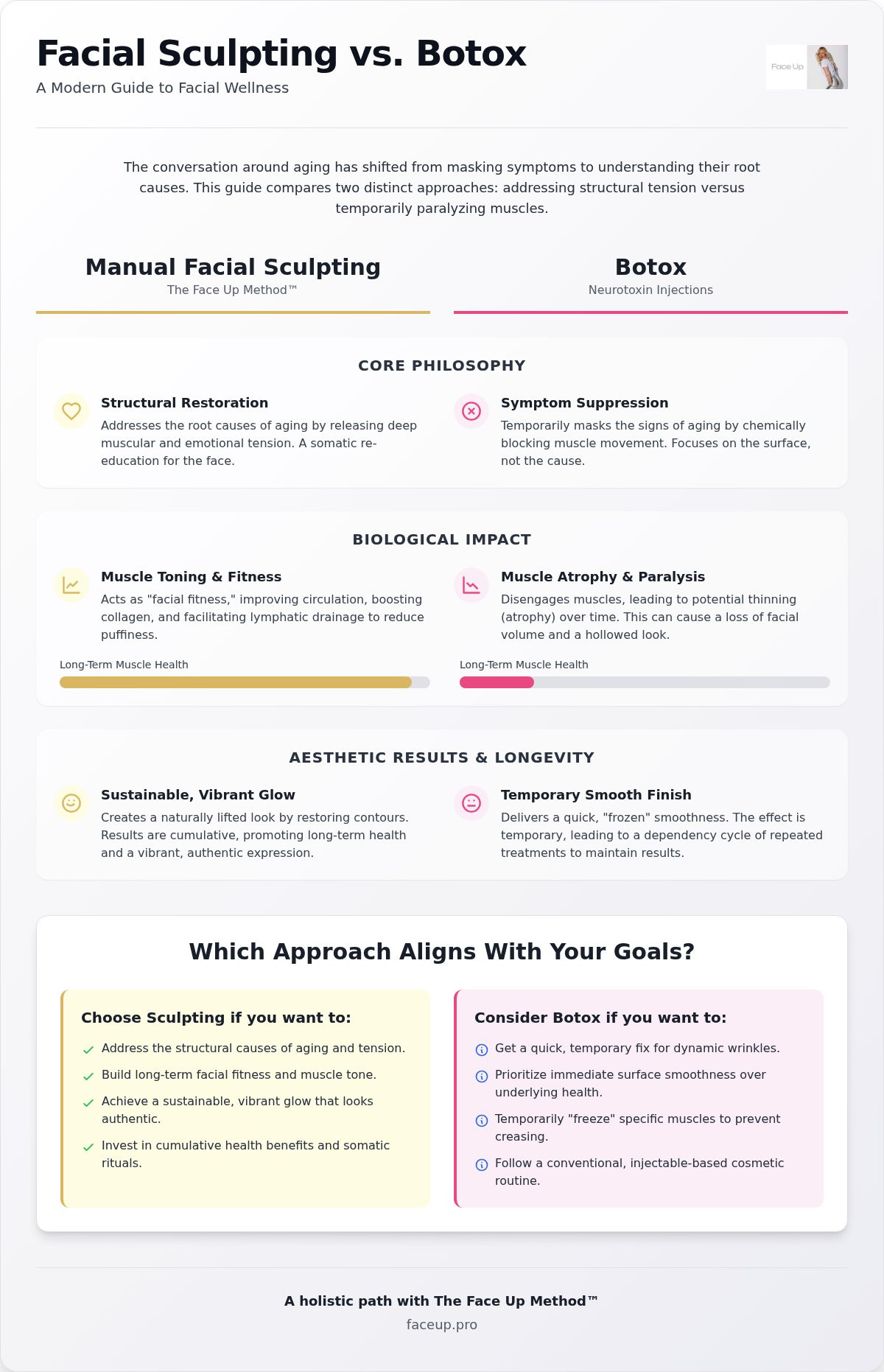
In 2026, the conversation around aging has shifted from simply "erasing" lines to understanding the "why" behind them. The decision between facial sculpting vs botox represents more than just a preference for needles or hands; it's a fundamental choice between symptom suppression and structural restoration. While one offers a chemical pause for the muscles, the other provides a somatic re-education for the entire facial structure. This move toward functional beauty reflects a growing desire for routines that respect the body's natural mechanics rather than overriding them.
Botox is a cosmetic application of Botulinum toxin, a potent neurotoxin that has dominated the aesthetic industry for decades. It functions by intercepting the communication between your nerves and your muscles. When you choose this path, you're opting for a temporary "freeze" that prevents the skin from folding during movement. It's a top-down approach where the primary goal is the immediate smoothing of the surface, often without addressing why the tension existed in the first place.
Manual facial sculpting, particularly through the Face Up Method™, operates on an entirely different philosophy. Instead of silencing the muscle, this technique engages with it. It focuses on deep muscular and emotional tension, working to release the "holding patterns" that cause the face to sag or tighten over time. Individuals comparing facial sculpting vs botox are increasingly prioritizing this "clean" approach because it encourages the tissue to heal and lift naturally, creating a look that's both vibrant and authentically yours.
How Botox Works on the Nervous System
Botox acts by blocking the release of acetylcholine, the neurotransmitter responsible for triggering muscle contractions. By doing so, it induces a state of temporary paralysis in the targeted area. This effectively softens dynamic wrinkles, such as crow's feet or forehead lines, because the muscle simply can't move enough to create the fold. However, this "frozen" effect means the muscles stop communicating with the nervous system. Over time, this lack of activity can lead to a loss of subtle, natural expression and a change in how you perceive your own facial sensations.
The Mechanics of Manual Facial Sculpting
Manual sculpting targets the fascia, the lymphatic system, and the deep musculature of the face. By applying strategic pressure and movement, practitioners improve blood circulation and encourage natural collagen synthesis. This method doesn't just smooth the skin; it lifts the underlying tissue by releasing what we call "emotional armor." This is the chronic tension stored in the jaw and brow that often makes us look tired or stressed. By addressing these structural blocks, sculpting restores the face's natural contours and promotes a healthy, internal glow that no chemical can replicate.
The Biological Impact: Muscle Atrophy vs. Toning
Choosing between facial sculpting vs botox involves understanding the long-term biological trajectory of your facial tissues. While the immediate smoothing effect of an injection is tempting, the underlying reality of muscle health is often overlooked. Botox works by disengaging the muscle, which, over time, can lead to muscle thinning. In contrast, manual sculpting acts as a form of "facial fitness," strengthening the structural integrity of the face and promoting a defined, naturally contoured appearance.
The role of the lymphatic system is vital in this comparison. When we hold chronic tension, our lymphatic drainage slows down, resulting in facial puffiness and a heavy, "congested" look. Manual sculpting facilitates this drainage, which is why many practitioners observe an immediate sharpening of the jawline and cheekbones following a session. A scientific study on facial massage using CT scans has demonstrated that manual techniques can objectively lift and tighten the skin by engaging the deeper layers of the face. Unlike the static result of an injection, this process restores the face's natural ability to detoxify and maintain its own contours.
The Botox Dependency Cycle
As the body adapts to neurotoxins, many users find they require higher dosages or more frequent appointments to achieve the same result. This dependency cycle often leads to compensatory aging, where untreated muscles overwork to mimic lost expressions, creating new lines in unexpected places. Over decades of consistent use, the resulting muscle atrophy can lead to a significant loss of facial volume, making the face appear hollow rather than youthful. This shift can leave the skin looking thin and fragile, as the underlying muscular support begins to diminish.
Restoring Vitality with Somatic Release
Resetting the nervous system's "tension blueprint" is the core of somatic release. This technique acknowledges that our faces are the primary canvas for our internal emotional state. The Vagus nerve, which regulates our "rest and digest" system, is intricately linked to the muscles we use for social engagement and expression. By working somatically, we don't just smooth a wrinkle; we signal to the body that it's safe to let go of the rigid patterns that cause them. For those struggling with chronic tightness, exploring tmj massage therapy provides a functional benefit that Botox often fails to address.
You can begin exploring these benefits from home by using the Face Up App for daily maintenance, ensuring your beauty routine supports your long-term structural health.
Comparing Results: Aesthetics, Longevity, and Expression
When evaluating facial sculpting vs botox, the visual outcome is often the first thing people notice. Botox delivers that signature "glass skin" look, where the forehead appears perfectly smooth and reflective. It is a highly predictable, clinical result that many find appealing for its immediate impact. Manual sculpting, however, prioritizes a vibrant, oxygenated glow. By moving the blood and lymph, we create a face that looks awake and toned rather than simply quiet. To further support your body's cellular health and oxygen levels, you can check out O2 Be Well. This approach focuses on the lived-in quality of a face that can still move naturally while looking refreshed.
The "Uncanny Valley" is a real concern for many aesthetic consumers in 2026. This phenomenon occurs when the face is so immobile that it loses the ability to project warmth or micro-expressions. Natural expression is a vital part of human connection. While Botox might erase a line, it can also erase the subtle cues that make you approachable. Sculpting allows you to keep your character and communicate emotion without restriction, refining your contours without sacrificing your identity.
The Timeline of Transformation
The speed of results is a major factor in this comparison. Botox requires zero effort; you receive the injection and wait 7 to 14 days for the muscles to settle. It is convenient but temporary, typically lasting 3 to 6 months before the cycle begins again. Manual sculpting offers a visible lift after just one session, but the real magic happens through consistency. It's about building tissue memory and structural change. Using a tmj massage tool as part of your daily ritual helps maintain that structural lift between professional treatments, turning your beauty routine into a cumulative investment.
Addressing TMJ and Jaw Tension
For those seeking a slimmer jawline, masseter Botox is a common choice. It works by shrinking the muscle, but it doesn't address the underlying stress response that causes clenching. Buccal massage, a key component of the Face Up Method™, manually releases the tension from inside the mouth. It addresses the functional cause of the tension while providing a natural slimming effect. While a clinical injection feels like a brief, sharp intrusion, a somatic session provides a profound, warming release of years of held tension.
How to Choose: Is Sculpting or Botox Right for You?
Deciding between facial sculpting vs botox often comes down to your personal values and the relationship you want to have with your body as you age. If you value instant gratification and prefer a clinical intervention, injectables provide a predictable, albeit temporary, path. However, if your health philosophy leans toward avoiding synthetic toxins and prioritizing long-term tissue integrity, a manual approach aligns more closely with those goals. It's a choice between a "quick fix" that silences the muscle and a sustainable beauty ritual that restores the tissue's natural function.
Your lifestyle also plays a significant role in this decision. Botox is an appointment-based solution; you visit a clinic once every few months and largely forget about it until the effects fade. Facial sculpting is more of a journey. While professional treatments are deeply transformative, the most profound results are amplified by daily rituals and somatic awareness. It requires a commitment to your own well-being that goes beyond the skin's surface, asking you to become an active participant in your own rejuvenation.
Some individuals find that a hybrid approach works best for their specific needs. If you choose to use both, timing is the most critical factor to consider. You should wait at least 14 days after receiving any injectable treatment before undergoing a deep manual sculpting session. This waiting period ensures the neurotoxin has properly settled into the targeted muscle and isn't displaced by the strategic pressure used during somatic work.
When Botox Might Be the Preferred Choice
When to Commit to Facial Sculpting
Commit to sculpting if your goal is to look like a restored, vibrant version of yourself rather than a modified version of someone else. This method is ideal for those who suffer from chronic jaw tension, frequent tension headaches, or high levels of emotional stress. It treats the face as a gateway to the nervous system, providing a level of relief that injections cannot reach. For those who feel a deep calling to this holistic work, you might even consider pursuing a facial sculpting certification to bring this somatic wisdom to your own community.
To begin your journey toward structural restoration, you can locate a certified practitioner through our global directory to experience the Face Up Method™ in person.
Transitioning to a Holistic Routine with the Face Up Method™
Choosing to move away from injectables is a deliberate decision to reclaim your facial autonomy and prioritize structural health. The Face Up Method™ facilitates this transition by providing a proprietary ecosystem of somatic education. It's far more than a specialized massage; it's a comprehensive way to understand the language of your own nervous system. When weighing facial sculpting vs botox, you're opting for a service model that spans both the physical and emotional, ensuring your results are as deep as they are visible.
Starting this journey doesn't require an immediate or overwhelming change to your lifestyle. You can begin with the Jaw Release Course, which targets the specific, deep-seated tension many people attempt to silence with masseter injections. For consistent daily maintenance, the Face Up App Subscription provides the rituals needed to sustain structural changes between your professional sessions. This steady, invitational rhythm allows you to enter our community at a pace that feels right for your personal wellness journey.
Finding a reliable partner in this process is essential for long-term success. Our global network of certified practitioners is trained to look beyond the skin's surface, addressing the root causes of facial aging with professional integrity. By working with someone who understands the somatic connection, you ensure that your path toward rejuvenation is both safe and effective. You can easily locate a specialist through our Practitioner Directory Listing to experience a Face Up Sculpting Treatment in person.
The Face Up Difference: Somatic Bodywork
We often wear an "emotional mask" created by years of micro-stresses and holding patterns. This chronic tension eventually manifests as sagged tissue or deep furrows. Somatic bodywork addresses this by integrating the neck, shoulders, and breath into the facial rejuvenation process. When you learn to sculpt your own face through our guided rituals, you gain a sense of agency that a clinical appointment can't provide. It's about empowering yourself to manage your own aging process with confidence and clarity.
Next Steps for Your Face and Nervous System
If you're looking to "detox" from long-term Botox use, the first step is allowing your muscles to reclaim their natural function. This process requires patience as the neurotoxin wears off and the tissue begins to respond to manual stimulation again. Reclaiming your expression is a cumulative journey that rewards consistency with a look that is authentically yours. Whether you choose a Somatic Bodywork Session or start with our digital tools, the goal is a sustainable beauty routine that doesn't rely on chemicals. Explore our directory or start your daily ritual today to begin your transformation.
Embracing a Sustainable Path to Vibrant Aging
Navigating the choice of facial sculpting vs botox is ultimately about deciding how you want to age. While injectables offer a temporary chemical pause for the skin, manual sculpting provides a structural restoration that builds lasting facial fitness. By prioritizing somatic release, you move beyond masking symptoms and begin to address the deep-seated emotional tension that defines your contours. This holistic approach ensures that your beauty routine supports your long-term health rather than leading to muscle thinning or a loss of natural expression.
We invite you to join a community that values integrity and proactive management of the aging process. Through our proprietary somatic techniques and the support of our global practitioner directory, you can transition to a routine that honors your body's natural mechanics. Whether you engage with our ecosystem through our daily rituals app or seek professional treatments, the results are cumulative and authentically yours. You deserve a beauty ritual that feels as restorative as it looks.
Discover the Face Up Method™: Your Natural Path to Rejuvenation
Frequently Asked Questions
Can I start facial sculpting if I currently have Botox?
Yes, you can begin your journey with manual techniques even if you use injectables, but you must wait at least 14 days after your last session. This waiting period ensures the neurotoxin has fully settled into the targeted muscles. Once that window has passed, sculpting helps maintain the health of the surrounding tissues that haven't been frozen.
How often do I need facial sculpting to see results compared to Botox?
Botox typically requires one appointment every three to six months for maintenance. In the debate of facial sculpting vs botox, sculpting is more like a fitness routine that requires initial consistency. Most people see a visible lift after one professional session, but lasting structural changes usually require weekly treatments for a month followed by monthly maintenance and daily home rituals.
Does facial sculpting hurt more than getting injections?
The sensations are entirely different. An injection is a brief, sharp prick, while facial sculpting involves deep, sustained pressure. Some people describe the Face Up Method™ as a "productive discomfort" similar to a deep tissue body massage. It focuses on releasing chronic tension in the jaw and brow, which often feels like a profound relief rather than clinical pain.
Can facial sculpting fix a 'droopy' face better than Botox can?
Facial sculpting is often more effective for structural sagging because it tones the underlying muscles and tightens the fascia. Botox is designed to smooth wrinkles by paralyzing movement, but it doesn't actually lift heavy tissue. In some cases, over-treating the forehead with injections can actually make the brows feel heavier, whereas sculpting encourages a natural, upward lift.
Is facial sculpting safe during pregnancy (unlike Botox)?
Yes, manual facial sculpting is a non-invasive and chemical-free approach that is generally considered safe for expectant mothers. Many medical professionals advise against using neurotoxins like Botox during pregnancy or while breastfeeding. Sculpting provides a healthy alternative for managing facial puffiness and tension without introducing synthetic substances into the body.
What is the cost difference between a year of Botox and a year of facial sculpting?
A year of Botox usually involves two to four clinical visits, with the total investment depending on how many units you require. Facial sculpting is a different financial model that combines professional treatments with self-care tools. While the frequency of sessions varies, many find that sculpting offers superior long-term value by improving tissue health rather than simply masking the signs of aging.
Will facial sculpting make my Botox wear off faster?
There isn't any clinical evidence suggesting that manual massage causes Botox to metabolize more quickly once it has bound to the nerve receptors. When considering facial sculpting vs botox, it's helpful to know that sculpting can actually make the results of your injections look more natural. It prevents the rest of your face from looking static or "frozen" as the neurotoxin begins to fade.
Can I learn to do professional-grade facial sculpting at home?
You can certainly learn effective daily rituals for personal maintenance, though professional mastery requires formal training. We provide the Face Up App for those who want to integrate somatic techniques into their morning routine. If you're interested in a deeper level of expertise, we also offer a professional certification for those who wish to practice the method at a clinical level.


