

What if the "tired" expression you see in the mirror isn't a result of poor sleep, but a physical archive of the stress you've carried for years? Most of us are intimately familiar with the persistent ache of a tight jaw or the dull throb of tension headaches that seem to resist every standard remedy. When you seek emotional release through facial massage, you're addressing the core of this somatic holding. You might feel as though your face has lost its natural softness, replaced by a mask of exhaustion or unintended sternness. It's a common experience to feel emotionally overwhelmed while your body physically braces against the world.
We believe that true radiance is more than skin deep; it's an outward reflection of an aligned nervous system. This article explores the transformative power of somatic facial sculpting, showing you how to achieve a visible "lift" and genuine physical relief. You'll discover how to transition from a state of chronic tension into a specialized environment of calm, using the face as a direct portal to emotional freedom and aesthetic renewal. By understanding the link between your muscles and your mood, you can finally reclaim a sense of lightness and professional poise.
Key Takeaways
- Understand how the face acts as a physical shield, storing somatic imprints of past stress within the delicate layers of fascia.
- Discover how emotional release through facial massage targets the jaw, the primary gatekeeper of suppressed feelings, to alleviate chronic TMJ discomfort.
- Learn why addressing emotional armoring creates a visible "lift" that softens tension-induced wrinkles and restores natural vitality to your features.
- Gain practical insights into establishing a daily somatic ritual supported by breathwork to maintain both your aesthetic and internal calm.
- Explore the professional pathway for practitioners to move beyond traditional beauty standards by incorporating deep somatic depth into their practice.
The Science of Emotional Armoring: Why Stress Lives in Your Face
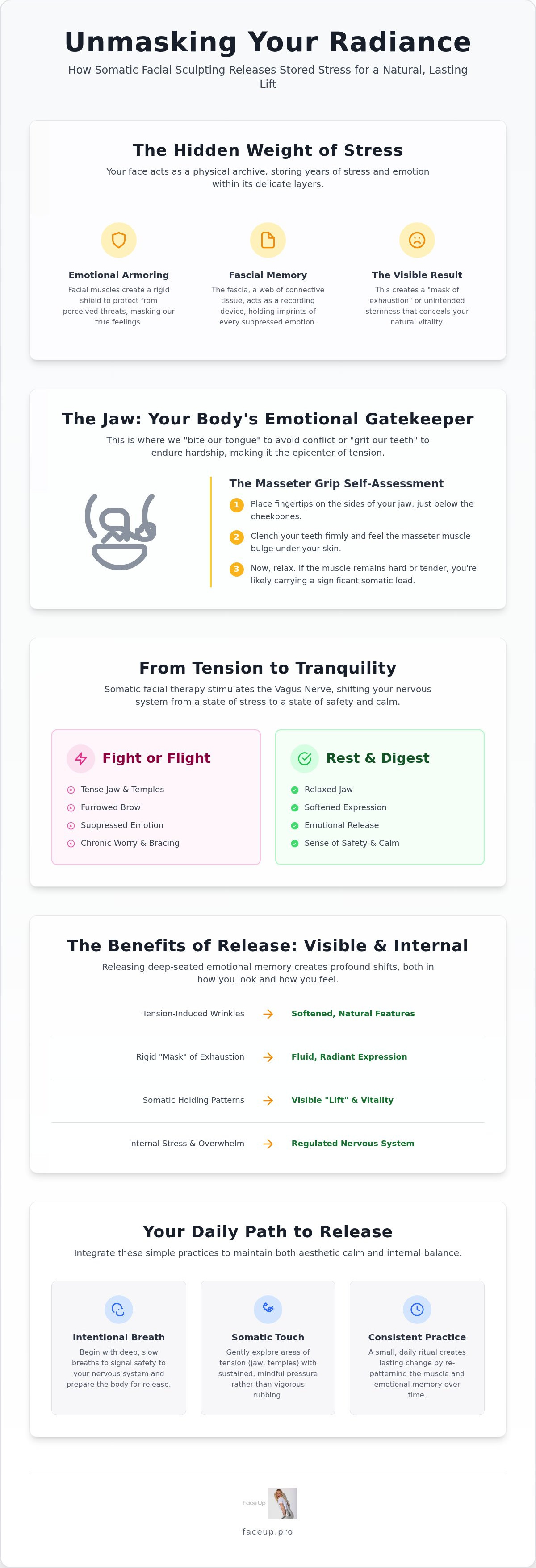
The face is the most visible canvas of our internal state. While we often view stress as an abstract mental weight, it physically manifests through a process known as emotional armoring. This phenomenon occurs when our facial muscles and connective tissues create a rigid shield to protect us from perceived threats or social discomfort. Because the face is the primary tool for communication, it's often the first place we mask our true feelings to maintain a professional or composed exterior. Over time, this constant bracing becomes a structural habit rather than a temporary reaction.
This persistent masking has deep biological consequences. Fascia, the intricate web of connective tissue beneath the skin, acts as a recording device for our life experiences. It stores somatic imprints of past stress; essentially holding onto the tension of every suppressed cry or forced smile. Achieving emotional release through facial massage requires more than just rubbing the skin. It involves a targeted approach to unbinding these fascial layers, allowing the body to finally process what the mind has set aside. This methodology draws from the core principles of Somatic Experiencing, which suggests that the body must physically discharge stress to return to a state of equilibrium.
The Vagus Nerve and Facial Expression
Your facial expressions are inextricably linked to your autonomic nervous system through the vagus nerve. When we work with the muscles around the eyes and the jaw, we're communicating directly with the brain's social engagement system. Stimulating these areas encourages the body to enter a ventral vagal state, signaling a sense of safety and belonging. This shifts the body out of fight or flight and into a restorative rest and digest mode. Somatic facial therapy is a specialized modality that utilizes intentional touch to regulate the nervous system and release stored physiological stress.
Muscle Memory vs. Emotional Memory
There is a significant difference between a superficial massage and a deep somatic intervention. Repetitive expressions, such as chronic worry or suppressed anger, eventually become permanent holding patterns in the musculature. These aren't just wrinkles; they are physical memories of emotional states. Standard treatments often focus on temporary relaxation, but they fail to address the underlying emotional memory. The Face Up Method™ is designed to navigate these deep-seated layers, providing a structured path to release the physical armor that limits both your radiance and your well-being. By prioritizing emotional release through facial massage, we can unbind these patterns and restore a natural, fluid expression to the face.
The Jaw-Heart Connection: Releasing the Epicentre of Tension
The jaw functions as a primary gatekeeper for our emotional expression. It's the physical site where we "bite our tongue" to avoid conflict or "grit our teeth" to endure hardship. This area is often the first to contract when we feel threatened or unheard, leading to a state of chronic emotional suppression. Understanding how stress causes facial tension is essential because the jaw doesn't just hold physical weight; it holds the energy of unspoken words and unexpressed boundaries. When this tension remains unresolved, it frequently manifests as TMJ dysfunction, creating a cycle of pain that reinforces a sense of being emotionally trapped.
To understand your own level of "armoring," try a simple self-assessment called the Masseter Grip. Place your fingertips on the sides of your jaw, just below the cheekbones. Clench your teeth firmly and feel the muscle bulge under your skin. Now, relax your jaw. If that muscle remains hard, prominent, or tender even when you aren't biting down, you're likely carrying a significant somatic load. Releasing this grip is often the catalyst for a deep emotional shift, as the body finally feels safe enough to let down its guard.
The Somatic Significance of the Masseter
In the animal kingdom, the jaw is a weapon used for defense. In our modern world, we no longer bite to protect ourselves, but the "fight" reflex remains stored in the masseter muscle. This tension doesn't exist in isolation. There is a documented somatic link between the jaw and the pelvic floor, known as the deep front line of fascia. When the jaw is tight, the pelvis often follows, creating a full-body state of bracing. You can find natural relief through targeted tmj massage therapy, which addresses these interconnected pathways to restore balance to your entire system.
Buccal Massage: Releasing from the Inside Out
Traditional facials often stay on the surface, but deep emotional clearing requires access to the internal structures of the face. Buccal massage involves intra-oral work, where a practitioner gently massages the muscles from inside the mouth. This technique reaches the deep attachments of the masseter and pterygoid muscles that are impossible to access through the skin alone. During a session with a Face Up practitioner, it's common to experience a "cathartic" release. This isn't just muscle relaxation; it's the physical discharge of years of stored bracing. For those ready to begin this journey at home, exploring specialized courses like Jaw Release can provide the tools needed to maintain this newfound openness daily. When you target these hidden layers, emotional release through facial massage becomes a profound somatic experience that transforms your reflection and your internal state.
While many view facial sculpting as a purely cosmetic endeavor, the most profound aesthetic changes occur when we address the underlying emotional state. Chronic stress creates a "stress mask" that alters our facial architecture over time. By prioritizing emotional release through facial massage, we can achieve an "emotional lift" that softens the features and restores a vibrant, youthful appearance. This isn't just about surface-level beauty; it's about physicalizing the peace we feel internally.
Many signs of aging are actually "false" wrinkles caused by persistent muscular contraction rather than a simple loss of collagen. When muscles are perpetually tight, they pull the skin into deep folds, such as the "11 lines" between the brows or the nasolabial folds. Unlike invasive fillers that merely mask these shadows, somatic release allows the muscle to return to its resting length, naturally smoothing the skin from within. The Face Up Method™ serves as a holistic alternative to Botox by addressing the emotional root of expression-based aging, allowing for a more authentic and fluid facial movement.
Softening the "Stress Mask"
Forehead tension often reflects a state of hyper-vigilance or chronic worry. Understanding the mind-jaw connection is crucial here, as tension in the lower face often mirrors the rigidity in the upper face. Releasing the jaw defines the jawline more than any tmj massage tool. When these tissues are finally liberated, blood flow increases, delivering essential nutrients that restore a natural glow to the complexion.
Somatic Sculpting vs. Lymphatic Drainage
A common mistake in skincare is attempting lymphatic drainage on a face that is physically armored. You cannot effectively drain toxins if the muscles are too tight to allow the fluid to pass through. We follow a specific hierarchy of treatment: Release, then Drain, and finally, Sculpt. This structured approach ensures that your beauty ritual is sustainable and honors your nervous system. By clearing the emotional blockages first, the subsequent sculpting work becomes significantly more effective, leading to lasting radiance.
Rituals for Release: Practicing Somatic Facial Work at Home
Establishing a dedicated environment, or a "sacred space," transforms a simple skincare step into a deep somatic practice. This doesn't require an elaborate setup; a quiet corner and a comfortable seat are enough to begin. The goal is to signal to your nervous system that it's safe to transition from a state of doing into a state of being. Integrating conscious breathwork is the most critical element of this process. Deep, diaphragmatic breathing acts as a bridge between the conscious mind and the autonomic nervous system, facilitating emotional release through facial massage by ensuring the body remains in a relaxed, receptive state.
You can begin your practice with a simple 5-minute release routine. Start by placing your palms over your eyes to block out external light, taking three slow breaths to settle. Move your fingertips to the center of your forehead and apply gentle, firm pressure, drawing them slowly toward your temples to smooth out the "stress mask." Next, find the masseter muscle just below your cheekbones. Open your mouth slightly and use small, circular motions to encourage the jaw to drop. If you encounter a tender spot, hold the pressure and exhale fully, imagining the tension melting away. It's common to experience physiological discharge during this work, such as yawning, localized shaking, or even spontaneous tears. These are healthy signs that your body is processing and releasing stored stress.
The Face Up Daily Ritual
Consistency is far more effective than intensity when it comes to somatic work. Reprogramming the nervous system requires regular, gentle reminders rather than occasional deep pressure. Utilizing the Face Up App Subscription allows you to access guided sequences that ensure you're working with your anatomy rather than against it. The "Jaw Release" sequence is particularly beneficial for evening decompression, helping to clear the day's accumulated tension before sleep. By making this a daily habit, you prevent the re-formation of emotional armoring and maintain the fluid, vibrant expression achieved through the Face Up Method™.
Signs of a Successful Release
A successful session often manifests through both physical and emotional indicators. Physically, you might feel a sudden surge of heat or a tingling sensation as blood flow returns to previously constricted tissues. You'll likely notice a visible softening of your features, particularly around the eyes and mouth. Emotionally, the primary marker is a sense of lightness or mental clarity. Some describe it as a gentle catharsis; a feeling that a weight has been lifted. After your ritual, prioritize hydration and grounding. Drink a glass of water and take a moment to feel your feet on the floor, allowing the emotional release through facial massage to fully integrate into your system.
Mastering the Method: From Personal Ritual to Professional Practice
The beauty and wellness industry is currently undergoing a significant transformation as clients move away from purely transactional skincare toward holistic, somatic experiences. Standard facial training often overlooks the physiological link between emotional health and facial structure, leaving a gap that modern consumers are eager to fill. By mastering emotional release through facial massage, practitioners can offer a level of depth that sets them apart in a competitive global market. This transition from a surface-level esthetician to a somatic facilitator allows for a more profound connection with the client, positioning the practitioner as a reliable mentor in a specialized professional landscape.
This advanced approach elevates the client-therapist relationship by fostering a sense of community and belonging. When you address the deep-seated tension in a client's face, you're not just providing a service; you're inviting them into a proprietary ecosystem of healing and nervous system regulation. This level of care eases the emotional burden often associated with chronic stress, creating a narrative of professional progression and trust that lasts far beyond a single session.
The Face Up Method™ Certification
The facial sculpting certification provided by Face Up is unique because it bridges the gap between aesthetic mastery and deep somatic bodywork. This proprietary training ensures that practitioners aren't just manipulating skin, but are actively participating in the client's nervous system regulation. Certified experts join a global community of professionals who uphold a high standard of integrity and proactive management. The curriculum is modern and polished, moving with a logical flow that guides you from foundational techniques toward advanced somatic interventions.
Finding Your Path
Choosing your path within the Face Up ecosystem depends on your personal and professional goals. For those seeking daily emotional maintenance, the Face Up App Subscription serves as an ideal tool for personal ritual and decompression. However, for those looking to advance their career and offer these specialized treatments, the Face Up Method Certification is the gold standard. Once certified, practitioners are listed in the Face Up Directory, which acts as a rhythmic gateway for clients seeking verified experts in somatic facial work. Whether you're an established professional or an enthusiast ready to deepen your practice, your journey toward facilitating emotional release through facial massage begins with the Jaw Release Course, the essential first step in reclaiming radiance for yourself and your clients.
Reclaiming Your Natural Vitality Through Somatic Awareness
Recognizing that your face holds the archive of your emotional history is the first step toward lasting transformation. By addressing the deep-seated tension in the jaw and fascia, you move beyond superficial skincare into a specialized environment of somatic healing. We've explored how the face acts as a primary dashboard for the nervous system and how releasing these armored layers can restore both your physical comfort and your natural aesthetic vibrancy. This process isn't just about looking better; it's about aligning your internal state with your outward expression.
Achieving true emotional release through facial massage is a journey of both personal ritual and professional excellence. Founded by somatic expert Olga Newman, the Face Up Method™ is redefining non-invasive beauty globally by providing a holistic approach to TMJ and stress relief. Whether you're integrating these tools into your daily routine or seeking to elevate your professional practice as a certified practitioner, the path forward is clear. Begin your journey to emotional and aesthetic freedom with the Face Up Method™ and discover the profound radiance that comes from an aligned, relaxed, and expressive self. You deserve to look as vibrant as you feel.
Frequently Asked Questions
Is it normal to cry during a facial massage?
Yes, crying is a common and healthy physiological response to somatic release. The face stores significant emotional armoring, and as these tissues soften, the body often discharges suppressed feelings through tears. This is a clear sign that you're moving out of a state of bracing and into a state of safety. It's an integral part of the healing process within our proprietary ecosystem and should be embraced without judgment.
Can facial massage help with anxiety?
How often should I perform emotional release facial rituals?
For optimal results, we recommend a daily practice of five to ten minutes rather than occasional intense sessions. Consistency is the key to reprogramming the nervous system and preventing the re-accumulation of tension. Short, regular rituals help maintain your "emotional lift" and keep the fascia fluid. If you're experiencing acute stress, you might find a longer evening sequence particularly beneficial for decompressing before sleep and ensuring a restful night.
Will emotional release massage help with my TMJ pain?
Yes, achieving emotional release through facial massage is highly effective for alleviating TMJ pain by addressing the muscular and emotional roots of jaw clenching. Most TMJ issues are exacerbated by chronic stress and the "masseter grip." By releasing these deep holding patterns, you reduce the mechanical pressure on the joint. This approach provides both immediate physical relief and long-term management tools for chronic tension that standard treatments often miss.
What is the difference between a regular facial and a somatic facial?
A regular facial primarily focuses on skin health and surface-level aesthetics, while a somatic facial targets the underlying musculature and nervous system. Somatic work involves deep tissue manipulation designed to unbind fascial imprints of past stress. While you'll still see a visible "lift," the primary goal is a profound shift in your internal state. It's a holistic experience that treats the face as a portal to emotional freedom and global well-being.
Do I need special tools for emotional release facial massage?
No, your hands are the most effective tools for this work because they provide necessary sensory feedback to your brain. While some people enjoy using a stone, the direct skin-to-skin contact allows for a deeper connection with your body's somatic signals. This tactile feedback is essential for identifying areas of resistance and ensuring you're applying the correct amount of pressure for a safe release. You don't need complex equipment to begin your journey.
Can I learn the Face Up Method™ if I am not a professional therapist?
You can certainly begin your journey as a non-professional through our specialized courses and the Face Up App. These resources are designed to provide you with safe, effective rituals for personal maintenance and emotional regulation. While the Face Up Method™ Certification is reserved for those seeking professional standing in the industry, the Jaw Release Course offers an accessible gateway for anyone looking to manage their own chronic tension and stress effectively.
How long does it take to see results from somatic facial work?
Many people experience an immediate sense of lightness and physical relief after their very first session of emotional release through facial massage. However, lasting aesthetic changes and nervous system regulation typically emerge after two to three weeks of consistent daily practice. As your tissues soften and your "stress mask" dissolves, you'll notice a more permanent softening of your features and a significant reduction in the frequency of chronic jaw tension.


