
The most effective way to sculpt your jawline isn't by freezing your facial muscles, but by finally allowing them to let go. While the global botulinum toxin market is projected to reach over $13 billion in 2026, a growing number of individuals are moving away from the needle to avoid the dreaded "frozen" look. When weighing up buccal massage vs botox, it's easy to focus only on the surface results. However, the true distinction lies in how these treatments interact with your nervous system and your long-term facial health.
You likely know the heavy sensation of chronic jaw clenching or the frustration of seeing your facial definition soften under the weight of persistent stress. It's a common burden in our high-pressure professional landscape. This guide explores why the "inside-out" approach of the Face Up Method™ offers a deeper, somatic reset that an injectable simply cannot match. We'll examine the physiological benefits of intra-oral work, the latest 2026 trends in natural rejuvenation, and how you can achieve a defined, vibrant appearance while actually reducing your physical and emotional tension.
Key Takeaways
- Understand the "inside-out" philosophy of intraoral sculpting and how it accesses deep musculature that traditional surface treatments cannot reach.
- Explore the somatic link between jaw tension and the nervous system, learning how the Face Up Method™ facilitates a deep emotional and physical release.
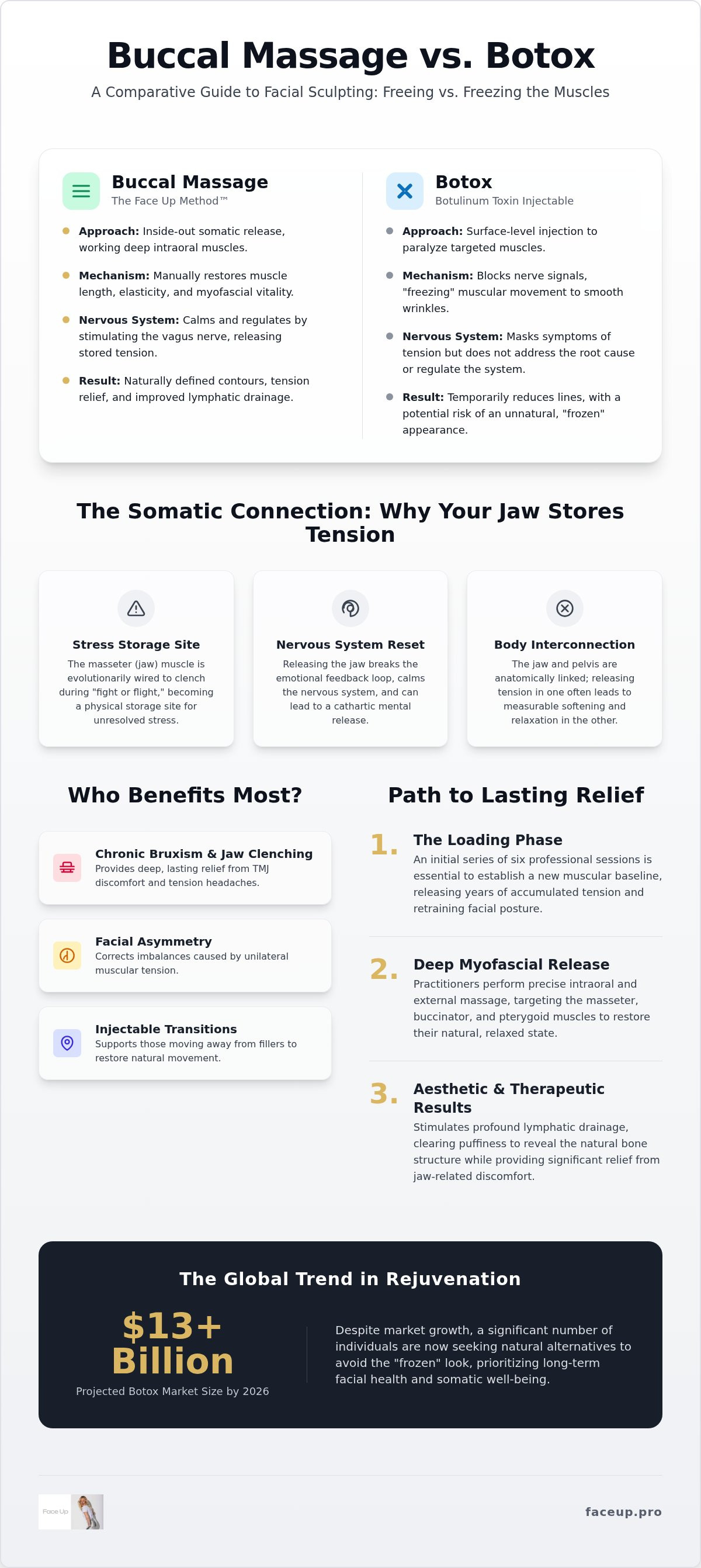
- Evaluate the biological impact of buccal massage vs botox, focusing on the difference between restoring myofascial vitality and simply freezing muscular movement.
- Learn why a dedicated "loading phase" of six professional sessions is essential for establishing a new muscular baseline and achieving a naturally defined jawline.
- Discover the professional pathway for joining the global somatic movement through specialised practitioner certification and advanced anatomical study.
What is a Buccal Facial? Reimagining Rejuvenation from the Inside Out
A buccal facial represents a fundamental shift in how we approach facial aesthetics. It moves beyond the skin's surface to address the very architecture of the face. Unlike standard facials that focus on topical applications, this technique involves intraoral massage. A practitioner works from both the interior and exterior of the oral cavity to release deep-seated tension. This "inside-out" philosophy is essential because surface massage alone cannot reach the deep masseter and buccinator muscles, which are the primary drivers of facial shape and tension.
The mechanics of the technique are precise and intentional. Using sterile gloves, the practitioner performs deep myofascial release on the pterygoids and other structural muscles. When comparing buccal massage vs botox, the difference in methodology is stark. While Botulinum toxin blocks nerve signals to temporarily relax a muscle, buccal work manually restores the muscle's natural length and elasticity. It has quickly become the leading natural alternative for those who want a contoured look without the permanence or risks of invasive buccal fat removal surgery.
The Anatomy of the Intraoral Approach
The Face Up Sculpting Treatment targets three primary muscle groups: the buccinator, the masseter, and the pterygoids. These muscles are responsible for chewing and jaw stability, yet they often become shortened and hypertonic due to stress. During a session, you'll experience a unique sensation often described as a "gym workout for the face." This specific muscle fatigue indicates that the tissue is being challenged and reshaped. Beyond the muscular reset, the technique stimulates profound lymphatic drainage. This helps clear mid-face stagnation and puffiness, revealing the natural bone structure hidden beneath fluid retention.
Beyond Aesthetics: Who Benefits Most?
While the visual results are compelling, the therapeutic benefits are equally significant. This method provides vital relief for individuals suffering from chronic bruxism and jaw clenching. It's a common solution for professionals who carry their stress in their face, leading to headaches and TMJ discomfort. We also see exceptional results for:
- Correcting Facial Asymmetry: Addressing imbalances caused by unilateral muscular tension or habitual chewing on one side.
- Injectable Transitions: Supporting those who are moving away from long-term filler or injectable use and want to restore natural movement.
- Stress Management: Utilising the buccal massage vs botox comparison to choose a path that calms the nervous system rather than just masking a symptom.
By releasing the internal "grip" of the facial muscles, we don't just change how a person looks; we change how they feel within their own body.
The Somatic Connection: Why Your Jaw Stores More Than Just Tension
The face is more than a canvas for aesthetics; it's a map of our internal state. When we face stress, the body enters a "fight or flight" mode. The masseter muscle is often the first to contract. It's an evolutionary survival mechanism. Over time, this constant clenching creates a physical storage site for unresolved stress. While many people weigh the benefits of buccal massage vs botox to address these symptoms, it's vital to recognise that numbing the muscle doesn't resolve the underlying tension.
The Face Up Method™ approaches this by integrating somatic bodywork into every session. We don't just manipulate tissue. We aim to regulate the nervous system. By releasing the jaw, we break the emotional loop that keeps the mind in a state of high alert. This physical release often leads to a cathartic mental state. It's a holistic reset. Interestingly, the jaw and pelvis are anatomically and energetically linked. Releasing one often leads to a measurable softening in the other. This interconnectedness is why a facial treatment can feel like a full-body release.
The Vagus Nerve and Facial Relaxation
Intraoral work goes deep enough to stimulate the vagus nerve. This is the primary driver of your parasympathetic nervous system. Somatic facial therapy serves as a bridge between physical sculpting and emotional regulation. This stimulation induces deep cranial relaxation that often results in improved sleep quality and a significant reduction in tension-related headaches. It's the difference between a cosmetic fix and a neurological one. By working from within the mouth, we access nerve endings that surface-level treatments simply cannot reach.
Releasing the Stress Mask
Chronic stress can "set" our facial expressions, creating what we call a "stress mask" that contributes to premature ageing. There is a fundamental difference between a standard spa massage and a session focused on somatic massage therapy. When choosing between buccal massage vs botox for jaw pain, the somatic approach prioritises the restoration of function rather than the temporary suspension of it. Before opting for pharmaceutical interventions, reviewing the FDA BOTOX Cosmetic Medication Guide helps in understanding the side effects of chemical relaxation. If you are looking for a more integrated path, you can explore our global practitioner directory to find a specialist near you.
Buccal Massage vs Botox: Comparing the Science of Freezing vs Freeing
The fundamental scientific difference between these two approaches lies in how they treat muscular function. Botox utilises a neuromuscular blockade to temporarily interrupt the signal between the nerve and the muscle. This results in a state of paralysis that smooths the skin's surface. In contrast, buccal massage focuses on myofascial restoration. It manually re-educates the muscle fibres to return to their optimal length and tone. When evaluating buccal massage vs botox, it's essential to consider the biological cost of inactivity versus the benefits of manual stimulation.
Muscles require movement to maintain their vitality. A "frozen" muscle lacks the consistent oxygenation and nutrient delivery provided by active blood flow. Over time, this inactivity can lead to tissue stagnation and a duller complexion. Buccal work manually stimulates both the circulatory and lymphatic systems. It ensures that the mid-face remains vibrant, nourished, and capable of efficient waste removal. This "freeing" action restores the face's natural ability to heal and glow from within.
The Risks of the "Quick Fix"
Long-term reliance on injectables carries a documented risk of muscular atrophy. When a muscle isn't used for extended periods, it inevitably thins and loses density. This loss of structural volume can cause the overlying facial fat pads to shift or descend, which may actually accelerate the appearance of sagging as we age. The Face Up Method™ prioritises a "pro-ageing" philosophy. It preserves the natural architecture of the face by toning the muscles that act as a scaffold for the skin. It's a sustainable investment that builds facial resilience rather than masking its decline.
Functional Benefits Comparison
The choice between buccal massage vs botox often comes down to the desired aesthetic and functional outcome. While Botox provides a "poker face" by eliminating dynamic lines, it can also diminish your ability to express genuine emotion. Buccal massage produces a sculpted, expressive look that retains the unique character of your face. For those suffering from TMJ, Botox offers temporary relief by weakening the jaw muscles. However, buccal work addresses the root cause of the tension by physically lengthening the fibres and releasing the surrounding fascia.
We're seeing a significant shift in the industry as more clinicians move toward this holistic model. For professionals looking to transition their practice, obtaining a facial sculpting certification is a vital step. This training allows practitioners to offer results that respect the body's natural physiology while meeting the 83% surge in consumer demand for non-invasive, somatic rejuvenation.
Maximising Results: Daily Rituals and the Path to Lasting Jaw Relief
Achieving a defined, tension-free face is not a passive event; it is a collaborative process between the practitioner and the individual. While the immediate lift after a professional session is visible, the true transformation occurs during the "loading phase." We recommend a series of six sessions to establish a new muscular baseline. This frequency allows the fascia to soften and the muscles to hold their new, elongated shape. When comparing buccal massage vs botox, the former requires more initial engagement, but it rewards you with a functional, lasting reset that an injectable cannot provide.
Immediately following a treatment, the body initiates a 24-hour detox period. The deep manual work triggers a significant lymphatic surge, clearing metabolic waste that has often been stagnant for years. To support this elimination, prioritise high hydration and rest. You might experience a sensation described as "sore but good," similar to the feeling after an intense gym workout. This is a natural part of the myofascial restoration process, indicating that the deep masseter fibres are beginning to release their chronic grip.
The Jaw Release Course
True longevity in facial sculpting comes from addressing the habits that caused the tension in the first place. Our Jaw Release Course is designed to help you identify masseter trigger points for immediate relief at home. By integrating somatic exercises and targeted breathwork into your day, you can prevent stress from "setting" back into your features. Learning to soften the jaw during high-pressure moments ensures that your professional treatments yield even more profound results. It's about moving from a state of constant clenching to one of conscious relaxation.
Post-Treatment Aftercare
Maintaining your results between appointments is simplified through the use of the Face Up App. This digital mentor allows you to turn professional insights into a sustainable daily ritual. For those looking to deepen their self-practice, learning how to use a tmj massage tool safely is a game-changer. These rituals should be integrated into your morning skincare routine to maximise lift and drainage. Consistency is what separates a temporary "glow" from a structural shift in your facial architecture. If you're ready to commit to this journey, you can subscribe to the Face Up App to start your daily practice today.
Beyond the Treatment: Professional Certification and the Global Somatic Movement
The aesthetics industry is witnessing a profound transformation. As consumers increasingly weigh the long-term implications of buccal massage vs botox, the demand for skilled practitioners who understand the body's somatic language has reached an all-time high. This movement isn't just about a new technique; it's about a fundamental shift toward functional rejuvenation. Professionals across the globe are seeking ways to offer results that respect the nervous system while delivering the structural sculpting their clients crave. We're seeing a rise in specialized clinics that prioritize the "inside-out" approach, moving away from purely transactional, clinical models. If you are looking for a comprehensive beauty destination that offers expert skincare, you can visit Devotion Beautique to discover their range of aesthetic and body refinement services.
Transitioning from standard facial treatments to high-ticket somatic bodywork requires a deep understanding of both anatomy and emotional physiology. The Face Up Method Certification provides this essential bridge. Our curriculum goes beyond surface-level strokes, covering the intricate muscular anatomy of the jaw and the specific protocols for emotional trauma release. For aestheticians and Registered Massage Therapists (RMTs), this training offers a clear path to build a practice rooted in integrity. It allows you to provide non-invasive, life-changing results for those suffering from chronic tension. Beyond the technical skills, the programme focuses on business growth, helping you position your services within a premium, specialized professional landscape.
The Future of Holistic Beauty
The beauty industry is moving away from the "frozen" aesthetic of the past. We're entering an era where rejuvenation is defined by vitality, movement, and expression. When clients compare buccal massage vs botox in 2026, they're looking for a partner in their ageing journey, not just a temporary fix. Face Up is at the forefront of this revolution, setting international standards for safety and efficacy. By securing a Practitioner Directory Listing, certified experts join a global community of facilitators who value order, reliability, and professional advancement. This verified ecosystem ensures that clients can navigate complex requirements with confidence, finding a professional mentor who can guide them toward lasting facial longevity.
Ready to lead the revolution? Explore the Face Up Method Certification.
Embracing the Future of Facial Longevity
The choice between buccal massage vs botox is ultimately a decision between temporary suppression and long-term restoration. We've explored how the "inside-out" approach of the Face Up Method™ does more than sculpt the jawline; it provides a vital somatic reset for your nervous system. By prioritising myofascial vitality over muscular blockade, you're investing in a functional form of rejuvenation that respects your body's natural architecture. It's a holistic reset. This shift toward non-invasive, expressive results is the cornerstone of the global somatic movement in 2026.
Whether you're looking to release chronic tension or advance your professional career, the path forward is rooted in education and integrity. Our proprietary somatic protocols, developed by Olga Newman, represent a Red Dot-calibre approach to facial health. Our global directory of elite, certified Face Up providers ensures you can find a verified specialist regardless of your location. You can also take the lead yourself by entering our professional ecosystem. Join the movement and become a certified Face Up Practitioner to start your journey toward true, natural rejuvenation today.
Frequently Asked Questions
Is a buccal facial painful if I have severe TMJ?
Intraoral work for severe TMJ is generally not painful, though you may experience significant intensity as deep-seated tension is released. A certified practitioner always works within your comfort zone, adjusting the depth of the Face Up Sculpting Treatment to match your tissue response. The goal is to move the muscle from a state of hypertonicity to relaxation. This process often brings immediate relief to the jaw joint by physically lengthening the masseter fibres.
Can I get a buccal massage if I have already had Botox or dermal fillers?
You can absolutely incorporate intraoral work into your routine if you use injectables, provided you follow specific safety windows. It's essential to wait at least 4 weeks after receiving fillers or injections before booking a session. This ensures the product has fully integrated into the tissue. When comparing buccal massage vs botox, many clients use the manual method to extend the time between their clinical appointments or to restore natural expression.
How many sessions are required to see a permanent change in my jawline?
To establish a new muscular baseline and see lasting structural changes, we recommend an initial loading phase of 6 sessions. While the term "permanent" doesn't apply to living tissue that reacts to daily stress and ageing, this series re-educates the muscles to hold a more lifted, relaxed position. Regular maintenance sessions, combined with daily rituals from the Face Up App, ensure that your sculpted jawline remains defined over the long term.
What is the main difference between buccal massage and myofascial release?
Buccal massage is a specialised form of myofascial release that specifically targets the muscles of mastication from both the interior and exterior of the oral cavity. While standard myofascial work is performed on the skin's surface, the intraoral approach allows the therapist to "sandwich" the muscle. This provides access to the deep masseter and pterygoids that are unreachable through external touch alone, making it a more comprehensive structural treatment for the mid-face.
Are there any contraindications for intraoral massage?
Contraindications for intraoral work include active oral infections, severe inflammatory acne, recent dental surgery, or contagious skin conditions like cold sores. It's also vital to disclose any history of recent facial trauma or major medical procedures. If you're pregnant, the treatment is generally safe, but we always suggest consulting your healthcare provider first. A thorough consultation is part of every Face Up Method™ session to ensure your safety and comfort.
How long do the results of a single buccal session typically last?
The immediate "glow" and lymphatic drainage results from a single session typically last between 48 and 72 hours. However, the internal muscular release can provide relief from jaw tension for up to a week. To transform these temporary effects into a structural shift, consistency is key. Integrating somatic exercises from our Jaw Release Course helps maintain the space created during your professional treatment, preventing the muscles from snapping back into their old, tense patterns.
Is buccal massage hygienic, and what safety protocols are used?
Hygiene is the highest priority during any intraoral procedure. Practitioners must use sterile, single-use gloves and follow rigorous sanitation protocols for all surfaces and equipment. At Face Up, our certified specialists are trained in medical-grade safety standards to ensure a clean and professional environment. This commitment to hygiene allows you to relax fully into the somatic experience, knowing that your health and safety are managed with the utmost care and professional integrity.
Can I perform a buccal massage on myself at home safely?
You can safely perform targeted techniques on yourself at home by following guided professional programmes. We don't recommend "guessing" with intraoral pressure, as the facial nerves are delicate. Instead, our Face Up App provides step-by-step rituals designed for self-practice. These tutorials teach you how to use your hands to maintain jaw mobility and facial lift between professional appointments, ensuring your results are sustainable and safely achieved without the need for clinical intervention.


