

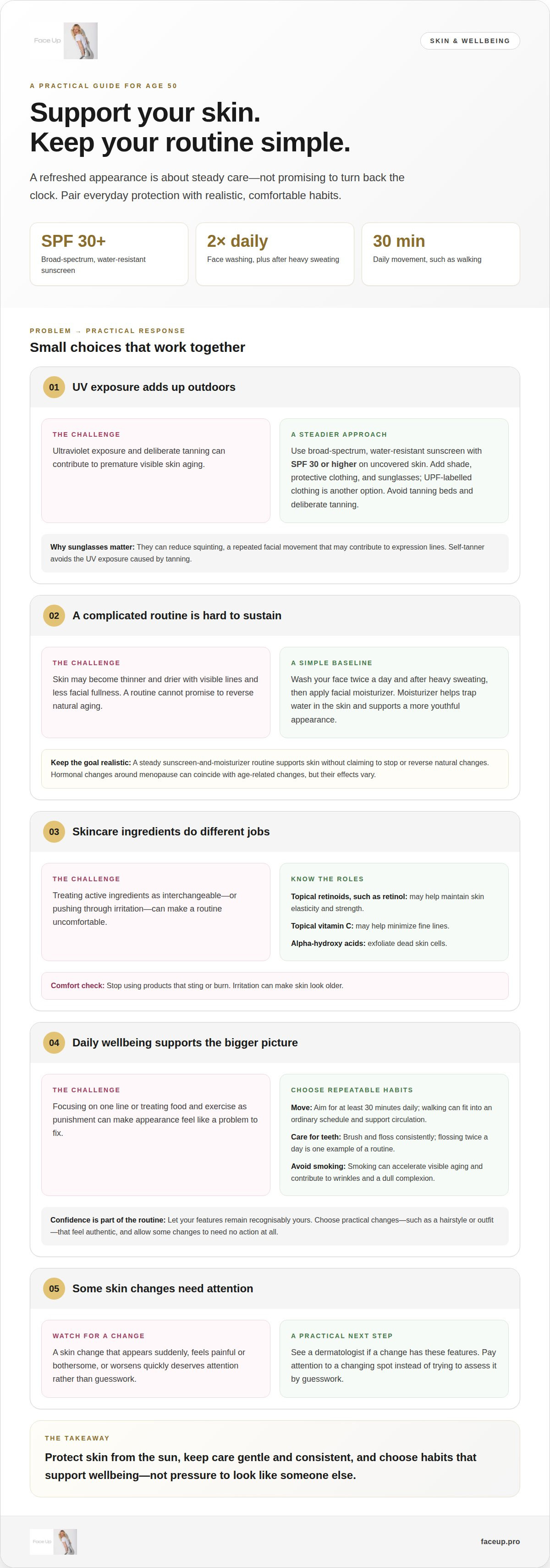
A fresher look at 50 is less about turning back the clock than supporting what already suits you. A noticeably fresher appearance is possible, but no natural routine can promise you’ll look 10 years younger. A practical approach to how to look younger at 50 naturally begins with daily sun protection: use broad-spectrum, water-resistant sunscreen with SPF 30 or higher on skin not covered by clothing, and add shade, protective clothing and sunglasses.
It makes sense to want changes that feel natural and fit your life. This guide explains how sun habits, confidence, a balanced diet, hydration and thoughtful hair care can work together to support a more refreshed appearance. You’ll find realistic steps to consider, from protecting your skin outdoors to choosing everyday routines that help you feel comfortable and assured in your own look.
Key Takeaways
- Use broad-spectrum, water-resistant SPF 30 or higher on uncovered skin, and pair it with shade, protective clothing, and sunglasses.
- Build confidence by treating age-related changes as part of your individual look, rather than a problem to hide.
- Choose balanced meals and steady hydration to support your overall wellbeing and a healthy-looking complexion.
- Adapt hair care to changes in thickness, texture, dryness, and colour so your style feels comfortable and true to you.
1. Sun avoidance and daily sunscreen
Protecting skin from ultraviolet exposure is a practical way to reduce premature aging. Use broad-spectrum, water-resistant sunscreen with SPF 30 or higher on uncovered skin. Add shade, protective clothing, and sunglasses to your daily routine; UPF-labelled clothing offers another option. Avoid tanning beds and deliberate tanning, which expose skin to harmful UV rays. Sunglasses can also reduce squinting, a repeated facial movement that may contribute to expression lines.
Keep daily skin care simple: wash your face twice a day and after heavy sweating, then apply facial moisturizer. Moisturizer helps trap water in the skin and support a more youthful appearance. Topical retinoids such as retinol may help maintain skin elasticity and strength, while topical vitamin C may help minimize fine lines. Alpha-hydroxy acids exfoliate dead skin cells. These ingredients aren’t interchangeable, and stop using products that sting or burn, as irritation can make skin look older. Avoid tanning for a glow; self-tanner avoids the UV exposure caused by tanning.
At 50, skin may become thinner and drier, with visible lines and less facial fullness. Hormonal changes around menopause can coincide with these age-related changes, but their effects vary. A steady routine of sunscreen and moisturizer supports skin without promising to reverse natural aging. Smoking can also accelerate visible aging and contribute to wrinkles and a dull complexion, so avoiding it supports skin health.
Other daily habits contribute to overall appearance. Brush and floss consistently; flossing twice a day is one example of a regular dental-care routine. For movement, aim to move for at least 30 minutes daily. Walking, for example, can fit into an ordinary schedule and support circulation. See a dermatologist if skin changes appear suddenly, feel painful or bothersome, or worsen quickly; Cleveland Clinic advises seeking care in those situations. A changing spot deserves attention rather than guesswork.
Confidence and attitudes toward ageing
A confident appearance doesn’t depend on hiding every wrinkle. Start with a realistic aim, such as choosing a hairstyle or outfit that feels like you. This shifts attention from a single facial line to your overall presentation. Natural skin changes vary, and genes largely influence when they appear. Focus on supporting your wellbeing while letting your features remain recognisably yours.
Notice the language you use about your appearance. Instead of calling a new line a flaw, describe it plainly as a change you’ve noticed. Then decide whether it calls for a practical step, such as adjusting your hairstyle, or no action at all. This won’t erase wrinkles, but it can help keep a small detail from defining how you see yourself.
Repeated expressions are part of communication, but contracting the same facial muscle over many years can make expression lines permanent. You don’t need to stop smiling or showing concern. Try noticing tension between your brows during focused tasks, then relax your forehead when you catch it. The aim is awareness, not policing every expression or treating normal movement as a problem.
Confidence also grows from habits that reflect care rather than punishment. Choose a daily walk because movement feels good, or plan a balanced meal because eating well supports your overall health. Don’t frame food or exercise as a way to compensate for sun damage or force your face to look younger. Smoking can accelerate visible skin aging, so avoiding it supports broader wellbeing.
Finally, suggest practical changes without demanding perfection from yourself. If a new clothing colour, haircut, or grooming routine makes you feel more at ease, try it and notice how it fits your life. Keep the changes that feel authentic. At 50, a refreshed appearance can come from a combination of self-expression, steady care, and less pressure to look like someone else.
3. Diet and hydration
A healthy, balanced diet rich in fresh fruits and vegetables can help protect skin from damage linked to premature aging. Build meals around produce, then include protein sources such as salmon. Salmon provides protein and omega-3 fatty acids, which may help keep skin plump. Collagen supports skin strength and firmness and plays a role in wound healing, but no single food can prevent every change associated with age.
Limit foods high in sugar and refined carbohydrates, since these may accelerate visible aging. Alcohol can dehydrate and damage skin over time, so keep intake to one glass daily or ideally less. Green tea offers antioxidants associated with fighting inflammation. These choices support broader health, but everyone’s needs and eating patterns differ. Focus on balanced meals rather than strict rules that are difficult to maintain.
How much sleep and water support healthy-looking skin? Aim for 7 to 8 hours of sleep per night; drink fluids regularly, since hydration needs vary with the person and their circumstances. Staying hydrated supports the body’s normal functions, though drinking water alone won’t erase wrinkles or replace a balanced diet.
Make your routine easy to repeat. Add fruit to breakfast, include vegetables at lunch, and keep water within reach during the day. A reusable bottle can make drinking regularly more convenient. If you drink alcohol, consider having water alongside it, and notice whether your skin feels drier afterward. These simple steps support a healthy routine without treating hydration as a cure for every skin condition.
Diet and fluids work alongside external care, not instead of it. Removing makeup before bed, for example, keeps cleansing separate from nutrition and hydration. If a change in eating or drinking causes discomfort, adjust your routine to suit your needs. Consistent choices matter more than a complicated plan: choose foods you enjoy, drink regularly, and make sleep a priority.
4. Hair thinning, dryness, and gray hair
Hair can change in texture, density, and colour with age, so notice what has changed before adjusting your routine. Compare how your hair feels after washing and whether your usual part looks different. Gradual changes may call for practical styling and care choices, while sudden or patchy loss is a reason to seek medical advice rather than rely on cosmetic treatments.
For dry lengths, use a gentle shampoo mainly at the scalp and conditioner through the mid-lengths and ends. A wide-tooth comb can help detangle damp hair with less pulling. If you use a dryer or styling tool, choose a lower heat setting and avoid repeated passes over the same section. These steps reduce unnecessary handling. They won’t restore lost density, but they can make hair easier to manage.
Thinning can affect how a style sits. A shorter cut, a changed part, or softer layers may create a shape that feels balanced. Ask your stylist to adapt the cut to your hair’s current texture rather than copying a style designed for thicker hair. One approach won’t suit everyone, and comfort matters as much as the appearance of volume.
Gray hair can be worn as it grows or blended with colour. If you choose colour treatments, follow the product directions and allow enough time between applications for your hair and scalp to recover. Stop using a product if it causes irritation. Hair care and skin care are separate routines, so don’t apply facial products to your scalp unless their directions specifically allow it.
Collagen is associated with skin structure, but it isn’t a hair-care treatment. A balanced routine, gentle handling, and a style that suits your current hair can support a polished appearance without promising to reverse change. If a change continues to concern you, describe when it began and what you’ve noticed to a healthcare professional. That context can help distinguish styling concerns from changes that need further attention.
Face Up
Face Up offers a natural way to explore facial tension and sculpting as part of your wellbeing routine. Its approach focuses on releasing muscular and emotional tension in the face and neck without invasive procedures. Choose guided self-practice through the Face Up App Subscription or Jaw Release Course, or consider a Face Up Sculpting Treatment for an in-person experience.
These options complement everyday habits such as sun protection, balanced eating, hydration, and hair care. They focus on facial wellbeing, not changing gray hair or treating hair thinning. Choose the format that suits the support you’re looking for, whether that’s a guided course, app-based practice, or hands-on treatment.
To explore how Face Up can support your facial wellbeing goals, get in touch with Face Up.
Choose a next step that feels like you
If you’re considering how to look younger at 50 naturally, let the question guide choices that feel sustainable, not like a demand to become someone else. A useful next step is to decide what kind of support fits you: independent practice, a guided learning experience, or professional development in facial sculpting. Keep your focus on personal wellbeing and a look that still feels authentic.
Face Up offers the Face Up Method Certification, Face Up App Subscription, and Jaw Release Course, each providing a different way to engage with its facial sculpting method. The certification is for practitioners, while the app and course offer self-practice options. Consider which format best matches your interests and preferred way of learning.
For a conversation about the next step that suits your goals, contact Face Up. Progress can begin with a choice that feels thoughtful, personal, and manageable.
Frequently Asked Questions
Can you really look 10 years younger at 50?
A fresher appearance is possible, but looking 10 years younger isn’t a dependable outcome. If you’re wondering how to look younger at 50 naturally, focus on changes you can sustain, such as choosing a haircut that suits your current hair or wearing clothes that make you feel confident. A realistic aim is looking rested and feeling like yourself, not matching a specific age.
What skincare routine helps skin look younger at 50 naturally?
A simple routine keeps daily care manageable: cleanse gently, moisturize, and apply sunscreen in the morning. In the evening, remove makeup and cleanse again. If you use an ingredient such as retinol, follow the product directions and stop using it if it causes burning or stinging. Consistency matters more than layering many products, and irritation is a reason to simplify your routine.
Does daily sunscreen prevent signs of aging, and what SPF should I use?
Daily sunscreen helps protect against UV exposure that contributes to premature skin aging. Choose broad-spectrum, water-resistant sunscreen with SPF 30 or higher for uncovered skin. Reapply according to the product directions, especially after swimming or sweating. A hat, shade, and sunglasses add practical protection outdoors. Sunscreen helps limit further damage; it won’t erase lines or changes that are already visible.
How does nutrition affect skin aging after 50?
Nutrition supports skin as part of overall health, but no single food can stop aging. Build meals with a range of vegetables and fruit, and include protein sources such as fish, beans, or eggs. For example, add vegetables to lunch rather than relying on a restrictive diet. Varied, sustainable meals are more practical than expecting a supplement or “superfood” to transform your skin.
What exercises help maintain posture, muscle tone, and a youthful appearance after 50?
Combine movement that challenges strength with activities that support balance and mobility. Chair squats and wall push-ups, for example, use body weight, while standing on one leg near a stable support practises balance. Gentle shoulder rolls and an upright walking posture can encourage awareness of alignment. Choose movements that suit your ability, and stop if an exercise causes pain.
Can facial exercises or massage reduce wrinkles, and what does research show?
Facial massage may help you notice and release tension, but don’t treat it as a proven way to permanently remove wrinkles. People exploring how to look younger at 50 naturally should distinguish claims about lasting wrinkle reduction from short-term changes in how the face feels or looks. Face Up’s method focuses on releasing muscular and emotional tension in the face and neck; it doesn’t promise that wrinkles will disappear.


