

What if the chronic tension in your jaw isn't just a physical habit, but a physiological map of the stress your nervous system has stored over time? Many people live with a "frozen" facial expression or persistent TMJ pain that feels impossible to shake, even after a restful weekend. If you've felt skeptical of invasive procedures like Botox but still crave a face that looks relaxed and vibrant, you're looking for something deeper. Embracing somatic facial release offers a sophisticated path to rejuvenation that honors the body's natural intelligence.
It's frustrating when your external appearance reflects a level of stress you're working hard to resolve internally. This article will show you how somatic practices bridge the gap between emotional healing and visible facial sculpting to reset your nervous system and restore your natural glow. We'll explore the science behind these deep muscular releases and provide you with the insights needed to achieve a more defined, youthful structure while fostering lasting emotional balance and daily regulation.
Key Takeaways
- Understand how your face acts as a physiological map for stored stress and how facial relaxation directly influences your nervous system's sense of safety.
- Discover why somatic facial release is a distinct therapeutic approach that prioritizes deep muscular discharge over temporary surface-level aesthetics.
- Learn how to differentiate somatic work from traditional spa treatments using a framework focused on depth, emotional impact, and longevity of results.
- Master a practical daily ritual that combines breathwork and targeted movement to provide immediate relief for chronic jaw and brow tension.
- Explore the professional advantages of the Face Up Method™ Certification for those seeking to establish a high-standard somatic practice globally.
The Nervous System Connection: Why Your Face Holds Your Emotional History
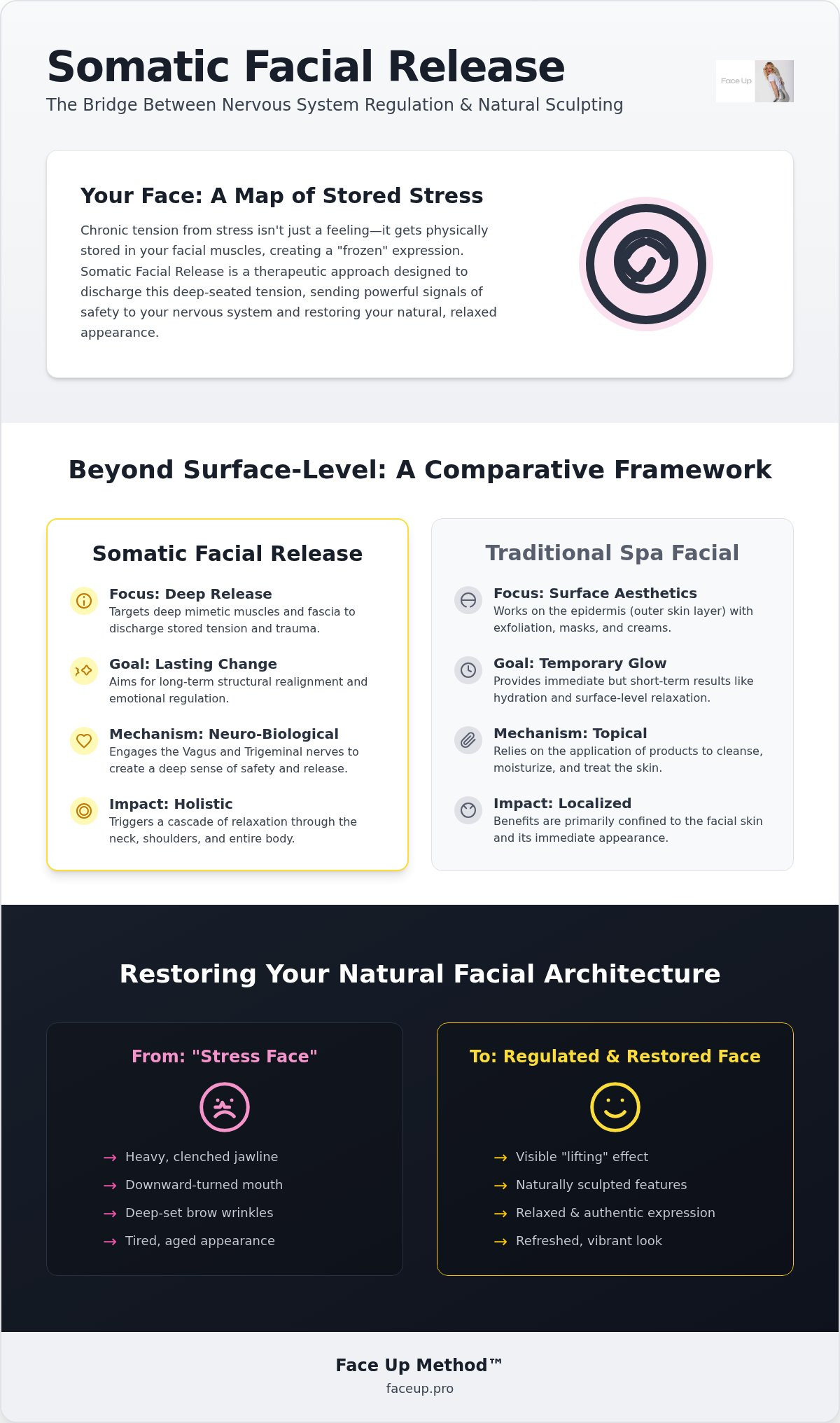
Your face is a sophisticated map of your lived experiences. It doesn't just reflect your current mood; it stores the remnants of every stressful deadline, difficult conversation, and long night. Somatic facial release is a therapeutic approach designed to discharge this stored tension from the mimetic muscles. These are the small muscles responsible for facial expressions that often become "locked" in response to chronic stress. By gently addressing these areas, we engage with the Vagus nerve, a primary component of the parasympathetic nervous system. When these muscles relax, they send a biological signal of safety to the brain. This feedback loop is essential for dismantling "facial masking," which is the unconscious habit of holding a rigid, guarded expression that no longer matches your internal state. Somatic facial release serves as a sophisticated bridge between neurobiology and aesthetic wellness.
The Science of Facial Fascia and Stored Trauma
The fascia is a continuous, fluid web of connective tissue that acts as a meticulous record-keeper for emotional history. When you encounter trauma or persistent anxiety, the fascia surrounding your facial muscles can become dense and restricted. This physical tightening is often linked to the trigeminal nerve, which is heavily involved in the body's "fight or flight" response. If you've ever noticed your jaw clenching during a moment of high pressure, you've experienced this survival mechanism firsthand. Exploring what is somatics provides a foundation for understanding how somatic bodywork functions as a tool for nervous system regulation. It allows the body to process and let go of these physical imprints, moving beyond surface-level relaxation to find a deeper state of internal equilibrium.
How Chronic Tension Alters Your Facial Architecture
Persistent stress changes the very structure of your face. A "stress-face" often manifests as a heavy jawline, downward-turned mouth, and deep-set wrinkles between the eyebrows. These changes occur because the muscles are trapped in a state of muscular fatigue. This is fundamentally different from healthy muscle tone, which provides natural lift and resilience. When muscles are fatigued by chronic tension, they pull the features downward, creating a tired or aged appearance. By facilitating a targeted emotional and physical release, you can achieve a visible "lifting" effect. This isn't about temporary fixes. It's about restoring the natural architecture of your face. When the muscles are no longer burdened by stored stress, the result is a refreshed, authentic, and vibrant look that reflects a regulated nervous system. To support this internal balance with physical health, resources like tryumphfitness.com offer guidance on building a resilient body through professional training and weight-loss programs.
What is Somatic Facial Release? Beyond Surface-Level Massage
Standard spa facials often stop at the epidermis, focusing on surface-level glow through exfoliation and masks. While these treatments are relaxing, they rarely address the structural and emotional foundations of the face. Somatic facial release operates at a much deeper level. It's a specialized discipline that targets the root causes of tension rather than just managing visible symptoms. This practice requires a high degree of mindful touch and practitioner presence, as the goal is to facilitate a dialogue with the body's internal systems. By moving beyond the skin, we can address the deeply held patterns that define our facial structure.
The Face Up philosophy is built on the understanding that the face is not an isolated feature. It's an extension of the entire body's emotional and physical state. When you release the jaw, for instance, you often trigger a cascade of relaxation throughout the neck, shoulders, and even the pelvis. Understanding the science of facial tension helps clarify why these physical manifestations of stress require more than a simple massage to resolve. It's about creating a sense of safety that allows the muscles to let go of their defensive posture.
The Role of Sculptural Face Lifting
Deep tissue work in this context isn't just about pressure; it's about reorganizing the facial tissues to encourage a natural lift. The Face Up Sculpting Treatment is a professional-grade protocol that achieves this by manually stimulating the muscles to regain their youthful position and tone. As more people seek alternatives to invasive fillers or Botox, these non-invasive methods have become the preferred standard for those wanting authentic, long-term results. If you are interested in experiencing this profound shift, you can explore our practitioner directory to find a specialist in your area.
Buccal Massage: The Ultimate Intra-Oral Release
To truly address the deepest layers of tension, one must look toward buccal massage. This technique involves working from inside the oral cavity to directly access the masseter and pterygoid muscles. These are some of the strongest muscles in the body and are frequently the primary sites of significant emotional storage. It's considered the "gold standard" for somatic facial release because it offers an unparalleled level of access and release that external work simply cannot match. For professionals looking to integrate this sophisticated technique into their practice, our buccal massage training online provides a comprehensive pathway to mastery and global certification.
Somatic Release vs. Traditional Facials: A Comparative Framework
To evaluate the efficacy of different facial treatments, we must look beyond the immediate post-session glow. Traditional facials primarily target the skin's surface, offering temporary hydration or relaxation. In contrast, somatic facial release works within a much broader framework that prioritizes depth, emotional impact, and structural longevity. While a standard treatment might leave you feeling rested for an afternoon, somatic work facilitates a neurobiological reset. This process requires a sophisticated understanding of anatomy and the nervous system. Scientific research, such as the Facial Feedback Hypothesis, supports the idea that our facial expressions can actually influence our emotional states. By releasing deep-seated muscular patterns, we aren't just changing how we look; we're shifting how we feel.
There is a common misconception that "pain equals gain" when working with deep tissue. In the Face Up approach, we reject this notion. True transformation doesn't come from forcing the body into submission. It comes from a gentle yet profound dialogue with the tissues. When a practitioner uses excessive force, the nervous system often goes into a defensive state, which counteracts the goal of release. Instead, somatic work uses precise, mindful techniques to invite the muscles to let go. This results in a more sustainable and authentic rejuvenation that honors the body's natural boundaries.
Invasive Procedures vs. Somatic Rejuvenation
Many individuals are moving away from the "frozen" look associated with Botox and fillers. While these procedures provide immediate smoothing, they often result in a loss of natural mobility and expression. Somatic rejuvenation offers a vibrant alternative. By improving natural circulation and lymph drainage, it supports the skin's health from the inside out. This shift in consumer demand is why many professionals are now seeking a facial sculpting certification. They want to offer results that feel alive and age gracefully rather than treatments that mask the face's natural character.
Why standard massage fails to address emotional "armouring"
Emotional armouring is the physical manifestation of psychological defense mechanisms in the face and neck. It's the "mask" we wear to protect ourselves from stress. A standard 60-minute facial massage typically addresses superficial muscular fatigue, providing only temporary relief. It fails to reach the chronic, deep-seated patterns held in the fascia. To truly dismantle this armouring, a somatic-first mindset is required. This approach recognizes that the face is a living record of emotional history. Without addressing the underlying nervous system state, any physical relaxation remains fleeting and surface-level.
Practical Somatic Techniques for Jaw and Facial Tension
Recognizing this systemic connection, it's important to note that tension in the lower body, such as that caused by chronic foot pain, can also reinforce this "armouring." Seeking care from experts like the Frankel Foot & Ankle Center to resolve foundational discomfort is a proactive way to support your body's overall transition into a state of ease.
Transitioning from the theoretical understanding of the nervous system to physical practice is where true transformation begins. While professional treatments offer deep structural shifts, the longevity of those results depends on your daily engagement with your body. The Face Up app was designed specifically to facilitate this journey, providing a curated library of daily rituals that fit seamlessly into a busy lifestyle. Committing to just ten minutes of daily somatic practice acts as a vital preventative measure against the accumulation of chronic jaw pain and structural rigidity. By integrating these movements, you create a consistent environment of safety for your nervous system.
To begin your own somatic facial release practice, follow this five-step daily ritual designed for immediate relief:
- Conscious Breathwork: Begin with three deep diaphragmatic breaths. As you exhale, imagine the tension melting from your scalp down to your chin. Breath is the essential catalyst that signals the muscles it's safe to let go.
- Brow Sweeping: Use the pads of your fingertips to gently sweep from the center of your forehead toward your temples. Apply light pressure to encourage the fascia to soften.
- Masseter Softening: Locate the jaw joint and use slow, circular motions to invite warmth into the muscle. Don't force the release; simply stay present with the sensation.
- The Passive Jaw Hang: Allow your lower jaw to drop slightly, creating space between your upper and lower teeth. Ensure your lips remain softly closed or slightly parted.
- Vagus Nerve Integration: Finish by gently humming or making a low "vooo" sound. The vibration stimulates the Vagus nerve, cementing the state of relaxation you've created.
The Face Up Approach to Jaw Release
For those struggling with persistent discomfort, the Jaw Release Course offers a deeper dive into specialized protocols. One of the most effective techniques involves safe palpation of the masseter muscle. You can find this by clenching your teeth slightly to feel the muscle "pop" near the back of your jaw. Once located, relax the jaw and use a hooked finger to apply steady, non-aggressive pressure. Additionally, pay attention to your tongue position. Your tongue should rest gently on the roof of your mouth, just behind the front teeth. This "resting posture" supports the entire facial architecture and prevents the jaw from collapsing into a state of tension.
Using the Right Tools for Somatic Success
While your hands are your primary and most intuitive instruments, choosing the best TMJ massage tool can help you reach deeper layers of the pterygoid muscles that are difficult to access otherwise. However, it's vital to avoid aggressive "jaw exercisers" or high-resistance devices. These products often encourage the very hypertrophy and tension we are trying to resolve. In the realm of somatic facial release, less is often more. The goal is to coax the body into a state of ease, not to "work out" muscles that are already overtaxed. If you're ready to start your journey with guided support, you can download the Face Up app to access our full library of somatic rituals.
Advancing Your Practice: Certification in the Face Up Method™
As the global wellness landscape evolves, clients are increasingly moving away from surface-level aesthetics in favor of treatments that honor the mind-body connection. This shift has created a significant demand for practitioners who can offer more than just a standard facial. The Face Up Method™ has emerged as the premier global training for somatic facial release, providing a sophisticated pathway for professionals to deepen their expertise. By becoming a certified practitioner, you enter a growing market where the ability to address stored emotional tension is just as valued as the ability to sculpt the facial architecture. This certification is designed for those who seek to provide a high-standard, non-invasive alternative to traditional cosmetic procedures.
What Makes the Face Up Method™ Unique?
Founded by Olga Newman, a specialist in somatic bodywork, this method is a proprietary blend of deep sculptural lifting and intentional somatic release. Unlike programs that focus solely on muscle manipulation, our curriculum integrates emotional intelligence with advanced anatomy. This holistic approach facilitates a profound shift in professional identity. You transition from the role of a traditional beauty therapist to that of a somatic facial specialist. This distinction allows you to support clients through a neurobiological reset, helping them shed the "facial masking" discussed earlier in this article. Students also gain access to a global community and a proprietary ecosystem that offers ongoing professional support and mentorship.
The Path to Global Certification
The journey toward becoming a specialist involves a rigorous yet accessible training structure. For those ready to elevate their career, our facial sculpting certification provides the necessary tools to master these advanced techniques. The training includes a comprehensive study of the mimetic muscles, the Vagus nerve, and the intricate web of facial fascia. We offer advanced classes throughout 2026, with key sessions scheduled for July 27th, August 3rd, November 30th, and December 2nd. This flexibility allows professionals to complete their education online without sacrificing the high standards required for global accreditation.
Upon completion, certified providers are invited to join our global practitioner directory. This listing serves as a linguistic anchor for your business, signaling to potential clients that you provide a verified, high-quality experience. Whether you're an esthetician looking to expand your service menu or a massage therapist seeking to specialize in the face, this method offers a clear path forward. We encourage you to explore our practitioner directory to find a certified provider near you or to begin your own journey toward professional advancement in the field of somatic facial release.
Embracing the Future of Natural Rejuvenation
Understanding the intricate link between your nervous system and facial architecture is the first step toward lasting vitality. We've explored how stored emotional history manifests as physical tension and why addressing the root cause through somatic facial release offers a more sustainable path than invasive surface treatments. By prioritizing the health of your fascia and the regulation of your Vagus nerve, you don't just change your appearance; you enhance your entire emotional well-being. Whether you're seeking relief from chronic jaw pain or a more vibrant, mobile expression, these practices provide the tools for an authentic transformation.
Founded by somatic specialist Olga Newman, our proprietary approach is used by professionals globally to bridge the gap between beauty and emotional health. If you're a professional ready to elevate your practice or an individual seeking a high-standard provider, we invite you into our specialized community. You can Master the Face Up Method™: Explore our Professional Certification and join a global directory of experts dedicated to holistic excellence. It's time to let your natural glow reflect a state of inner balance and resilience. Your journey toward a more relaxed, youthful, and regulated self begins with a single, mindful step.
Frequently Asked Questions
What is the difference between somatic facial release and a regular facial?
Somatic facial release focuses on the deep mimetic muscles and the nervous system rather than just the skin's surface. While a regular facial prioritizes exfoliation and hydration, this therapeutic approach works to discharge stored tension and emotional history. It targets the root cause of structural issues, offering a neurobiological reset that signals safety to the brain. This results in a more authentic, lasting rejuvenation that standard spa treatments cannot achieve through topical products alone.
How often should I perform somatic facial release exercises?
Consistency is vital for resetting the nervous system and altering muscular memory. We recommend a short daily ritual of approximately ten minutes, which you can easily follow using the Face Up app. These daily practices prevent the accumulation of new stress and help maintain the structural "lift" achieved during professional sessions. For deeper work, a more intensive somatic bodywork session once or twice a month provides professional-grade support for long-term emotional and physical health.
Can somatic facial release help with chronic TMJ and jaw pain?
Yes, it's highly effective for chronic jaw tension and TMJ dysfunction. Our specialized Jaw Release Course provides targeted protocols to safely palpate and release the masseter and pterygoid muscles. By addressing the emotional "armouring" often held in the jaw, this method reduces pain and restores natural mobility. It's a comprehensive solution for those who haven't found relief through traditional dental guards or physical therapy, as it integrates both physical and emotional release.
Is somatic facial release a safe alternative to Botox or fillers?
Somatic facial release is a safe, non-invasive alternative for those seeking natural rejuvenation without needles or chemicals. Unlike Botox, which freezes muscles and limits expression, this method restores healthy muscle tone and natural mobility. It improves circulation and lymphatic drainage to create a vibrant, youthful appearance from the inside out. It's the ideal choice for individuals who value their natural features and want to avoid the risks associated with invasive cosmetic procedures.
What emotions are commonly stored in the facial muscles?
The face often acts as a record-keeper for chronic stress, anxiety, anger, and even suppressed grief. These emotions manifest as "facial masking," where the muscles become locked in defensive patterns like a furrowed brow or a tight jaw. By engaging in somatic facial release, you can consciously process and discharge these physical imprints. Releasing these muscles often leads to a profound sense of emotional lightness, as the body finally lets go of long-held defensive postures.
Do I need special tools to start a somatic facial practice at home?
Your hands are your most sophisticated and intuitive tools for a somatic facial practice. They allow for a high degree of mindful touch and direct feedback from your tissues. While you don't need expensive equipment to start, some specific aids can deepen your practice, especially for intra-oral work. The Face Up app provides the necessary guidance to use your hands effectively. We advise against aggressive jaw exercisers, as these can actually increase tension.
How long does it take to see visible results from facial sculpting?
Many clients experience an immediate sense of relief and a visible "glow" after a single session. However, structural changes like a more defined jawline or reduced deep-set wrinkles typically require consistent practice over several weeks. Because somatic facial release involves retraining the muscles and the nervous system, the results are cumulative. With daily rituals, you'll notice your face looking more relaxed, vibrant, and authentically "you" as the chronic tension patterns begin to dissolve.
Who can become a certified Face Up practitioner?
The Face Up Method Certification is designed for dedicated professionals in the wellness and beauty industries. This includes licensed estheticians, massage therapists, and bodyworkers who want to specialize in high-standard, somatic techniques. The curriculum is rigorous, covering everything from advanced anatomy to emotional intelligence. By joining our global community, practitioners transition from traditional beauty roles to becoming specialized somatic facilitators, helping clients achieve deep rejuvenation through our proprietary, professional-grade protocols.


