

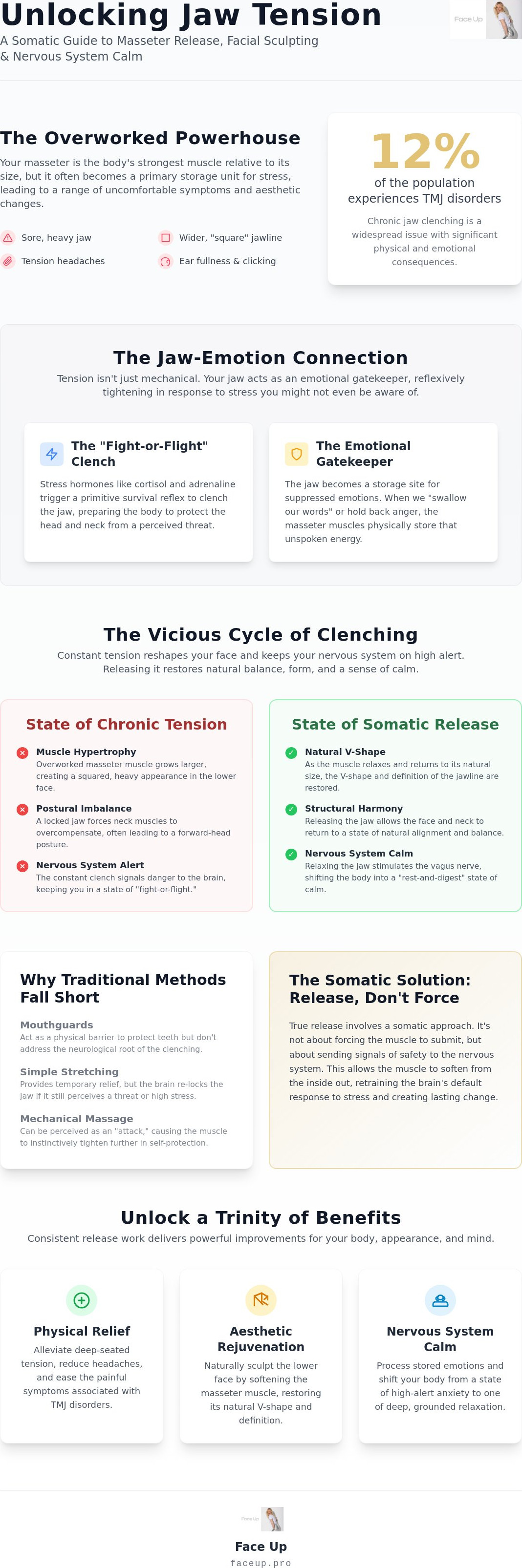
What if the tension you carry in your jaw is doing more than just causing a morning headache; what if it's actually reshaping your face? For many, waking up with a sore, heavy jaw has become an accepted part of a high-stress lifestyle. You might notice your jawline appearing wider or more square due to muscle hypertrophy, leaving you feeling physically and aesthetically stuck. It's a common struggle, as research indicates that up to 12% of the population experiences TMJ disorders. Finding an effective masseter muscle release is no longer just about pain management; it's a vital ritual for both emotional freedom and facial rejuvenation.
You deserve to feel a sense of calm efficiency in your own body. This somatic guide will show you how to alleviate deep-seated tension, process stored emotions, and naturally sculpt your lower face for a more refined look. We'll explore how the proprietary Face Up Method™ provides the tools you need to transition from a state of constant clenching to a more relaxed, confident version of yourself. This article previews how somatic work can transform your facial structure and your nervous system, offering a clear path toward professional-grade wellness and a more defined jawline.
Key Takeaways
- Understand the role of the masseter as the body's primary powerhouse of tension and how chronic clenching leads to physical muscle hypertrophy.
- Explore the somatic connection between jaw tightness and suppressed emotional stress, recognizing the jaw as a vital emotional gatekeeper.
- Master specific, non-invasive techniques for masseter muscle release to achieve both immediate physical relief and nervous system grounding.
- Discover the aesthetic benefits of consistent release work, which helps restore the natural V-shape and definition of the lower face.
- Learn how to transition from reactive pain management to a proactive daily ritual by utilizing guided sessions within the Face Up App.
Understanding the Masseter Muscle: The Powerhouse of Jaw Tension
The Masseter muscle is widely regarded as the strongest muscle in the human body relative to its weight. Positioned between the cheekbone and the lower jaw, it serves as the primary engine for chewing and speaking. While its functional role is essential, this powerhouse often becomes a repository for modern stress. When we subconsciously clench or grind, we subject this muscle to a repetitive workout it was never designed to sustain. This leads to hypertrophy, a literal overgrowth of the muscle tissue that can square off the jawline and create a perpetual state of physical "armor."
Chronic tension in this area doesn't just stay in the jaw. It radiates. It often manifests as persistent tension headaches, a strange sense of ear fullness, or audible clicking when you open your mouth. We must distinguish between functional tension, which is the temporary engagement needed to eat, and chronic holding patterns. The latter is a state where the muscle forgets how to relax, even during sleep. It's a constant state of alert. Effective masseter muscle release requires moving beyond simple physical therapy into a somatic understanding of why the body refuses to let go. For those whose jaw tension is part of broader structural challenges like hypermobility, Yutani Movement offers specialized manual therapy and movement education to help restore functional balance.
Anatomy of a Locked Jaw
To find your masseter, place your fingers just below your cheekbones and clench your teeth; you'll feel a firm, rectangular band pop outward. This muscle works in a tight symphony with the temporalis on the side of your head and the temporomandibular joint (TMJ). When the masseter is locked, it creates a dominant pull that can misalign the entire face and neck. This imbalance often forces the neck muscles to overcompensate. This leads to a forward-head posture and a "heavy" appearance in the lower third of the face that many people mistake for aging.
Why Traditional Stretching Often Fails
Many people attempt to resolve jaw pain by simply pulling their mouth open or using generic stretches. However, a muscle stretch is not the same as a deep tissue release. If the brain perceives a threat or high stress, it will "re-lock" the jaw almost immediately after a stretch to protect the joint. While mouthguards are often prescribed to protect teeth from grinding, they are merely a physical barrier. They don't address the neurological root of the tension. True masseter muscle release involves a deeper, somatic approach that signals safety to the nervous system, allowing the muscle to soften from the inside out. It's about retraining the brain, not just pulling on the tissue.
The Somatic Connection: Why Your Jaw Stores Emotional Stress
The jaw doesn't just chew; it speaks the language of your nervous system. In the Face Up philosophy, we view facial tension as a precise map of our internal state. The jaw acts as the body's emotional gatekeeper, often being the first place to tighten when we feel threatened or overwhelmed. When we suppress anger or "swallow" our words, the masseter muscles act as the primary storage for that unspoken energy. A targeted masseter muscle release isn't just about loosening a joint; it's an act of emotional regulation that signals safety to the entire body.
The Fight-or-Flight Jaw
In high-stress environments, our bodies are frequently flooded with cortisol and adrenaline. This triggers a reflexive clench, a primitive survival mechanism designed to protect the head and neck during a physical confrontation. While we may not be facing physical predators, our brains react to a demanding email or a difficult conversation with that same "clench reflex." This creates a feedback loop where a tight jaw keeps the mind in a state of anxiety, making it nearly impossible to fully relax without intentional intervention.
This chronic bracing often leads to more significant issues. The National Institute of Dental and Craniofacial Research notes that Temporomandibular Disorders (TMDs) often involve complex interactions between physical strain and psychological factors. By relaxing the jaw, we can actually stimulate the Vagus nerve, which is the key to shifting the body from a state of "fight-or-flight" into "rest-and-digest." This connection is why many people feel an unexpected wave of emotional relief during a session.
Somatic Release vs. Mechanical Massage
There's a fundamental difference between a mechanical deep-tissue massage and somatic work. Mechanical approaches often try to force a muscle to submit through intense pressure, which can sometimes cause the body to guard even more. Somatic facial therapy is a method of "listening" to the tissue rather than forcing it. It requires presence and a deep connection to the breath to encourage the nervous system to let go of its own accord. When you perform a masseter muscle release somatically, you're engaging the mind-body connection to create lasting change rather than a temporary fix.
By moving with the tissue instead of against it, we achieve a more profound level of relaxation. If you're ready to explore this deeper connection, our somatic bodywork sessions offer a professional gateway to unlocking these deep-seated patterns and restoring balance to your face and mind.
Step-by-Step Masseter Muscle Release Techniques
Performing a masseter muscle release is a sacred dialogue between your hands and your nervous system. It requires more than just physical pressure; it requires a sanctuary. Begin by dimming the lights and taking three diaphragmatic breaths to signal to your brain that it's safe to let go. When the body is in a state of high alert, the tissue remains dense and resistant. Grounding yourself first ensures that the work you do is transformative rather than merely a temporary distraction from the pain. This preparation shifts the practice from a mechanical task to a somatic ritual.
The External Sculpting Sweep
Locate the zygomatic arch (cheekbone) and follow it back toward the ear. This is the origin point for the muscle. Using the knuckles of your index and middle fingers, apply a firm but steady "hook" into the tissue. Slowly "iron out" the knots by moving in downward strokes toward the angle of the jaw. Understanding the Anatomy of the Masseter Muscle helps you visualize the deep and superficial layers you're working through. If you encounter a sharp point of tension, pause and breathe into it rather than pushing harder. These slow, deliberate strokes encourage the muscle to lengthen and return to its natural state.
Introduction to Buccal (Intraoral) Foundations
The most profound masseter muscle release often happens from the inside out. Using a clean thumb inside the cheek and the forefinger on the outside, create a "pincer" grip. This allows you to isolate the muscle fibers directly. You'll likely feel small, rice-like grains or hard "trigger points" within the cheek. Don't force them to pop. Instead, hold a gentle, consistent pressure and wait for the "melt." This intraoral work accesses the deep belly of the muscle where emotional stress often hides, providing a level of relief that external massage alone cannot reach.
Using Tools for Enhanced Release
While your hands are your best diagnostic tools, you might choose to incorporate a tmj massage tool for deeper, more consistent work. Applying heat therapy, such as a warm compress, for five minutes before your ritual can soften the fascia and make the release more effective. However, you should avoid "jaw exercise balls" or resistance devices. These are designed to "bulk" the jawline, which actually increases masseter hypertrophy and worsens the very tension patterns you're trying to break. Focus on tools that encourage softening rather than strengthening.
Coordinate every movement with your exhalation. As you stroke downward or apply pressure, slowly open your mouth as if you're letting out a sigh. This "Release and Breath" technique prevents the muscle from reflexively guarding. Always stop if you feel sharp, shooting pain or numbness. The goal is a "good hurt", a sensation of productive release, not a struggle against your own body.
Beyond Pain: The Aesthetic Benefits of Masseter Release
While the primary goal of somatic work is often physical and emotional relief, the visual transformation is equally profound. Chronic clenching acts like a weightlifting program for your face, causing the masseter to grow in volume and density. This hypertrophy creates a heavy, square-set jawline that can mask your natural bone structure. By committing to a consistent masseter muscle release, you effectively "de-bulk" the lower face, allowing the natural V-shape and elegant contours of your jaw to emerge. It's not about changing your face; it's about revealing the architecture that's already there.
Tight muscles also act as physical blockages for the lymphatic system. When the jaw is perpetually locked, fluid tends to pool in the cheeks and around the chin, leading to persistent facial puffiness. Releasing this tension acts like opening a dam, facilitating drainage and instantly sharpening your features. This process offers a sustainable, non-invasive alternative to masseter Botox, which carries a national average cost between $600 and $800 per session and only addresses the symptom rather than the habit. A somatic approach ensures that you aren't just freezing a muscle, but retraining it to rest.
Sculpting the Lower Face Naturally
A relaxed jaw is the foundation for high, defined cheekbones. When the masseter is tight, it exerts a downward pull on the mid-face, dragging the features toward the jawline and creating a tired appearance. By softening this tension, you allow the facial tissues to settle back into their optimal, lifted positions. By releasing the chronic downward pull of the jaw muscles, you can effectively "lift" the appearance of the jowls and restore a firmer, more youthful contour to the chin. This natural sculpting creates a refined, "Face Up" look that temporary cosmetic procedures often fail to replicate.
The Anti-Ageing Power of Relaxation
Chronic jaw tension is a silent contributor to common signs of ageing, such as marionette lines and deep nasolabial folds. These lines are often the result of repetitive muscular patterns that "fold" the skin in the same place for years. Balancing the tension on both sides of the jaw also restores facial symmetry, as most people unknowingly clench more on their dominant side. Beyond structure, the "glow" of relaxation is real. Improved blood flow brings vital nutrients and oxygen to the skin's surface, enhancing overall vitality and radiance.
If you're ready to experience these aesthetic benefits firsthand, our Face Up Sculpting Treatment combines deep somatic release with advanced manual techniques to redefine your profile and restore balance to your features.
Integrating Release into Your Daily Face Up Ritual
True transformation occurs when we stop treating our bodies as a series of problems to be solved and start treating them as a home to be cared for. Integrating a regular masseter muscle release into your lifestyle moves you away from reactive pain management toward a proactive state of well-being. By using the Face Up App Subscription, you can access guided daily sessions that ensure your technique remains precise and your nervous system stays grounded. This daily ritual of self-connection creates a steady rhythm of release that prevents tension from ever reaching a state of crisis.
Creating Your Morning or Evening Ritual
A five-minute jaw check-in is the cornerstone of a successful practice. Take a moment each morning to identify where your teeth are resting; they should never be touching unless you are actively chewing. Pairing your masseter work with other tmj massage therapy techniques creates a comprehensive approach to facial tension. Remember that consistency always beats intensity. Small, daily micro-releases are far more effective at retraining the brain than an occasional deep-tissue session that might trigger a guarding response.
If you find that your tension is particularly stubborn, the Jaw Release Course provides a structured environment to explore these patterns in greater depth. It's designed to help you navigate the layers of chronic holding with patience and professional guidance. This course serves as a gateway to understanding your body's unique language, allowing you to reclaim a sense of order and comfort in your daily life.
The Path to Mastery: Face Up Certification
For many, the journey of self-healing sparks a desire to share these transformative results with others. Professionals in diverse international markets are now adding somatic facial sculpting to their clinics to meet the growing demand for non-invasive rejuvenation. This transition from personal self-care to a professional path is supported by our proprietary ecosystem. By mastering the masseter muscle release and the broader Face Up Method™, you can position yourself as a reliable, high-standard partner in the wellness landscape.
By pursuing a facial sculpting certification, you join a global community of somatic beauty experts. This certification is more than just a credential; it's an entry into a specialized professional community that values integrity and proactive management. Whether you're seeking to enhance your own features or lead others toward a more defined, relaxed jawline, the Face Up ecosystem offers the tools and the community to ensure a smooth and well-governed journey forward.
Reclaiming Your Natural Balance and Definition
Understanding the deep connection between your nervous system and your facial structure is the first step toward lasting change. By mastering the art of masseter muscle release, you're doing more than just easing physical pain; you're letting go of the emotional "armor" that often defines our modern, high-stress lives. We've explored how a somatic approach can naturally sculpt your jawline, reduce puffiness, and restore a sense of calm efficiency to your entire body. This isn't a temporary fix; it's a fundamental shift in how you relate to your own tissue.
Founded by somatic expert Olga Newman, the Face Up Method™ is dedicated to redefining beauty through nervous system regulation. Whether you choose to practice at home or seek guidance through our global Practitioner Directory, you're entering a community that values integrity and professional excellence. It's time to move beyond the cycle of chronic clenching and rediscover the relaxed, defined version of yourself. Unlock your jaw and your glow with the Face Up Jaw Release Course. You have the power to transform your face and your state of mind, one intentional breath at a time.
Frequently Asked Questions
How often should I perform a masseter muscle release?
You should aim for daily micro-releases rather than intense, occasional sessions. Consistency is the key to retraining the nervous system and preventing the clench reflex from returning. A five-minute check-in during your morning or evening ritual is usually sufficient for maintaining results. This approach ensures your muscles remain soft and adaptable without triggering a defensive guarding response.
Can masseter release actually change my face shape?
Yes, consistent release can significantly refine your face shape by addressing muscle hypertrophy. When the masseter is perpetually overworked, it grows in volume, creating a wider, more square-set jawline. Performing a regular masseter muscle release helps de-bulk this area, allowing your natural bone structure and V-shaped contour to become more visible over time.
Is intraoral (buccal) massage safe to do on myself?
Intraoral massage is safe and highly effective when practiced with somatic awareness and clean hands. This technique allows you to access the deep belly of the muscle that external work cannot reach. Always move with the tissue rather than forcing it, and stop if you feel sharp pain. Our Jaw Release Course provides detailed guidance for mastering this foundational skill safely at home.
How long does it take to see results from jaw release?
Physical relief from tension is often immediate, while aesthetic changes typically become visible after two to four weeks of daily practice. You'll likely notice a reduction in morning soreness after your first few sessions. For visible sculpting and a more defined jawline, the body needs time to drain excess fluid and for the muscle volume to naturally decrease through relaxation.
Why does my jaw tension keep coming back after I massage it?
Tension often returns because a purely mechanical massage doesn't address the underlying nervous system state. If your brain still perceives a fight-or-flight environment, it'll reflexively re-lock the jaw to protect you. Effective masseter muscle release requires a somatic approach that incorporates breath and presence to signal safety to the brain, breaking the chronic feedback loop of stress.
Can masseter release help with my tension headaches and migraines?
Yes, releasing jaw tension can significantly reduce the frequency and intensity of tension headaches. The masseter is closely linked to the temporalis and neck muscles; tension in one often radiates to the others. By softening the jaw, you remove a primary trigger for referred pain that commonly manifests as pressure around the temples or at the base of the skull.
Should I avoid masseter release if I have dental implants or fillers?
You should wait at least two to four weeks after receiving fillers or dental implants before performing deep tissue work. It's essential to allow these treatments to fully integrate and for any inflammation to subside. Once cleared by your provider, you can resume release techniques using a lighter, more mindful touch to avoid displacing product or irritating sensitive areas.
What is the difference between masseter release and TMJ physical therapy?
Physical therapy focus is primarily on clinical joint function and range of motion through traditional exercises. The Face Up Method™ goes further by blending somatic bodywork with facial sculpting and emotional processing. We look at the jaw as an emotional gatekeeper, using release rituals to regulate the nervous system while simultaneously enhancing the aesthetic contours of the face.


