
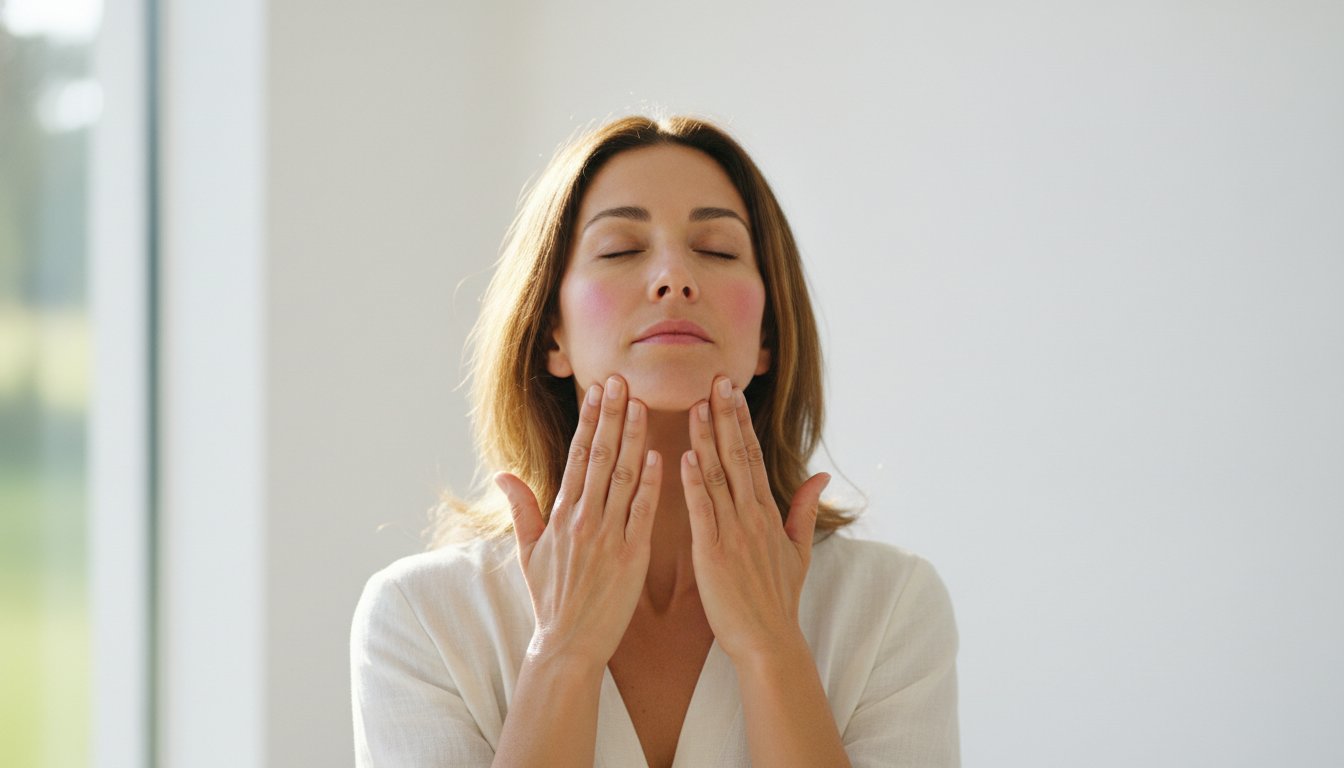
You might think that more movement is the key to a smoother face, but the secret to rejuvenation often lies in learning how to stop moving. It's exhausting to navigate the sea of conflicting advice, where influencers promise miracles and medical professionals warn of potential damage. All the while, you're likely trying to avoid the high costs and potential side effects associated with invasive fillers. You've probably wondered, does face yoga really work for wrinkles, or are those repetitive expressions just etching deeper lines into your skin?
We understand the desire for a natural path that respects your anatomy. A 2018 study in JAMA Dermatology found that participants appeared approximately three years younger after a consistent program, yet the "why" behind these results is often misunderstood. This article reveals the physiological reality of the Face Up Method™, explaining why traditional exercises often fail and how somatic release creates lasting, wrinkle-smoothing results. We will preview the science of facial tension, show you how to reduce lines safely, and help you find a routine that delivers visible change without the frozen look of clinical procedures.
Key Takeaways
- Explore the scientific evidence behind facial toning, including the landmark 2018 study that demonstrated how building muscle volume can naturally fill out sagging skin.
- Understand the nuances of the question, "does face yoga really work for wrinkles," by distinguishing between repetitive movements that cause tension and somatic release techniques that smooth the skin.
- Learn why releasing deep-seated tension in the jaw is often more effective for long-term rejuvenation than traditional cheek-lifting exercises.
- Discover a safe, five-step framework for your facial ritual that uses mirror feedback to prevent the accidental formation of new expression lines.
- See how transitioning from generic tutorials to professional-grade somatic rituals in the Face Up App provides a sustainable, guided path to visible results.
What is Face Yoga and How Does It Claim to Reduce Wrinkles?
Face yoga is often described as a natural facelift, a discipline that combines targeted muscle engagement with intentional massage and relaxation techniques. The central premise is simple: by strengthening the muscles beneath the surface, you create a firmer foundation for the skin to rest upon. This approach targets the root cause of sagging rather than just treating the surface. Historically, these practices have roots in ancient traditions, but their recent resurgence on digital platforms has led many to ask, does face yoga really work for wrinkles or is it merely a fleeting trend? As we move through 2026, the conversation has shifted toward a more sophisticated, evidence based approach that prioritizes holistic health over quick fixes.
The core promise of this practice is the "lifting" effect. When facial muscles are toned and active, they provide better support for the overlying skin, which can reduce the appearance of fine lines and prevent new ones from forming. This isn't just about vanity; it's about maintaining the functional integrity of the face. Modern practitioners now view facial care as a proprietary ecosystem where movement, rest, and somatic awareness work in harmony to produce visible rejuvenation.
The Anatomy of a Facial Workout
There are more than 40 muscles in the face, and they possess a unique characteristic: many are attached directly to the skin rather than to bone. This intimate connection means that the state of your muscles dictates the appearance of your dermis and subcutaneous fat layers. When these muscles provide strong scaffolding, the skin appears taut and vibrant. Conversely, when muscles lose their tone or become chronically tight, they can pull the skin into folds, creating the very lines we seek to avoid. Understanding this relationship is vital for anyone wondering, does face yoga really work for wrinkles, as the results depend entirely on how you engage this delicate anatomy.
Common Techniques: From Lion's Breath to Sculpting
Practices like Facial toning encompass a variety of methods, including resistance training, lymphatic drainage, and stretching. Popular moves like "Lion's Breath" or "The V" aim to isolate specific muscle groups to build volume or release tension. However, a "one size fits all" routine often ignores individual facial structures and can even be counterproductive for certain face shapes. Working harder by straining muscles isn't always working better. True rejuvenation comes from precise, somatic movements that respect the body's limits. Without professional guidance, repetitive movements can inadvertently etch deeper lines into the skin, which is why the shift toward guided, expert led rituals is so significant in the current landscape.
The Scientific Verdict: Does Face Yoga Really Work?
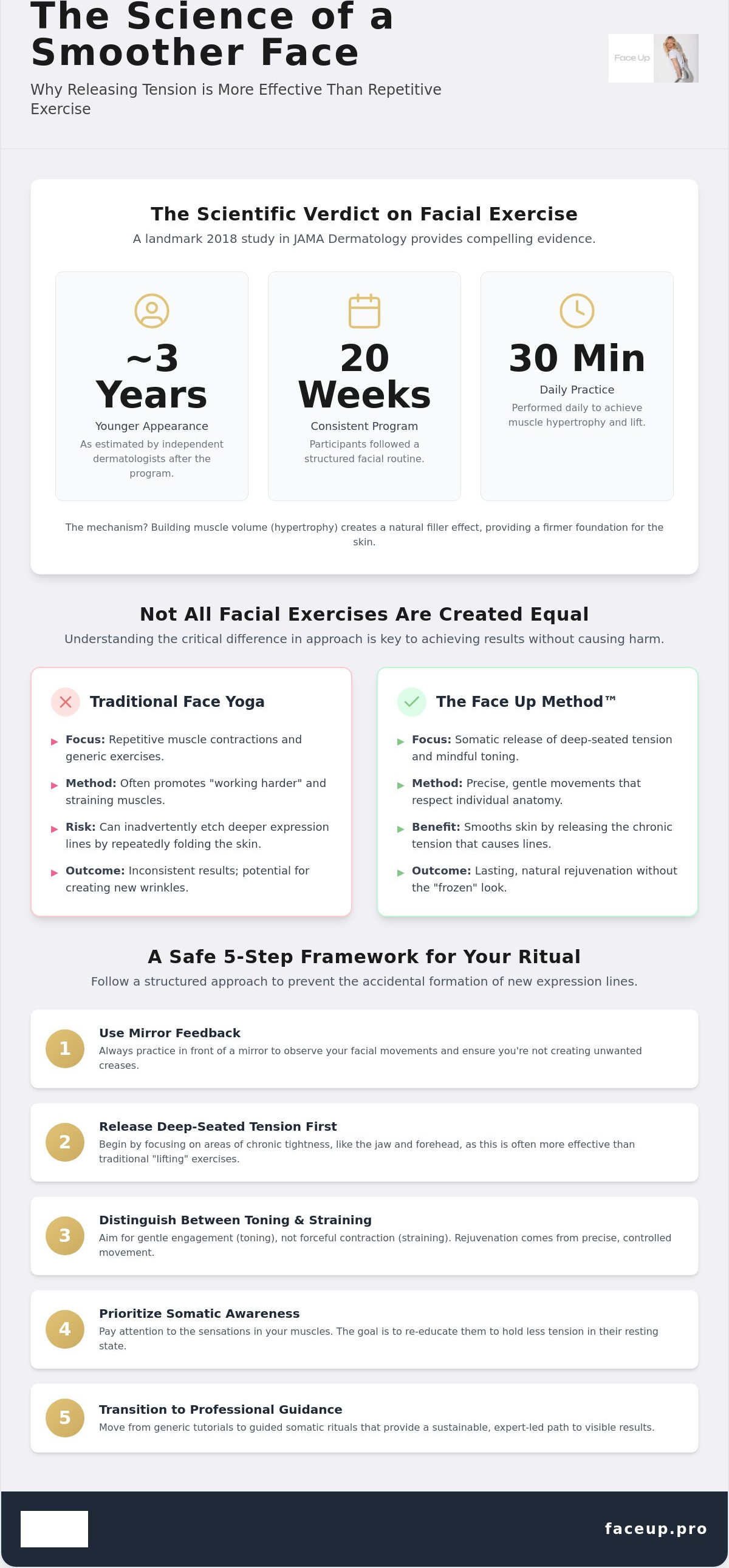
The most frequently cited evidence for facial exercise comes from a landmark 2018 study published in JAMA Dermatology. Over a 20 week period, middle aged women performed daily facial routines for 30 minutes. By the end of the trial, independent dermatologists estimated the participants looked nearly three years younger. This provides a compelling answer for those asking, does face yoga really work for wrinkles, particularly regarding mid face fullness and cheek volume. Building on this foundation, two 2025 studies further validated these effects. One study in the journal Medicina found that an eight week daily program significantly improved muscle tone and elasticity, while another measured a direct decrease in muscle stiffness in the forehead and eye areas.
The physiological mechanism at play is muscle hypertrophy. Just as skeletal muscles in the body grow with resistance, facial muscles can increase in volume. This added mass acts as a natural scaffolding, smoothing out the "draping" effect of sagging skin. However, a study from Harvard suggests that while the theory is sound, the long term effects require more rigorous investigation. Success depends heavily on distinguishing between structural sagging, which benefits from muscle volume, and expression lines, which are caused by repetitive folding. To ensure you are targeting the right areas without causing strain, exploring a professional practitioner directory listing can help you find expert guidance.
Can Face Yoga Actually Cause More Wrinkles?
A common concern among clinical experts is "unconscious compensation." This happens when you try to move one specific muscle but accidentally engage another, causing the skin to bunch or fold in unintended places. Without proper form, you might trade a lifted cheek for deeper crow's feet. It's essential to understand that muscle hypertonicity is the state of a muscle that never fully relaxes. When muscles stay in this "always on" state, they pull the skin into permanent creases. Reversing this requires somatic release rather than just more "work." Many dermatologists often question, does face yoga really work for wrinkles, because they see patients who have inadvertently etched deeper lines through aggressive, unguided movements.
The Role of Blood Circulation and Collagen
Beyond muscle building, intentional facial movement stimulates the vascular system. Increased blood flow delivers oxygen and essential nutrients to the dermis, supporting the overall health of skin cells. Massage techniques also assist the lymphatic system, which helps drain excess fluid and reduce the puffiness that can mimic the look of deep wrinkles. It's vital to clarify that while these movements improve the environment for skin health, they aren't a direct replacement for collagen induction therapies. Instead, they provide the internal support system that helps your skin look its best naturally. By focusing on circulation and release, you create a vibrant complexion that reflects internal health.
Face Yoga vs. Somatic Facial Sculpting: A Practical Comparison
Many individuals approach facial exercises like a traditional gym workout, assuming that repetitive, high intensity movements are the only path to a youthful appearance. However, when investigating does face yoga really work for wrinkles, it's essential to distinguish between building bulk and releasing tension. Traditional face yoga focuses heavily on muscle hypertrophy, or building size, to fill out sagging areas. In contrast, the Face Up Method™ prioritizes somatic release. This approach recognizes that our faces have a "set point" dictated by the nervous system. If your muscles are chronically contracted due to stress, adding more "work" can actually deepen existing lines rather than smoothing them out.
| Feature | Traditional Face Yoga | Somatic Facial Sculpting |
|---|---|---|
| Primary Focus | Muscle Hypertrophy (Building volume) | Somatic Release (Relaxing tension) |
| Nervous System | Often overlooked | Central to the practice |
| Intensity | High resistance and repetition | Gentle, mindful engagement |
| Primary Goal | Lifting through strength | Smoothing through length and balance |
Why Releasing Tension Beats Building Bulk
Chronic tension, often called somatic holding, acts like an invisible weight pulling the facial features downward and inward. When muscles like the masseter or the corrugator stay in a state of constant contraction, they create a "stressed" look that no amount of lifting can fix. This is why incorporating tmj massage therapy is so vital for overall facial symmetry. By relaxing the jaw, you allow the rest of the face to soften and lift naturally. A sculpted face is a relaxed face. When you stop fighting against your own muscular tension, the skin has the opportunity to settle into a smoother, more balanced state.
The Emotional Connection: Somatic Bodywork
Our faces are a living record of our emotional experiences. We often "wear" feelings like grief, anger, or persistent worry in the brow, mouth, and jawline. Somatic practices allow for deep muscular reprogramming by addressing these stored emotions. Olga Newman, the founder of the Face Up Method™, advocates for "natural rejuvenation through release." She believes that true beauty emerges when we let go of the physical imprints of stress. Engaging in a Somatic Bodywork Session helps to reset these emotional set points. This provides a profound answer to the question, does face yoga really work for wrinkles, by suggesting that the most effective "workout" might actually be a deep, intentional let down of the day's burdens.
How to Practice Safely for Maximum Wrinkle Reduction
Practicing with precision is what separates a beneficial ritual from one that accidentally accelerates aging. While we've explored the evidence behind the question, does face yoga really work for wrinkles, the practical application is where most people stumble. To achieve visible results without creating new expression lines, follow this foundational 5-step framework:
- Apply a Slip: Use a high quality facial oil or serum to ensure your hands glide without pulling the skin. Friction is the enemy.
- Set Your Mirror: Always practice in front of a mirror to monitor for any accidental skin folding or bunching.
- Anchor the Area: Use your fingers to stabilize the skin surrounding the muscle you're targeting.
- Execute with Control: Perform every movement slowly, focusing on the muscle's contraction and extension rather than speed.
- Cool Down: End with gentle, outward strokes to encourage lymphatic drainage and nervous system relaxation.
Focusing on 10 minutes of high quality, mindful practice is far superior to 30 minutes of strained repetition. Overworking the face can lead to muscle fatigue and the very hypertonicity we aim to avoid. This safety first approach is the definitive answer to the skepticism surrounding the topic: does face yoga really work for wrinkles?
The 'Anchor and Isolate' Technique
The most critical safety measure is learning how to anchor your skin. When you work a muscle like the frontalis in the forehead, it naturally wants to bunch the skin into horizontal lines. By placing your palms or fingers firmly over the brow, you provide resistance while keeping the surface smooth. Successful facial sculpting requires isolating the target muscle while keeping the surrounding skin taut and immobile. For example, when performing a forehead lift, your hands should prevent any "brow scrunch" from occurring. This ensures the muscle gets the workout while the skin remains protected and flat.
Choosing the Right Tools for the Job
Your hands are the most sophisticated tools you possess, offering immediate sensory feedback that external devices cannot match. However, certain aids can enhance deep tissue work when used correctly. If you're looking to expand your practice, consider choosing the best tmj massage tool for targeted jaw relief. Be cautious of high resistance gadgets like jaw exercise balls; these can often cause excessive strain on the temporomandibular joint and lead to bulkiness in the lower face rather than a refined silhouette. For those seeking a structured and professional path to mastery, you can explore our Face Up Method Certification to deepen your expertise.
Elevating Your Results: The Face Up Method™
Generic tutorials often lack the anatomical precision required to create lasting change. While you may have spent considerable time researching, does face yoga really work for wrinkles, the answer often lies in the quality of the instruction rather than the quantity of the movements. The Face Up ecosystem provides a professional grade alternative to the fragmented advice found on social media. By inviting you into a proprietary environment, we move beyond simple exercises toward a holistic model of facial rejuvenation. This approach establishes a sense of community and belonging, positioning you as an active participant in your own long term wellness journey.
The Face Up App Subscription serves as your daily companion in this process. It offers guided somatic rituals that are designed with calm efficiency, ensuring your practice is both safe and effective. These sessions guide you through the transition from tension to release, helping you avoid the common pitfalls of unguided practice. When considering does face yoga really work for wrinkles, it's vital to recognize that consistency within a proven framework is what delivers visible results. The app ensures that your professional grade facial care remains a manageable part of your global, modern lifestyle.
From Self-Practice to Professional Mastery
Deepening your understanding of facial anatomy can lead to more profound results for yourself and others. We offer a comprehensive facial sculpting certification for those who wish to master the Face Up Method in 2026. A certified Face Up Practitioner is distinct from a standard esthetician; they are trained to recognize the somatic markers of stress and use specialized techniques to reprogram facial set points. For those seeking in person care, our Practitioner Directory Listing connects you with established professionals who offer Face Up Sculpting Treatments and Somatic Bodywork Sessions. This global network ensures that high standard, specialized care is accessible regardless of your jurisdiction.
The Jaw Release Course: A Foundation for Youth
The jaw acts as the structural anchor for the entire face, and chronic tension in this area is a primary driver of premature aging. Our specialized Jaw Release Course targets this foundational tension to restore balance and symmetry. By resolving the physical imprints of stress stored in the masseter and surrounding tissues, you create the necessary space for the skin to smooth and the features to lift. This course is designed to ease the administrative and physical burden of chronic tension, offering both aesthetic and functional health benefits. Experience the Face Up Method™ and start your daily ritual today.
Your Path to a Sculpted, Stress-Free Reflection
Reaching your aesthetic goals requires a shift from viewing the face as a collection of muscles to seeing it as a living, somatic system. We've established that while traditional exercises offer benefits, true transformation occurs when you prioritize release over resistance. By focusing on the jaw as a structural anchor and using tools like the Face Up App for guided rituals, you ensure that every movement serves to smooth rather than strain. This nuanced approach respects your unique anatomy and the emotional history stored within your features.
The evidence remains clear: does face yoga really work for wrinkles? Yes, when it's practiced with the anatomical precision and nervous system awareness that the Face Up Method™ provides. Founded by somatic specialist Olga Newman, our proprietary approach focuses on deep tissue release to reduce tension based aging without the need for invasive procedures. It's time to move beyond generic advice and enter a community dedicated to high standard, professional rejuvenation. Discover the Face Up Method™ and find your path to natural rejuvenation. We look forward to supporting you as you reclaim your natural vitality and confidence.
Frequently Asked Questions
Is face yoga better than Botox for wrinkles?
Face yoga serves as a natural, long term alternative to Botox by addressing the underlying muscular causes of aging rather than temporarily paralyzing the face. While Botox offers immediate results for expression lines, somatic rituals promote muscle health, improved circulation, and lasting tension release. To complement these natural methods with professional medical oversight, you can explore Specialized Outpatient Medical Treatments and Consultations to find a balanced approach to your aesthetic and wellness goals.
How long does it take to see results from face yoga?
Visible improvements in muscle tone and skin elasticity typically emerge after 8 to 12 weeks of consistent practice. A landmark 2018 study in JAMA Dermatology demonstrated that participants appeared significantly younger after 20 weeks of daily exercise. While you might feel an immediate reduction in facial tension, structural changes require the same dedication as any other professional fitness program within our ecosystem.
Can face yoga make my skin sag more if I stop?
Your skin will not sag more than its natural baseline if you decide to stop your practice. If you discontinue your rituals, your facial muscles will simply return to their previous state of tone or chronic tension over time. It is similar to body fitness; when you stop exercising, you lose the sculpted definition, but you don't cause additional physiological damage to the tissue.
What is the best age to start practicing facial exercises?
Starting in your late 20s or early 30s is ideal for preventative care, as this helps manage early expression lines before they become deeply etched. However, somatic practices are effective at any age. Clinical research has shown that middle aged participants experience significant rejuvenation, proving that it is never too late to begin a guided routine that supports your facial anatomy and skin health.
Does face yoga help with deep forehead wrinkles or just fine lines?
Face yoga is effective for both, though deep forehead wrinkles require a specific focus on somatic release. When investigating does face yoga really work for wrinkles that are more pronounced, the key is relaxing the hypertonic muscles that stay chronically contracted. By learning to release this "stuck" tension, you allow the skin to flatten and the depth of the fold to visibly diminish.
Can I do face yoga if I already have fillers or Botox?
You can certainly practice, but you must wait at least two to four weeks after your procedure to ensure the product has fully settled. While Botox paralyzes specific muscles, gentle somatic movements can help maintain the vitality of the surrounding tissues. It is vital to avoid aggressive massage immediately after fillers, as this could potentially cause the product to migrate from its intended location.
How do I know if I am doing the exercises correctly?
The most effective way to ensure proper form is to practice in front of a mirror and watch for accidental skin bunching. If a movement causes new lines to form in surrounding areas, you must adjust your anchor or isolation technique. This is why many professionals recommend a guided experience like the Face Up App Subscription to ensure every ritual is performed with anatomical precision.
What is the difference between face yoga and a buccal massage?
Face yoga involves active participation where you intentionally move and relax your own muscles, whereas a buccal massage is a passive treatment performed by a specialist. During a buccal massage, the practitioner works inside the mouth to release deep intra oral tension in the jaw and cheeks. Both methods are valuable; however, face yoga provides the daily tools needed for sustainable, long term facial maintenance.


