
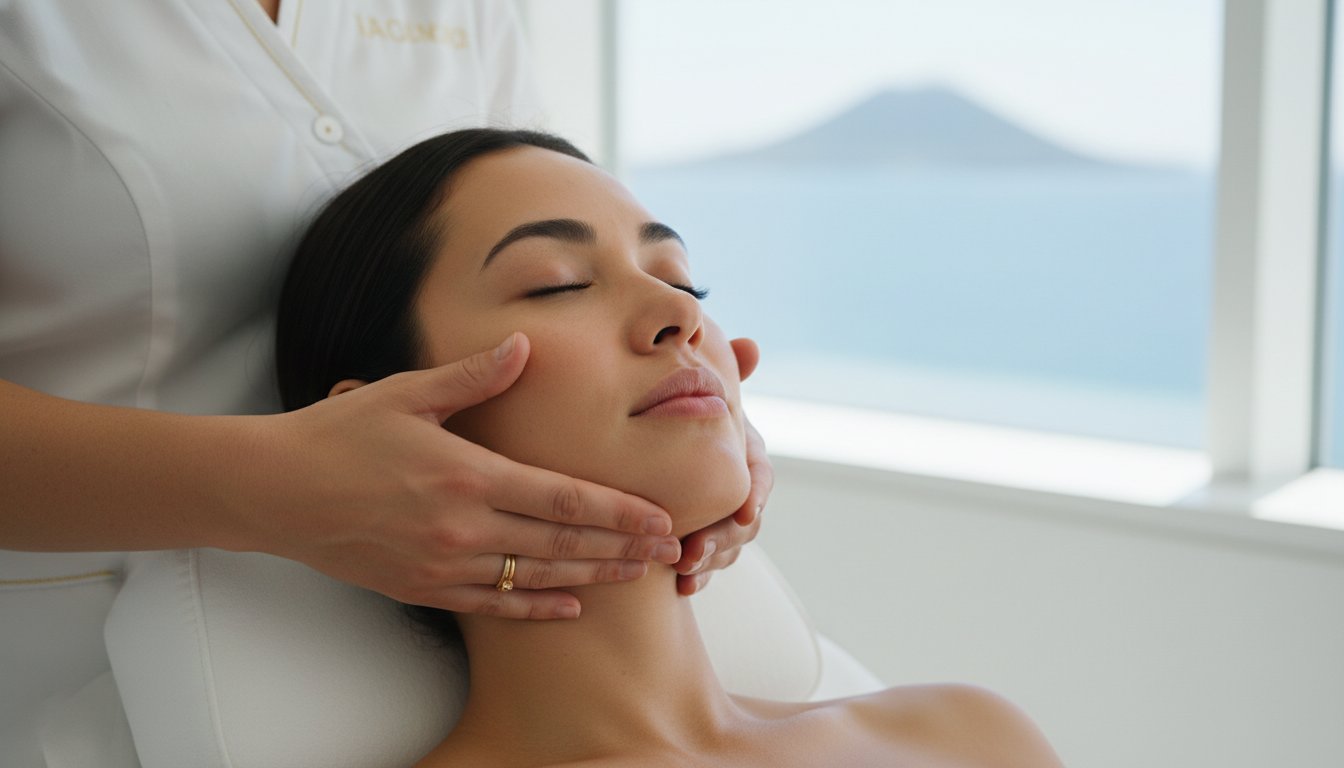
What if the tightness in your jaw isn't just a physical knot, but a stored emotional response from your nervous system? Between 8% and 12% of Americans live with the grinding reality of TMJ disorders, often feeling trapped by chronic facial pain and restricted movement. You likely already know that traditional mouthguards or expensive injections aren't always the final answer. While complex surgical options can cost upwards of $85,000, clinical data shows that 75% to 90% of patients find relief through conservative, non-invasive care. Integrating a targeted massage for tmj into your wellness routine offers a powerful bridge between clinical treatment and holistic healing.
Welcome to the World of Face Up™, where we believe that true recovery starts with a somatic dialogue. We'll show you how somatic facial massage addresses both the physical triggers of pain and the underlying stress that fuels teeth grinding. You'll learn how to achieve immediate pain reduction and improve your jaw mobility using the Face Up Method™. This guide provides the tools you need for long-term stress management and a clear path toward a more comfortable, mobile life.
Key Takeaways
- Identify the primary muscle groups responsible for jaw tension and why they require a targeted approach beyond basic stretching.
- Uncover the somatic link between the nervous system and jaw clenching to address the emotional triggers behind chronic pain.
- Evaluate how active massage for tmj provides a more rehabilitative alternative to passive tools like night guards or muscle-thinning injections.
- Master effective self-massage techniques that use deep pressure and grounding breathwork to release the masseter muscle.
- Learn how the Face Up Method™ offers a holistic path to recovery and professional advancement through specialized certification.
Understanding TMJ: Why Massage is a Vital Tool for Relief
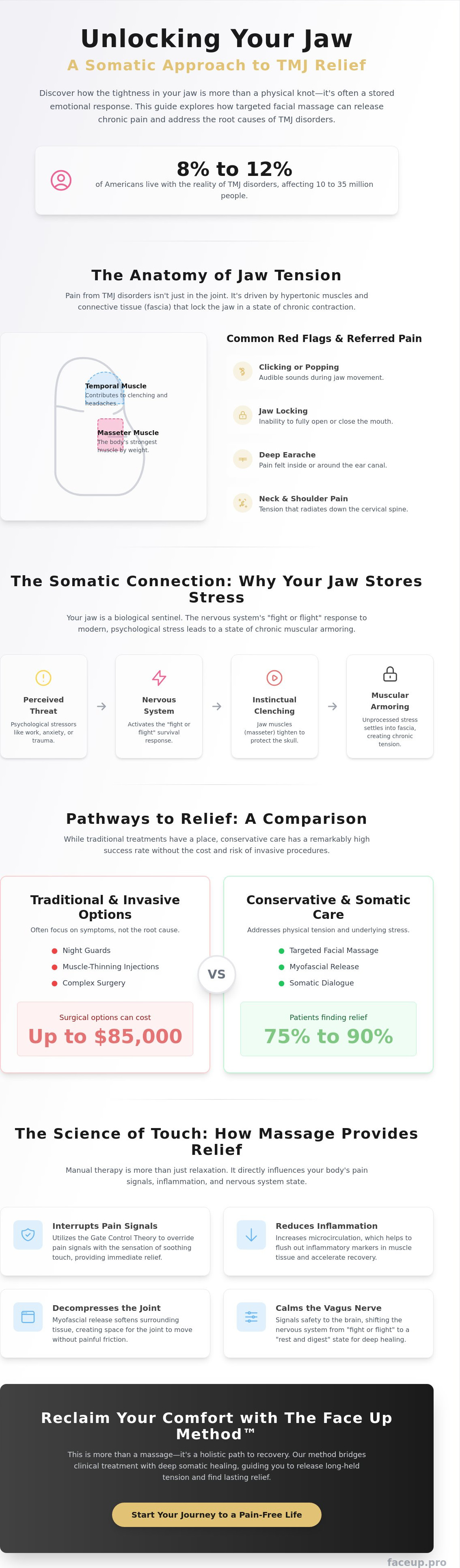
The temporomandibular joint acts as the primary hinge connecting your jawbone to your skull. When this delicate mechanism is disrupted, it leads to Temporomandibular joint dysfunction, a condition that affects between 8% and 12% of Americans. While many people focus on the bone and joint, the real drivers of pain are often the masseter and temporal muscles. The masseter is the strongest muscle in the human body by weight, and it facilitates every word you speak and every bite you take. Chronic tension here creates red flags like clicking, locking, or referred pain that feels like a deep earache or neck strain. Using massage for tmj helps restore balance by increasing microcirculation and physically lengthening hypertonic muscles that have lost their natural elasticity.
The Anatomy of Jaw Tension
The jaw relies on four primary muscles of mastication: the masseter, temporalis, medial pterygoid, and lateral pterygoid. Fascia, the web of connective tissue, can "lock" these muscles into a state of chronic contraction. This tightness doesn't stay local; it often pulls on the cervical spine. This creates a chain reaction of neck and shoulder pain that affects many of the 10 to 35 million individuals currently reporting TMJ symptoms in the United States.
How Massage Therapy Interrupts the Pain Cycle
Manual therapy utilizes the Gate Control Theory to override pain signals with soothing touch. This process reduces inflammatory markers in the muscle tissue, allowing for faster recovery. Myofascial release is particularly effective for joint decompression. By softening the surrounding tissue, massage for tmj creates the space necessary for the joint to move without the painful friction that characterizes many TMD cases.
Recognizing these red flags is the first step toward reclaiming your comfort. When the jaw locks or clicks, it's a signal that the internal environment is under too much pressure. Traditional treatments often provide a buffer, but they don't always address the underlying muscular shortening. It's heartening to know that 75% to 90% of patients respond well to conservative, non-invasive management like this. For specialized support, The Family Practice offers osteopath-led, evidence-informed care for pain and injury that integrates well with these approaches. A somatic approach looks at how these muscles hold onto tension over time. By addressing the fascia and the relationship between the jaw and neck, we move beyond temporary relief. This foundational understanding allows us to treat the jaw not just as a mechanical hinge, but as a vital part of your body's integrated structural system.
The Somatic Connection: Why Your Jaw Stores Stress
The jaw is a biological sentinel. When your nervous system detects a threat, the "fight or flight" response triggers an immediate contraction of the masseter and temporalis muscles. This instinctual clenching is designed to protect your skull and airway. In our modern world, these threats are often psychological rather than physical, leading to a state of chronic "muscular armoring." Somatic bodywork suggests that our tissues serve as a living record of our emotional history. When stress isn't processed, it settles into the fascia. This often leads to disorders of the jaw muscles that feel permanent. Over time, this persistent tension can even result in a "frozen" facial expression, where the lower face loses its natural mobility and aesthetic softness.
The Vagus Nerve and Facial Relaxation
There's a profound connection between the jaw and the vagus nerve, the primary driver of your parasympathetic nervous system. When you perform a massage for tmj, you're communicating directly with your brain's safety centers. Gentle, intentional touch on the face signals to the central nervous system that the "threat" has passed. This shift into a "rest-and-digest" state is why many people experience improved sleep and lower cortisol levels after a session. By calming the nerves that govern the face, we allow the body to let go of the rigid grip it has held for years. This is why the Face Up Method™ focuses on rhythmic, invitational movements rather than aggressive manipulation.
Releasing the "Emotional Armor"
Psychologists have long observed how we use our faces to "armor" ourselves against vulnerability. The jaw is a primary site for suppressed words and unexpressed frustration. When a practitioner applies the Face Up Method™, they act as a professional guide between physical sculpting and deep emotional release. It's common for clients to experience an unexpected emotional catharsis as these long-held patterns break. A specialized massage for tmj can serve as the catalyst for this breakthrough, helping you move past the "mask" of tension. Somatic jaw release is a vital tool for holistic self-regulation that allows you to reclaim your voice and your comfort. If you're ready to explore this deeper connection, you can learn the Face Up Method™ to transform your approach to facial wellness and professional practice.
Massage vs. Traditional TMJ Treatments
Traditional medical approaches often lean toward reactive measures that prioritize symptom management over root-cause resolution. Botox injections for TMJ have gained significant popularity in recent years, yet they can cost between $300 and $1,500 per session. While these injections provide temporary relief by paralyzing the muscle, they carry the risk of long-term muscle thinning and potential bone density loss in the jaw. In contrast, a massage for tmj acts as an active rehabilitative tool. It addresses the source of the tension rather than just masking the signals. Even more invasive procedures like surgery, which can range from $3,000 to over $85,000, are rarely the best first step for muscular TMD. Medical research suggests that 75% to 90% of patients find success through non-invasive, conservative management like manual therapy.
Why Mouthguards Aren’t Always Enough
Night guards are a dental staple, typically costing between $300 and $800. They serve as a vital protective barrier for your tooth enamel, preventing the physical wear caused by grinding. However, they're a passive defense. They don't retrain the nervous system or release the hypertonic masseter muscles that drive the clenching in the first place. By integrating manual therapy, you create a 360-degree approach to healing. You can explore more about this synergy in The Ultimate Guide to TMJ Massage Therapy. Clinical insights highlight how massage can ease TMJ disorders by improving range of motion and reducing the intensity of muscular trigger points.
Non-Invasive Rejuvenation: The Aesthetic Bonus
Beyond pain relief, the Face Up Method™ offers a unique aesthetic advantage that pharmaceutical interventions cannot match. Chronic clenching leads to masseter hypertrophy, which often creates a heavy, squared appearance in the lower face. Olga Newman's "Natural Alternative" philosophy emphasizes that we don't need toxins to achieve a refined profile. Instead of thinning the muscle through paralysis, we sculpt the face by releasing deep-seated tension. This approach ensures you look younger and more vibrant while feeling physically liberated. It's a sophisticated blend of wellness and beauty that positions Face Up™ as a leader in global facial health. Choosing massage for tmj allows you to invest in a long-term solution that respects your body's natural physiology.
Effective Techniques for TMJ Massage and Release
Mastering the art of massage for tmj requires more than just rubbing the cheeks; it demands a structured, somatic sequence that addresses the deep architecture of the face. Unlike generic advice that suggests simple circular motions, the Face Up Method™ utilizes a layered approach to tissue release. We begin with preparation, where you ground your breath to shift the nervous system into a receptive state. This warming phase ensures that the fascia is pliable before moving into the External Masseter Release. During this step, you use your knuckles or fingertips to apply steady, deep pressure along the jawline, tracing the muscle from the cheekbone down to the angle of the mandible. This physical work directly counters the chronic shortening discussed in previous sections.
Next, we address the "headache muscles" through Temporal Decompression. By applying slow, upward strokes to the temples, you alleviate the secondary tension that often triggers morning migraines. The final step of the external sequence is integration. Stretching the sternocleidomastoid and trapezius muscles in the neck provides the necessary structural support for a relaxed jaw. This comprehensive routine ensures that you aren't just treating a symptom but realigning the entire upper body. When these external techniques are combined with a professional massage for tmj, the results are often immediate and profound.
The Power of Buccal Massage
Buccal massage is widely considered the gold standard for intraoral release because it allows you to reach the medial and lateral pterygoid muscles. These muscles are responsible for the side-to-side movement of the jaw and are inaccessible from the outside. By placing a gloved thumb inside the mouth and your fingers on the outside of the cheek, you can compress the masseter from both sides. This dual-sided pressure is transformative for those who experience severe jaw locking. If you're a professional looking to master these advanced techniques, our Facial Sculpting Certification provides the in-depth training required to perform this safely and effectively.
Daily Rituals: The Face Up App Approach
Consistency is the foundation of long-term relief. We recommend incorporating five-minute "micro-rituals" into your daily routine to prevent tension from accumulating. These short sessions act as a reset button for your nervous system, ensuring that daily stressors don't result in a "frozen" expression by evening. The Face Up app offers guided somatic sessions that walk you through these movements with professional precision. You can start your journey with Face Up™ today to access these expert-led rituals and reclaim your jaw health.
Finding Relief with the Face Up Method™
Welcome to the World of Face Up™, where we redefine the approach to facial health through a sophisticated blend of professional authority and somatic wisdom. Our philosophy is rooted in the belief that true healing is holistic, addressing the physical, emotional, and neurological layers of the body. We don't view massage for tmj as a simple transaction or a temporary fix. Instead, it's a transformative dialogue with your nervous system. By integrating the techniques we've discussed, such as buccal release and temporal decompression, the Face Up Method™ provides a reliable path forward for those who've found traditional dental or medical interventions insufficient.
It's vital to recognize that your jaw tension is a message, not just a symptom of a mechanical failure. It’s your body's way of signaling that it’s holding onto stress or seeking safety. When you work with a certified Face Up™ provider, you're engaging with a professional guide who understands this somatic connection. These specialists are trained to look beyond the surface, ensuring that every touch is invitational and every sequence is designed for long-term self-regulation. This high standard of decorum and professional integrity is what sets our practitioners apart in a crowded wellness landscape.
Professional Training for Practitioners
The Face Up Method™ Certification is designed for beauty and wellness professionals who seek to elevate their practice and offer genuine solutions for complex conditions like TMD. In a specialized professional landscape, being able to provide effective massage for tmj is a powerful differentiator. Our training modules emphasize global standards and clinical precision, ensuring you're ready to serve a diverse clientele. By adding these somatic techniques to your menu, you create a sense of belonging and community for your clients, which naturally leads to higher retention rates. Our digital training spans multiple jurisdictions, providing a comprehensive service model that allows you to join our global network of experts from anywhere in the world.
Next Steps for Personal Healing
You don't have to be a professional to benefit from our specialized knowledge. We've created a seamless gateway for individuals to take control of their own recovery through the Face Up mobile app. This platform offers guided somatic sessions that mirror the rhythms used by our certified practitioners. For those who want a deeper dive, our "Jaw Release by Face Up™" digital course provides a structured curriculum for releasing chronic tension at home. This is your invitation to move past the administrative and physical burdens of chronic pain. We encourage you to take the first step toward a more mobile, comfortable life and Experience the Face Up Method™ today.
Reclaim Your Vitality with Somatic Jaw Release
Reclaiming your jaw health is a journey from simple mechanical adjustment to deep somatic awareness. We've explored how the proprietary Face Up Method™ moves beyond surface-level rubbing to address the nervous system's role in chronic clenching. By integrating external masseter release with the gold-standard buccal technique, you can interrupt the pain cycle and restore your natural facial expression. Choosing a specialized massage for tmj isn't just about immediate pain reduction; it's about adopting a lifestyle that values long-term self-regulation and non-invasive rejuvenation.
Face Up™ has empowered over 10,000 students globally to master this somatic-based approach to beauty and wellness. Whether you're seeking personal relief or professional certification, our ecosystem provides the tools and community support you need to succeed. It's time to stop treating your jaw as a problem to be solved and start listening to what it needs to heal. Join the World of Face Up™ and Release Your Jaw Tension Today. Your path to a lighter, more vibrant life begins with a single, intentional touch.
Frequently Asked Questions
Can massage actually cure my TMJ permanently?
Massage for tmj is an exceptionally effective management tool rather than a one-time surgical cure. Data from the National Institute of Dental and Craniofacial Research suggests that 75% to 90% of patients find lasting relief through conservative care. By retraining the nervous system and releasing hypertonic muscles, you address the underlying clenching patterns. Consistency with the Face Up Method™ helps prevent the return of chronic tension over time.
Is it safe to do intraoral (buccal) massage on myself at home?
It's safe to perform intraoral work at home provided you use clean hands or medical-grade gloves. The Face Up app offers guided tutorials to ensure you're applying pressure safely to the internal pterygoid muscles. Reaching these points is essential for restoring full jaw mobility. If you feel sharp pain or have active mouth sores, you should pause and consult a professional practitioner before continuing.
How often should I massage my jaw for TMJ relief?
Daily 5-minute micro-rituals are ideal for maintaining jaw mobility and preventing tension from accumulating throughout the day. For chronic cases, we recommend a professional 60-minute session every two to four weeks. This schedule allows the muscle tissue to integrate the changes while providing deep, restorative decompression. Most individuals notice a significant shift in their comfort levels after just three consistent weekly sessions.
Why does my jaw click even after a massage session?
Clicking often persists because it relates to the internal disc of the joint, while massage primarily targets the surrounding muscles. While the sound might remain, massage for tmj reduces the muscular pull that makes the joint rub or lock painfully. By softening the masseter, you allow the joint to function with significantly less friction. This often makes the clicking quieter and much more comfortable during daily movement.
Can facial massage help with headaches caused by teeth grinding?
Facial massage is highly effective for tension headaches triggered by bruxism. Releasing the temporalis muscle located at your temples directly alleviates the vice-like pressure often felt after a night of grinding. Many of the 10 to 35 million people with TMJ symptoms report that regular temple work reduces headache frequency by over 50%. It's a natural, somatic alternative to relying solely on over-the-counter pain relievers.
What is the difference between a standard facial and the Face Up Method™?
A standard facial focuses primarily on skin health and topical product absorption. The Face Up Method™ is a proprietary somatic approach that targets the deep musculature and fascia of the lower face. It utilizes intraoral techniques and nervous system regulation to achieve structural change rather than just surface-level glow. Our method is a professional-grade therapy used by certified practitioners across Australia, New Zealand, and beyond.
Should I see a doctor before trying massage for TMJ?
You should consult a medical professional or dentist for a formal diagnosis before beginning any new therapy. Since TMJ disorders encompass over 30 different conditions, it's important to rule out structural fractures or infections first. Once a doctor confirms your symptoms are muscular, manual therapy becomes a vital first-line treatment. Most practitioners welcome a collaborative approach between medical providers and somatic experts for the best results.
Can I do TMJ massage if I have dental implants or fillers?
You can safely practice jaw massage if you have implants or fillers, but the timing of your treatment is crucial. We recommend waiting at least 4 weeks after filler injections to ensure the product has fully settled into the tissue. For dental implants, wait until your surgeon has cleared you for full pressure, which usually occurs after the 3-to-6-month integration period. Always inform your practitioner about any recent procedures.


