

What if the secret to a chiseled jawline isn't about working the muscles harder, but finally letting them let go? Most people assume that jawline sculpting exercises at home require aggressive chewing or intense resistance, yet these methods often leave us with more TMJ tightness than actual definition. You've likely felt that chronic heaviness in your face or noticed sagging skin that doesn't seem to respond to traditional face yoga. It's frustrating to feel like your efforts are only adding to your facial tension rather than easing it.
We recognize the need for a more refined, sustainable approach to facial wellness. This guide introduces a somatic path to natural definition, focusing on rituals that melt away the stress held in your masseter muscles to reveal your natural bone structure. You'll learn how to transition from high-impact movements to gentle, effective releases that create a lifted and sculpted profile. We'll explore the connection between muscular release and aesthetic clarity, providing you with a simple ritual for long-term facial health and a more defined appearance.
Key Takeaways
- Discover how somatic jawline sculpting exercises at home focus on releasing masseter muscle tension to restore natural facial definition rather than relying on aggressive contractions.
- Learn why the jaw is a primary site for storing "fight or flight" stress and how softening this area benefits your entire nervous system.
- Understand the risks associated with high-resistance jaw exercise balls and why traditional "mewing" techniques are frequently misunderstood by beginners.
- Master a five-step somatic ritual designed to lengthen and soften the lower face, providing a sustainable alternative to invasive treatments.
- Explore how the Face Up™ App and the Jaw Release Course provide guided support to integrate these professional-grade rituals into your daily wellness routine.
Understanding Jawline Sculpting: Why Tension Release is the Key to Definition
Achieving a sharp, elegant profile often feels like an uphill battle against genetics or the natural passage of time. However, somatic jawline sculpting offers a refreshing and effective perspective. It defines the process as restoring natural bone visibility by releasing muscular bunching rather than adding bulk. When we practice jawline sculpting exercises at home, our goal isn't to build larger muscles. Instead, we aim to soften and lengthen the tissues that have become tight and shortened over years of accumulated stress. This approach uncovers the structural beauty that already exists within your facial frame.
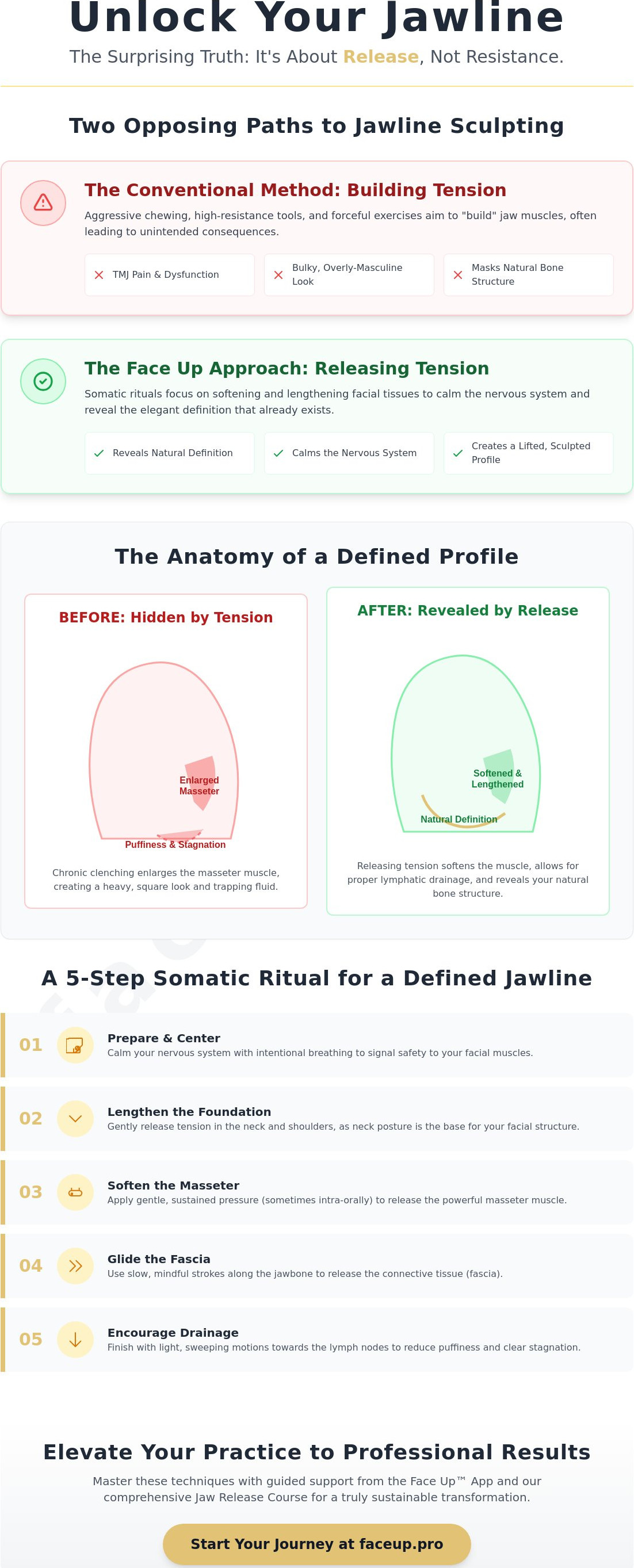
The Masseter muscle is one of the strongest in the human body, responsible for the powerful action of chewing. When we chronically clench our teeth or hold stress in our face, this muscle becomes hyper-toned and enlarged. This results in a heavy, square lower face that obscures the elegant line of the mandible. The Face Up™ philosophy suggests that true beauty is a byproduct of a regulated nervous system. When the body feels safe and the mind is calm, the facial muscles release their "fight or flight" grip. This transition allows your natural architecture to emerge without the need for aggressive intervention.
The Anatomy of a Defined Profile
The relationship between the mandible, or jawbone, and the surrounding soft tissue is delicate. When facial tissues are chronically tight, they act as a dam, trapping fluid and preventing efficient drainage. This lymphatic stagnation contributes to a puffy appearance or the look of a double chin, regardless of body weight. Foundationally, your neck posture serves as the base for your entire facial structure. You cannot effectively sculpt a jawline if the neck is collapsed forward, which is why working with experts like Upstream Performance to improve your overall alignment is a vital step in achieving the structural support needed to lift and define these tissues.
Sculpting vs. Bulking: A Crucial Distinction
There is a significant danger in over-training the jaw with high-resistance tools. Aggressive reps can lead to joint dysfunction and a bulky, overly masculine look that many individuals find undesirable. Identifying whether your jawline is hidden by muscle tension or fluid retention is the first step toward clarity. Choosing the right jawline sculpting exercises at home means prioritizing fascia release over muscle contraction. We believe that true sculpting is the restoration of the face’s natural architecture. By focusing on the health of the connective tissue, you create a lifted appearance that looks both natural and vibrant.
The Somatic Connection: Why Your Jawline Reflects Your Inner State
Your jaw is far more than a functional joint for eating and speaking; it acts as a primary reservoir for your emotional history. When you encounter stress, your body often defaults to a "fight or flight" response, causing the muscles of the lower face to contract instinctively. This isn't just a fleeting physical reaction. The trigeminal nerve, which governs the muscles used for chewing, is directly wired into the brain’s arousal centers. This means that chronic mental stress translates directly into physical density in the face. When you engage in jawline sculpting exercises at home, you aren't just moving skin. You're communicating with your entire nervous system, signaling that it's safe to let go of defensive postures.
Somatic bodywork serves as a bridge between aesthetic goals and emotional relief. By focusing on the internal sensation of the muscle rather than just the external appearance, you can achieve results that feel as good as they look. For those whose tension has progressed into persistent discomfort, our Ultimate Guide to TMJ Massage Therapy offers targeted strategies for restoration. Understanding the root of this tension is essential for anyone dealing with Temporomandibular Disorders (TMDs), as it shifts the focus from "fixing" a problem to nurturing a system.
Emotional Armor and the Masseter
The habit of "gritting your teeth" creates a form of emotional armor that physically alters the shape of your lower face over time. This chronic clenching can make the jawline appear heavy or "locked," masking the elegant contours of your bone structure. Often, this physical tightness is tied to repressed emotions like frustration or the need to maintain control. Somatic awareness is the first step in any effective exercise ritual. By acknowledging where you hold this "armor," you can begin to melt it away, allowing your natural features to emerge. If you feel you need deeper support in this journey, a Somatic Bodywork Session can help bridge the gap between physical release and emotional clarity.
The Vagus Nerve and Facial Rejuvenation
Calming the nervous system through the vagus nerve is a powerful secret for facial rejuvenation. When you shift into a parasympathetic "rest and digest" state, your blood flow improves and your muscles naturally find their optimal placement. You can incorporate simple breathwork into your jawline sculpting exercises at home by inhaling for four counts and exhaling for six. This rhythmic breathing helps soften the face and creates a distinct "glow" that no amount of aggressive exercise can replicate. This state of ease allows for better lymphatic flow and a more lifted, vibrant appearance.
Beyond the Jaw Ball: Comparing Sculpting Methods and Avoiding Common Mistakes
The viral trend of "mewing" is another area where beginners often stumble. While the principle of proper tongue posture is sound, it's frequently misunderstood. Many individuals apply far too much pressure against the roof of the mouth, which creates new patterns of tension in the floor of the mouth and neck. Similarly, traditional "Face Yoga" often relies heavily on muscle contraction to build volume. In contrast, the Face Up™ Somatic Release method focuses on lengthening and softening the fascia. While you can find various expert-backed jawline exercises to help you get started, the key is performing them with internal awareness rather than brute force.
Why Resistance Tools Can Be Risky
Using high-resistance devices creates an unnatural workload for the Temporomandibular Joint (TMJ). Unlike the hinge joints in our limbs, the jaw isn't built for repetitive heavy lifting. This mechanical strain often results in secondary issues like tension headaches and chronic neck stiffness. When the masseter is over-stimulated without a corresponding release, the entire craniofacial system becomes tight and compressed. If you're seeking relief and definition without the risk of injury, consider Choosing the Best TMJ Massage Tool to facilitate a safer, more restorative practice.
The Myth of Facial Spot Reduction
It's a common misconception that you can "burn" fat in a specific area by exercising the muscle underneath. Chewing won't melt away a double chin or reduce buccal fat. However, somatic rituals improve lymphatic drainage, which significantly reduces puffiness and creates the illusion of a leaner, more sculpted face. Consistency in your practice is what yields visible results. Intense, sporadic workouts only lead to muscle fatigue and potential joint wear, whereas gentle, daily rituals support the face's natural architecture and long-term health.
Effective Jawline Sculpting Exercises at Home: A Guided Ritual
Performing jawline sculpting exercises at home requires a fundamental shift in perspective. Instead of counting repetitions or pushing for muscle fatigue, we focus on the somatic quality of each movement. This ritual is designed to be a meditative experience, where the "Jaw Release" mindset guides you to soften rather than strain. By cultivating intra-oral awareness, even when working on the surface of the skin, you engage the deep buccal tissues that define the lower face. This five-step process ensures that you are working with your body’s natural intelligence to reveal a more defined profile.
Step 1: The Postural Reset
Foundation is everything in facial work. Align the crown of your head with your tailbone to decompress the cervical spine. You should never practice while sitting with a slumped spine, as this creates downward pressure on the facial tissues and restricts lymphatic flow. Use the "Collarbone Anchor" by placing your hands firmly just below your clavicles. This creates a stable base, allowing the jaw to lift and the neck to lengthen without creating tension in the back of the neck.
Step 2: The Masseter Melt
Using soft knuckles, apply gentle pressure to the masseter muscle, which is located just in front of the ear. Move in slow, downward strokes to melt away trigger points that have accumulated from daily clenching. Avoid aggressive digging that might cause bruising; the goal is a responsive release. Keep your tongue resting lightly on the roof of your mouth, just behind the front teeth. This placement naturally encourages the jaw to relax, making the jawline sculpting exercises at home significantly more effective.
Step 3: The Platysma Stretch
The platysma is a thin sheet of muscle that covers the neck and lower jaw, and lengthening it is key to a "lifted" look. To perform the "Gentle Sky Kiss," tilt your head back slightly while maintaining your "Collarbone Anchor." Pout your lips toward the ceiling without crunching the back of your neck. This movement should feel like a long, smooth stretch from the chin down to the chest. This step helps define the angle of the jaw by smoothing the soft tissue that often sags over time.
To conclude the ritual, incorporate the "Face Up Sweep" to clear lymphatic pathways. Use the flats of your hands to glide from the center of the chin, along the jawline, and down the sides of the neck toward the collarbones. This final step reduces puffiness and highlights the work you have just done. For those seeking a guided daily companion to refine these techniques, the Face Up App Subscription provides structured rituals to elevate your results and ensure your technique remains precise and effective.
Elevating Your Practice: The Face Up™ Method and Professional Results
While self-guided rituals form the foundation of facial health, the Face Up Method™ represents the gold standard for non-invasive rejuvenation. It transitions the focus from mere aesthetics to a holistic state of well-being, where beauty is the natural outcome of a relaxed and balanced system. For those ready to deepen their somatic journey, our Jaw Release digital course offers an expansive exploration of how emotional clearing translates into physical definition. This structured education allows you to move beyond basic movements into a profound understanding of your own facial anatomy, ensuring your jawline sculpting exercises at home are performed with professional-level precision.
The Face Up Method™ is built on the belief that true sculpting happens when we stop fighting our anatomy and start listening to it. By integrating nervous system regulation with deep tissue release, we achieve results that look vibrant and feel sustainable. This approach honors the unique architecture of your face, providing a pathway to definition that doesn't rely on temporary fillers or aggressive interventions. It's about empowering you with the tools to manage your own facial aging through awareness and intentionality.
From Self-Care to Professional Mastery
Some structural changes require the precision and skilled hands of a trained professional. While jawline sculpting exercises at home are incredibly effective for daily maintenance, a certified practitioner can perform advanced buccal and somatic work that reaches deeper layers of muscle and fascia. These treatments provide a level of release that is difficult to replicate on your own. Our Practitioner Directory connects local Auckland clients and global users with experts who specialize in this unique modality. If you find yourself inspired by the results of your personal practice, you might even consider pursuing a Facial Sculpting Certification to master the Face Up Method™ and share these rituals with others.
The Face Up™ App: Your Daily Ritual
Consistency is the most vital component of any facial practice. The Face Up™ App serves as your daily companion, providing guided videos, somatic reminders, and progress tracking to keep your technique sharp. It removes the guesswork from your routine by offering specific cues that ensure you are lengthening rather than bunching the muscles. Dedicating just 10 minutes a day to these rituals creates cumulative structural change that lasts. It's about building a sustainable relationship with your face rather than seeking a quick fix. You can start your 7-day ritual journey on the Face Up App today to experience the transformative power of the Face Up Method™ firsthand.
Embrace the Art of Facial Release
True definition isn't found through force; it's revealed through the intentional release of accumulated stress. By shifting your focus from aggressive muscle building to somatic softening, you've taken the first step toward a more vibrant and sustainable profile. You now understand that jawline sculpting exercises at home are most effective when they prioritize nervous system regulation and lymphatic health over high-resistance strain. This approach honors your natural bone structure while easing the chronic tension that often masks your facial architecture.
Founded by somatic bodywork specialist Olga Newman, the Face Up Method™ represents a non-invasive, holistic path to rejuvenation. Our Red Dot-level design and methodology ensure that every ritual you perform is backed by professional standards of excellence. Whether you're seeking relief from jaw tightness or a more lifted appearance, the tools for transformation are within your reach. Explore the Jaw Release Course and Start Your Sculpting Ritual Today to begin your journey toward lasting facial clarity. We're here to guide you through every step of this proprietary ecosystem, inviting you to rediscover a sense of ease and confidence in your own skin.
Frequently Asked Questions
How long does it take to see results from jawline sculpting exercises at home?
You will likely feel a sense of lightness and reduced tension immediately after your first session. Visible aesthetic changes, such as a more defined mandible and reduced puffiness, typically emerge within four to six weeks of consistent daily practice. Because somatic rituals focus on the underlying fascia and lymphatic health, the results are cumulative. This consistency allows your facial structure to settle into a more lifted and relaxed state over time.
Can jawline exercises help with TMJ pain and clenching?
These rituals are specifically designed to alleviate TMJ discomfort and chronic clenching. By performing jawline sculpting exercises at home that prioritize release over contraction, you signal the nervous system to drop its defensive "fight or flight" grip. This process softens the masseter muscle and reduces the mechanical strain on the joint. Many users report a decrease in morning jaw soreness and tension related headaches after integrating these somatic movements into their routine.
Are jawline exercises safe if I have dental implants or Botox?
Somatic rituals are generally safe for those with dental implants or Botox, provided you follow specific timing guidelines. If you've recently received Botox, it's essential to wait at least 14 days before practicing to ensure the product has fully settled. Since our method focuses on gentle soft tissue release rather than deep structural manipulation of the bone, it doesn't interfere with stable dental implants or other restorative work already in place.
What is the best time of day to perform a jaw sculpting ritual?
The best time to practice depends on your specific goals for the day. Morning rituals are excellent for clearing overnight lymphatic stagnation and reducing morning puffiness. Conversely, an evening practice helps melt away the stress accumulated throughout the day, preventing nighttime clenching and promoting deeper sleep. Many members of our community find that a short, ten minute session before bed offers the most profound emotional and physical release.
Do I need any tools, like a Gua Sha or a roller, for these exercises?
You don't need any specialized tools to achieve professional results with our method. Your hands are the most sophisticated instruments available, providing the sensory feedback necessary for true somatic awareness. While tools like a Gua Sha or a roller can complement your practice, they're not a substitute for the intuitive touch of your own fingers. Learning to feel the tension within your tissues is a core part of the healing process.
Will jawline exercises make my face look more masculine?
These exercises won't make your face look more masculine; instead, they reveal your natural, unique architecture. Because we focus on lengthening the muscles rather than bulking them through resistance, the result is a refined and elegant profile. By releasing the "bunching" of the masseter, we uncover the bone structure that's often hidden by tension or fluid, regardless of your gender or existing facial features.
Can I overdo jawline exercises, and what are the warning signs?
It's possible to overdo any facial practice if you prioritize intensity over awareness. Warning signs include increased jaw clicking, muscle soreness, or persistent headaches after a session. If you experience these symptoms, it's a signal to reduce the pressure and focus more on the "melt" rather than the movement. Remember that in the Face Up™ Method, the quality of the release is always more important than the quantity of repetitions.
Is there a difference between face yoga and the Face Up™ Method?
Traditional face yoga typically focuses on muscle contraction and repetitive movements to build volume. The Face Up™ Method, developed by Olga Newman, prioritizes somatic release, fascia lengthening, and nervous system regulation. While face yoga can sometimes lead to more tension if performed incorrectly, our approach ensures that jawline sculpting exercises at home remain restorative. We view beauty as a natural byproduct of a calm, regulated body rather than a result of muscular strain.


