

The most useful jaw tension release exercises may begin with doing less, not stretching harder. If your jaw feels tight while eating, speaking, or getting through the day, it’s understandable to look for a quick routine. Online advice can conflict, though, and a movement that feels too forceful may leave you unsure whether to continue. A gentle, attentive approach is a more considered place to start. Persistent or worsening symptoms deserve more than guesswork.
This guide will help you explore gentle self-practice, notice how your jaw responds, and decide when guided support or advice from an appropriate health professional may be a better fit. You’ll learn what to look for in an exercise, why a one-size-fits-all routine may not suit everyone, and how to compare self-practice with structured options such as Face Up’s Jaw Release Course and guided rituals in the Face Up app. The aim isn’t to promise a cure or push through discomfort. It’s to help you choose a measured next step and know when to pause and seek assessment.
Key Takeaways
- Jaw tension release exercises are gentle movement or awareness practices, not a diagnosis or guaranteed fix.
- Look for clear instructions, comfortable pacing, and guidance on when to stop rather than pushing through discomfort.
- Choose between self-practice, structured wellness learning, or clinical assessment based on the support you need.
- Persistent or worsening symptoms are a reason to seek advice from an appropriate health professional.
- Face Up’s Jaw Release Course offers a structured digital practice option; check local provider availability separately if seeking support in Wellington.
Jaw tension release exercises: what they can and cannot do
A tight or tired jaw can make ordinary activities, such as eating or speaking, uncomfortable. That feeling can have different contributors, so it’s best not to assume stress or clenching is the cause. Jaw tension release exercises generally mean gentle movements or awareness practices intended to help you notice and ease unnecessary tension. They can be part of general self-care, but they don’t diagnose what’s happening or guarantee a particular result.
People respond differently, and an exercise that feels comfortable for one person may not suit another. Evidence about jaw exercises often comes from programmes tailored to a person’s needs, so it shouldn’t be taken as proof that every self-directed routine will help. Relaxation practice may support everyday awareness, but it isn’t an assessment or treatment plan for a jaw condition.
What can cause a tense or tired jaw?
Jaw tightness may be associated with clenching, stress, posture, dental factors, or other issues. More than one factor may be involved, and trying an exercise can’t confirm the cause. Jaw pain, clicking, or restricted movement can have different explanations. The broad term Temporomandibular joint dysfunction (TMD) covers conditions affecting the jaw joint and surrounding muscles.
If symptoms persist, worsen, or concern you, seek advice from an appropriate qualified health professional. An assessment can help clarify whether there’s an underlying issue and what kind of support may be suitable.
When are jaw release exercises a reasonable starting point?
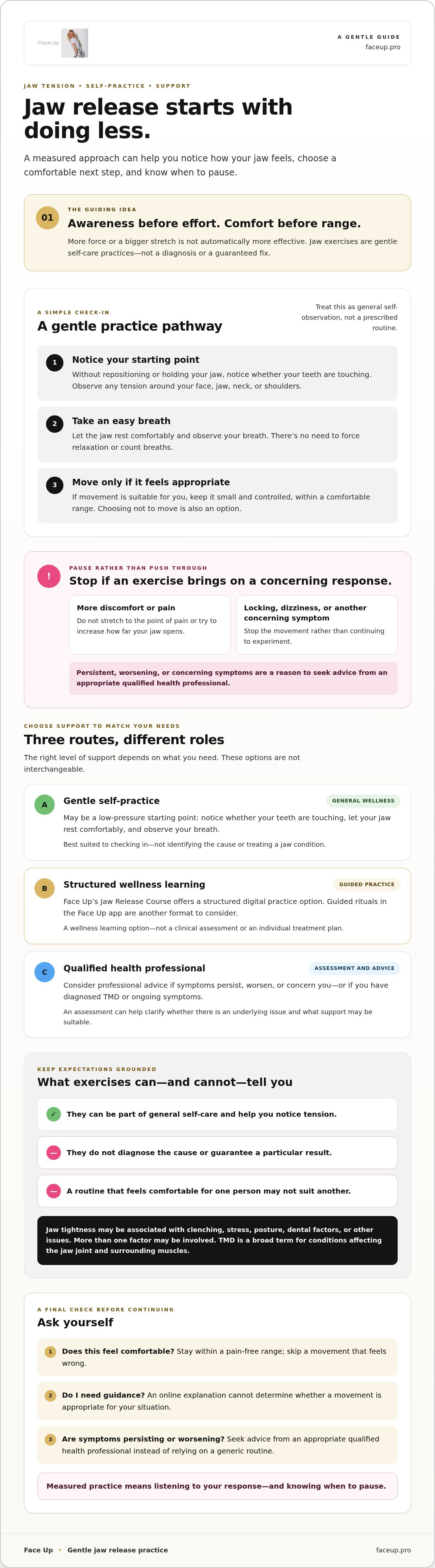
For some people, a low-pressure starting point is simply noticing whether the teeth are touching, letting the jaw rest comfortably, and observing the breath. If you try movement, stay within a comfortable, pain-free range. More force or a bigger stretch isn’t automatically more effective.
Stop if an exercise increases discomfort, and don’t treat worsening symptoms as something to push through. Gentle self-practice may be appropriate as general wellness practice, but diagnosed TMD or persistent symptoms call for individual guidance rather than reliance on a generic online routine. The next section covers how to approach practice gently and what to consider before following a routine.
How to practise gentle jaw tension release exercises
A careful approach starts with awareness, not effort. There’s no single movement sequence that is suitable for everyone, so treat general self-observation as a way to check in, not as a prescribed exercise routine. If you have ongoing symptoms or a diagnosed jaw condition, ask an appropriate health professional whether a particular movement is suitable for you.
Start with jaw awareness and a relaxed resting position
Without trying to reposition or hold your jaw, notice whether your teeth are touching. Take a slow, easy breath and observe any tension you can feel around your face, jaw, neck, or shoulders. There’s no need to force the muscles to relax or count breaths. Simply noticing your starting point can help you decide whether self-practice feels comfortable today.
Add small, comfortable movements only if appropriate
Some general guides describe gentle opening and closing, but that movement won’t be suitable for everyone. For background, Hinge Health shares examples of targeted TMJ exercises. An online guide can explain a movement, but it can’t determine whether that movement is appropriate for your situation.
If movement has been cleared as suitable for you, keep it small and controlled, and stay within a comfortable range. Don’t stretch to the point of pain or try to increase how far your jaw opens. If a movement feels wrong, skip it rather than pushing through. Jaw exercises should feel controlled and comfortable, never forced.
Stop if a movement increases pain, causes locking or dizziness, or brings on another concerning symptom. If symptoms persist or worsen, seek advice from an appropriate qualified health professional rather than continuing to experiment. General self-care guidance is not a substitute for individual assessment.
Gentle practice should leave room to choose what feels appropriate, including choosing not to move. If you’d prefer guidance framed as wellness education rather than a clinical treatment plan, explore Face Up’s guided jaw release practice and consider whether that format suits your needs.
Self-guided exercises, a course, or a jaw pain specialist in Wellington?
The right level of support depends on what you need. Self-guided jaw tension release exercises may suit someone exploring gentle awareness and comfortable movement. A structured course can organise wellness practice, while a qualified health professional can assess symptoms and advise on care. These options have different purposes: a course isn’t a clinical assessment, and general self-practice can’t identify the cause of jaw symptoms.
- Self-practice: A flexible way to explore gentle movements or awareness, but it may not be tailored to your symptoms.
- Structured wellness education: A course can provide an organised approach to practice, without promising symptom relief or diagnosing a condition.
- Clinical assessment: A suitable health professional can assess persistent or concerning symptoms and discuss appropriate next steps.
What does a guided jaw release course add?
A course may bring structure to self-practice, especially if you find online instructions inconsistent. Face Up’s Jaw Release Course is a digital offering for wellness education and practice, not medical treatment. Before choosing any course, check what it covers and whether its scope fits your needs. If you’re looking for clinical advice, consult an appropriate health professional instead.
For broader background on massage and jaw care, see The Ultimate Guide to TMJ Massage Therapy. If you’re comparing exercise instructions, Jaw stretching exercises from Cambridge University Hospitals provides patient information on jaw movements. Guidance from any source may not be right for every person, so consider your symptoms and seek individual advice if unsure.
When should you look for professional assessment in Wellington?
Consider seeking assessment if symptoms persist, worsen, or interfere with eating, speaking, or everyday comfort. A qualified professional can help assess what may be contributing and whether further care is appropriate. Before booking in Wellington, ask about the provider’s relevant qualifications, experience with jaw concerns, and scope of practice. Confirm directly that their service matches the help you’re seeking.
Face Up has a global directory of certified providers, but its current Wellington listings haven’t been verified here. Don’t assume there’s a local listing or clinic; check the directory and confirm availability directly. Choosing support starts with clarity about what each option can and can’t offer.
How to choose jaw tension release exercises that feel appropriate
Online routines vary in pace, technique, and the claims they make. To assess jaw tension release exercises, look for guidance that helps you make an informed choice rather than promising the same result for everyone. Use this checklist before following a routine:
- Clear purpose: Does it explain who the routine is intended for and what it doesn’t address?
- Manageable pacing: Are movements introduced gently, with options to modify or skip them?
- Understandable instruction: Can you see or follow the movement clearly without guessing at the technique?
- Stopping guidance: Does it tell you to pause if discomfort increases or a movement feels unsuitable?
- Transparent scope: Are the instructor’s qualifications relevant to the advice, and are the limits of the routine made clear?
Be cautious of forceful stretching, guaranteed outcomes, or instructions to ignore worsening pain. A routine that encourages you to push through discomfort isn’t a good match for gentle self-practice. If you’re comparing hands-on tools with movement-based approaches, Choosing the Best TMJ Massage Tool offers another perspective to consider.
Questions to ask before following an exercise routine
Before starting, check whether the guidance describes its intended audience and limitations. Look for clear demonstrations, suitable modifications, and advice on when to pause. Consider whether the instructor’s stated qualifications fit the kind of instruction being offered. If the answers aren’t clear, choose a better-explained resource or ask an appropriate health professional whether the routine suits your circumstances.
Signs to pause self-practice and get advice
Stop the routine if movement increases pain, your jaw locks, or you experience dizziness or another concerning symptom. Clicking or tension alone doesn’t establish what’s causing a problem, so avoid self-diagnosis. If symptoms persist, worsen, or make eating or speaking difficult, pause self-practice and consult an appropriate qualified health professional. They can assess your situation and advise whether a particular movement approach is suitable.
Personal circumstances matter. A routine that feels manageable for one person may not be appropriate if you have ongoing symptoms or a diagnosed jaw condition. In those cases, ask for individual guidance rather than adapting exercises by trial and error. If you’re looking for structured wellness education and guided practice, explore the Face Up Jaw Release Course. It’s an option for learning, not a substitute for clinical assessment or care.
Explore guided jaw release practice with Face Up
Your next step depends on the support you’re looking for. Gentle self-practice may suit you if you’re comfortable exploring awareness and movement at your own pace. A digital course can offer more structure for wellness practice, while persistent, worsening, or disruptive symptoms are a reason to seek assessment from an appropriate health professional. These paths serve different needs, and a course isn’t a replacement for clinical advice.
Is the Face Up Jaw Release Course the right fit?
Face Up’s Jaw Release Course is a digital wellness resource for people seeking structured jaw release practice. It may suit you if you want a guided framework for self-practice and understand that it doesn’t diagnose or treat a medical condition. The Face Up app is another digital option, with a library of guided rituals and facial exercises. Neither should be viewed as a guarantee of symptom relief.
Before deciding, consider whether the offering matches what you need:
- Are you looking for wellness education and guided practice, rather than an individual clinical assessment?
- Do the course’s current curriculum and access details fit your expectations?
- Can you pause or seek other support if practice feels uncomfortable or your symptoms need assessment?
Review the course information directly before enrolling, since its current curriculum and access details should be confirmed. If the format and scope feel appropriate, Explore Face Up to learn more about the available digital resources.
Continue with a practice that respects your needs
Choose a routine you can approach comfortably, rather than chasing intensity or quick results. You might prefer independent awareness practice, a structured course, or professional assessment. If you’re unsure which fits, or symptoms are affecting everyday activities, ask an appropriate health professional for individual guidance before continuing.
Face Up also has a global directory of certified providers that can be used to explore local options. Wellington availability hasn’t been confirmed, so check the directory and verify any listing directly before making plans. A directory search doesn’t replace checking that a provider’s qualifications and scope suit your needs.
A measured next step is enough. If structured digital practice appeals to you, Explore the Jaw Release Course and review its current details at your own pace.
Choose a gentle next step that fits your needs
Jaw tension release exercises are best approached with awareness and comfortable movement, not force. They can be part of general self-care, but they can’t identify the cause of symptoms or replace an assessment when one is needed. If jaw concerns persist, worsen, or interfere with daily activities, consult an appropriate health professional.
If guided wellness practice feels like a useful next step, Face Up offers a dedicated Jaw Release Course and an app with guided facial exercises and somatic practices. These resources support self-practice, but they don’t promise results or provide medical treatment. Face Up also has a global provider directory; confirm whether a suitable provider is listed in Wellington before relying on local availability.
Explore Face Up’s guided jaw release resources to review the options and decide whether they fit what you’re looking for. Take your time, choose an approach that feels comfortable, and seek individual advice whenever you need more support.
Frequently Asked Questions
Can jaw tension release exercises help with a tight jaw?
Gentle jaw tension release exercises may help some people notice jaw habits or explore relaxation, but experiences differ. They can’t establish why your jaw feels tight, diagnose a jaw condition, or guarantee relief. Keep any movement comfortable and stop if symptoms increase. If tightness persists, worsens, or affects eating, speaking, or other daily activities, seek advice from an appropriate health professional rather than relying on exercises alone.
What is the simplest exercise for jaw tension?
A simple, low-effort starting point is to notice your jaw position while breathing comfortably. Observe whether your teeth are touching, without forcing them apart or holding your jaw in a prescribed position. This awareness practice won’t suit everyone and isn’t a treatment or diagnosis. Don’t add movement if it feels uncomfortable. If symptoms persist or limit everyday activities, ask an appropriate health professional for individual advice.
How often should I do jaw release exercises?
There isn’t one schedule or repetition count that’s right for everyone. What feels appropriate depends on the movement, your comfort, and your individual circumstances. More practice isn’t necessarily better, so don’t increase frequency or intensity to chase a result. Follow guidance from a qualified professional if you have it, and stop if symptoms worsen. If pain or restricted movement continues, ask a health professional for advice tailored to you.
Can jaw exercises make tension or pain worse?
Yes, an unsuitable or forceful movement may aggravate discomfort for some people. Don’t push through pain, locking, or worsening symptoms. Stop the movement if it feels wrong, and avoid assuming that clicking or tension reveals the cause. If discomfort continues, worsens, or concerns you, consult an appropriate health professional for assessment. A change in symptoms doesn’t by itself show that a particular exercise caused an underlying condition.
Should I try exercises or see a jaw pain specialist in Wellington?
That choice depends on how long symptoms have lasted, how they affect daily activities, and whether they’re worsening or concerning. Gentle self-practice may suit some people, but persistent or function-limiting symptoms are a reason to seek qualified assessment. In Wellington, verify a provider’s qualifications, relevant experience, and scope of practice directly. Don’t assume Face Up has a clinic or listed provider there, as local availability must be confirmed.
Are guided jaw release courses a substitute for seeing a health professional?
No. A digital course may offer structured wellness education and self-practice, but it isn’t a diagnosis or clinical assessment. Face Up’s Jaw Release Course is a digital offering for guided jaw release practice, not medical treatment. Review its current scope to see whether it matches what you’re looking for. If symptoms are persistent, severe, worsening, or affecting daily function, contact an appropriate health professional.
What should I look for in a jaw tension exercise video or course?
Look for clear demonstrations, gentle pacing, transparent information about the instructor’s qualifications and the resource’s scope, and explicit guidance to stop if discomfort increases. Be cautious of guaranteed results, forceful movements, or advice to ignore pain. If you have individual health concerns, seek professional guidance before starting. Check the course content and access details directly, so you can decide whether the resource fits your needs.


