
The best time to consider face sculpting before wedding photos isn’t the final week. Starting early enough to explore your options gives you space to ask questions, decide what feels right, and avoid experimenting under pressure. A wedding is a meaningful milestone, but it doesn’t call for a last-minute transformation.
It’s understandable to wonder when to begin, whether a new treatment could cause an unwanted reaction, and what a session can realistically offer. Face sculpting may support relaxation and help you pay attention to facial tension, but no session can promise a particular lift, slimmer appearance, or wedding-day result. Your comfort and expectations matter as much as the calendar.
This guide will help you plan around your event date, goals, and willingness to try something new. You’ll learn what to consider before booking a Face Up Sculpting Treatment, how guided self-practice might fit into your routine, and why leaving yourself time to decide can feel more reassuring than chasing a quick fix.
Key Takeaways
- Understand how hands-on face sculpting differs from a skincare facial or a medical procedure, so you can choose with clearer expectations.
- Plan face sculpting before wedding celebrations around your event date, current routine, comfort with touch, and flexibility if plans change.
- Compare professional guidance with at-home rituals to decide which approach feels practical and comfortable for you.
- Use each planning stage, from exploring options to wedding week, to check your comfort and the time available before the event.
- Choose a provider who communicates clearly about their experience, approach, and realistic outcomes.
Face Sculpting Before a Wedding: What It Is and Is Not
Wedding photos can make it seem as though every detail of your appearance needs a dedicated routine. It doesn’t. There’s no single ideal preparation plan, and adding a treatment is a personal choice, not a wedding requirement. If you’re considering face sculpting before wedding celebrations, first clarify what the term means and what a session can reasonably offer.
Face sculpting generally refers to hands-on work with the face and often the neck. Depending on the practitioner’s approach, a session may focus on facial and neck tension, relaxation, and the experience of facial massage. It isn’t a medical procedure, and it isn’t necessarily a conventional skincare facial. Because practitioners use different methods, the name alone doesn’t tell you exactly what will happen.
How is facial sculpting different from a conventional facial?
A conventional facial commonly centres on cleansing or skincare, while facial sculpting describes hands-on facial and neck techniques. The purpose and experience can differ, and details vary between providers. For a neutral overview of what a facial is, see the general description of facials and their common types. Before booking, ask which areas the practitioner works with, what the session involves, and whether the approach suits your comfort level.
Facial sculpting is also different from medical aesthetic procedures. A hands-on session isn’t an injectable or device-based treatment. If you’re considering those separately, discuss them with an appropriately qualified professional, such as the specialists at RK Exquisite Aesthetic Clinic. Don’t assume they share the same process, risks, or timeline as facial massage.
What can you reasonably expect before the wedding?
Some people choose a session for relaxation, personal care, or the experience of easing facial and neck tension. These can be worthwhile aims in themselves, but they aren’t guaranteed outcomes. You might feel more relaxed or notice a temporary difference in how your face looks or feels. That personal impression doesn’t establish a measurable or lasting change.
Appearance changes vary from person to person. No particular lift, contour, slimmer look, or wedding-day result can be promised. A session can’t guarantee that your face will look a certain way in photographs, either. Keep expectations grounded, and don’t treat one appointment as a reliable route to transformation.
A consultation should make the approach, its limits, and your options clear before any treatment begins. Use that conversation to describe what you’re hoping for and raise any concerns about touch or timing. A good fit starts with understanding the experience, not with pressure to book a particular routine.
How to Plan Face Sculpting Before Your Wedding Without Rushing
A useful plan starts with your priorities, not a standard number of appointments. For face sculpting before wedding celebrations, work backward from the event date while leaving room to ask questions, consider whether the approach suits you, and change course if needed. Treat the process as a sequence of choices, not a results schedule.
- Clarify your aim. Are you interested in relaxation, facial and neck tension, or simply trying a new form of hands-on care? Be specific about what you hope to experience.
- Check your starting point. Consider your existing routine and how you generally respond to touch or massage. If you’re unsure, raise that during your first conversation with a practitioner.
- Research before booking. Ask about the provider’s experience, the session format, which areas may be worked on, and whether you can discuss suitability before committing.
- Leave room to decide. If you choose to try a session, give yourself time to reflect on your comfort and experience before the wedding gets close. Don’t assume you need repeat appointments.
What should you do several months before the wedding?
With more time available, you can explore options without turning them into a deadline. Match your hoped-for experience to what hands-on facial work can reasonably offer, then ask the practitioner how they approach a session and what to expect. If you’re curious about how practitioners learn a particular method, read this Face Up Method certification guide. Learning about training can help you form questions, but it doesn’t replace asking a provider directly about their own experience and approach.
Timing and suitability are individual. Discuss both with the practitioner, especially if this would be your first session. Ask how much flexibility to leave before the event and what to do if the appointment needs to be rescheduled. A clear conversation is more useful than adopting someone else’s monthly routine as a rule.
What if the wedding is only weeks away?
A late appointment isn’t an essential bridal step or a dependable quick fix. If you’re interested, tell the practitioner how soon the wedding is and ask about first-time treatment considerations, personal suitability, and what you might experience afterward. If the answers don’t leave you comfortable, it’s reasonable to wait.
Keep the final stretch simple. Familiar routines may feel more reassuring than adding an untested treatment while managing last-minute plans. If you’d like to understand Face Up’s facial and somatic approach, you can explore Face Up’s approach to facial sculpting as one option, without treating a session as a requirement or a promise of a particular wedding-day appearance.
Professional Face Sculpting or At-Home Rituals: How to Choose
There’s no required route for face sculpting before wedding celebrations. A professional session offers the chance to discuss your needs with a practitioner, while guided self-practice may be easier to fit into an existing routine. Neither option is automatically better. Consider how much support you want, what suits your schedule, and how comfortable you feel with hands-on techniques.
| Consideration | Professional session | Guided at-home ritual |
|---|---|---|
| Guidance | You can discuss your goals and comfort with a practitioner. | You follow instructions independently, so choose guidance you understand and trust. |
| Personalisation | You can ask how the practitioner adapts the session to your needs. | You control the pace, but the practice may not be tailored to you. |
| Convenience | Requires arranging and attending an appointment. | Can fit into a routine at home, without appointment logistics. |
| Your responsibility | Share relevant concerns and speak up about comfort during the session. | Follow the instructions gently and stop if anything feels uncomfortable. |
When might a professional session suit your preparation?
This route may suit you if you’d value a conversation about your aims and comfort before hands-on work begins. Ask what techniques may be used, what the appointment includes, and how follow-up works. If jaw tension is part of your concern, this guide to TMJ massage therapy offers related context. Persistent pain or other concerns warrant advice from an appropriate health professional.
A Face Up Sculpting Treatment is one option for readers seeking a practitioner-led facial and somatic approach. A session isn’t a requirement for brides, and it shouldn’t be chosen under pressure to achieve a particular look. You can also use the practitioner directory to ask whether a certified Face Up provider is available in your area.
When might a guided home ritual be a better fit?
A guided ritual may suit you if you prefer to practise at home, at a pace that works with your existing routine. Face Up’s app offers guided rituals for self-practice. Keep movements gentle, follow the guidance, and stop if you feel discomfort. Self-practice isn’t a substitute for assessment of persistent pain or other health concerns.
The right choice is the one that feels manageable, comfortable, and realistic for your schedule, not the one that seems most urgent in the run-up to the wedding. If you’d like to explore Face Up’s approach and available options, visit Face Up’s facial sculpting resources.
A Wedding Face-Sculpting Timeline: Questions to Ask at Each Stage
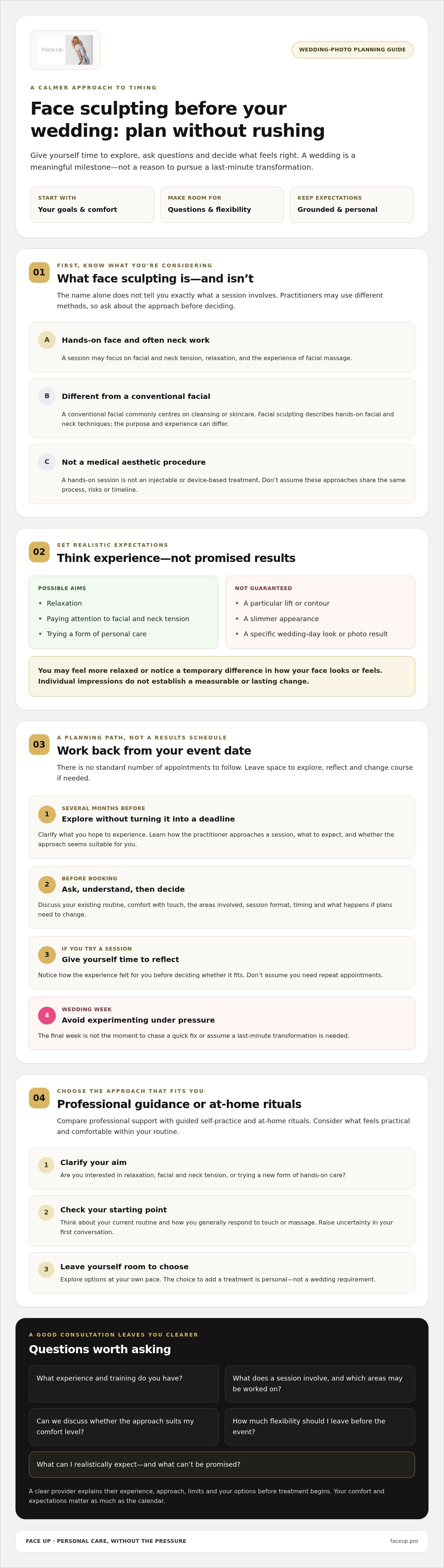
There’s no universal schedule for face sculpting before wedding celebrations. Use these stages as decision points, adjusting them to your event date, comfort, and practitioner’s advice. At each stage, consider how you feel, how much time remains, and whether a session still fits your plans.
- Early planning: Decide what you hope to get from face sculpting and whether hands-on work appeals to you. Ask potential practitioners about their approach, experience, and what a session involves. How much time can you leave to consider the experience before the wedding?
- Trial stage: If you choose to try a session, treat it as a chance to understand the techniques and your comfort, not as a test you must pass. Do you feel at ease with the practitioner and the pressure used? What does the provider recommend about follow-up and timing?
- Final weeks: Review how the experience felt and whether there’s enough time for questions, rescheduling, or a change of plan. Is another session something you genuinely want, or does it feel like an added obligation?
- Wedding week: Prioritise familiarity and calm. Stick with choices you already know suit you rather than introducing a new treatment because the event is close.
Your wedding timeline should be individualised with your practitioner, based on your comfort, the planned approach, and the time available before the event.
How should you approach the first appointment?
Before hands-on work begins, explain your goals and mention relevant sensitivities or concerns. Ask which techniques the practitioner plans to use and how they’ll adjust the pressure or approach if you feel uncomfortable. You can ask to pause or speak up during the session. Follow the practitioner’s aftercare guidance, and seek appropriate advice if you notice an unexpected reaction.
What should you avoid close to the wedding?
A new appointment immediately before the event isn’t a necessary bridal step, and no treatment is risk-free for every person. Avoid changing several beauty routines at once if you want to make it easier to notice what affects your skin or comfort. Choose familiarity over pressure to try something new.
If jaw pain or persistent symptoms are part of your concern, a guide to choosing a TMJ massage tool can provide related context, but a tool or self-practice isn’t a substitute for assessment. Consider seeking advice from an appropriate health professional about ongoing symptoms.
If you’re considering in-person support, explore Face Up’s facial sculpting options and decide whether the approach suits your plans.
Finding Face Sculpting Support That Fits Your Wedding Plans
Choosing a provider for face sculpting before wedding celebrations means looking beyond appointment availability. Look for someone whose approach is easy to understand, who communicates respectfully, and who can discuss realistic expectations without promising a particular look. You should feel comfortable asking questions and deciding whether the session suits you.
What should you ask a face-sculpting practitioner?
Before booking, ask what the session involves, which areas may be included, and how the practitioner responds if you feel discomfort. Confirm their relevant training and experience, ask how appointments are arranged, and check whether there’s preparation or aftercare guidance you should know. Clear answers help you assess whether the approach and timing feel right.
You might use this checklist during an initial conversation:
- Experience: What training and experience do you have in the techniques you use?
- Session details: What should I expect during the appointment, and how do you adjust your approach if I’m uncomfortable?
- Expectations: What outcomes are realistic, and what can’t this session promise?
- Practicalities: How is the appointment arranged, and what preparation or aftercare guidance is relevant to me?
Pay attention to how the practitioner responds. A good fit means receiving clear information and having space to make your own decision, without pressure to book or continue.
How can Face Up fit into a personal preparation plan?
Face Up offers a Face Up Sculpting Treatment and Somatic Bodywork Session, with an approach focused on facial and neck tension. These may interest readers who want to explore hands-on facial and somatic work as part of their personal preparation. They aren’t required for a wedding, and no specific wedding-day appearance or lasting result is guaranteed.
If you prefer in-person support, Face Up’s global directory lets you search for certified providers. Check current listings and confirm directly whether a provider is available and whether their approach suits your needs. If you’d rather explore a routine at home, Face Up’s app offers guided rituals for self-practice. The app is an optional source of guidance, not a substitute for personalised care when you need it.
Let your plans reflect what feels comfortable and manageable, rather than pressure to achieve a particular result. If you’d like to learn more about the approach or guided rituals, Explore Face Up.
Choose a Wedding Preparation Plan That Feels Right
The most useful face sculpting before wedding plan is one that leaves room for your comfort, schedule, and changing priorities. Start with realistic expectations, ask a practitioner what a session involves, and don’t treat a last-minute appointment as a necessary step. Professional guidance and gentle self-practice are options, not obligations.
Face Up’s approach draws on facial sculpting and somatic bodywork, with a focus on facial and neck tension. Founded by Olga Newman, a specialist in somatic bodywork and facial sculpting, Face Up offers in-person facial sculpting at its Auckland studio. Its global directory can help you look for certified Face Up providers in your city. Check current listings and confirm details directly with a provider.
If you’d like to learn more about this approach and consider whether it fits your plans, Explore Face Up’s facial sculpting approach. Choose what supports you, leave space to feel at ease, and let your wedding preparation serve you rather than add pressure.
Frequently Asked Questions
When should I start face sculpting before my wedding?
There’s no universal schedule or required number of sessions. If you’re interested in face sculpting before wedding celebrations, allow enough time to research a practitioner, discuss your goals, and understand what a session involves. That gives you room to decide whether the approach feels right. If the wedding is close, don’t treat a first appointment as a guaranteed quick fix. Ask the practitioner whether the timing and approach suit your circumstances.
Can face sculpting change how my face looks before the wedding?
Face sculpting may be part of a facial-care or relaxation routine, but appearance changes vary from person to person and shouldn’t be guaranteed. Be cautious of promises of permanent lifting, slimming, or a particular wedding-day contour. Before booking, ask what the session is intended to address and what outcomes are realistic for you. A practitioner should explain the approach clearly, without presenting a specific photographic result as certain.
Is face sculpting safe to try shortly before a wedding?
Whether it’s suitable depends on the techniques used and your individual circumstances. Ask the practitioner before booking, particularly if you haven’t had a session before. Trying something unfamiliar close to the wedding leaves less time to assess how you respond or adjust your plans. You can choose to keep to familiar routines instead. Follow the practitioner’s guidance, and don’t feel pressured to add a treatment at the last minute.
How many face-sculpting sessions do you need before a wedding?
There’s no single session count that applies to everyone, and more appointments don’t guarantee a particular result. Ask the practitioner to explain their approach, how it relates to your goals, and what timing they consider appropriate for your circumstances. Then weigh that advice against your schedule and comfort. Sessions are optional, so choose only what fits your preparation plan rather than following a fixed package or frequency as a rule.
Can I do face-sculpting massage at home before my wedding?
Yes, some people prefer gentle guided self-practice because it can fit around wedding preparations. Choose clear, appropriate guidance, keep movements comfortable, and stop if they cause discomfort. At-home practice differs from an individual session with a practitioner, so don’t assume it provides the same guidance or personalisation. If you have persistent pain or another concern, seek suitable professional advice rather than relying on self-practice alone.
What should I ask before booking a facial sculpting treatment?
Ask what techniques the practitioner uses, what the session is intended to address, and how they adapt their approach if you feel uncomfortable. Check their relevant training and experience, and ask what preparation or aftercare guidance may apply to you. Discuss realistic outcomes and timing before you commit. Clear, pressure-free answers can help you decide whether the practitioner and session feel appropriate for your plans.
Should I avoid trying a new facial treatment the week of my wedding?
Many people prefer not to introduce an unfamiliar treatment immediately before an important event, since there’s little time to assess their response. That isn’t a universal rule for every service or person. Ask the practitioner for guidance based on the techniques and your circumstances. If uncertainty doesn’t feel comfortable, stick with a familiar routine. A new treatment isn’t an essential step in preparing for your wedding.


