

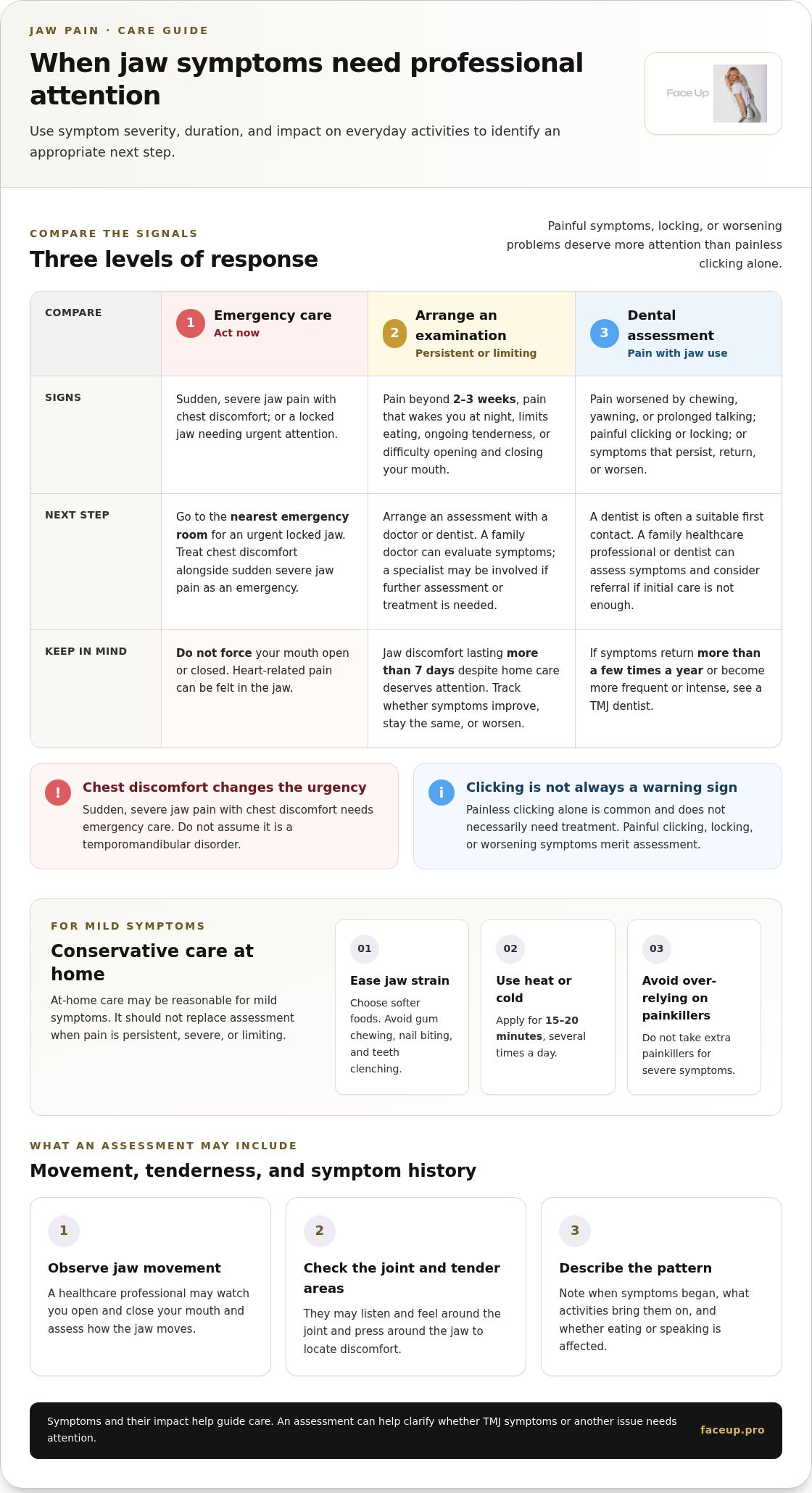
Knowing when to see a professional for jaw pain depends on how long it lasts, how severe it is, and what it stops you from doing. Arrange an examination if pain persists beyond two to three weeks, wakes you at night, limits eating, or comes with ongoing tenderness or difficulty opening and closing your mouth. Sudden, severe jaw pain with chest discomfort needs emergency care. If your jaw is locked and you need urgent care, go to an emergency room; don’t try to force your mouth open or closed.
Jaw pain can make chewing, talking, yawning, and other everyday activities difficult. It’s understandable to wonder whether it will settle or needs attention. Painless clicking alone is common and doesn’t necessarily need treatment, but pain, locking, or worsening symptoms deserve a closer look.
This article covers possible causes, including temporomandibular disorders, and how a healthcare professional may assess jaw symptoms. You’ll also learn which warning signs call for urgent care, when to book an examination, and how jaw pain can affect daily life.
Key Takeaways
- A jaw assessment may include observing movement, listening and feeling as you open and close your mouth, and checking where tenderness occurs.
- Pain that worsens with chewing, yawning, or prolonged talking, or painful clicking and locking, is a reason to seek dental advice.
- Notice how jaw symptoms affect eating, speaking, and other daily activities; these changes help describe the problem during an assessment.
- For ongoing facial and jaw tension, Face Up’s Jaw Release Course offers a self-practice option, while persistent or severe symptoms call for professional assessment.
When jaw pain calls for a physician or emergency care
Seek emergency care for sudden, severe, one-sided jaw pain with chest discomfort. Heart-related pain can be felt in the jaw, so don’t assume it’s a temporomandibular disorder (TMD). Treat chest discomfort alongside jaw pain as urgent.
A locked jaw that needs urgent attention also calls for the nearest emergency room. Don’t use your hands to force your mouth open or closed. Forcing movement may add strain when the joint or surrounding muscles are already painful.
Arrange an examination if jaw pain lasts beyond two to three weeks, wakes you at night, or limits eating. Persistent tenderness or difficulty opening and closing your mouth are also reasons to see a doctor. Knowing when to see a professional for jaw pain matters when symptoms disrupt sleep or meals.
If chewing, yawning, or prolonged talking worsens the pain, a dentist is often a suitable first contact. A dentist can assess painful clicking or locking, and a family doctor can also evaluate symptoms. An oral surgeon or specialist may be involved if further assessment or treatment is needed.
In the United States, the cost of evaluating jaw pain depends on the appointment, examination, and any imaging or other tests. Insurance coverage varies by plan, network, and whether the visit or tests are billed as medical or dental care. These factors affect your out-of-pocket cost.
For mild TMD symptoms, conservative self-care can include softer foods and avoiding gum chewing, nail biting, and teeth clenching. Apply heat or cold for 15 to 20 minutes several times a day. Don’t take extra painkillers for severe symptoms.
A healthcare professional may assess jaw movement by watching you open and close your mouth, listening and feeling around the joint, and locating tender areas. Physical therapy for TMD can include stretches and massage techniques to strengthen and stretch the jaw, with practices such as RED Physiotherapy offering rehabilitation to relieve related muscular tension. These approaches can support care, but don’t replace an assessment for persistent, severe, or limiting symptoms.
When to seek professional help for TMJ symptoms
At-home care may be a reasonable first step for mild temporomandibular joint (TMJ) symptoms. Arrange a professional assessment if symptoms persist, return, or interfere with ordinary jaw movement.
Symptoms That Persist Despite Home Care
Symptoms that continue despite home care, including jaw discomfort lasting more than seven days, deserve attention. Track whether pain or tenderness is improving, staying the same, or worsening, and note which activities bring it on. If softer foods and avoiding gum or clenching haven’t helped, discuss the ongoing symptoms with a doctor or dentist. This can help determine whether you need a different assessment or treatment rather than simply continuing the same routine.
Symptoms Warranting Dental Evaluation
A dental evaluation is appropriate if chewing, yawning, or prolonged talking worsens jaw pain, or if clicking becomes painful. Painful locking also merits assessment, unlike painless clicking by itself. A dentist can examine how your jaw moves and check for tenderness or related dental concerns. If suggested care doesn’t provide enough relief, a healthcare professional may refer you to a TMJ specialist. A family healthcare professional or dentist is usually the right place to start.
Recurring or Worsening Symptoms
Recurring symptoms mean jaw discomfort keeps returning; worsening symptoms become more frequent or intense. See a TMJ dentist if symptoms return more than a few times a year or increase in frequency or intensity. Don’t wait for a flare-up to become more limiting before arranging an assessment.
Delaying care for persistent pain can leave the cause unidentified while discomfort continues to affect eating or jaw movement. An assessment can clarify whether TMJ symptoms or another issue needs attention and help guide the next treatment step. If initial care falls short, a family healthcare professional or dentist can consider referring you to a specialist.
Causes and risk factors of temporomandibular disorders
Persistent jaw pain or difficulty moving the jaw can have several causes, including problems involving the temporomandibular joint, chewing muscles, or nearby tissues. Temporomandibular disorder (TMD) is an umbrella term for more than thirty problems affecting the jaw-joint system, so symptoms alone can’t identify the cause.
Risk patterns offer context, not a diagnosis. Jaw-joint pain occurs roughly twice as often in women as in men, according to the National Institute of Dental and Craniofacial Research. Age can be one part of the context when assessing jaw-joint pain. These patterns don’t explain an individual’s symptoms; an assessment considers the person’s pain, movement, and history.
Tell the healthcare professional if close relatives have had jaw-joint problems, and describe when your symptoms began. Family history provides useful context alongside details such as painful clicking, tenderness, or difficulty opening your mouth. It doesn’t prove that a relative’s condition caused your pain. A clear timeline can help distinguish recurring symptoms from a new problem.
A jaw evaluation may include watching and feeling the joint as you open and close your mouth, observing its movement, and pressing around the jaw to locate discomfort. If a professional suspects a TMJ problem, dental X-rays, CT scans, or MRI may help examine the teeth, jaw, bones, joint disk, or surrounding soft tissue. The type of imaging depends on what needs to be assessed.
Procedures and surgery are not usually the first consideration. A healthcare professional may suggest open-joint surgery when pain persists despite more conservative treatments and a structural joint problem appears to be causing it. Surgery may also be considered when other treatments haven’t relieved the pain. The decision depends on the suspected structural issue and previous care, not pain alone. That’s why an accurate assessment matters before considering an invasive procedure.
Jaw pain interfering with daily activities
Jaw pain can turn ordinary routines into repeated tests of comfort. A sandwich may require smaller bites, a long conversation may make your jaw ache, and yawning may feel difficult. Note which movements trigger symptoms and which activities you’ve had to change. This information gives a dentist a clearer picture of how your jaw and surrounding joints function during daily life.
Eating often reveals the impact first. Temporomandibular disorder (TMD) self-care may include soft foods, cutting food into small pieces, and avoiding sticky or chewy choices. Using utensils and chewing on both sides may also help reduce strain. If meals remain difficult or you’re avoiding foods because of pain, note examples such as trouble biting an apple or chewing bread. These patterns show how symptoms limit function.
Talking, work, and rest can also be affected. Prolonged conversation may bring on jaw pain, while clenching during a focused task can leave the muscles tense. Notice whether symptoms change after calls, meals, or a day of concentrated work. Avoid gum chewing, nail biting, and teeth clenching when managing TMJ symptoms. These details can show whether discomfort is occasional or repeatedly shaping your routine.
For TMJ-related discomfort, heat or cold may be applied for 15 to 20 minutes several times a day. Physical therapy may include stretches and massage techniques to strengthen and stretch the jaw, while wellness and aesthetic providers like Arden Clinic often focus on complementary treatments that address facial tension and muscular stress. Keep the focus on whether everyday tasks become easier, not on forcing a wider opening or pushing through pain. A dentist can assess painful clicking or symptoms that worsen with chewing, yawning, or prolonged talking.
If facial tension is affecting your daily routine, explore guided jaw-release practices as a self-care option alongside appropriate professional assessment.
Face Up: Face Up Method Certification
Face Up Method Certification is for practitioners who want to learn Face Up’s facial sculpting method. For guided self-practice focused on facial and jaw tension, the Jaw Release Course and Face Up App Subscription offer options for releasing tension. Face Up Sculpting Treatment is another option for those interested in practitioner-led facial sculpting.
These offerings support wellness and self-practice; they don’t replace assessment or treatment from a healthcare professional for persistent pain, locking, or difficulty eating. If jaw pain affects your daily activities, seek appropriate medical or dental guidance first. Consider Face Up’s options as a complementary approach to facial tension, not as a diagnosis or cure for a jaw disorder.
Visit Face Up online to explore its offerings.
Make Your Next Step Clear
Use your jaw symptoms as useful information, rather than trying to interpret them alone. Before an appointment, write down when discomfort appears, which movements bring it on, and which daily tasks have changed. Note whether symptoms have eased, stayed steady, or become more disruptive. This record can help you describe the pattern clearly and focus the conversation with a healthcare professional.
Deciding when to see a professional for jaw pain is part of a larger process: understanding your symptoms and choosing appropriate support. Keep professional assessment central when pain persists or affects everyday function. For complementary facial tension and self-practice support, Face Up offers options including the Jaw Release Course and Face Up App Subscription.
Contact Face Up about jaw pain to explore its approach to facial tension and wellness. A clear next step can make it easier to move forward with confidence.
Frequently Asked Questions
What is actually causing your jaw pain?
Jaw pain may come from the jaw-joint system, chewing muscles, or another issue affecting the face. Temporomandibular disorders describe more than thirty problems, so the label doesn’t identify a specific cause. A clinician considers your symptoms and examines how your jaw moves. Pain when chewing and difficulty opening your mouth are useful details to report, but they don’t establish a diagnosis on their own.
What jaw pain symptoms require emergency medical care?
Sudden, severe jaw pain with chest discomfort warrants emergency care because heart-related pain can be felt in the jaw. A locked jaw that needs urgent attention also calls for an emergency room. Don’t try to force your mouth open or closed with your hands. When seeking urgent help, note when symptoms began and clearly describe the chest discomfort or jaw locking.
How long should jaw pain last before seeking professional care?
Arrange an examination if jaw pain persists beyond two to three weeks, wakes you at night, or limits eating. Persistent tenderness and difficulty opening or closing your mouth also warrant medical attention. Knowing when to see a professional for jaw pain depends on more than duration: symptoms that disrupt meals or sleep deserve attention even before then.
How is jaw pain treated by a dentist or doctor?
Treatment depends on the assessment and may combine different approaches. A dentist or doctor can observe jaw movement, listen and feel as you open and close your mouth, and locate tender areas. For suspected TMJ problems, dental X-rays, CT scans, or MRI may help assess the teeth, bones, joint disk, or nearby soft tissue. Care may include self-care or physical therapy; other options depend on the findings.
Can jaw pain be a sign of a heart attack, and what warning signs should you watch for?
Yes. Heart-related pain can be felt in the jaw and may resemble symptoms of a temporomandibular disorder. Sudden, severe jaw pain with chest discomfort is an emergency warning sign: seek emergency care rather than assuming it’s a jaw-joint problem. Tell emergency responders about both symptoms, including whether the pain started suddenly. Jaw pain without chest discomfort still merits assessment if it persists or affects eating.


