
The best plan is to book a facial appointment 10 to 14 days before your event, leaving time for redness, purging, or sensitivity to settle. A pre-event facial massage may help reduce the look of puffiness by supporting circulation and lymphatic drainage, but the visible effect can vary. If your skin is sensitive or acne-prone, book ideally three weeks ahead.
It makes sense to want a fresh, rested look without trying something new at the last minute. This guide explains how pre event facial massage may help, what can affect how long the results last, and how to time a treatment around your occasion. You’ll also find practical preparation tips to help you plan calmly and avoid unnecessary irritation.
Key Takeaways
- Use gentle facial massage to support circulation and lymphatic drainage, and avoid pressing or pulling at the skin.
- Plan for a temporary refreshed appearance; how long it lasts can depend on factors such as fluid retention and your usual routine.
- Schedule a facial 10 to 14 days before an event, or ideally three weeks ahead if your skin is sensitive or acne-prone.
- Prepare thoughtfully by avoiding retinol, AHAs, and BHAs for two to three days before a facial, and limiting sun exposure around your appointment.
Facial massage, circulation, and lymphatic drainage
A pre-event facial massage uses gentle hand movements to ease facial tension and temporarily reduce the appearance of puffiness. Use light pressure and keep the steps simple and comfortable.
Understand Facial Massage and Its Benefits
Choose a gentle approach that suits your goal: facial massage uses hand movements across the face, while gua sha uses a smooth-edged tool. A facial may combine massage with other skin treatments, and lymphatic drainage massage uses gentle movements intended to support fluid movement. Massage may encourage circulation and a temporarily refreshed appearance, but it won’t permanently reshape facial features.
Perform an At-Home Facial Massage
Begin with clean hands and a light touch; you don’t need specialist equipment for an at-home massage. Use slow strokes from the centre of your face outward, then along the sides of your face toward your neck. Keep the pressure comfortable and stop if your skin feels sore or irritated.
- Wash your hands and cleanse your face before starting, so you aren’t massaging over makeup or surface debris.
- Use a familiar, non-irritating massage medium if your fingers drag; avoid introducing a new product before an event.
- Glide gently across the cheeks and jaw, moving outward rather than tugging the skin. Repeat each stroke slowly and evenly.
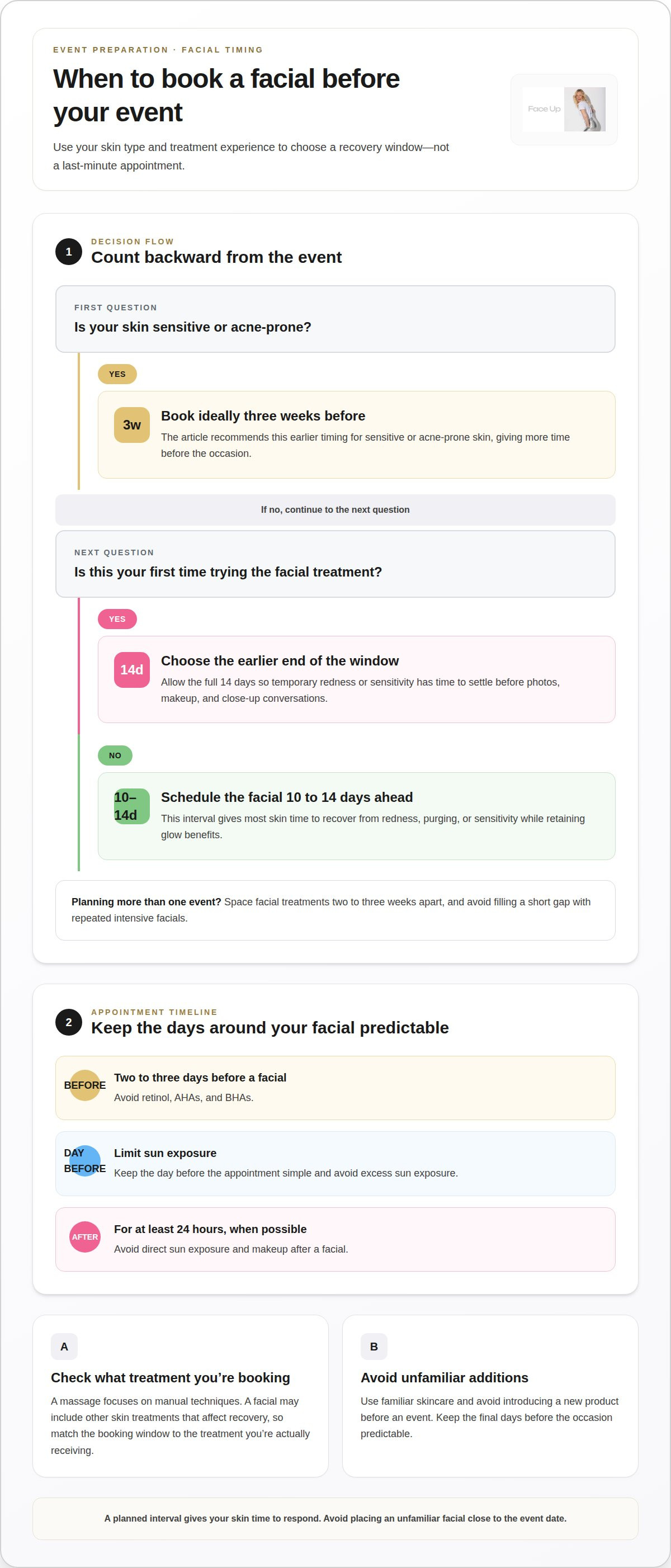
- Avoid retinol, AHAs, and BHAs for two to three days before a facial appointment. Limit sun exposure the day before.
- After a facial, avoid direct sun exposure and makeup for at least 24 hours when possible. Skip massage over broken, painful, or irritated skin; redness or irritation can occur.
- Look for a reputable practitioner who explains their technique, asks about skin sensitivities, and adapts pressure. Clear hygiene practices and an unhurried consultation are useful signs.
How long pre-event facial results may last
- Assess what changed immediately after your massage. Look at areas where puffiness was most noticeable, such as under the eyes or along the jaw. Massage-related changes are generally temporary, since they don’t alter facial structure. A calm, refreshed appearance can reflect eased tension and fluid movement.
- Notice the factors that can shift your appearance again. Saltier meals, poor sleep, stress, and your usual fluid-retention patterns can influence morning puffiness. Compare how your face looks after a typical night with how it looks after a restful one. This helps you set realistic expectations for an event.
- Plan around the look you want, not an assumed duration. If your event starts in the evening, consider when your face tends to look most rested. A massage earlier that day may feel relaxing, while a familiar routine on a previous day gives you time to observe your skin’s response.
- Keep your post-massage routine familiar. Use gentle cleansing and your usual skincare rather than adding a strong exfoliant or unfamiliar product. If makeup is part of your event preparation, apply it without rubbing or dragging the skin. These choices help avoid irritation that could distract from a refreshed appearance.
- Track your response with a simple comparison. Notice how your face looks before massage, afterward, and the next morning in similar lighting. Check the same areas each time, such as cheek fullness or jaw tension. This personal record can guide the timing and pressure of future sessions.
- Choose gentle pressure and stop if discomfort or irritation develops. More force doesn’t mean longer-lasting results, and repeated tugging can leave skin feeling sensitive. If your skin is already irritated, sore, or broken, postpone facial massage until it feels settled.
- Build a steady routine instead of relying on a last-minute intensive session. Short, comfortable self-massage can help you learn what feels appropriate for your face. For practical guidance on facial massage techniques, explore facial massage practice as part of your preparation.
Timing a facial before an event
- Count backward from the event date before booking. Schedule a facial 10 to 14 days ahead, which gives most skin time to recover from redness, purging, or sensitivity while retaining glow benefits. For a Saturday event, that means choosing an appointment in the preceding week or the week before.
- Choose the earlier end of that window if you’re trying a facial treatment for the first time. A new treatment can produce a skin response you haven’t seen before. Allowing the full 14 days gives you room to let temporary redness or sensitivity settle before photos, makeup, and close-up conversations.
- Move the appointment earlier if your skin is sensitive or acne-prone. The recommended timing for these skin types is ideally three weeks before the event. That extra recovery time helps reduce the chance of scheduling a new facial too close to the occasion.
- Write the event date and appointment date together in your calendar. Then mark any other facial treatments planned around the same occasion. This simple check helps prevent a last-minute booking from landing too close to another treatment.
- Space treatments two to three weeks apart during a season with back-to-back events. This spacing helps avoid overdoing active treatments while keeping your calendar manageable. For example, if two celebrations fall close together, resist filling the gap with repeated intensive facials.
- Separate a gentle massage from a facial that includes active treatments in your planning. A massage appointment focuses on manual techniques, while a facial may involve other steps that affect recovery. Match the booking window to the treatment you’re actually receiving, especially before a major event.
- Keep the final days before the event predictable. Avoid placing an unfamiliar facial close to the date, and use the time to observe how your skin responds after the appointment. A planned interval is more useful than trying to create a visible change at the last minute.
If you have a series of events, leave two to three weeks between facial treatments. This spacing can help you avoid overdoing active treatments as appointments add up.
When to schedule a facial before an event
- Start with the event date and count backward. Book a facial 10 to 14 days beforehand, allowing most skin time to recover from redness, purging, or sensitivity while retaining glow benefits. This window is a useful starting point for planning.
- Choose an earlier appointment if you have sensitive or acne-prone skin. Ideally, schedule it three weeks before the event. The longer interval gives your skin more time to settle before event-day makeup and photographs.
- Consider your treatment history before choosing a date. If a facial is unfamiliar, avoid placing it close to the event. An appointment within the 10-to-14-day window leaves more recovery time than a last-minute booking.
- Map every facial treatment on your calendar during busy event seasons. Space treatments two to three weeks apart when events come back-to-back. This schedule helps avoid overdoing active treatments while keeping appointments organized around important dates.
- Work backward from more than one occasion. For example, if a wedding and a work event fall close together, plan treatments around both dates rather than booking separate facials impulsively. Keep the spacing between treatments in view.
- Match the appointment window to your skin’s usual response. If past treatments have left redness or sensitivity, choose the earlier end of the 10-to-14-day range. For sensitive or acne-prone skin, use the three-week recommendation.
- Leave the final days before an event for familiar routines. Avoid scheduling a new facial treatment at the last minute, especially if you don’t know how your skin responds. A calm, planned schedule is more practical than trying to change your appearance overnight.
- Set a calendar reminder for the appointment and event date, then review the gap between them. For guidance on planning facial sculpting around an occasion, explore facial sculpting options.
Face Up: Face Up Method Certification
Face Up Method Certification is for practitioners who want to learn the Face Up approach to facial sculpting. It supports professional development, rather than providing a personal treatment before an event.
For hands-on support with facial tension or sculpting goals, Face Up Sculpting Treatment is the relevant option. For self-practice, the Face Up App Subscription and Jaw Release Course offer ways to explore facial massage and jaw release techniques.
Choose the route that matches your aim: practitioner training, an individual treatment, or guided practice at home. The right option depends on whether you want to develop a method professionally or explore facial care for yourself.
Visit faceup.pro to explore Face Up’s approach and offerings.
Choose a facial care approach that fits beyond the event
Let the occasion clarify what you want from facial care next. You may want support with facial tension, a more consistent self-practice routine, or a professional path into facial sculpting. Each goal calls for a different next step, so consider what matters to you after the event. Pre event facial massage can be part of a considered routine, rather than a last-minute attempt to change your appearance.
Face Up offers facial sculpting and education through its treatments, app, course, and practitioner certification. If you’d like to discuss a facial treatment as part of your event preparation, contact Face Up to plan your facial. Share what you’re hoping to focus on, such as facial tension or a refreshed appearance, and take the next step at a pace that feels right for you.
Frequently Asked Questions
How long before an event should you get a facial massage?
For a facial treatment before an event, book 10 to 14 days ahead; sensitive or acne-prone skin benefits from an earlier appointment, ideally three weeks beforehand. Use the time to notice how your skin responds before choosing any familiar follow-up routine. If several events are close together, plan appointments around the full calendar rather than treating each occasion separately.
How long do facial massage results typically last?
Facial massage results are temporary, and their duration varies. The appearance of puffiness may change with your usual fluid retention, sleep, and daily habits. To get a personal reference, compare your face after massage with how it looks the next morning, using similar lighting and facial expressions.
What facial massage techniques are best for a quick glow or depuffing?
Use slow, light gliding strokes with clean hands instead of firm kneading or pulling. For a simple sequence, relax your jaw, sweep across each cheek toward the side of your face, then finish with gentle strokes down the sides of your neck. Keep the movements comfortable and even. Skip tools or techniques that feel unfamiliar or irritate your skin.


