

A facial isn’t truly personalised just because it feels relaxing. A holistic facialist in Auckland shapes the treatment around your skin concerns, consultation and the factors that can influence skin health, with facial massage included where it suits your needs. The aim is to consider the face as part of a broader picture, rather than follow the same routine for everyone.
It makes sense to want more than a pleasant treatment: you want to understand what it involves and how it relates to your goals. A thoughtful consultation helps shape the approach, while therapeutic massage can address tension in the face and jaw. The session should feel considered, with room to discuss your preferences and what feels right for you.
This guide explains what to expect from personalised facial care, which factors may shape a session, and how massage can fit into a holistic facial. You’ll also find practical points to consider when choosing an approach in Auckland, so you can decide what suits you.
Key Takeaways
- Use the consultation to describe your skin concerns, preferences and facial-care goals so the treatment can be shaped around you.
- Consider how everyday habits and broader wellbeing may relate to your skin, rather than focusing on the face alone.
- Learn how therapeutic facial massage can address tension and form part of a personalised facial approach.
- Explore how Face Up’s facial sculpting and self-practice offerings may support your interest in holistic facial care.
Personalised holistic skin and facial care
A holistic facialist in Auckland can tailor a session through consultation, facial massage and sculpting, guided by your concerns and preferences. This approach considers facial care alongside tension and wellbeing, rather than relying on one fixed routine.
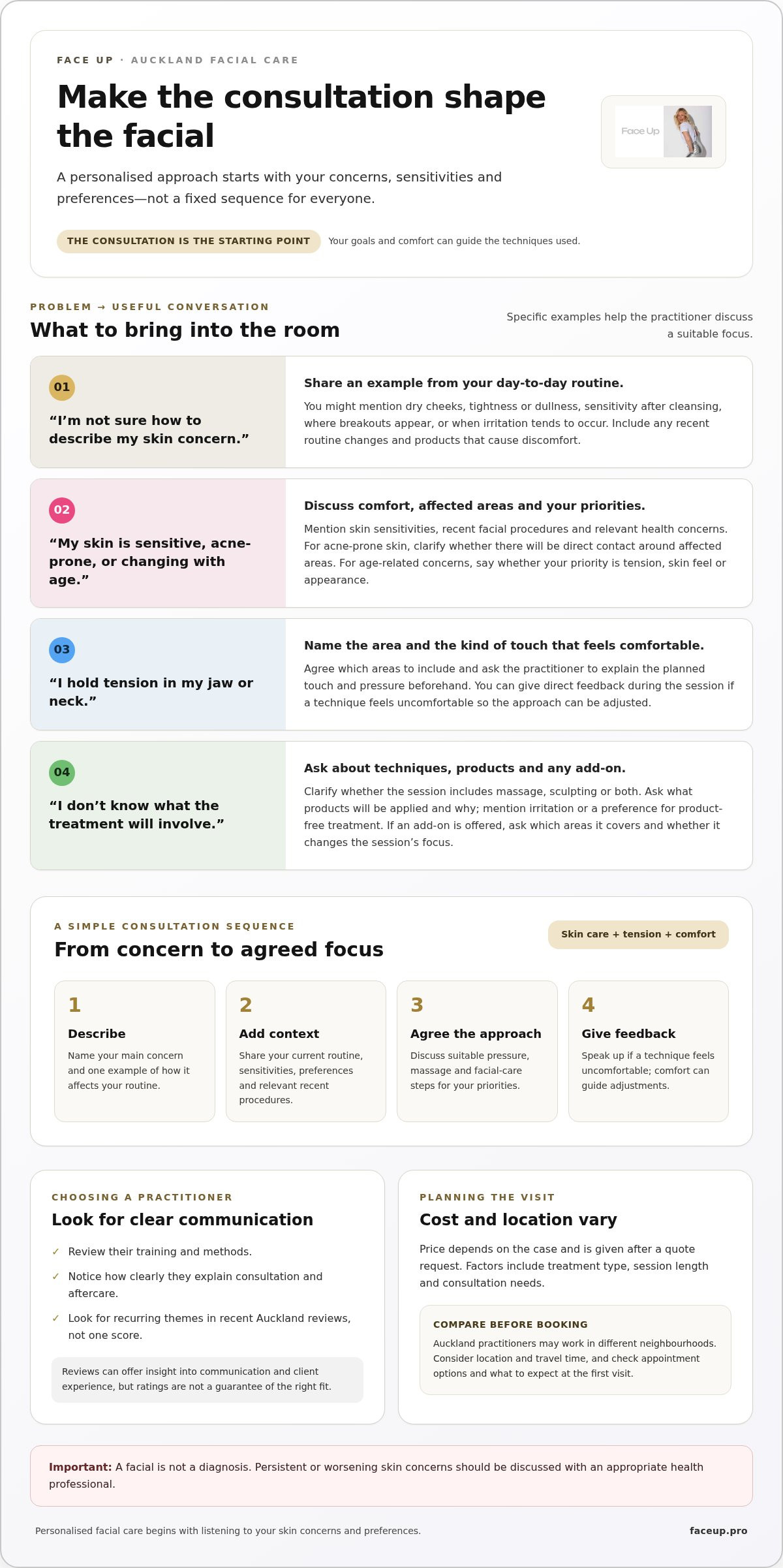
Ask how the consultation will shape your treatment. Your goals, comfort and skin sensitivities can guide the techniques used. For example, a session focused on jaw tension may differ from one centred on the feel and appearance of your skin.
Choosing a Qualified Facialist
When choosing a practitioner, review their training, methods, and how clearly they explain consultation and aftercare. Look for details on how they adapt touch and technique to your concerns. Recent Auckland reviews can offer insight into communication and client experience, but ratings change, so look for recurring themes rather than relying on one score. There is no single practitioner who is the right fit for everyone.
Conventional facials often focus on cleansing and topical skin care. A holistic approach may also involve massage, facial sculpting and attention to tension. The specific steps depend on the practitioner’s method and your consultation.
Facial Costs and Booking Locations
The price depends on the case and is given after a quote request; factors include treatment type, session length and consultation needs. Auckland practitioners may work in different neighbourhoods, so compare locations and travel time when planning. Check the practitioner’s booking information for appointment options and what to expect at the first visit.
Holistic facial treatments may include massage or sculpting, with the approach shaped by your goals. To book in Auckland, choose a practitioner and follow their stated booking process.
When comparing reviews, look at current Auckland listings and notice repeated comments about consultation, communication and treatment experience. Treat ratings as one consideration, not a guarantee of the right fit.
During your consultation, mention relevant skin sensitivities, recent facial procedures and health concerns. This helps the practitioner consider whether to adapt techniques or avoid particular areas.
Skin health and underlying factors
Skin appearance can be influenced by daily habits, your environment and individual sensitivities. An assessment at your first visit helps connect your concerns with an appropriate facial approach.
First Visit and Skin Assessment
At your first visit, describe your main concern, such as dry cheeks or sensitivity after cleansing. Share your current routine and any products that cause discomfort. The practitioner can then assess your skin and discuss suitable pressure, massage and facial-care steps. This conversation helps set realistic priorities for the session, rather than treating every concern with the same sequence.
For acne, sensitive skin or age-related changes, Auckland facialists can discuss approaches tailored to those concerns. Ask how the assessment influences the treatment plan, including any adjustments to touch or technique.
Acne, Sensitivity, and Aging Concerns
Bring specific examples to your consultation: where breakouts appear, when irritation tends to occur, or which changes you want to address. Mention recent changes to your routine, too. These details clarify your priorities and support a careful discussion of treatment methods. A facial is not a diagnosis, so persistent or worsening skin concerns should be discussed with an appropriate health professional.
For sensitive skin, discuss comfort before treatment and speak up if a technique feels uncomfortable. If you have acne-prone skin, clarify whether the session will involve direct contact around affected areas. For age-related concerns, identify whether your priority is facial tension, skin feel or appearance, as these goals may call for different approaches.
Hydration and radiance are useful topics to raise during an assessment, not guaranteed outcomes. Explain when your skin feels tight, looks dull or changes after cleansing. Your practitioner can use these examples to discuss the session’s focus and how facial massage might fit. Keep your regular routine in mind, as treatment is only one part of your skin-care choices.
Before booking, write down your main concern and one example of how it affects your routine. To explore facial-care practitioner resources, consider which approach aligns with your priorities and comfort.
Therapeutic facial massage
Facial massage can be part of a holistic session, with the focus guided by your goals. For example, you might discuss jaw or neck tension and agree which areas to include. The practitioner can explain the planned touch and pressure beforehand. Mention any discomfort during the session so the approach can be adjusted.
Techniques may include hands-on facial massage and sculpting movements. Products depend on the practitioner’s approach and your skin needs, so ask what will be applied and why. If you prefer a product-free treatment or have experienced irritation, mention that before the hands-on work begins. A clear explanation helps you understand each step.
An add-on may give extra attention to an area such as the jaw or neck. Ask what it involves, which areas it covers and whether it changes the session’s focus. This makes it easier to decide whether it suits your priorities. Any add-on should be clearly explained so you can choose whether to include it.
Before your appointment, note where you tend to hold tension and what kind of touch feels comfortable. At the start, describe your preference plainly, such as “gentle pressure around my jaw.” Give direct feedback during treatment if the pressure feels uncomfortable. This helps keep the session aligned with your comfort.
- Clarify the method: Ask whether the session includes massage, sculpting, or both.
- Discuss products: Mention sensitivities and ask what will be used on your face.
- Consider an add-on: Choose it only if its area and purpose match your goals.
For a more considered approach to facial massage, explore facial massage practice resources and note which techniques match your preferences.
Rae says clients do not need downtime after a face sculpting treatment. If you’re considering sculpting, ask how it fits with your plans and raise any practical concerns beforehand. This can help you decide whether the approach suits your needs.
Holistic facial consultation
A useful consultation turns general wishes into a clear treatment plan. Arrive with one priority, such as jaw tension, skin comfort or a more sculpted look. Then discuss what you want addressed, what you prefer to avoid, and how you’ll judge whether the session suited you.
Share practical details that may affect the appointment, including your usual skin routine, sensitive areas and preferred level of touch. For example, if pressure around your cheeks feels uncomfortable, say so before treatment begins. Clear preferences help the practitioner explain which techniques may suit you and where adjustments could be needed.
Use the conversation to understand the proposed session rather than treating “holistic” as a fixed menu. Ask which areas the practitioner plans to work on, whether massage or sculpting is involved, and what products will be used. If anything is unclear, ask for the steps in plain language before proceeding.
- Set a priority: Name the concern you most want the appointment to address.
- Share context: Describe sensitivities, routine changes and touch preferences.
- Clarify the plan: Ask about techniques, areas treated and products used.
- Agree on comfort: Establish how you’ll signal a need to pause or adjust pressure.
A thoughtful consultation also gives you space to discuss what happens after the session. Ask what sensations to expect during treatment and what simple guidance the practitioner recommends for your routine. Keep the discussion focused on advice related to your chosen treatment, rather than a promised result.
Before booking, prepare these points in writing so you can explain them clearly, even if the appointment feels unfamiliar. To find a practitioner whose approach matches your priorities, use the Practitioner Directory Listing as a starting point for your search.
Rae says a client’s first face sculpting treatment takes a little longer because it includes a consultation, so allow extra time for the initial discussion.
Face Up: Face Up Method Certification
Face Up Method Certification is a next step for practitioners who want to learn Face Up’s approach to facial sculpting and somatic bodywork. Its method focuses on releasing deep muscular and emotional tension in the face and neck as part of natural facial care.
If you’re exploring personal practice instead, the Face Up App Subscription offers daily self-practice rituals, while the Jaw Release Course focuses on jaw release. The Face Up Sculpting Treatment is another option for those seeking a guided facial treatment. Each offering serves a different purpose, from practitioner learning to personal practice or treatment.
Choose the path that best matches your goal, whether you’re developing your practice or exploring facial care for yourself. Visit faceup.pro to learn more.
Make your next step personal
Your next facial-care decision can start with one clear intention: what you want to explore and what kind of approach feels right. A holistic facialist in Auckland may take a different approach from a conventional facial, so let your priorities guide the conversation. Being clear about comfort, technique and goals helps you take an active role in shaping the experience.
Face Up offers options for practitioners and individuals interested in facial care, including Face Up™ Training, Face Up Club and Jaw Release by Face Up™. These serve different intentions, from learning the method to practising facial-care rituals or focusing on jaw release.
If you’d like to discuss a facial approach that fits your interests, contact Face Up to discuss your facial. Take the next step at your own pace, with your goals leading the way.
Frequently Asked Questions
What should I expect during a holistic facial appointment?
Expect the session to be shaped around your goals, with time to discuss what you want from the appointment and how the treatment feels as it progresses. Before you arrive, note the names of your regular skin-care products and any recent changes to your routine. This gives you useful context to share and helps you understand how the session matched your preferences.
Which Auckland holistic facialists have the best reviews and ratings?
There is no single practitioner who is the right fit for everyone. Compare recent Auckland reviews, looking for repeated comments about consultation, communication and treatment experience. Treat ratings as one factor, not a guarantee of fit.
What holistic facialists are located in Auckland, New Zealand?
Rae has face sculpting studios in Hobsonville and Ponsonby, Auckland. Melanie Gaynor’s Auckland clientele includes people aged 40 and older seeking facial care.
Are there risks or contraindications for holistic facial treatments?
Yes. Share skin sensitivities, recent procedures and health concerns during consultation. Rae recommends waiting at least 6 weeks after Botox, filler injections or cosmetic tattooing, and at least 6 months after mesothreads or threadlifting; pregnancy in the first or third trimester may also be a contraindication.


