

A headache around your temples may be connected to your jaw. Clenching or grinding can leave jaw muscles tight and irritated, and gentle massage for a teeth-grinding headache may help ease muscle tension.
If your jaw feels sore or you wake with a headache, it’s understandable to look for relief you can try at home. Use gentle, controlled pressure rather than forcing tender muscles to loosen, and stop if massage increases your discomfort.
This guide explains how clenching can contribute to headaches and offers practical ways to relax and massage your jaw, temples, and nearby areas. It also describes what professional TMJ massage may involve, including how session length and frequency can fit into a broader approach to jaw tension. Massage may support comfort, but persistent or worsening symptoms warrant appropriate dental or medical attention.
Key Takeaways
- Notice how jaw clenching can build muscle tension that spreads into the temples, head, neck, and shoulders.
- Find the masseter along your jaw and use gentle, controlled pressure rather than pushing into pain.
- Explore simple techniques for relaxing the jaw and easing tension around the temples and neck.
- Understand how professional TMJ massage may fit into a broader approach to jaw discomfort and tension-related headaches.
What causes clenching or grinding?
To spot a possible bruxism-related headache, notice whether temple or facial discomfort occurs with a sore jaw, morning tightness, or tooth grinding. Migraine and tension headaches can overlap with jaw-related pain, so symptoms alone can’t confirm the cause. A clinician can assess the pattern.
- Notice when your jaw is working. Bruxism means clenching or grinding teeth while awake or asleep, and nighttime grinding can leave jaw muscles tired by morning. The temporomandibular joints connect the jawbone to the skull and work with nearby muscles during chewing, speaking, and yawning. Repeated clenching can strain those muscles, irritate the joint, and contribute to facial pain or headaches. Make a note of morning soreness, temple pressure, clicking, or difficulty opening your mouth.
- Track where tension travels. Tight or irritated jaw muscles can cause discomfort that spreads across the face, temples, head, neck, and shoulders. The temporalis muscles at the sides of the head may also feel tender. With a relaxed jaw, use gentle fingertips to make small circles over the temples. Stop if the pressure increases pain; deeper massage isn’t necessarily more effective in sensitive areas.
- Consider guided movement and therapy. Physical therapy may help relieve tension and stiffness from excessive jaw-muscle use. A therapist can assess how the jaw moves and guide exercises suited to your symptoms. For a gentle opening exercise, rest your tongue on the roof of your mouth, just behind your front teeth, then slowly open and close your mouth within a comfortable range. Stop if discomfort increases.
- Choose the right next step. Jaw massage can cause temporary soreness or aggravate symptoms if pressure is too strong, so use a gentle touch and stop when pain rises. Insurance coverage for massage or physical therapy in the United States varies by plan and treatment details; review your benefits for coverage terms, network rules, and any authorization requirements. Seek dental or medical care for persistent jaw pain, locking, major bite changes, swelling, or difficulty chewing. Sudden, severe, worsening, or unusual headaches, or headaches with weakness, numbness, vision changes, confusion, fever, dizziness, or speech difficulty, need prompt medical evaluation.
Why is the masseter muscle a Perfect Spot for massage?
The masseter is a practical place to start: it’s easy to locate on your cheek and feel it engage. Follow these four steps to massage it with controlled pressure.
-
Locate the Masseter for Massage
Place your fingertips on your cheek and gently clench your teeth to feel the masseter tighten. The muscle lies over the jaw, in a cheekbone notch about one inch in front of your ears. Relax your teeth before massaging, and avoid pressing directly on the temporomandibular joint beside your ear. If the area is painful or swollen, skip massage and consult a dentist.
-
Perform Masseter Self-Massage
Use two or three fingers to knead the relaxed muscle in small circles, moving from top to bottom and back again. Work for about 30 seconds, using gentle pressure that can gradually become firmer if comfortable. Keep your jaw loose rather than biting down. Stop if discomfort increases, and ease off if your fingers create pain instead of a mild stretch.
-
Release Masseter Trigger Points
With your jaw relaxed, gently press a tender spot. A trigger point is a sensitive area that reproduces familiar pain when pressed. If you find one, hold steady pressure only while it feels comfortable, then release and reassess. Don’t dig into the tissue or force a response. Stress can encourage clenching, so notice whether your jaw tightens during this step.
-
Apply Masseter Soft Tissue Massage
Set your index and middle fingers beneath the cheekbone, then make small, controlled circles across the muscle. You can also roll a massage tool along the jawline, moving from the jaw toward the cheekbone. Keep the contact gentle; aggressive pressure on facial muscles can irritate sensitive tissue. For structured jaw exercises and self-practice, explore the Jaw Release Course.
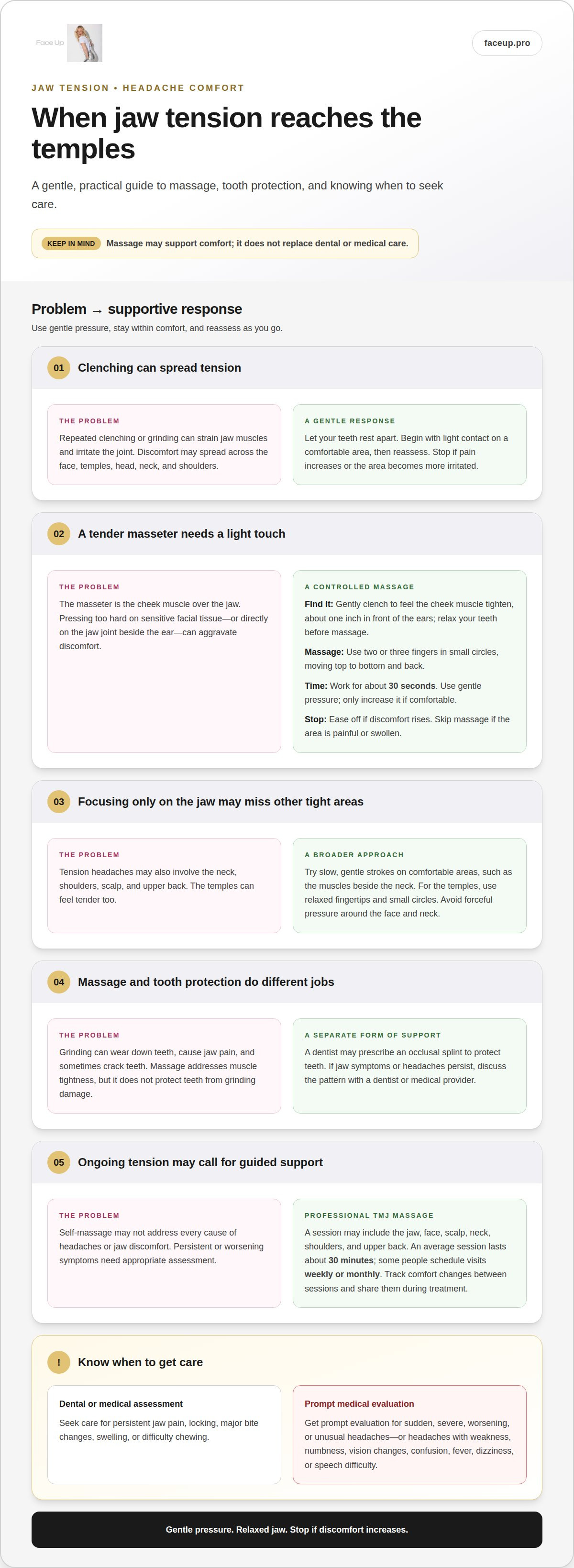
Can massage relieve headaches caused by teeth grinding or bruxism?
Massage may ease muscle tightness associated with jaw tension and tension headaches. It can support comfort, but it doesn’t replace dental or medical care or address every possible cause of headache.
- Begin with gentle contact. Let your teeth rest apart and notice whether your jaw, temples, neck, or shoulders feel tight. Start with light pressure on a comfortable area, such as the side of your cheek, then reassess. A massage for teeth grinding headache discomfort should feel controlled, not forceful. Stop if pain increases or the area becomes more irritated.
- Work beyond the jaw. Tension headaches may involve the neck, shoulders, scalp, and upper back. Use slow, gentle strokes on comfortable areas rather than focusing only on the jaw joint. For example, relax your shoulders and massage the muscles beside your neck, then notice whether your jaw feels less tense. Avoid forceful pressure around the face and neck.
- Keep tooth protection in view. Grinding can wear down teeth, cause jaw pain, and sometimes crack teeth. A dentist may prescribe an occlusal splint to protect teeth from grinding damage. Massage and a splint serve different purposes: massage addresses muscle tightness, while the splint protects teeth. If headaches or jaw symptoms persist, discuss the pattern with a dentist or medical provider.
- Consider professional support. A professional TMJ massage may include the jaw, face, scalp, neck, shoulders, and upper back. An average session lasts about 30 minutes, and some people schedule visits weekly or monthly. Track changes in comfort between sessions and share them during treatment. Massage for teeth grinding headache symptoms can be a supportive part of care, but ongoing symptoms still warrant appropriate assessment.
Which jaw, temple, and neck massage techniques help with bruxism headaches
- Stretch the temples. Place two or three fingertips about two finger-widths above your cheekbone and ear. Apply light pressure, then gently move the skin until you feel a comfortable stretch. Hold the stretch briefly, then repeat as comfortable. Keep your jaw relaxed throughout. Stop if the movement increases pain or causes dizziness.
- Massage the temporalis muscles. Rest two or three fingertips on your temples and make small, gentle circles for 30 seconds. These muscles can contribute to tension around the temples, so use controlled pressure rather than digging into tender spots. Let your teeth remain slightly apart. Notice whether your head feels more comfortable afterward, and stop if discomfort increases.
- Ease tension around the jaw joint. With relaxed fingers, make gentle circles near the temporomandibular joints, just in front of your ears. For the masseter, press inward and upward with your thumb in the notch beneath the cheekbone. Keep the pressure comfortable. If using a massage tool below the ear, move it side to side, then glide downward along the jaw angle.
- Include the neck without forcing movement. Tight upper trapezius, suboccipital, and sternocleidomastoid muscles can contribute to head pressure or restricted movement. Use light fingertip circles over comfortable areas, avoiding forceful pressure on the front of the neck. Pair the massage with slow, easy jaw movements; repeat a comfortable side-to-side motion 5-8 times. For guided jaw-release practice, explore the Jaw Release Course.
Face Up
Face Up offers guided self-practice and hands-on care for people who want to explore facial tension. If you want structure for jaw relaxation between appointments, the Jaw Release Course provides focused learning. For individualized facial and jaw muscle work, Face Up Sculpting Treatment offers an in-person approach to facial sculpting and tension release.
These options support muscle relaxation and wellbeing; they don’t replace dental assessment if grinding damages your teeth or medical care for persistent headaches. Choose the support that fits your needs, whether you prefer home practice or hands-on treatment.
Contact Face Up to discuss which approach may suit your interest in jaw and facial tension.
Make Jaw Care Part of Your Next Step
Pause during the day to notice whether your jaw is resting or bracing. This awareness can help you respond early with a gentle release, rather than waiting until facial tension disrupts your routine. If you’re considering massage for a teeth-grinding headache, treat it as one part of jaw care, not a substitute for dental or medical assessment when symptoms persist or change.
Your next step can be simple: choose the support that suits your needs now. Guided self-practice may help you build a regular routine, while hands-on facial care offers a more personal experience. Face Up also provides training for practitioners interested in its method.
For a considered next step, contact Face Up about TMJ massage. You can begin with a conversation about your goals and move forward at a pace that feels right for you.
Frequently Asked Questions
How can massage ease TMJ disorders?
Massage may ease muscle tightness around the jaw and nearby areas, which can reduce one source of discomfort. For example, gentle temple or cheek massage may feel useful when those muscles are tender after clenching. It doesn’t protect teeth from grinding or identify the cause of joint symptoms, so use it as supportive care alongside appropriate dental or medical evaluation.
What causes TMJ pain?
Pain around the TMJ can stem from muscle tension, joint irritation, bite issues, dental concerns, injury, arthritis, or other conditions. The cause matters: tenderness in the cheek muscles may need a different approach from pain linked to a dental problem or injury. Note what triggers discomfort, such as chewing or opening your mouth, and share that pattern during an assessment.
What’s the difference between grinding, TMJ, and TMD?
Grinding, or bruxism, means clenching or grinding your teeth. The TMJ is the temporomandibular joint connecting the jaw to the skull, while TMD refers to disorders involving that joint and related structures. The terms describe different things: bruxism can occur alongside jaw symptoms, but it doesn’t by itself establish that someone has TMD.
How do you safely massage the masseter muscle for jaw tension?
Find the masseter by gently clenching, then relax your teeth and use two or three fingertips to make small circles across the cheek muscle. Keep the pressure comfortable and avoid pressing hard into the joint beside your ear. Check that your jaw stays relaxed during contact. Stop if pain or discomfort increases instead of pushing through.
How long and how often should you massage jaw muscles for bruxism?
Try massaging the masseter for about 30 seconds, then pause and notice how the area feels. Keep each application gentle, and stop if discomfort increases. There isn’t a single frequency that suits every jaw; let your symptoms and response guide whether you repeat self-massage. Daily jaw exercises are suggested only when they can be done without pain.
What other treatments help bruxism headaches, such as night guards or physical therapy?
A dentist may prescribe an occlusal splint to protect teeth from grinding damage, while physical therapy may help with jaw-muscle tension and stiffness. These approaches address different concerns: a splint protects teeth, while therapy works with movement and muscle function. If grinding is wearing down your teeth or jaw symptoms persist, discuss options with a dental or medical professional.


