

Skin doesn’t respond to stress in isolation. How the nervous system affects skin depends in part on how the body shifts between a stress response and a state that supports rest and repair. These signals can influence inflammation, sensitivity, and recovery.
If stress seems to show up on your skin, the connection may be real, but it isn’t the whole story. The nervous system can respond to cues of safety and danger, shaping the body’s responses.
This article explains how stress may aggravate skin conditions, how parasympathetic activity relates to repair, and what neuroception has to do with both. You’ll also learn how gentle, body-based practices may support a calmer state, and when persistent or worsening skin concerns call for medical care.
Key Takeaways
- Understand how stress may heighten skin inflammation, sensitivity, and reactivity, and why stress-related habits can add to irritation.
- See how parasympathetic activity, steady breathing, and sleep relate to the body’s repair processes.
- Learn how neuroception, the nervous system’s detection of safety and danger cues, can shape the body’s stress response.
- Explore how sensory nerves connect skin sensations with the nervous system, and how this connection fits into the wider picture of skin health.
Stress-related inflammation and skin conditions
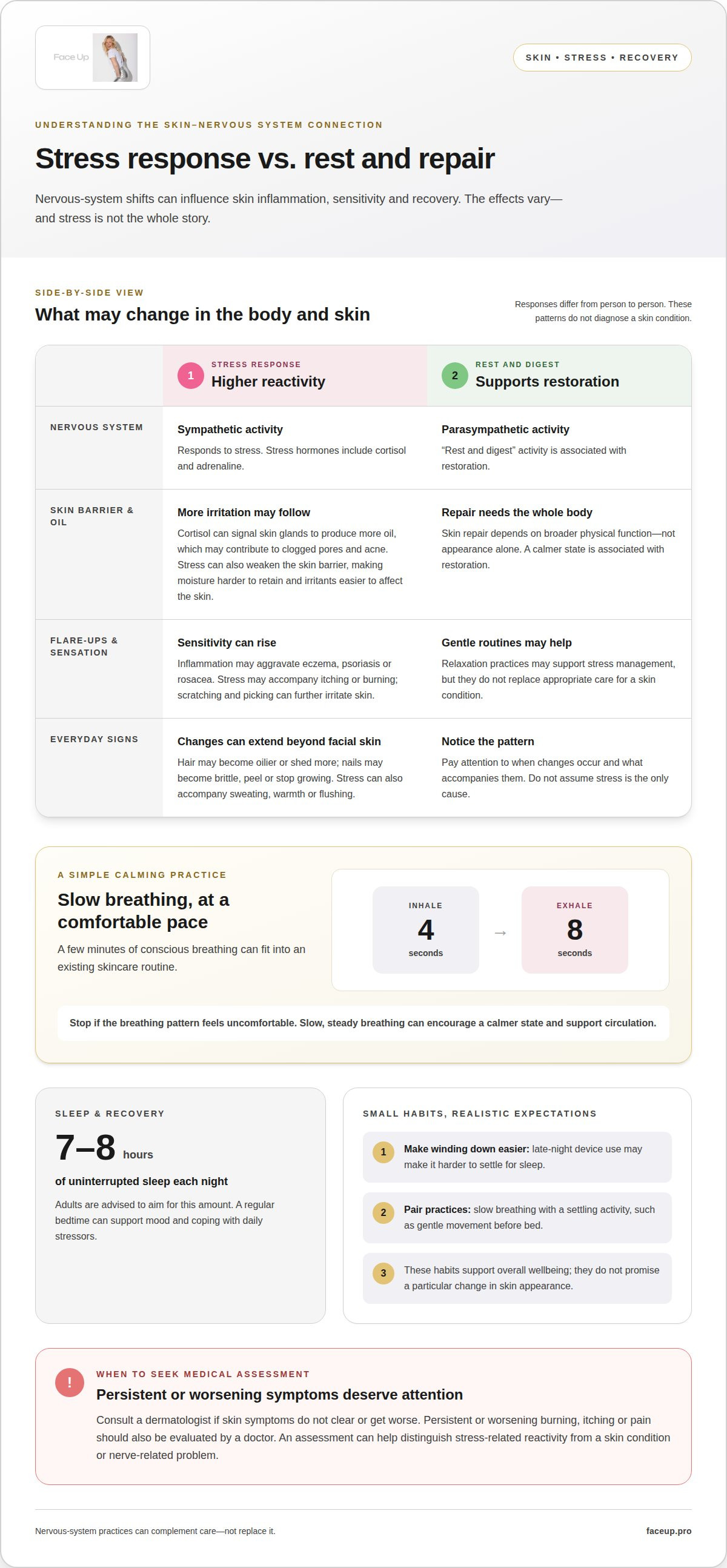
Stress can activate the body’s response systems and affect skin inflammation, sensitivity, and repair. Eczema, psoriasis, rosacea, and acne, for example, may worsen during stressful periods.
Stress Hormones and Skin Barrier Function
Stress hormones, including cortisol and adrenaline, are released when the sympathetic nervous system responds to stress. Cortisol can signal skin glands to produce more oil, which may contribute to clogged pores and acne. Stress can also weaken the skin barrier, making it harder to retain moisture and easier for environmental irritants to affect the skin. This may explain why a familiar skincare routine feels less comfortable during a stressful period. Stress-related inflammation can also aggravate eczema, psoriasis, or rosacea. Relaxation practices may support stress management, but they don’t replace appropriate care.
Stress-Associated Hair, Nail, and Scalp Changes
Stress-associated changes are shifts in hair, scalp, or nail condition that can occur alongside a stress response. Hair may become oilier or shed more, while nails may become brittle, peel, or stop growing. These changes can involve more than facial skin and may be easy to overlook when attention is focused on a rash or breakout. Notice whether hair or nail changes happen alongside a skin flare, but don’t assume stress is the only cause. A dermatologist can assess persistent or worsening skin concerns and consider the broader pattern.
Stress-Related Itching, Burning, and Skin Picking
Stress-related itching and burning are uncomfortable sensations that may accompany heightened skin reactivity. Anxiety can trigger a stress response, even when it feels mild, and the skin may then feel itchy or burn. Scratching or picking can further irritate the area and worsen existing skin problems. Notice when the urge appears and avoid adding friction or picking to already irritated skin. A calming routine may help manage stress, while medicine or therapy may be relevant depending on the underlying concern.
Stress can increase skin sensitivity and stimulate inflammation, so a flare may feel more reactive than usual. If symptoms don’t clear or get worse, consult a dermatologist. Burning, itching, or pain that persists or worsens, or occurs during recovery from herpes zoster, should also be evaluated by a doctor. An assessment can help distinguish stress-related reactivity from a skin condition or nerve-related problem.
Parasympathetic nervous system and skin repair
The parasympathetic nervous system supports “rest and digest” activity, a state associated with restoration. Its role matters because skin repair depends on the body’s broader physical function, not appearance alone.
Slow, steady breathing can encourage this calmer state and support circulation, helping carry oxygen and nutrients to skin cells. Try a comfortable breathing rhythm: inhale for 4 seconds, then exhale for 8 seconds. Stop if the pattern feels uncomfortable. A few minutes of conscious breathing can fit into an existing skincare routine without replacing treatment for psoriasis or another chronic condition.
Sleep also gives the body time for repair. Adults are advised to aim for 7-8 hours of uninterrupted sleep each night. A regular bedtime can support mood and coping with daily stressors, while late-night device use may make winding down harder. These habits support overall wellbeing, but they don’t promise a particular change in skin appearance.
Skin sensations can feel intensely physical. Delusional parasitosis describes a persistent belief that parasites are present, sometimes accompanied by sensations such as crawling or itching. Skin picking or repeated attempts to remove a perceived cause can injure the skin. A calm, nonjudgmental medical assessment can address both the skin and mental distress without treating the sensation as proof of infestation.
How do medications that affect the nervous system influence the skin? Effects depend on the medicine and the person. A medication may change skin sensations or cause other skin effects. If a new symptom follows a medication change, discuss its timing and appearance with the prescribing clinician rather than changing the dose independently.
For everyday regulation, pair slow breathing with a settling activity, such as gentle movement before bed. If chronic stress repeatedly disrupts sleep or daily function, mental health therapy may help address the trigger, while a dermatologist assesses persistent skin concerns. Nervous system practices can complement care, not replace it.
Autonomic nervous system and neuroception
The autonomic nervous system influences stress responses, immune function, and the body’s capacity to repair. Its automatic signals can also affect everyday skin changes, including sweating, temperature, and flushing.
Autonomic Control of Sweating and Skin Temperature
Autonomic control of sweating and skin temperature refers to the body’s automatic adjustment of sweat and heat responses. This matters because sweating and changes in skin warmth can accompany stress or other shifts in the body. Nerve signals influence sweat production and help regulate skin blood flow, affecting heat at the surface. For example, someone may notice clammy palms during a stressful moment. A new or persistent change deserves attention in context, rather than being assumed to reflect stress alone.
Nerve Regulation of Skin Blood Flow and Flushing
Nerve regulation of skin blood flow means autonomic signals influence the width of blood vessels in the skin. Changes in blood flow can alter skin warmth and appearance. Increased flow near the surface may cause visible flushing, such as redness across the cheeks during an emotional response. Flushing can have different triggers, so its timing, pattern, and accompanying symptoms help distinguish a brief response from a recurring concern. Skin health involves more than appearance, and persistent changes merit professional assessment.
Neuroception is sometimes used to describe automatic responses to cues in the environment. Stephen W. Porges coined the term. These cues can influence the body’s response, sometimes before a person consciously interprets them. A crowded room, a sudden noise, or a calm, familiar space may each register differently. The process is complex, and its effects can vary across people and circumstances.
Skin and the brain share an early developmental connection and communicate in both directions. This helps explain why emotional states and physical sensations can interact, but it doesn’t mean every eczema flare has the same cause. Stress-related changes in hormones and immune activity can be part of the picture, alongside other influences on skin health.
A simple orienting exercise can bring attention to the present: slowly look around and notice colors, textures, and sounds. Another grounding practice is to name five things you see, four you feel, three you hear, two you smell, and one you taste. These observations may help you feel more connected to your surroundings. They don’t diagnose a skin condition or replace care for persistent symptoms.
What role do sensory nerves play in skin sensation and touch?
Sensory nerves carry information from the skin to the nervous system, helping the brain interpret touch and other sensations. A fingertip noticing the roughness of fabric is one everyday example of this exchange.
Different nerve signals help the body distinguish sensations such as gentle contact, pressure, temperature, pain, and itch. They provide useful information: warmth from a cup, for instance, feels different from a sharp edge pressing against the hand. The brain combines incoming signals with context, so the same light touch may feel soothing when expected and startling when unexpected.
This communication also helps explain why skin sensations can feel vivid even when the surface looks unchanged. Itch, tingling, burning, or numbness are experiences shaped by nerve signals, not simply by what someone sees on the skin. Stress can heighten skin reactivity, while conditions such as post-herpetic neuralgia can involve itch or pain during recovery from shingles. A sensation alone doesn’t identify its cause.
Touch is also part of how people relate to their surroundings and their own bodies. Soft fabric, cool air, or gentle contact can draw attention to a particular area of skin. Noticing the location, quality, and timing of a sensation can help you describe it clearly in a medical conversation, especially if it persists or changes. Avoid treating repeated scratching or picking as a solution, since it can aggravate skin problems.
In facial care, touch can be approached with attention to comfort and muscular tension. Explore facial sculpting as a hands-on option focused on facial sculpting and releasing tension, rather than as treatment for nerve symptoms. Persistent, worsening, or unexplained numbness, pain, or altered sensation calls for medical assessment; cosmetic bodywork isn’t a substitute for that evaluation.
Face Up
Face Up offers a body-focused way to explore facial tension alongside what you’ve learned about stress and skin. The Face Up Sculpting Treatment and Jaw Release Course focus on releasing tension in the face and jaw, while the Face Up App Subscription supports daily self-practice rituals. These options may suit you if you’re interested in mindful facial care, rather than diagnosing or treating a skin condition.
For practitioners, Face Up Method Certification offers training in the Face Up facial sculpting method. For persistent inflammation, itching, or unusual sensations, seek medical assessment. Bodywork and self-practice aren’t substitutes for clinical care.
To explore Face Up’s bodywork, self-practice, or training options, contact Face Up.
Choose a thoughtful next step
Understanding how the nervous system affects skin can help you interpret changes without assuming stress explains every flare or sensation. Notice what’s happening around a change: how it feels, where it appears, and whether it disrupts your usual routine. These observations can help you describe concerns clearly and decide what kind of support feels appropriate. Skin is personal, and a considered response starts with attention rather than self-criticism.
A clearer understanding of how the nervous system affects skin can help you separate two aims: getting medical guidance for a persistent concern and exploring a body-focused practice for facial tension or self-care. Keeping those aims distinct makes your decision more deliberate. You don’t need to interpret every sensation or assume stress explains every change. Let what matters to you guide the conversation and the support you seek.
If you’d like to discuss whether Face Up fits your goals, contact Face Up to discuss your skin. A calm, considered next step is progress in itself.
Frequently Asked Questions
How does the nervous system communicate with the skin?
Communication runs both ways: nerves carry sensory information from skin to the brain, while autonomic signals influence bodily responses. For example, touching a very warm surface sends a sensation that helps you react, while emotional stress can affect skin reactivity. These pathways connect sensation with broader body functions. A skin change alone, however, doesn’t show which signal or cause is involved.
How do stress and emotions affect skin conditions?
Stress and emotions can influence skin symptoms by activating the body’s stress response and affecting inflammation and sensitivity. To notice patterns, record when symptoms appear, what was happening, and whether sleep or daily routines changed. This record can help clarify timing during a medical appointment. It can’t establish that stress caused a flare or replace an assessment of persistent symptoms.
What is the skin-brain connection and how does it affect inflammation?
The skin-brain connection describes two-way communication between the nervous system and skin. Because emotional and physical processes interact, stress may coincide with inflammatory changes or a flare of an existing condition. That connection doesn’t mean emotions are the sole cause of inflammation. For instance, a rash that appears during a stressful period still deserves attention to its pattern, duration, and other possible contributing factors.
Which skin conditions are linked to nerve dysfunction?
Nerve-related symptoms can accompany some conditions, but stress-aggravated skin inflammation isn’t automatically nerve dysfunction. Post-herpetic neuralgia, which can follow herpes zoster, may involve itch or pain during recovery. Eczema, psoriasis, and rosacea may worsen with stress, but that alone doesn’t establish nerve damage. A clinician considers the sensation, visible skin changes, timing, and health history together.
How can nerve damage change skin sensation, sweating, or healing?
When nerve signaling is affected, a person may notice changes in how an area feels or responds. Sensations such as numbness, pain, or unusual sensitivity, or a change in sweating, are useful details to report, not diagnoses on their own. Healing can also be influenced by the body’s repair processes. New or persistent changes merit medical assessment, especially if they worsen.


