

More pressure doesn’t mean better facial circulation. If you’re wondering how to increase blood circulation in face, a quick massage or visible flush may seem like proof that a technique is working. But temporary redness doesn’t show that circulation has meaningfully changed, and forceful rubbing can irritate delicate skin.
Gentle habits may support comfort, but persistent or sudden changes deserve medical assessment. This guide explains what facial circulation means and how gentle movement, comfortable warmth, and everyday habits may fit into a self-care routine. The goal isn’t to diagnose or treat a circulation problem at home. It’s to help you make informed choices without overworking your face.
You’ll also learn what to avoid and when a change in facial colour, temperature, sensation, or puffiness is a reason to seek professional advice. A calm, repeatable approach can make self-care easier while helping you notice signs that need more than self-care.
Key Takeaways
- Facial colour or warmth alone can’t confirm whether blood circulation is healthy.
- Explore how to increase blood circulation in face with a gentle approach that avoids forceful pressure and skin dragging.
- Compare gentle massage, general movement, and comfortable warmth, including cautions for each.
- Build a routine around comfort, and know when to stop.
- Guided facial practice can be an optional wellbeing ritual, not a substitute for medical advice.
What Does Facial Circulation Mean, and What Can You Notice?
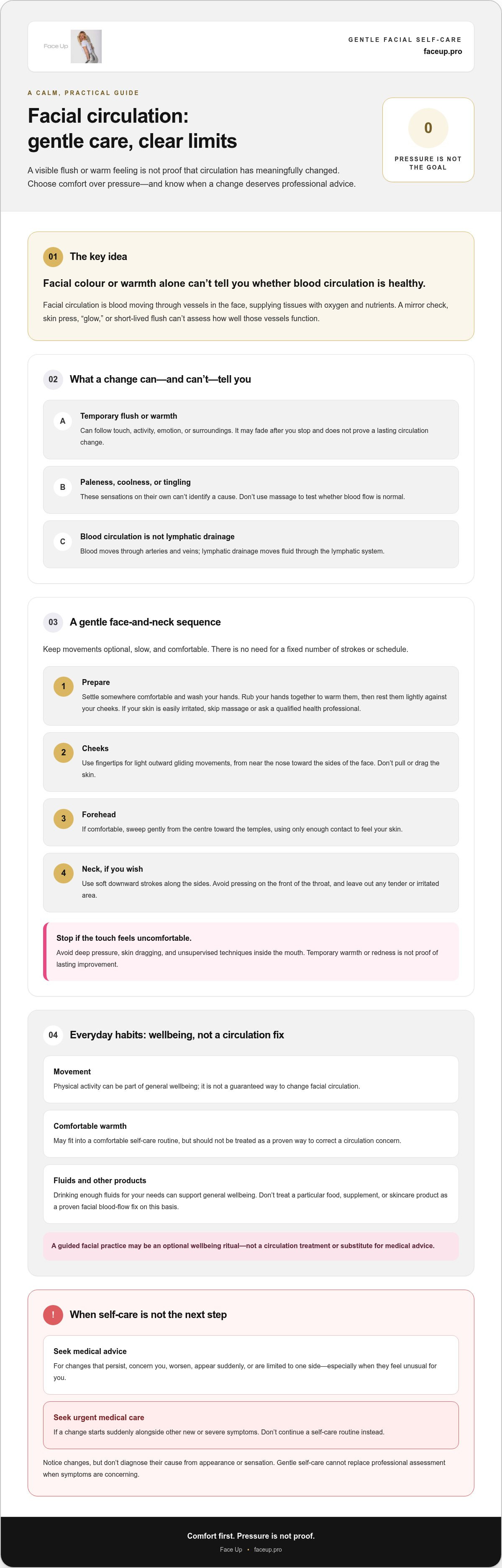
Facial circulation is the movement of blood through vessels in the face, supplying facial tissues with oxygen and nutrients. This is a plain-language description, not a diagnosis. Skin appearance or sensation alone can’t show whether blood flow is healthy. Blood circulation is also different from lymphatic drainage, which moves fluid through the lymphatic system rather than carrying blood through arteries and veins.
Facial blood vessels are part of a wider network. The Facial artery is one of the vessels supplying the face. Knowing this provides some anatomical context, but you can’t assess how well the vessels function by looking in a mirror or pressing on your skin.
How blood flow relates to facial skin
Blood vessels carry blood to tissues, delivering oxygen and nutrients and carrying away some waste products. A visible “glow” isn’t a reliable measure of circulation. If you’re researching how to increase blood circulation in face, remember that a change in appearance after a technique doesn’t establish a lasting improvement in blood flow.
When a change in facial colour or temperature matters
Facial colour and temperature can vary temporarily with surroundings, activity, emotion, or touch. A brief flush or warm feeling after massage may fade soon after you stop. It doesn’t prove circulation has improved over time. Paleness, coolness, or tingling on their own can’t identify a cause.
Pay attention to changes that are persistent, sudden, worsening, or limited to one side, particularly if they feel unusual for you. Don’t try to diagnose the cause from appearance or sensation, or use massage to test whether blood flow is normal. Seek medical advice about changes that persist or concern you. If a change starts suddenly alongside other new or severe symptoms, seek urgent medical care rather than continuing a self-care routine.
The practical takeaway is simple: notice changes, but don’t treat them as a circulation test. Gentle self-care can be an optional wellbeing ritual, but it can’t replace professional assessment when symptoms are concerning.
How to Increase Blood Circulation in Face Gently
If you’re exploring how to increase blood circulation in face, start with comfort rather than pressure. Gentle self-massage can be an optional wellbeing ritual, but a brief flush or warm feeling afterward may be temporary and doesn’t prove that blood flow has changed in a lasting way. Facial massage isn’t a medical treatment for circulation concerns and can’t replace medical advice.
A simple face-and-neck self-massage sequence
Settle somewhere comfortable and wash your hands. If your skin is easily irritated, skip the massage or ask a qualified health professional for advice. Warm your hands by rubbing them together, then rest them lightly against your cheeks. Keep every movement optional, slow, and comfortable.
- Begin at the cheeks: Use your fingertips to make light, outward gliding movements from near the nose toward the sides of your face. Don’t pull or drag the skin.
- Move to the forehead: If it feels comfortable, sweep gently from the centre toward the temples, using only enough contact to feel your skin.
- Include the neck if you wish: Use soft downward strokes along the sides of the neck. Avoid pressing on the front of the throat, and leave out any area that feels tender or irritated.
There’s no need to follow a fixed number of strokes or schedule. Stop if the touch feels uncomfortable, and don’t use deep pressure or unsupervised techniques inside the mouth. Temporary warmth or redness can happen after touching the skin, but it isn’t proof of a lasting circulation change.
Everyday habits that support general wellbeing
Movement, comfortable warmth, and drinking enough fluids for your needs can be part of general wellbeing. They aren’t guaranteed ways to change facial circulation. Don’t treat a particular food, supplement, or skincare product as a proven facial blood-flow fix on this basis. For a general overview of movement and skin, see this discussion of exercise for skin health.
If you have ongoing concerns about facial colour, temperature, or sensation, don’t try to resolve them with massage alone. Discuss them with a qualified health professional. If you’d like structure for gentle self-practice, Face Up’s app subscription includes guided daily practice rituals. It’s an optional wellbeing resource, not a circulation treatment. Explore Face Up guided practice to learn more.
Facial Massage, Exercise, and Warmth: What Is Worth Trying?
Massage, physical activity, and comfortable warmth serve different purposes. None should be treated as a proven way to correct a circulation problem. A warm feeling or flushed appearance doesn’t necessarily mean blood flow has changed in a lasting way. Use the comparison below to choose an approach for comfort, not as a ranking of clinical effectiveness.
| Approach | What it may offer | Cautions |
|---|---|---|
| Gentle facial massage | A quiet moment to notice facial tension and enjoy light touch. Any warmth or redness may be short-lived. | Use a light touch and stop if uncomfortable. A temporary change in appearance doesn’t confirm improved circulation or treat a medical condition. |
| General physical activity | Movement supports overall wellbeing. Choose an activity that suits your ability and feels comfortable. | Don’t assume a warm or flushed face after activity means lasting improvement in facial circulation. |
| Comfortable warmth | A comfortably warm cloth may feel soothing as part of a relaxing routine. | Avoid hot applications. Warmth can change how the skin feels temporarily, but that sensation isn’t proof of a lasting effect. |
Can facial massage improve circulation?
Massage may briefly change how your face feels or looks, but that response doesn’t establish a lasting circulation benefit. If you’re weighing how to increase blood circulation in face, separate a pleasant self-care experience from treatment. Massage may help you notice tension or feel relaxed, but it isn’t a treatment for a vascular or other medical condition. Readers curious about jaw tension can explore general information on specialized therapeutic techniques, while remembering that self-massage doesn’t diagnose its cause.
How facial tension and relaxation fit into the picture
Relaxation is worthwhile on its own. You might notice your jaw feels tight after a demanding day, then choose to unclench it, rest, or use gentle touch if that feels comfortable. That experience doesn’t show that tension was restricting blood supply or that releasing it has improved circulation. Facial tension and emotions can be worth exploring as wellbeing topics, but a personal connection isn’t a medical explanation. Gentle practice may support comfort, not prove a change in blood flow.
Choose an option that feels safe and appropriate, or skip all three. Persistent or concerning changes call for medical advice, not a more forceful technique.
Build a Safe Facial Self-Care Routine and Know When to Stop
A useful routine is one you can adapt or skip without pushing through discomfort. If you’re considering how to increase blood circulation in face, keep the goal modest: gentle self-care may feel soothing, but it can’t explain a symptom or treat a medical circulation problem.
- Pause and check your skin. Don’t massage areas that are broken, inflamed, painful, or recently treated.
- Wash your hands. Start with clean hands and a light touch. Tools and essential oils aren’t necessary.
- Keep it comfortable. Choose movements that feel pleasant, and avoid pulling or pressing hard.
- Check in as you go. Stop for pain, irritation, unusual numbness, dizziness, or any worsening symptom.
- Notice what happens afterward. Don’t interpret temporary warmth or redness as proof that circulation has improved.
Adjust the routine for sensitive or irritated skin
If your skin is sensitive, simplifying is often the better choice. Skip massage over a rash, wound, or sore area, and don’t restart on recently treated skin until it’s appropriate to do so. If you have a skin or health condition that might affect what’s safe, ask a qualified clinician for individual guidance before trying a new technique. You don’t need special pressure, tools, or oils to make self-care worthwhile.
When to seek professional medical advice
Arrange medical advice for facial colour, temperature, sensation, or swelling changes that persist, recur, worsen, or appear on one side. Don’t keep repeating massage to see whether the change goes away. If a change comes on suddenly and feels severe or concerning, seek urgent medical care rather than trying a home routine.
Facial self-care is not a way to diagnose or treat circulation problems. A beauty or wellbeing practitioner may support a relaxation-focused experience, but that role is distinct from a medical professional’s assessment of symptoms. If you’re unsure which kind of support you need, start with a qualified health professional.
For guidance with a gentle wellbeing ritual, explore Face Up’s guided daily practice rituals. They’re an optional self-practice resource, not a substitute for medical advice or treatment.
Make Gentle Facial Practice Part of a Wider Wellbeing Ritual
Facial self-practice doesn’t need to be a project or a test of whether your skin looks more flushed. Let comfort, ease, and relaxation guide you instead. If a movement feels unpleasant, leave it out. If you’re still wondering how to increase blood circulation in face, remember that a wellbeing ritual isn’t a way to diagnose or treat poor circulation.
Choose a practice that feels comfortable and sustainable
Keep your approach light and flexible. You might include a few gentle movements while winding down, or pause to notice whether you’re holding tension in your jaw or face. There’s no need to chase a particular skin colour or sensation. The aim is a comfortable practice, not a forced visible result or pushing through irritation.
Face Up’s somatic approach is wellbeing-oriented, with a focus on facial and neck tension. It isn’t medical treatment and shouldn’t be used to address suspected circulation problems. Persistent or concerning symptoms deserve attention from a qualified health professional, even if a self-care ritual feels relaxing.
Explore guided Face Up self-practice
For readers who enjoy structure, the Face Up App offers guided daily practice rituals. These can provide an optional framework for self-practice without promising to improve blood flow or replace medical care. If jaw tension is part of what you’re exploring, Face Up’s Jaw Release Course is another option to learn about. It relates to tension, not a diagnosis or treatment for circulation concerns.
Think of guided practice as one small part of a broader wellbeing routine. You can choose it, adapt it, or leave it aside depending on what feels right. Explore Face Up guided rituals to learn more about the app’s self-practice rituals.
The most useful routine respects your comfort and limits. Gentle practice may create a calmer moment in your day, but it can’t confirm what’s happening beneath the skin. Keep that distinction clear, and seek medical advice for changes that persist or concern you.
Make Your Facial Wellbeing Routine Gentle and Informed
A thoughtful approach to how to increase blood circulation in face starts with realistic expectations: self-care can support comfort, but it can’t diagnose or treat a circulation concern. Choose practices that feel pleasant, and let persistent or sudden changes guide you toward medical advice rather than more pressure or repetition.
Facial care can also be part of a broader wellbeing ritual. Face Up offers a mobile app with guided self-practice rituals, along with facial sculpting and somatic bodywork services. Founded by Olga Newman, Face Up’s work draws on her specialisation in somatic bodywork and facial sculpting. These offerings focus on wellbeing and tension, not medical treatment or proven circulation outcomes.
If a guided ritual feels like a helpful addition to your routine, explore Face Up guided rituals. Keep your practice flexible, respect your comfort, and take health concerns to a qualified professional.
Frequently Asked Questions
Can facial massage increase blood circulation?
Gentle facial massage may cause temporary warmth or visible flushing, but those signs don’t establish a lasting improvement in circulation. If you choose to massage, use a comfortable touch and stop if your skin hurts or becomes irritated. Massage is optional self-care, not a substitute for medical assessment. Seek professional advice if changes in facial colour, temperature, sensation, or swelling are persistent or sudden.
How can I increase blood circulation in my face naturally?
For a gentle approach to how to increase blood circulation in face, you might try light self-massage or general movement if these feel appropriate for you. Avoid forceful pressure and anything that irritates your skin. These habits may support comfort, but they can’t guarantee a change in facial blood flow. Discuss persistent, new, or worsening symptoms with a qualified health professional, especially if other concerning changes occur.
Does rubbing your face make it glow?
Rubbing can make skin look temporarily red or feel warm, but that isn’t proof of improved circulation or a lasting glow. Vigorous friction may irritate sensitive skin, so choose light touch rather than scrubbing or pressing hard. If redness, pain, or swelling persists after you stop, avoid repeating the technique and consider seeking advice from a qualified clinician.
Is facial massage safe for everyone?
No, facial massage isn’t suitable for every person or every area of skin. Avoid massaging broken, inflamed, painful, or irritated skin, and ask a clinician for advice if you have a relevant health condition or have recently had a procedure. Keep any touch gentle and stop for pain, unusual numbness, or worsening symptoms. Massage is optional self-care, not treatment for a circulation disorder.
Can exercise improve circulation in your face?
Physical activity supports general cardiovascular wellbeing, but it can’t guarantee a particular change in facial blood flow or appearance. A flushed face during or after exercise is temporary for some people and isn’t a test of circulation health. Choose activity suited to your health and fitness, and follow advice from your health professional if needed. Seek medical guidance about facial changes that persist or appear suddenly.
Why does my face feel cold or look pale?
A cool-feeling or pale face can have different explanations, and appearance alone can’t identify the cause. Notice whether the change is persistent, sudden, one-sided, or accompanied by other symptoms, but don’t rely on massage to assess or treat it. Contact a health professional about ongoing concerns. If a sudden change feels severe or comes with other serious symptoms, seek urgent medical care.
How often should I massage my face to improve circulation?
There’s no universal massage schedule that guarantees improved facial circulation. If you choose massage for relaxation, keep it gentle and comfortable, and stop if irritation or discomfort develops. Don’t treat a regular routine as medical care or use it to assess a symptom. Ask a qualified professional for guidance if you have a skin condition, have recently had a procedure, or are experiencing ongoing facial changes.


